Earth Resources Crossword
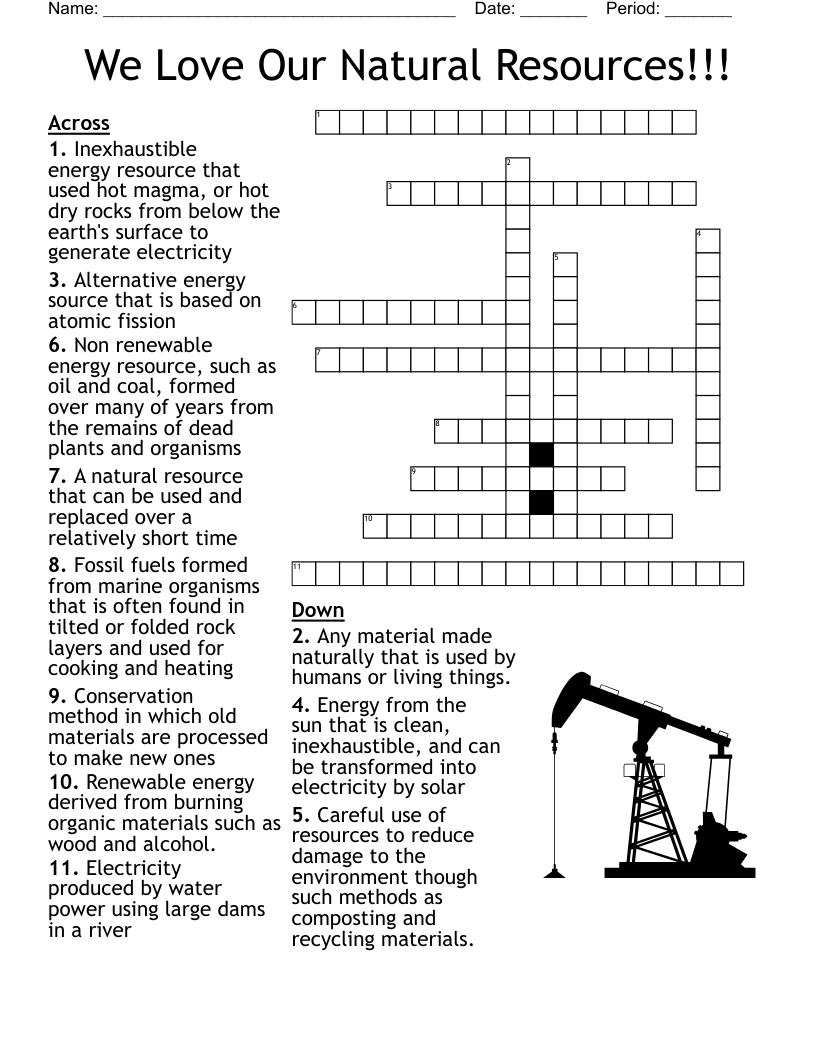
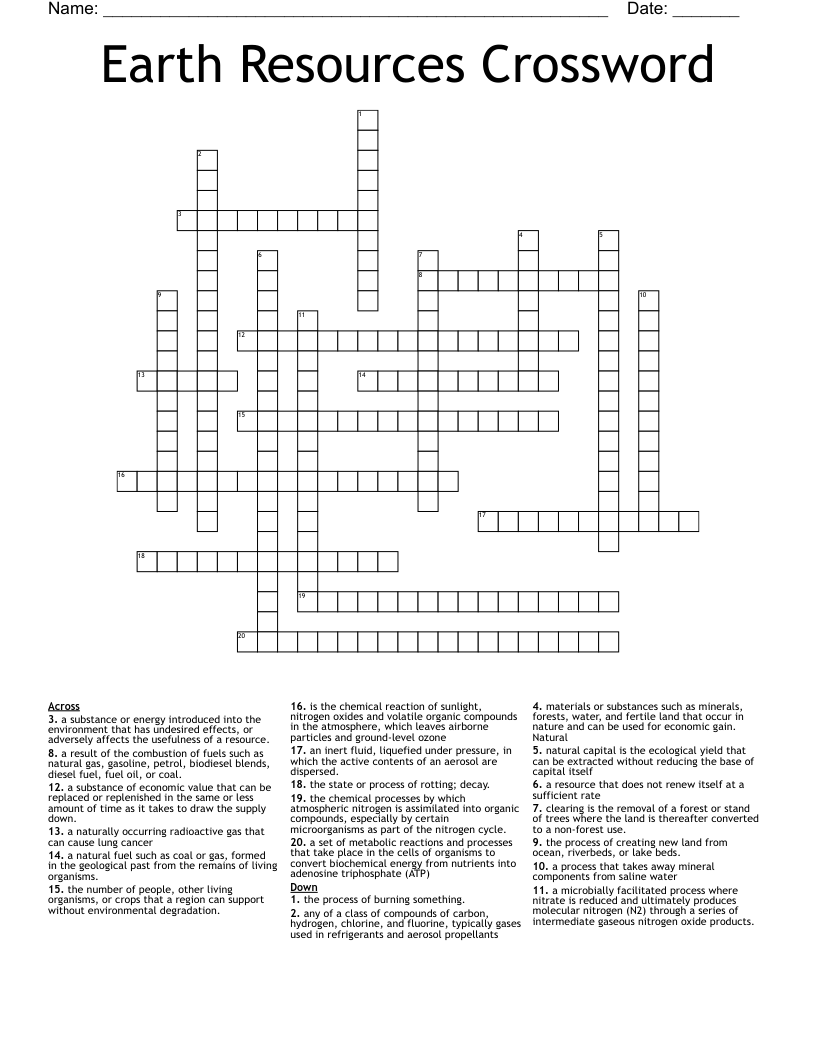
This printable crossword puzzle on the topic of Environmental Science has 20 clues. Answers range from 5 to 20 letters long. This crossword is also available to download as a Microsoft Word document or a PDF.
Description
materials or substances such as minerals, forests, water, and fertile land that occur in nature and can be used for economic gain. Natural
a substance of economic value that can be replaced or replenished in the same or less amount of time as it takes to draw the supply down.
a resource that does not renew itself at a sufficient rate
natural capital is the ecological yield that can be extracted without reducing the base of capital itself
a substance or energy introduced into the environment that has undesired effects, or adversely affects the usefulness of a resource.
a naturally occurring radioactive gas that can cause lung cancer
a process that takes away mineral components from saline water
a set of metabolic reactions and processes that take place in the cells of organisms to convert biochemical energy from nutrients into adenosine triphosphate (ATP)
the process of burning something.
a natural fuel such as coal or gas, formed in the geological past from the remains of living organisms.
the state or process of rotting; decay.
the chemical processes by which atmospheric nitrogen is assimilated into organic compounds, especially by certain microorganisms as part of the nitrogen cycle.
a microbially facilitated process where nitrate is reduced and ultimately produces molecular nitrogen (N2) through a series of intermediate gaseous nitrogen oxide products.
the process of creating new land from ocean, riverbeds, or lake beds.
clearing is the removal of a forest or stand of trees where the land is thereafter converted to a non-forest use.
is the chemical reaction of sunlight, nitrogen oxides and volatile organic compounds in the atmosphere, which leaves airborne particles and ground-level ozone
a result of the combustion of fuels such as natural gas, gasoline, petrol, biodiesel blends, diesel fuel, fuel oil, or coal.
any of a class of compounds of carbon, hydrogen, chlorine, and fluorine, typically gases used in refrigerants and aerosol propellants
an inert fluid, liquefied under pressure, in which the active contents of an aerosol are dispersed.
the number of people, other living organisms, or crops that a region can support without environmental degradation.