Ancient Rome - Vocabulary & People Crossword
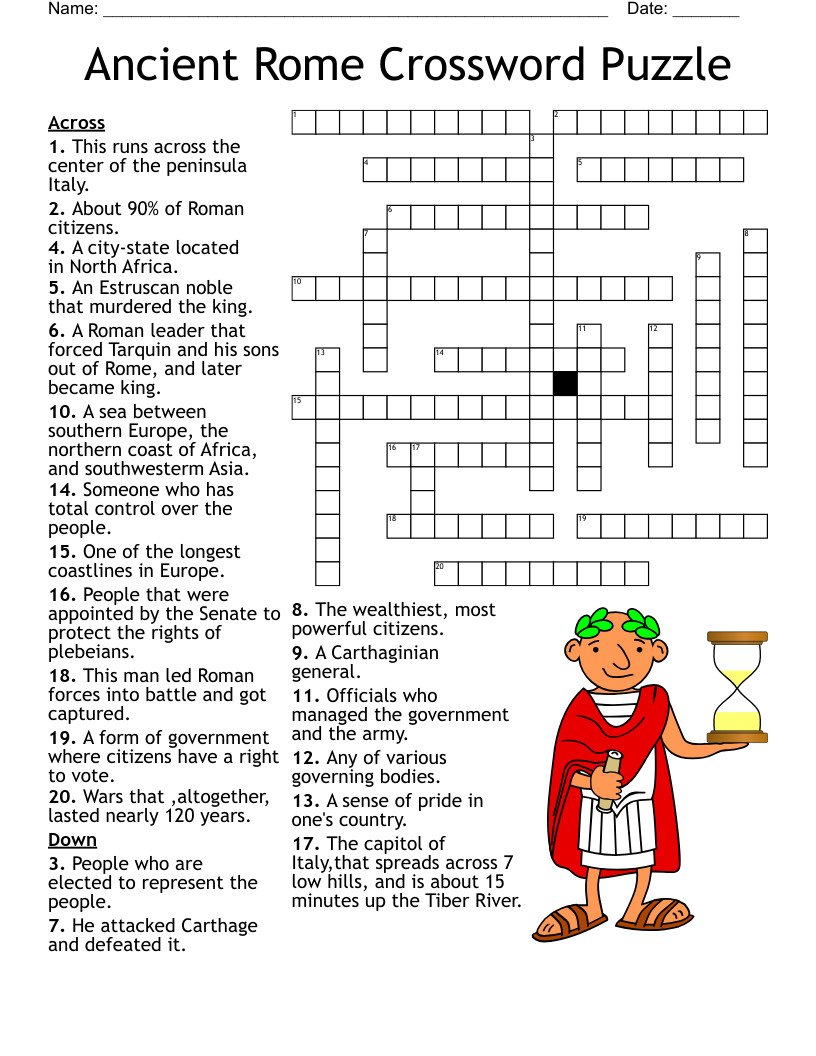
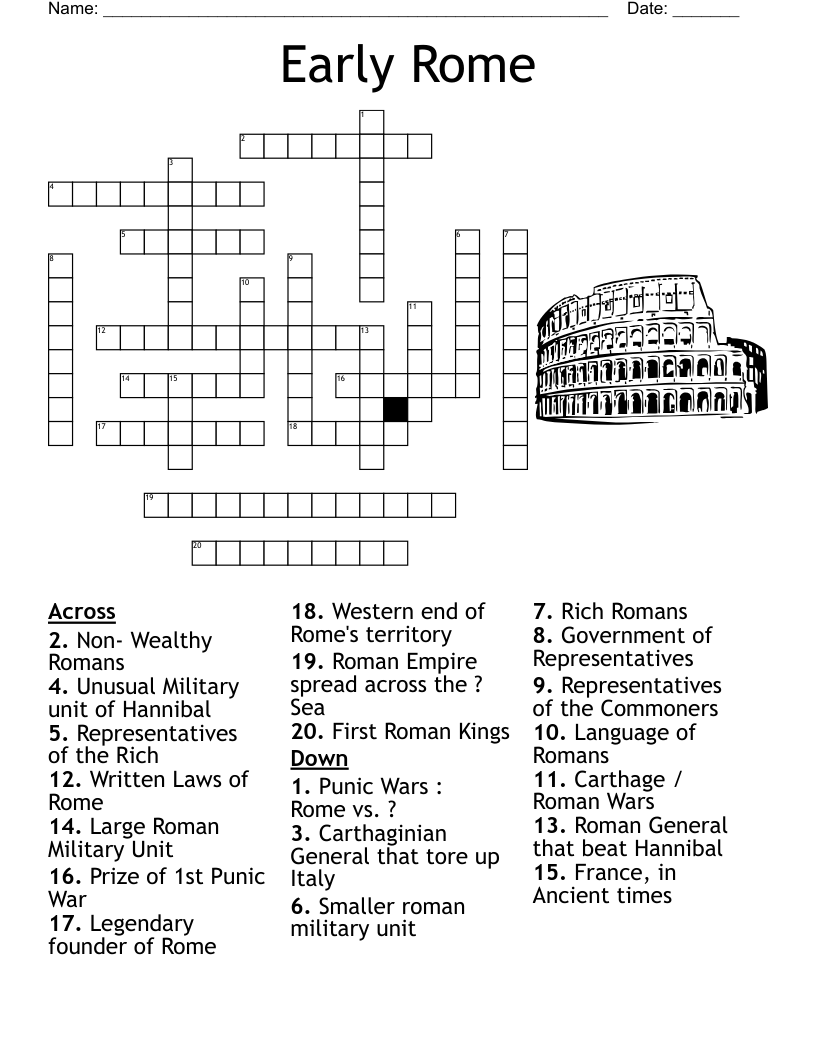
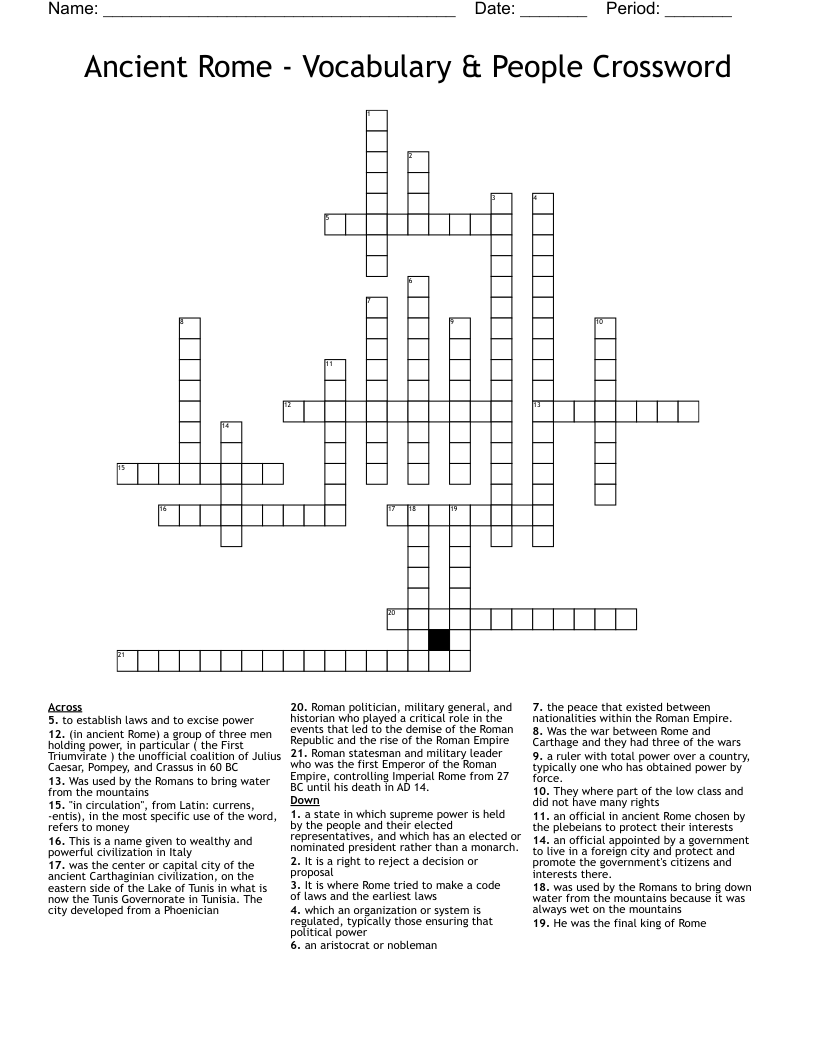
This printable crossword puzzle on the topic of Ancient Civilizations has 21 clues. Answers range from 4 to 17 letters long. This crossword is also available to download as a Microsoft Word document or a PDF.
Description
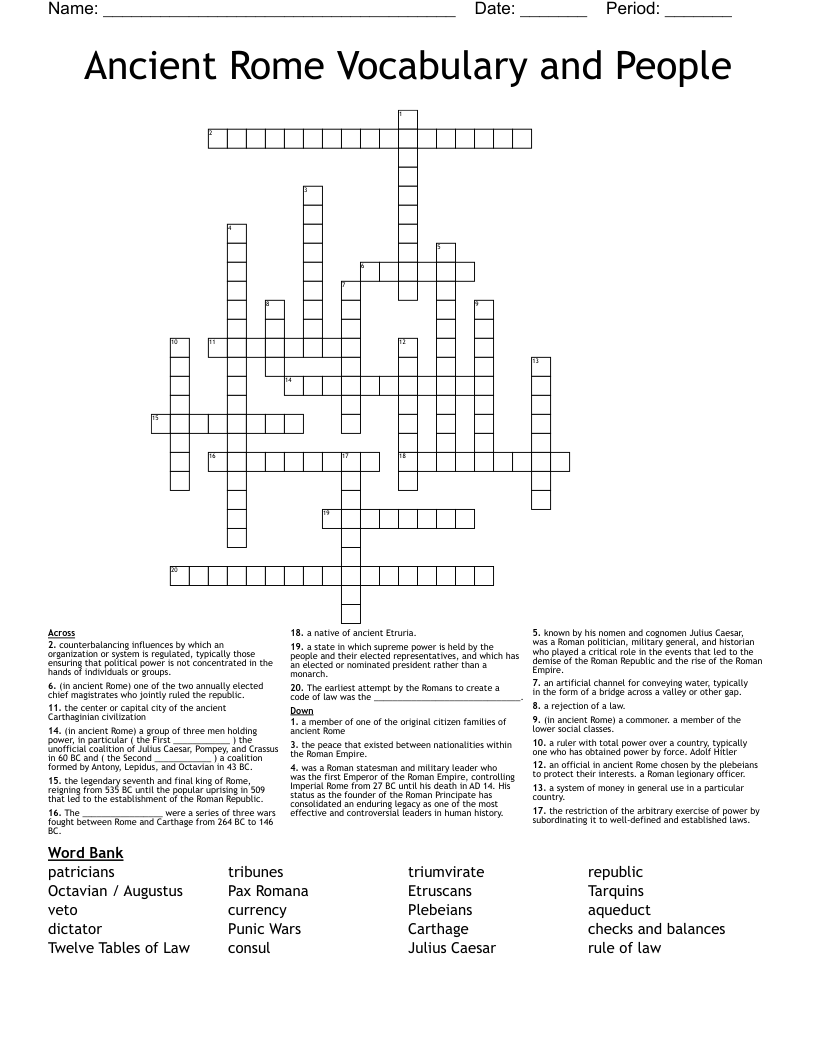
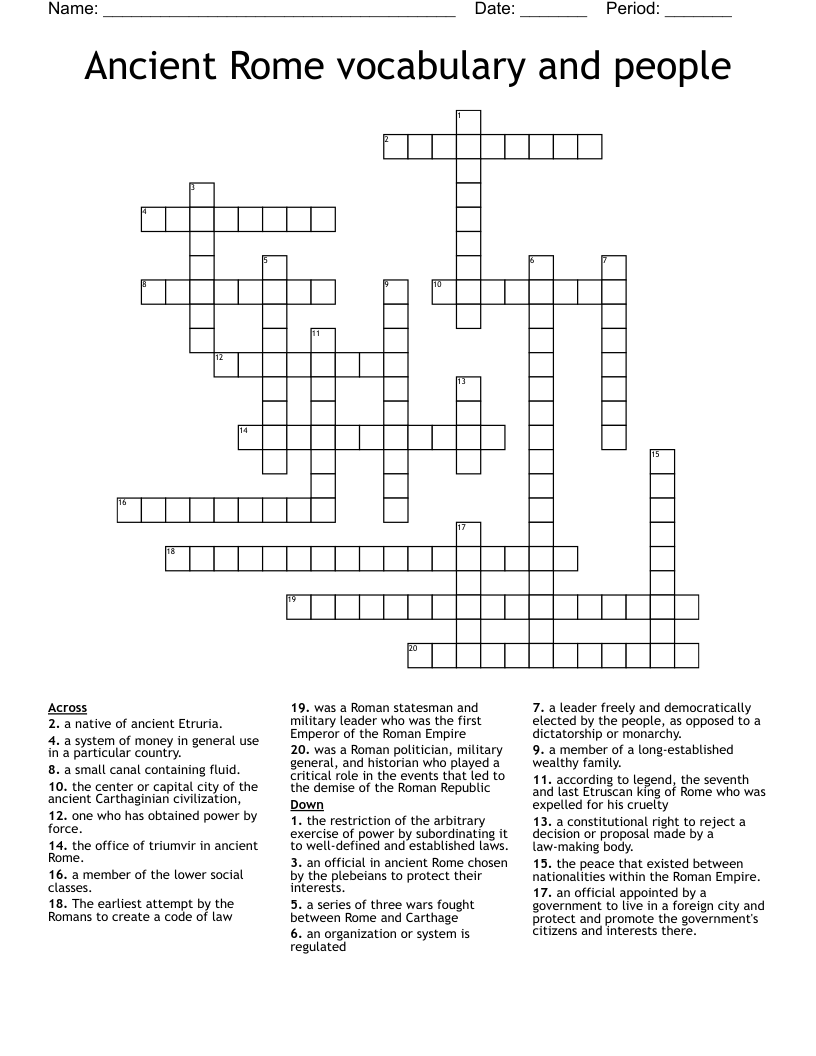
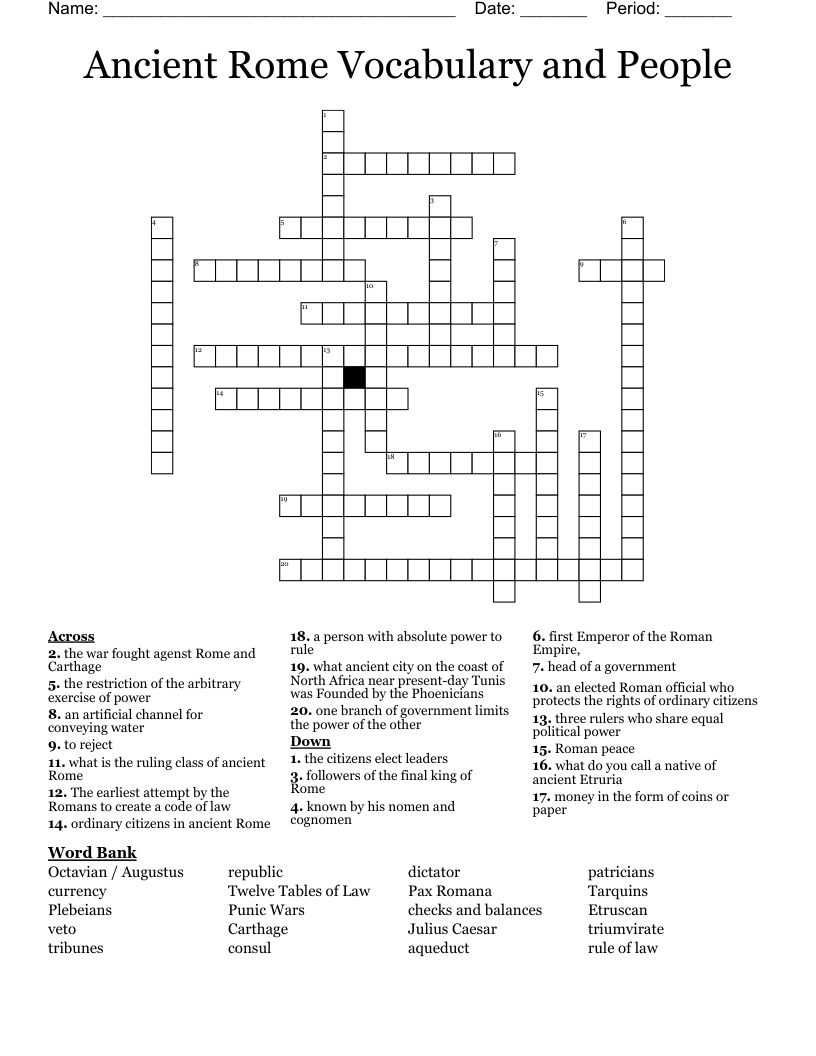
This is a name given to wealthy and powerful civilization in Italy
He was the final king of Rome
a state in which supreme power is held by the people and their elected representatives, and which has an elected or nominated president rather than a monarch.
which an organization or system is regulated, typically those ensuring that political power
was the center or capital city of the ancient Carthaginian civilization, on the eastern side of the Lake of Tunis in what is now the Tunis Governorate in Tunisia. The city developed from a Phoenician
Was the war between Rome and Carthage and they had three of the wars
an aristocrat or nobleman
They where part of the low class and did not have many rights
an official appointed by a government to live in a foreign city and protect and promote the government's citizens and interests there.
an official in ancient Rome chosen by the plebeians to protect their interests
It is a right to reject a decision or proposal
It is where Rome tried to make a code of laws and the earliest laws
to establish laws and to excise power
a ruler with total power over a country, typically one who has obtained power by force.
Roman politician, military general, and historian who played a critical role in the events that led to the demise of the Roman Republic and the rise of the Roman Empire
(in ancient Rome) a group of three men holding power, in particular ( the First Triumvirate ) the unofficial coalition of Julius Caesar, Pompey, and Crassus in 60 BC
Roman statesman and military leader who was the first Emperor of the Roman Empire, controlling Imperial Rome from 27 BC until his death in AD 14.
the peace that existed between nationalities within the Roman Empire.
was used by the Romans to bring down water from the mountains because it was always wet on the mountains
Was used by the Romans to bring water from the mountains
"in circulation", from Latin: currens, -entis), in the most specific use of the word, refers to money