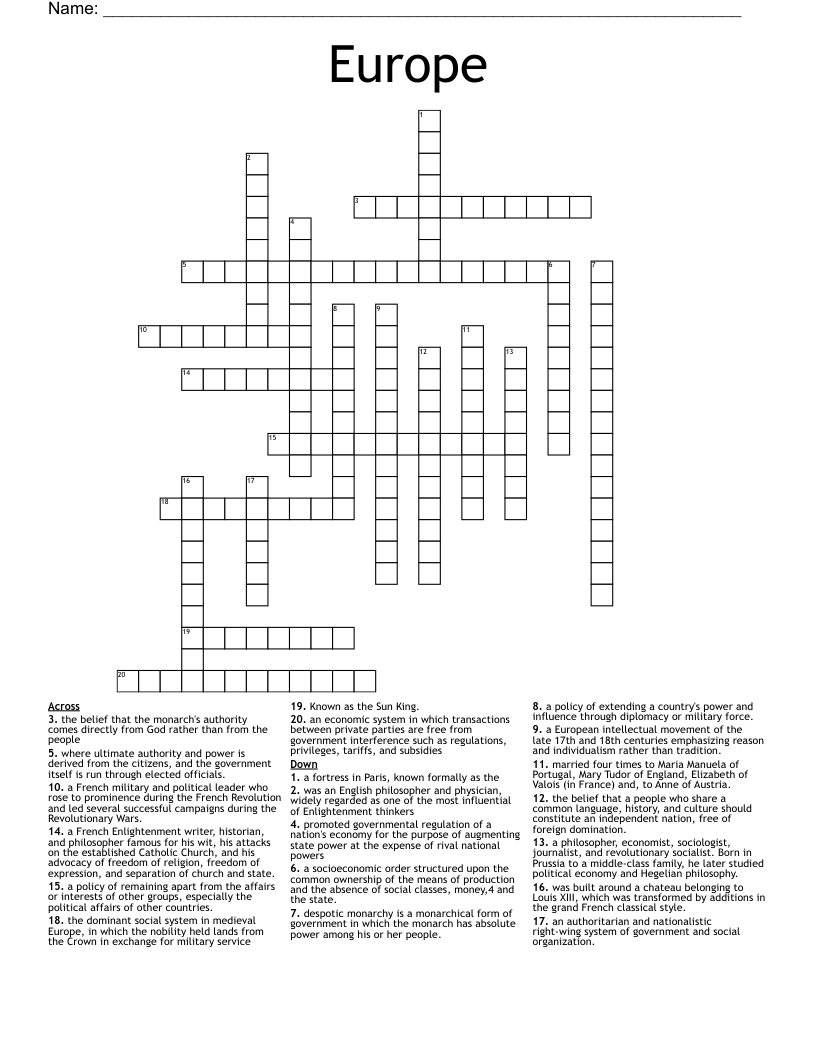
Europe Crossword
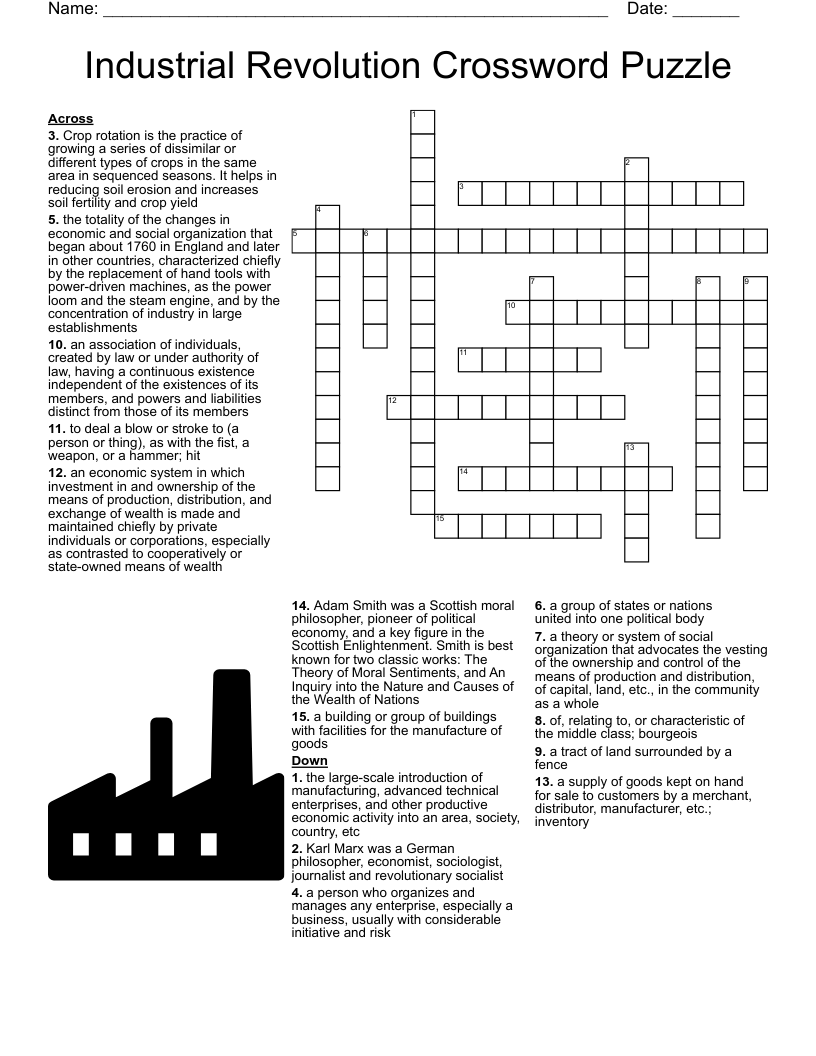
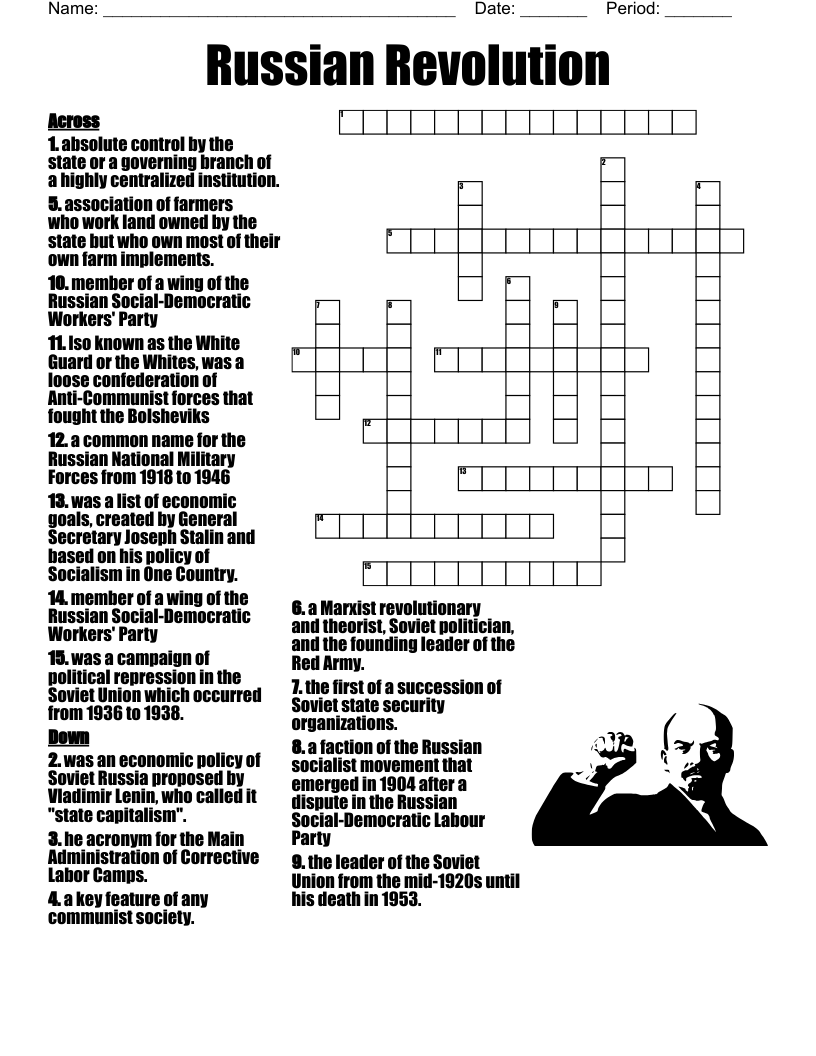
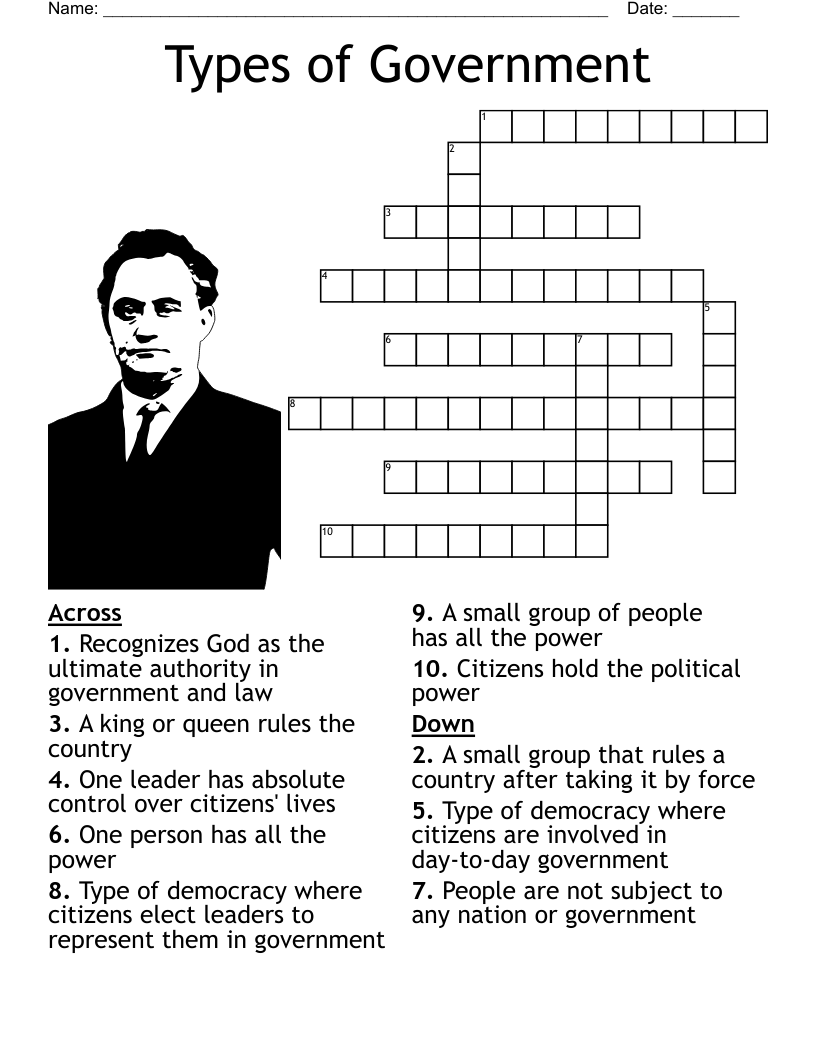
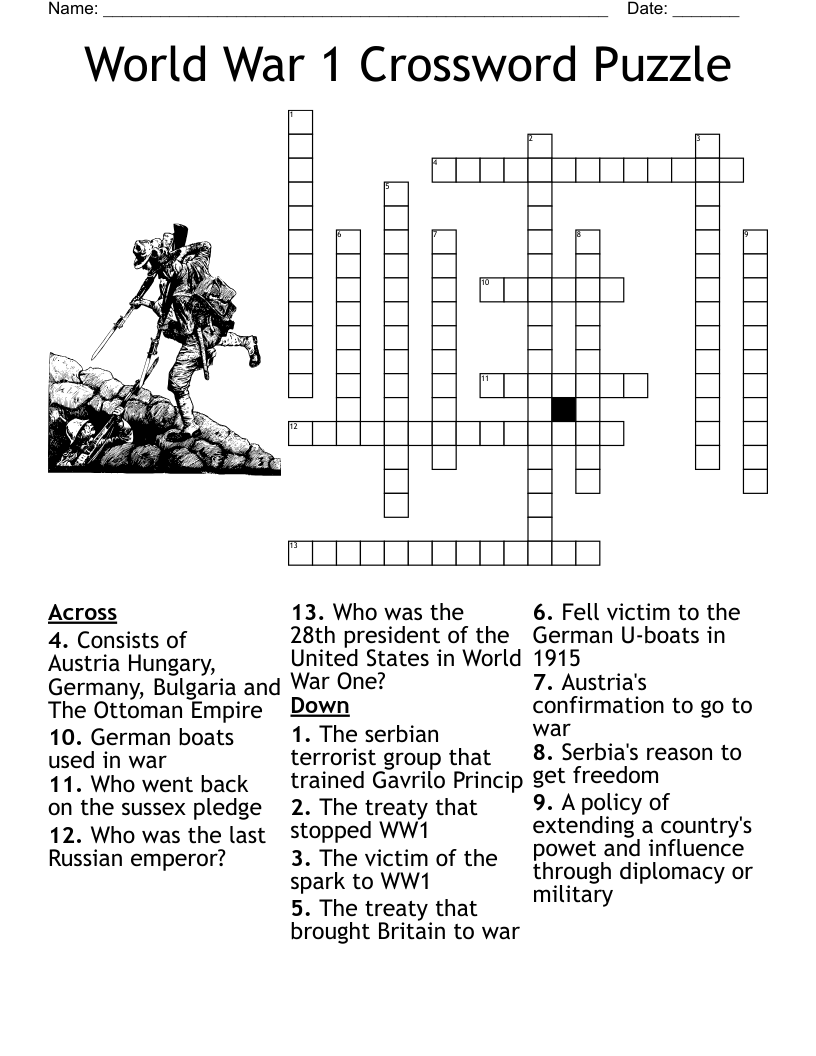
This printable crossword puzzle on the topic of World History (General) has 20 clues. Answers range from 6 to 18 letters long. This crossword is also available to download as a Microsoft Word document or a PDF.
Description
promoted governmental regulation of a nation's economy for the purpose of augmenting state power at the expense of rival national powers
an economic system in which transactions between private parties are free from government interference such as regulations, privileges, tariffs, and subsidies
the belief that the monarch's authority comes directly from God rather than from the people
married four times to Maria Manuela of Portugal, Mary Tudor of England, Elizabeth of Valois (in France) and, to Anne of Austria.
Known as the Sun King.
was built around a chateau belonging to Louis XIII, which was transformed by additions in the grand French classical style.
despotic monarchy is a monarchical form of government in which the monarch has absolute power among his or her people.
where ultimate authority and power is derived from the citizens, and the government itself is run through elected officials.
was an English philosopher and physician, widely regarded as one of the most influential of Enlightenment thinkers
a French Enlightenment writer, historian, and philosopher famous for his wit, his attacks on the established Catholic Church, and his advocacy of freedom of religion, freedom of expression, and separation of church and state.
a fortress in Paris, known formally as the
a French military and political leader who rose to prominence during the French Revolution and led several successful campaigns during the Revolutionary Wars.
a European intellectual movement of the late 17th and 18th centuries emphasizing reason and individualism rather than tradition.
an authoritarian and nationalistic right-wing system of government and social organization.
a socioeconomic order structured upon the common ownership of the means of production and the absence of social classes, money,4 and the state.
a philosopher, economist, sociologist, journalist, and revolutionary socialist. Born in Prussia to a middle-class family, he later studied political economy and Hegelian philosophy.
a policy of extending a country's power and influence through diplomacy or military force.
a policy of remaining apart from the affairs or interests of other groups, especially the political affairs of other countries.
the belief that a people who share a common language, history, and culture should constitute an independent nation, free of foreign domination.
the dominant social system in medieval Europe, in which the nobility held lands from the Crown in exchange for military service