POETIC DEVICES Crossword
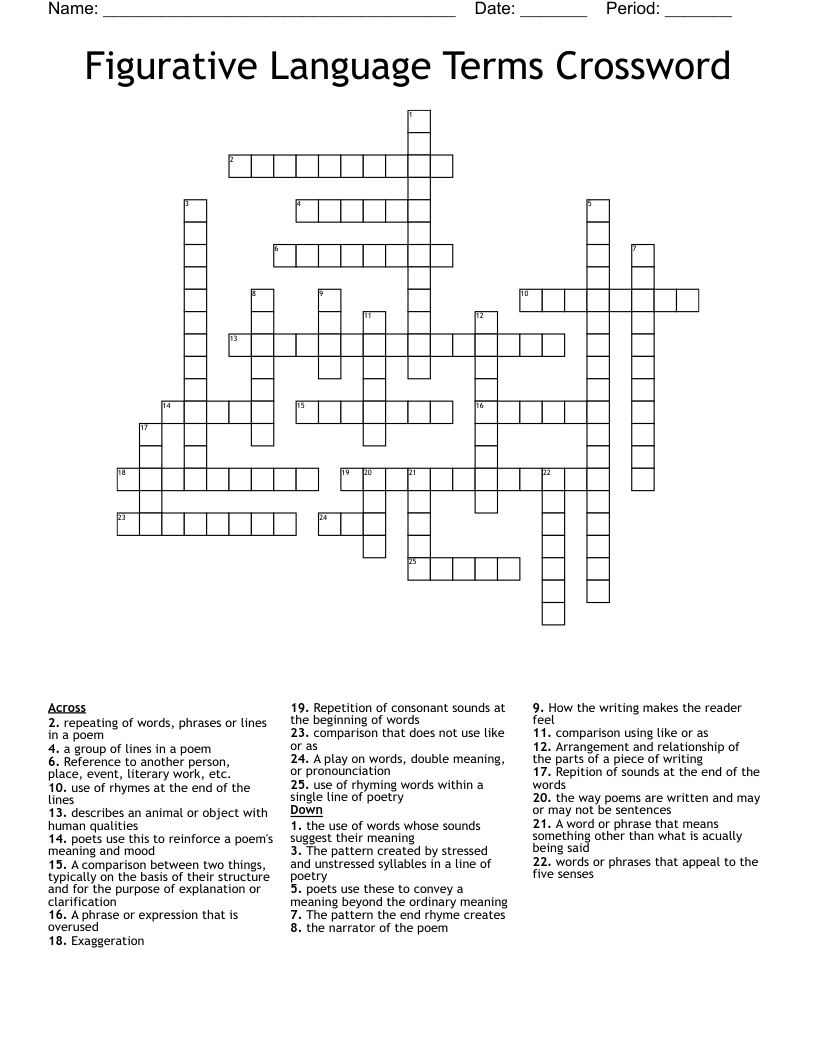
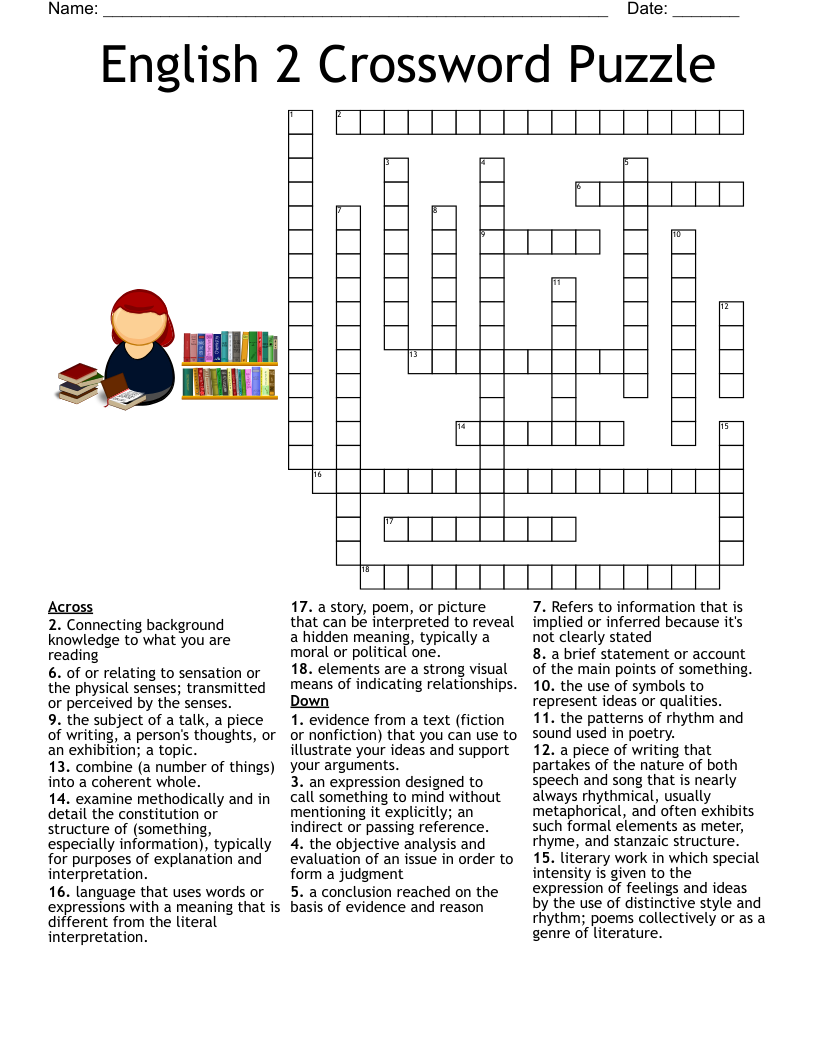
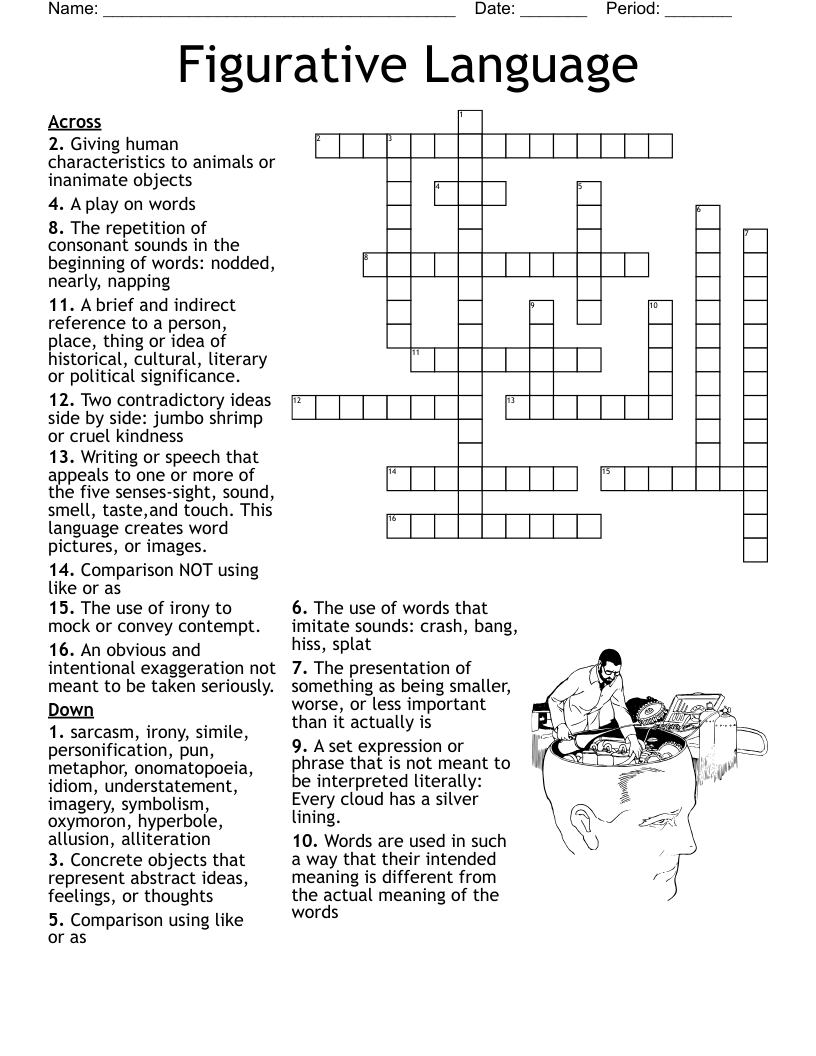
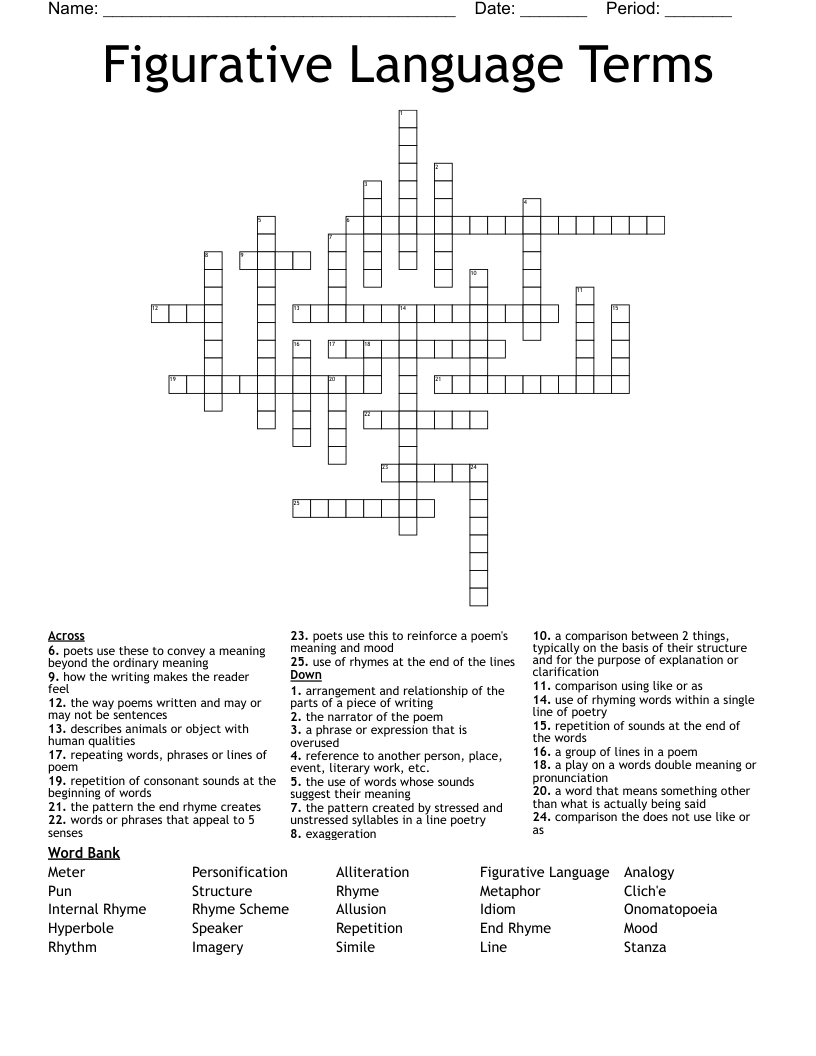
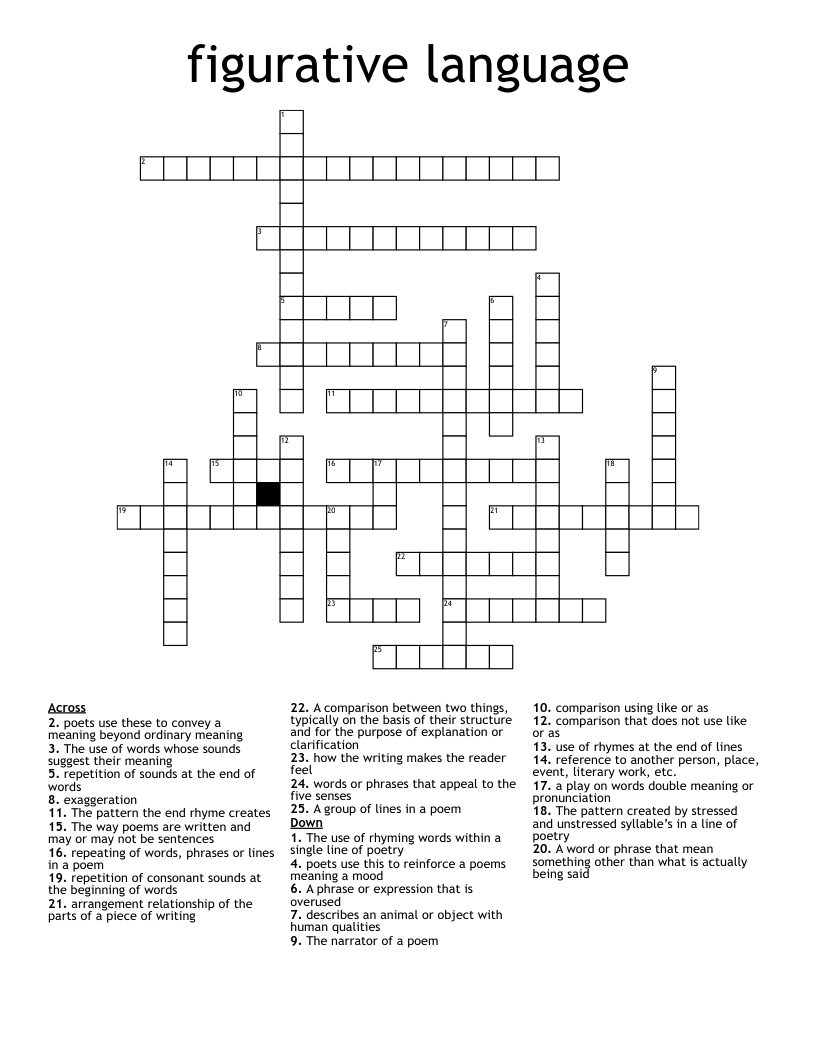
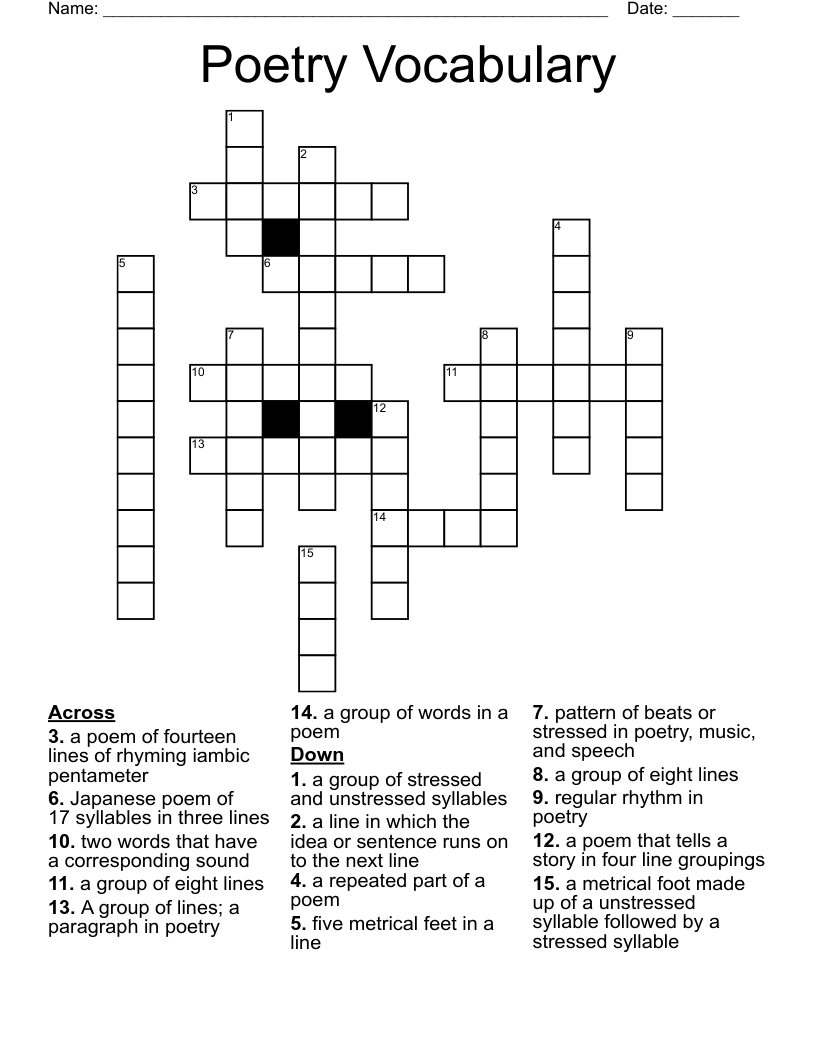
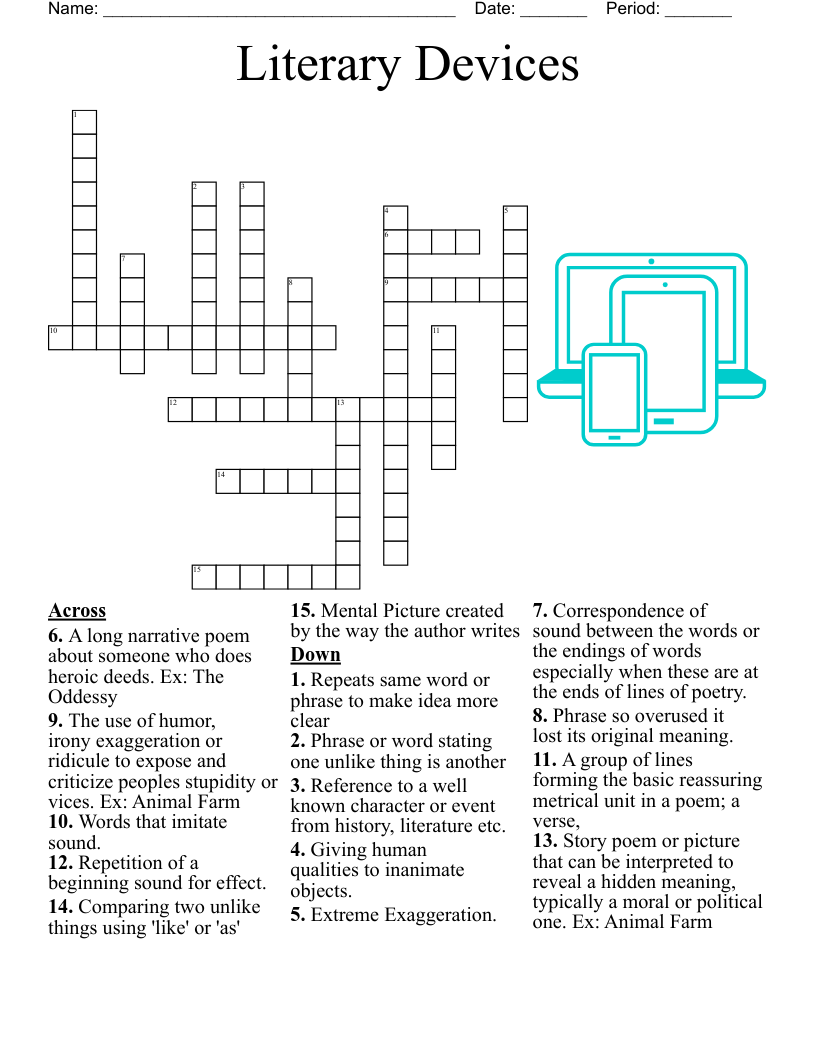
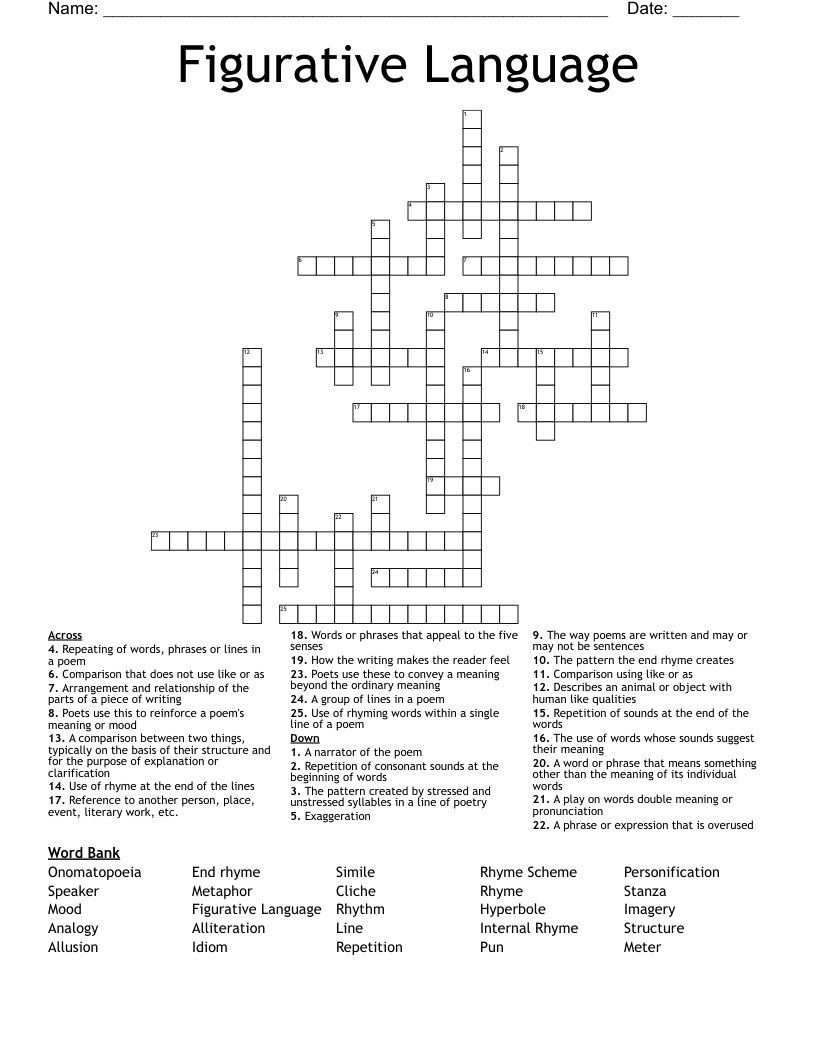
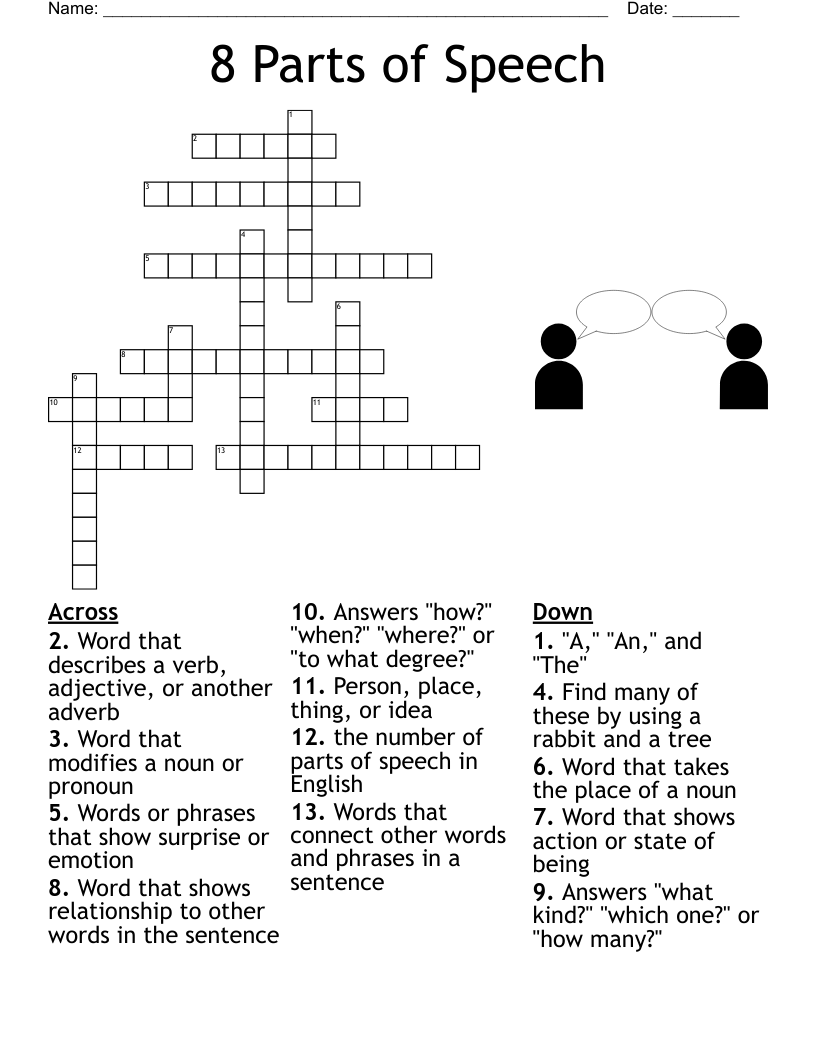
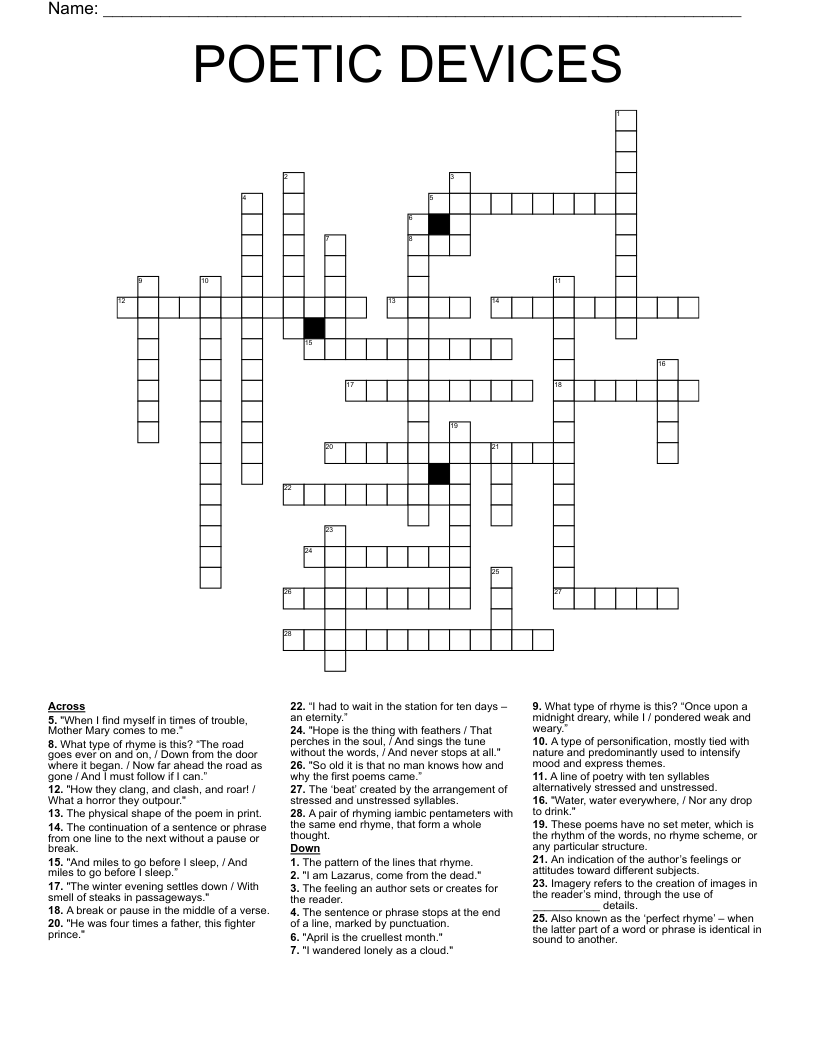
This printable crossword puzzle on the topic of Figurative Language & Literary Devices has 28 clues. Answers range from 3 to 16 letters long. This crossword is also available to download as a Microsoft Word document or a PDF.
Description
"Water, water everywhere, / Nor any drop to drink."
"So old it is that no man knows how and why the first poems came.”
"How they clang, and clash, and roar! / What a horror they outpour."
"April is the cruellest month."
"The winter evening settles down / With smell of steaks in passageways."
"I am Lazarus, come from the dead."
"Hope is the thing with feathers / That perches in the soul, / And sings the tune without the words, / And never stops at all."
"He was four times a father, this fighter prince."
"I wandered lonely as a cloud."
"When I find myself in times of trouble, Mother Mary comes to me."
"And miles to go before I sleep, / And miles to go before I sleep.”
“I had to wait in the station for ten days – an eternity.”
These poems have no set meter, which is the rhythm of the words, no rhyme scheme, or any particular structure.
An indication of the author’s feelings or attitudes toward different subjects.
The feeling an author sets or creates for the reader.
The physical shape of the poem in print.
Imagery refers to the creation of images in the reader’s mind, through the use of ___________ details.
A type of personification, mostly tied with nature and predominantly used to intensify mood and express themes.
The pattern of the lines that rhyme.
What type of rhyme is this? “Once upon a midnight dreary, while I / pondered weak and weary.”
What type of rhyme is this? “The road goes ever on and on, / Down from the door where it began. / Now far ahead the road as gone / And I must follow if I can.”
The ‘beat’ created by the arrangement of stressed and unstressed syllables.
The continuation of a sentence or phrase from one line to the next without a pause or break.
A break or pause in the middle of a verse.
The sentence or phrase stops at the end of a line, marked by punctuation.
Also known as the ‘perfect rhyme’ – when the latter part of a word or phrase is identical in sound to another.
A line of poetry with ten syllables alternatively stressed and unstressed.
A pair of rhyming iambic pentameters with the same end rhyme, that form a whole thought.