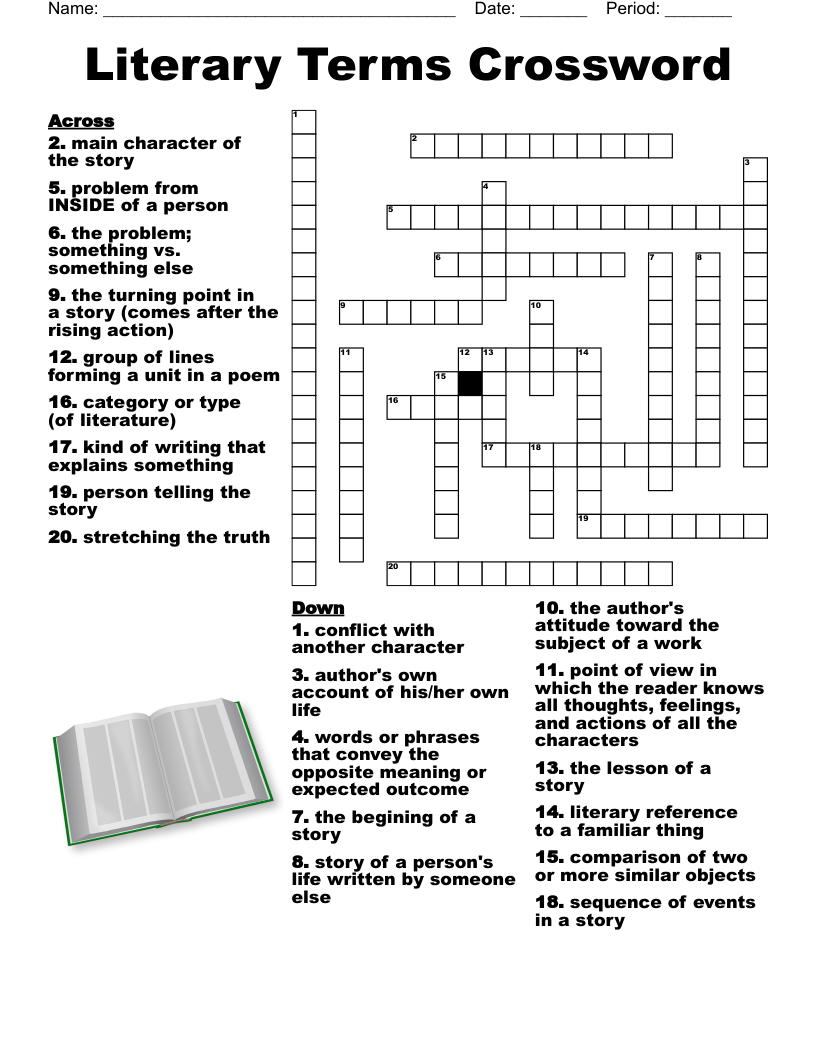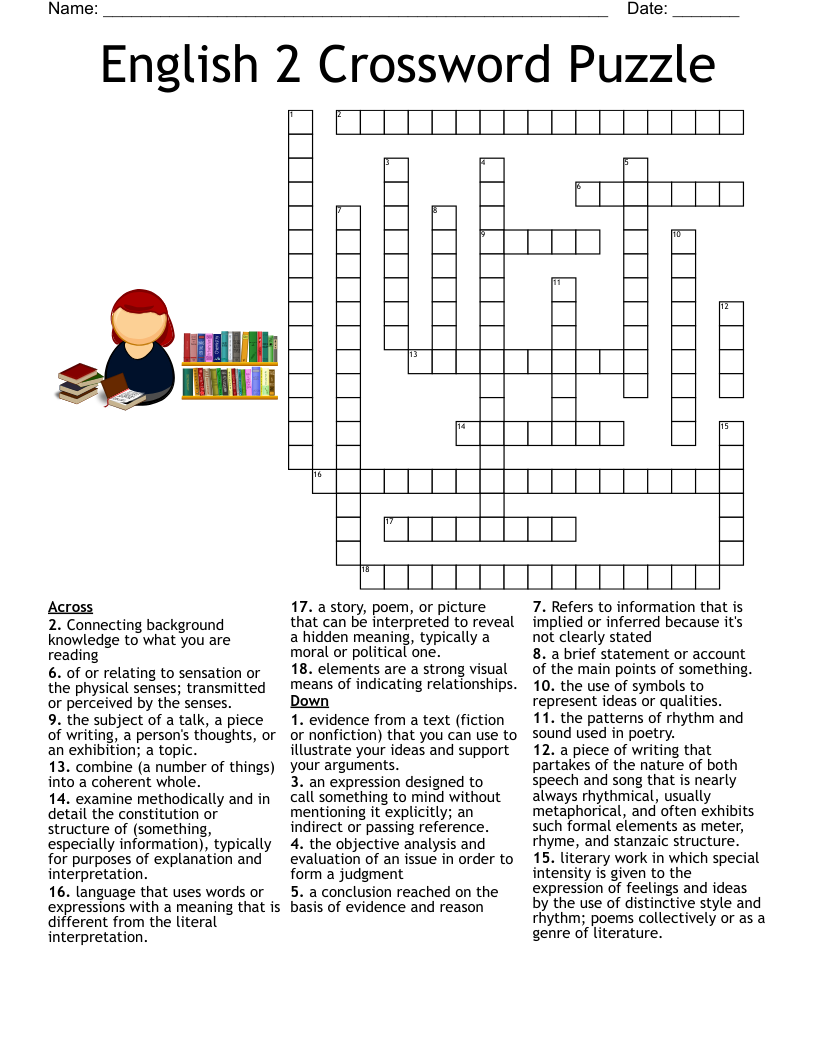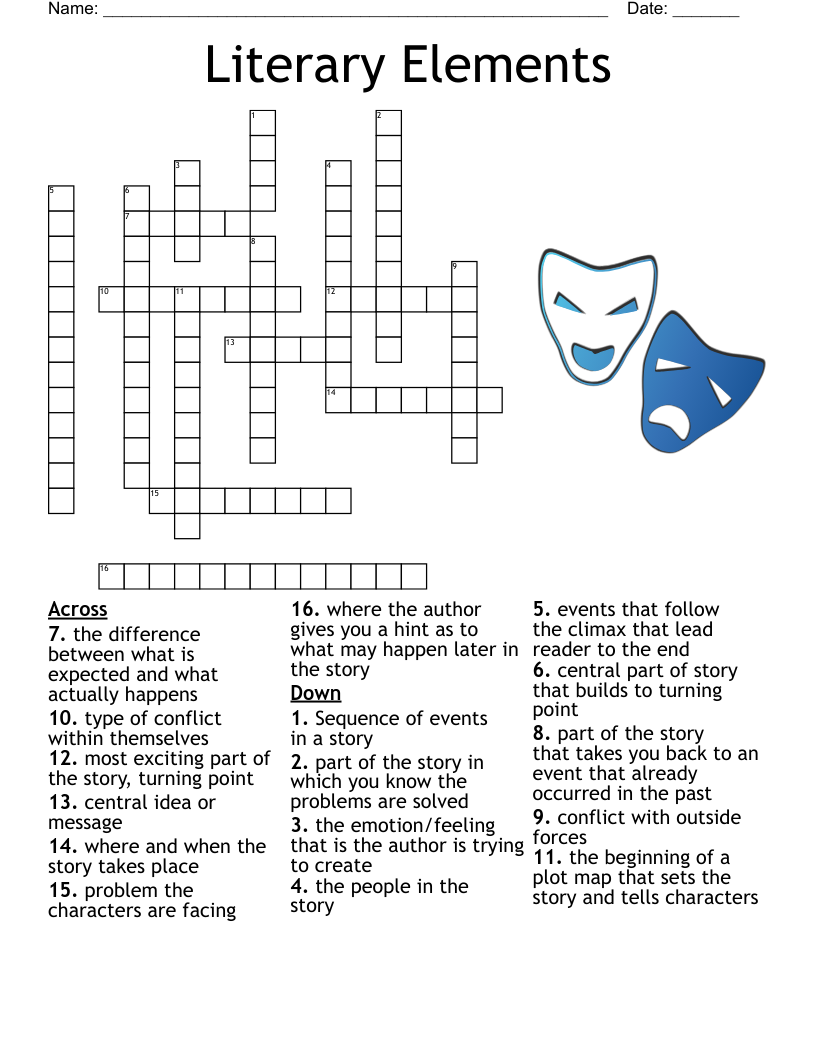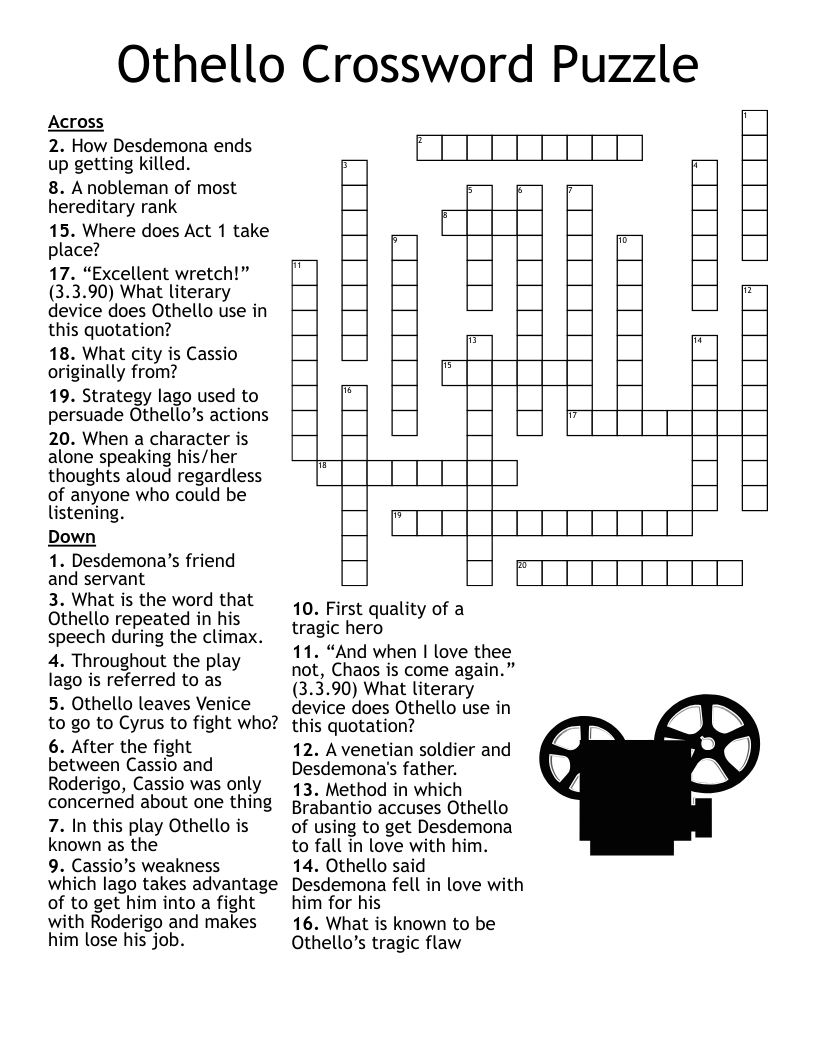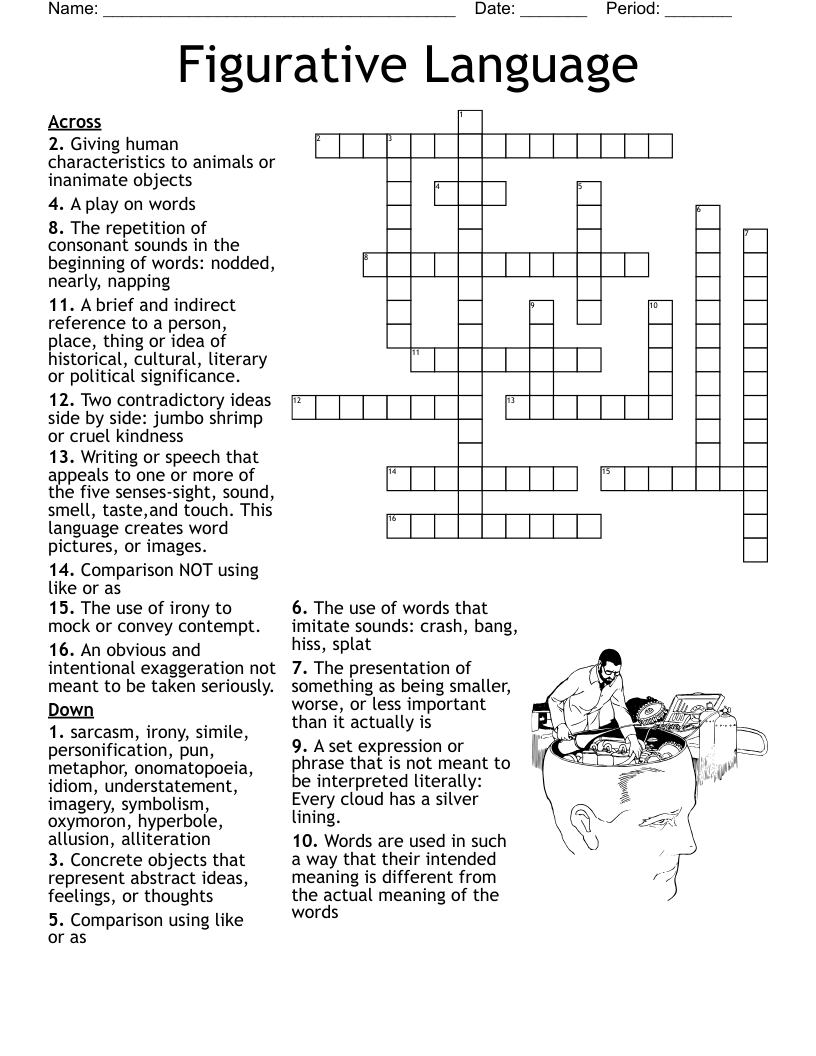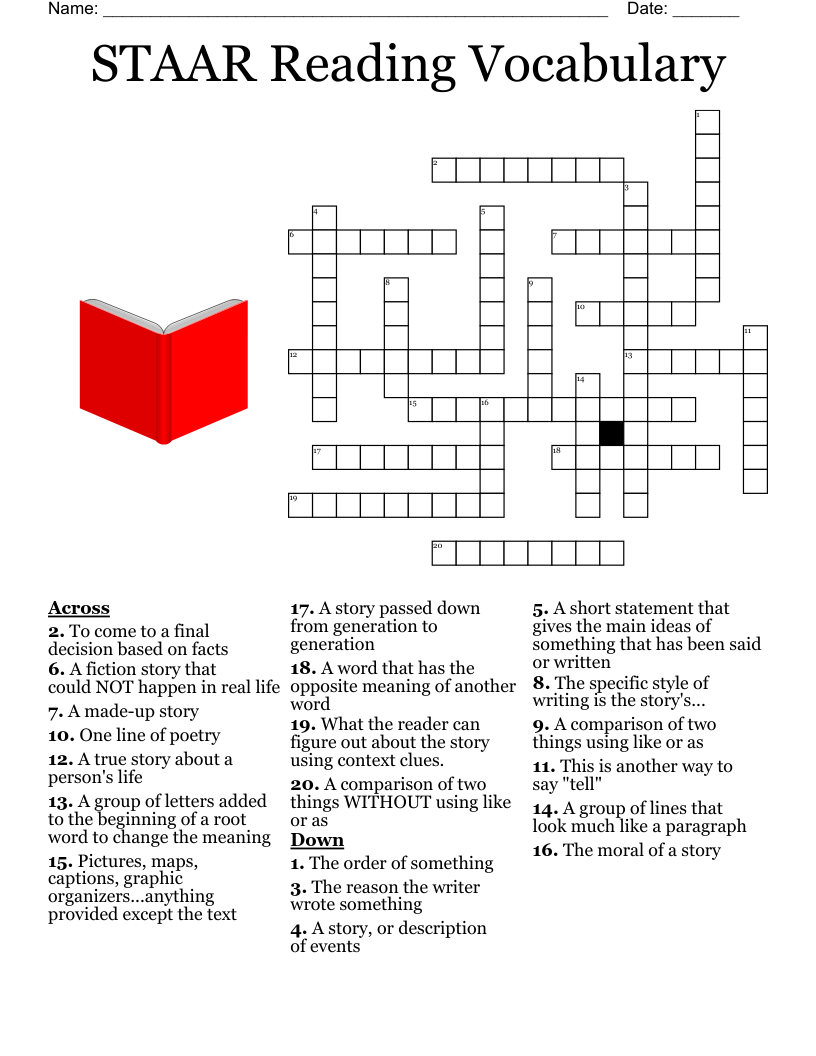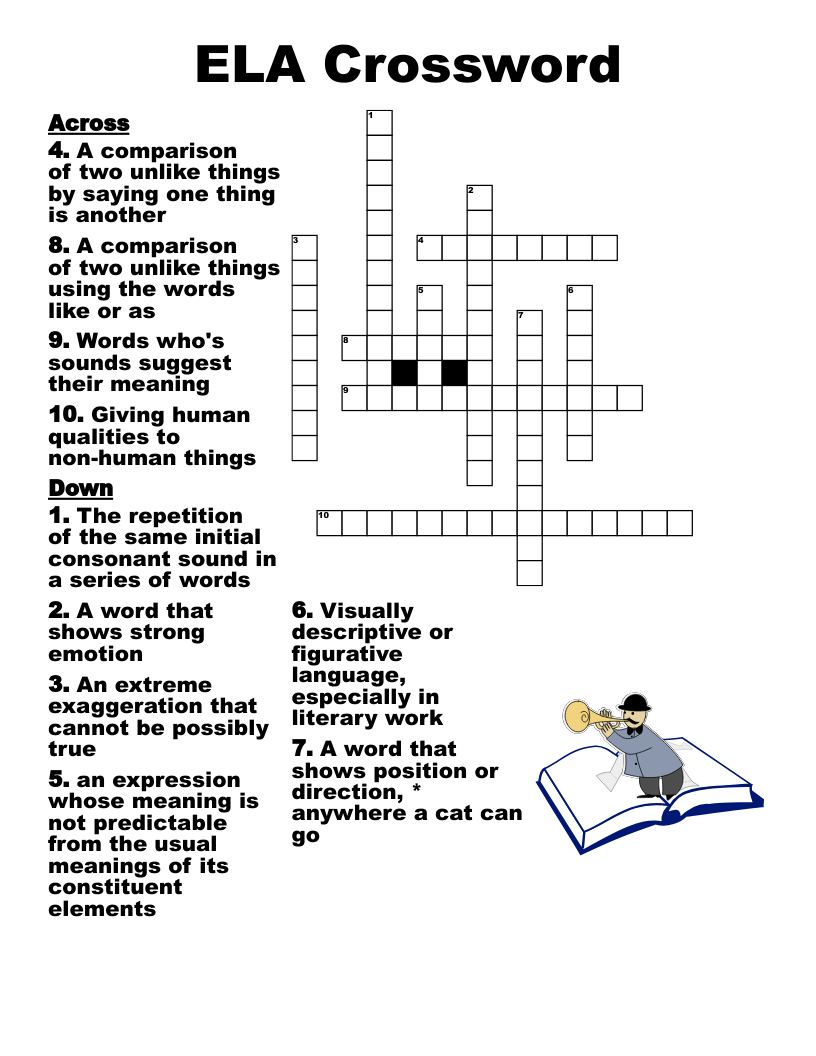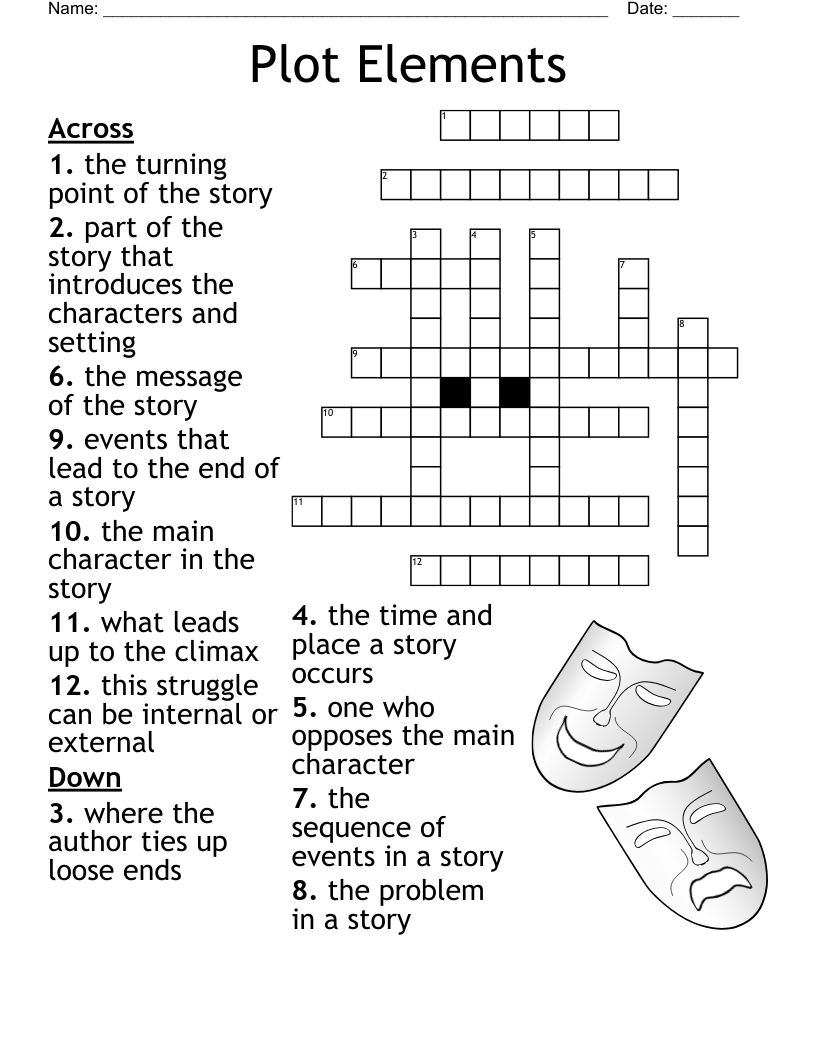
Literary terms cross word puzzle.
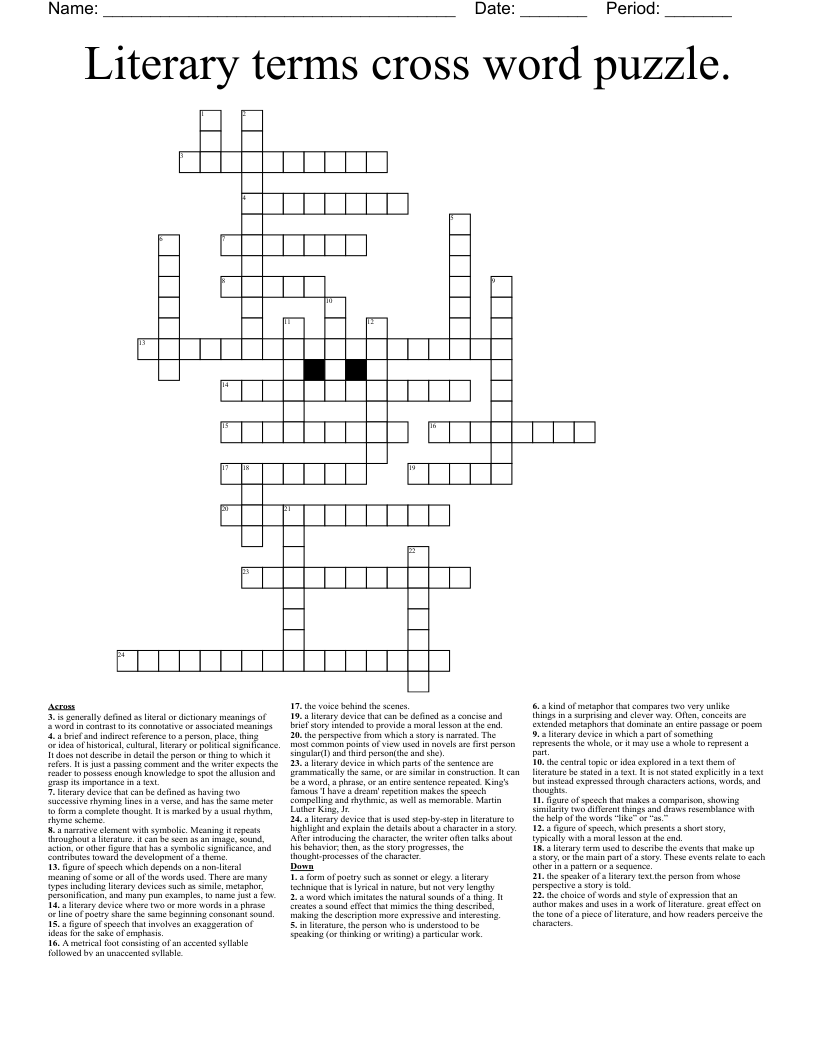
This printable crossword puzzle on the topic of Figurative Language & Literary Devices has 24 clues. Answers range from 4 to 18 letters long. This crossword is also available to download as a Microsoft Word document or a PDF.
Description
the perspective from which a story is narrated. The most common points of view used in novels are first person singular(I) and third person(the and she).
the central topic or idea explored in a text them of literature be stated in a text. It is not stated explicitly in a text but instead expressed through characters actions, words, and thoughts.
the choice of words and style of expression that an author makes and uses in a work of literature. great effect on the tone of a piece of literature, and how readers perceive the characters.
figure of speech which depends on a non-literal meaning of some or all of the words used. There are many types including literary devices such as simile, metaphor, personification, and many pun examples, to name just a few.
figure of speech that makes a comparison, showing similarity two different things and draws resemblance with the help of the words “like” or “as.”
a brief and indirect reference to a person, place, thing or idea of historical, cultural, literary or political significance. It does not describe in detail the person or thing to which it refers. It is just a passing comment and the writer expects the reader to possess enough knowledge to spot the allusion and grasp its importance in a text.
a literary device in which parts of the sentence are grammatically the same, or are similar in construction. It can be a word, a phrase, or an entire sentence repeated. King's famous 'I have a dream' repetition makes the speech compelling and rhythmic, as well as memorable. Martin Luther King, Jr.
A metrical foot consisting of an accented syllable followed by an unaccented syllable.
literary device that can be defined as having two successive rhyming lines in a verse, and has the same meter to form a complete thought. It is marked by a usual rhythm, rhyme scheme.
a narrative element with symbolic. Meaning it repeats throughout a literature. it can be seen as an image, sound, action, or other figure that has a symbolic significance, and contributes toward the development of a theme.
a kind of metaphor that compares two very unlike things in a surprising and clever way. Often, conceits are extended metaphors that dominate an entire passage or poem
a literary device in which a part of something represents the whole, or it may use a whole to represent a part.
the speaker of a literary text.the person from whose perspective a story is told.
a form of poetry such as sonnet or elegy. a literary technique that is lyrical in nature, but not very lengthy
a figure of speech, which presents a short story, typically with a moral lesson at the end.
a literary device that can be defined as a concise and brief story intended to provide a moral lesson at the end.
in literature, the person who is understood to be speaking (or thinking or writing) a particular work.
is generally defined as literal or dictionary meanings of a word in contrast to its connotative or associated meanings
a literary device that is used step-by-step in literature to highlight and explain the details about a character in a story. After introducing the character, the writer often talks about his behavior; then, as the story progresses, the thought-processes of the character.
a literary term used to describe the events that make up a story, or the main part of a story. These events relate to each other in a pattern or a sequence.
the voice behind the scenes.
a figure of speech that involves an exaggeration of ideas for the sake of emphasis.
a literary device where two or more words in a phrase or line of poetry share the same beginning consonant sound.
a word which imitates the natural sounds of a thing. It creates a sound effect that mimics the thing described, making the description more expressive and interesting.