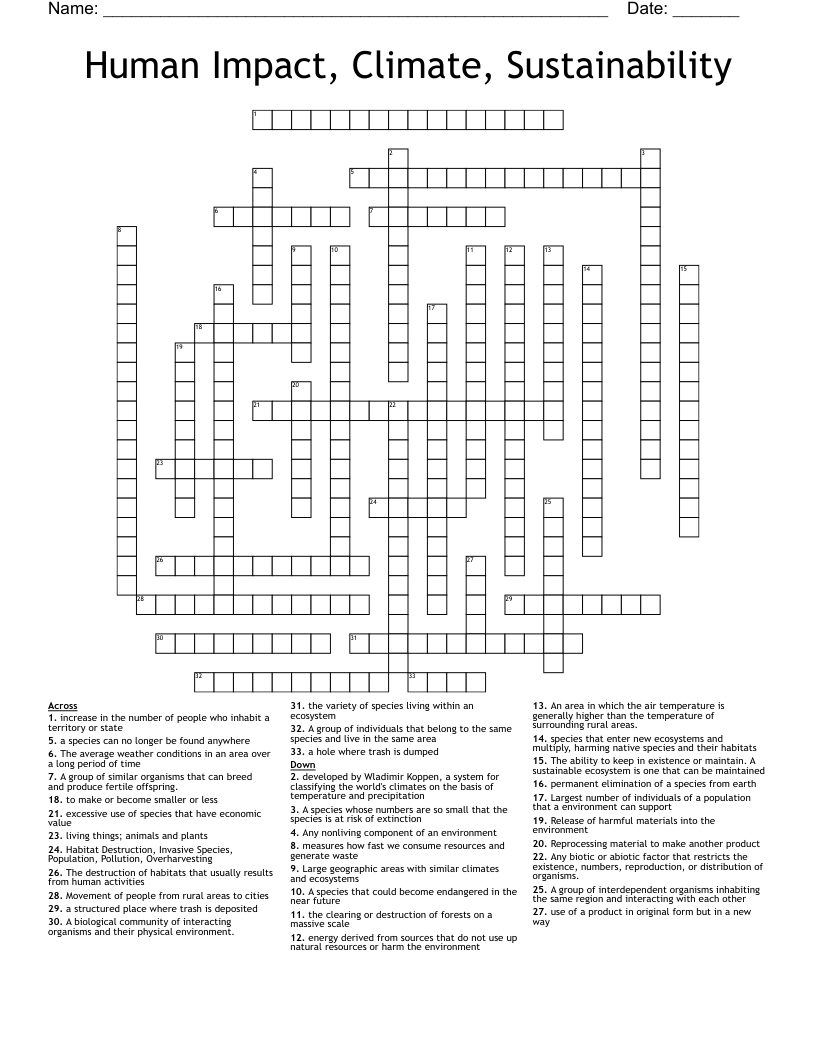
Human Impact, Climate, Sustainability Crossword
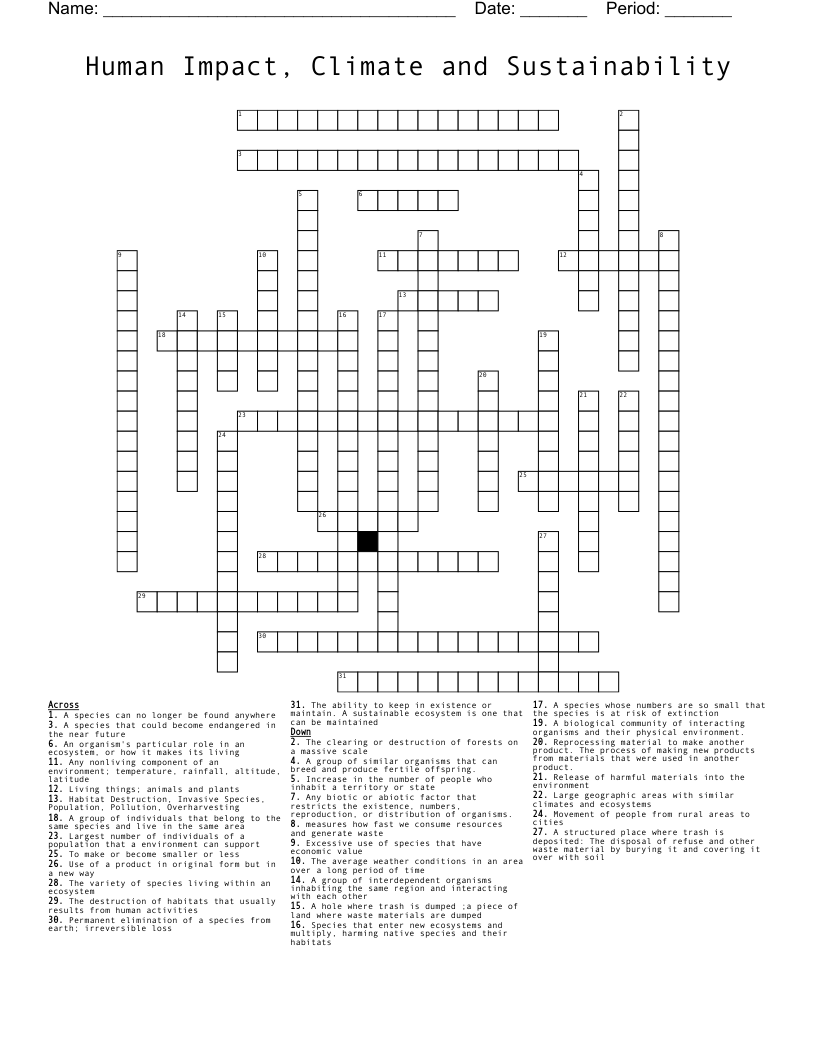
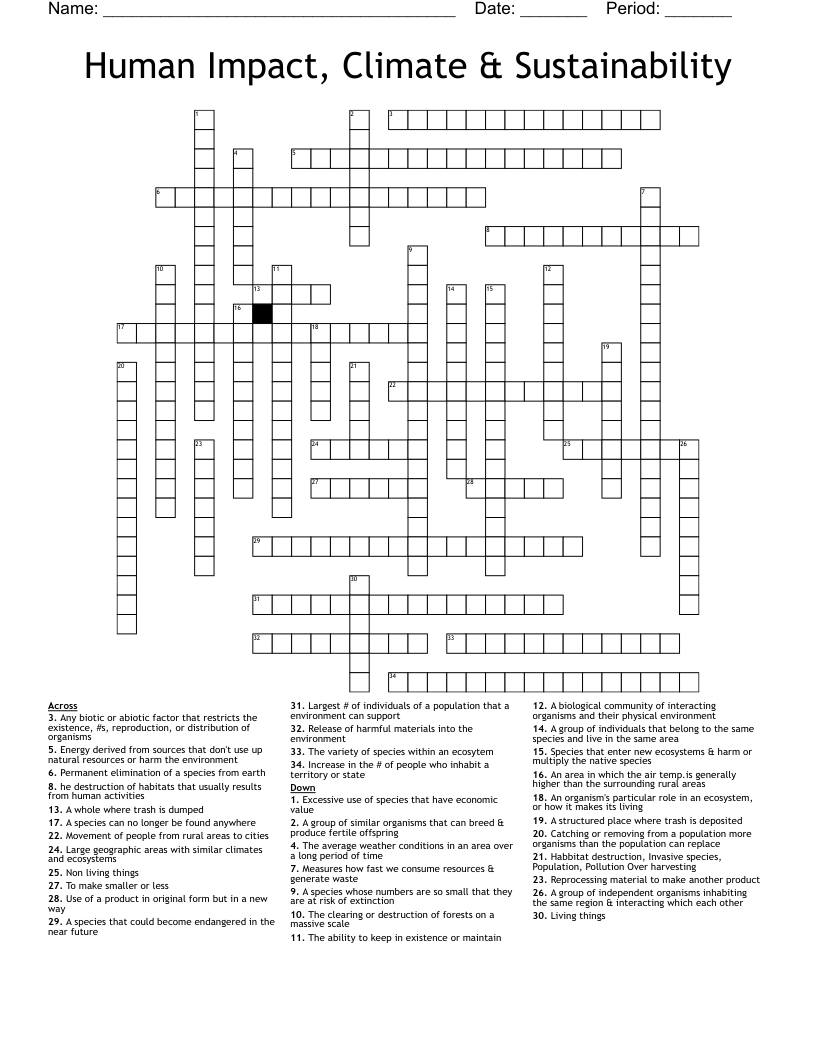
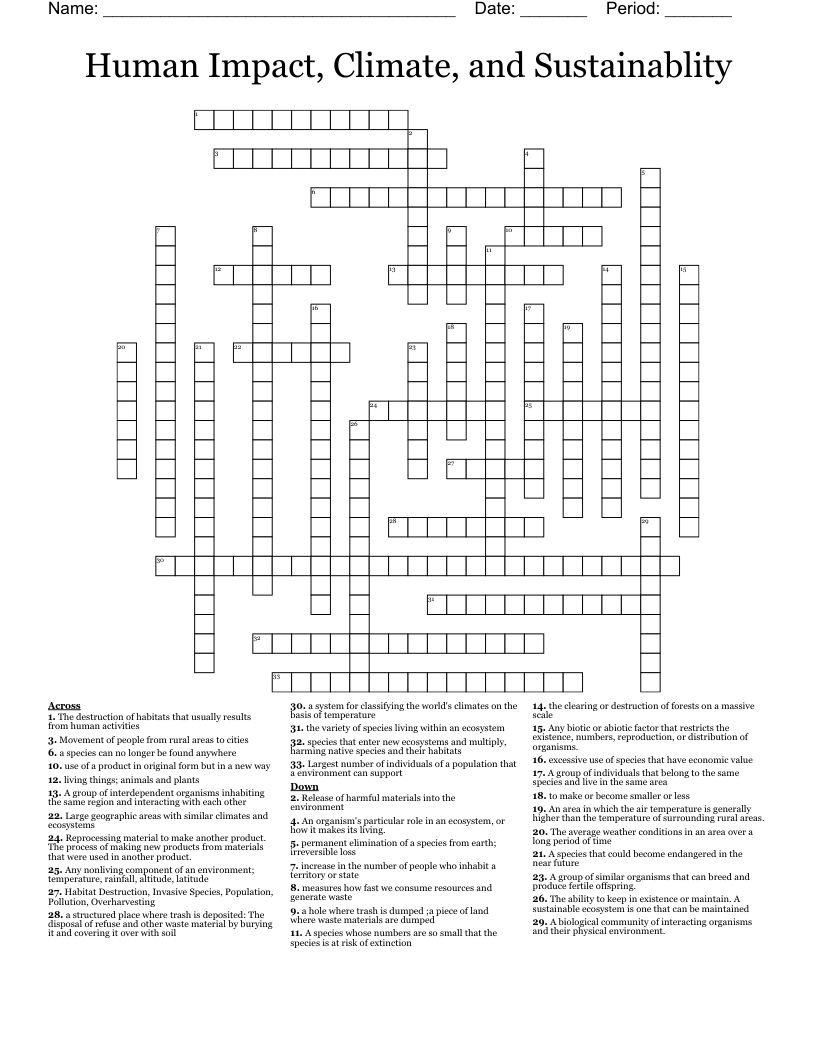
This printable crossword puzzle on the topic of Environmental Science has 33 clues. Answers range from 4 to 19 letters long. This crossword is also available to download as a Microsoft Word document or a PDF.
Description
A group of similar organisms that can breed and produce fertile offspring.
A group of individuals that belong to the same species and live in the same area
The average weather conditions in an area over a long period of time
the clearing or destruction of forests on a massive scale
Large geographic areas with similar climates and ecosystems
living things; animals and plants
Any nonliving component of an environment
the variety of species living within an ecosystem
A species whose numbers are so small that the species is at risk of extinction
A species that could become endangered in the near future
a species can no longer be found anywhere
permanent elimination of a species from earth
Habitat Destruction, Invasive Species, Population, Pollution, Overharvesting
The destruction of habitats that usually results from human activities
species that enter new ecosystems and multiply, harming native species and their habitats
increase in the number of people who inhabit a territory or state
Release of harmful materials into the environment
excessive use of species that have economic value
Reprocessing material to make another product
use of a product in original form but in a new way
to make or become smaller or less
a hole where trash is dumped
a structured place where trash is deposited
measures how fast we consume resources and generate waste
A group of interdependent organisms inhabiting the same region and interacting with each other
A biological community of interacting organisms and their physical environment.
Largest number of individuals of a population that a environment can support
Any biotic or abiotic factor that restricts the existence, numbers, reproduction, or distribution of organisms.
The ability to keep in existence or maintain. A sustainable ecosystem is one that can be maintained
Movement of people from rural areas to cities
developed by Wladimir Koppen, a system for classifying the world's climates on the basis of temperature and precipitation
An area in which the air temperature is generally higher than the temperature of surrounding rural areas.
energy derived from sources that do not use up natural resources or harm the environment