which takes place in the absence of oxygen Worksheet
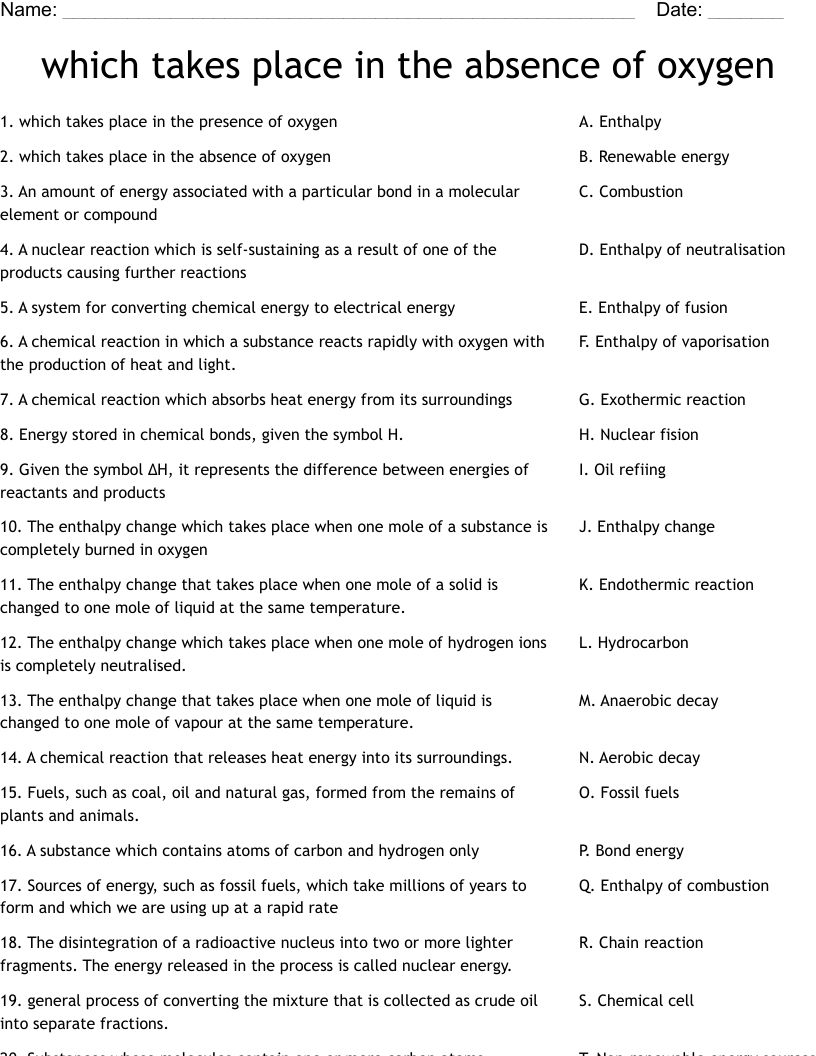
This printable matching worksheet has 21 questions and answers to match. This matching worksheet is also available to download as a Microsoft Word document or a PDF.
Description
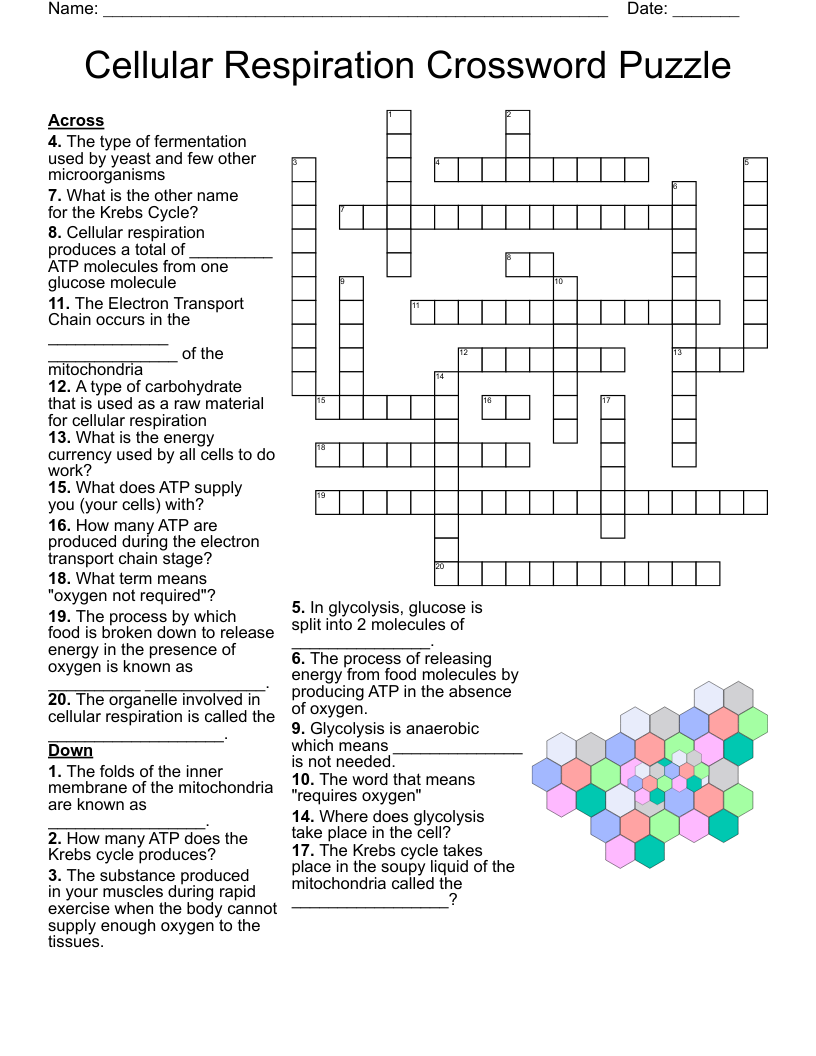
which takes place in the presence of oxygen
which takes place in the absence of oxygen
An amount of energy associated with a particular bond in a molecular element or compound
A nuclear reaction which is self-sustaining as a result of one of the products causing further reactions
A system for converting chemical energy to electrical energy
A chemical reaction in which a substance reacts rapidly with oxygen with the production of heat and light.
A chemical reaction which absorbs heat energy from its surroundings
Energy stored in chemical bonds, given the symbol H.
Given the symbol ΔH, it represents the difference between energies of reactants and products
The enthalpy change which takes place when one mole of a substance is completely burned in oxygen
The enthalpy change that takes place when one mole of a solid is changed to one mole of liquid at the same temperature.
The enthalpy change which takes place when one mole of hydrogen ions is completely neutralised.
The enthalpy change that takes place when one mole of liquid is changed to one mole of vapour at the same temperature.
A chemical reaction that releases heat energy into its surroundings.
Fuels, such as coal, oil and natural gas, formed from the remains of plants and animals.
A substance which contains atoms of carbon and hydrogen only
Sources of energy, such as fossil fuels, which take millions of years to form and which we are using up at a rapid rate
The disintegration of a radioactive nucleus into two or more lighter fragments. The energy released in the process is called nuclear energy.
general process of converting the mixture that is collected as crude oil into separate fractions.
Substances whose molecules contain one or more carbon atoms covalently bonded with another element (including hydrogen, nitrogen, oxygen, the halogens as well as phosphorus, silicon and sulfur).
Sources of energy which cannot be used up or which can be made at a rate faster than the rate of use.