TECHNICAL THEATRE VOCABULARY 2 Worksheet
This printable matching worksheet has 26 questions and answers to match. This matching worksheet is also available to download as a Microsoft Word document or a PDF.
Description
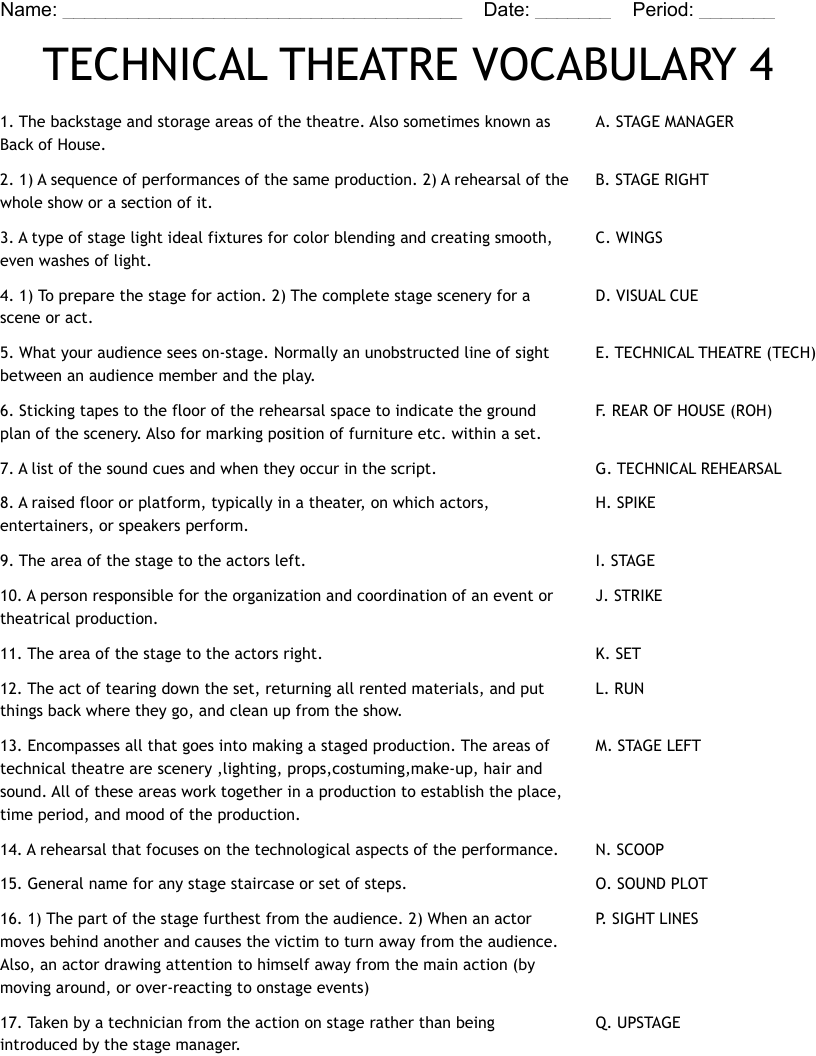
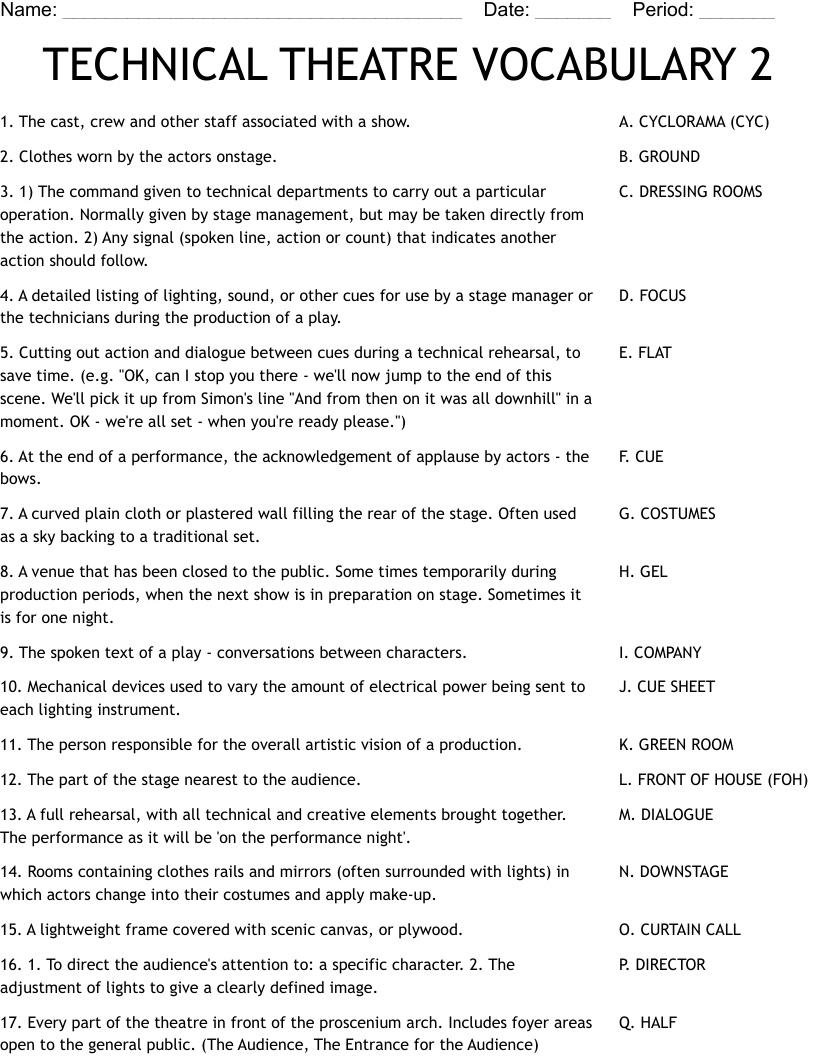
The cast, crew and other staff associated with a show.
Clothes worn by the actors onstage.
1) The command given to technical departments to carry out a particular operation. Normally given by stage management, but may be taken directly from the action. 2) Any signal (spoken line, action or count) that indicates another action should follow.
A detailed listing of lighting, sound, or other cues for use by a stage manager or the technicians during the production of a play.
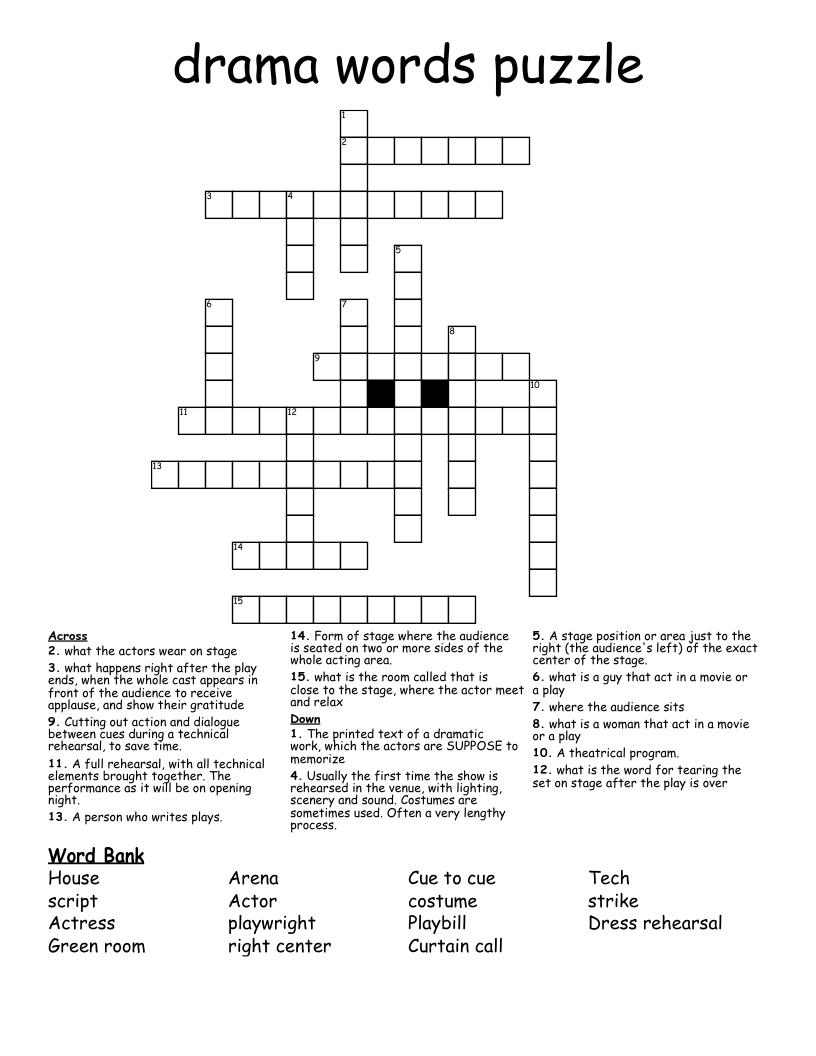
Cutting out action and dialogue between cues during a technical rehearsal, to save time. (e.g. "OK, can I stop you there - we'll now jump to the end of this scene. We'll pick it up from Simon's line "And from then on it was all downhill" in a moment. OK - we're all set - when you're ready please.")
At the end of a performance, the acknowledgement of applause by actors - the bows.
A curved plain cloth or plastered wall filling the rear of the stage. Often used as a sky backing to a traditional set.
A venue that has been closed to the public. Some times temporarily during production periods, when the next show is in preparation on stage. Sometimes it is for one night.
The spoken text of a play - conversations between characters.
Mechanical devices used to vary the amount of electrical power being sent to each lighting instrument.
The person responsible for the overall artistic vision of a production.
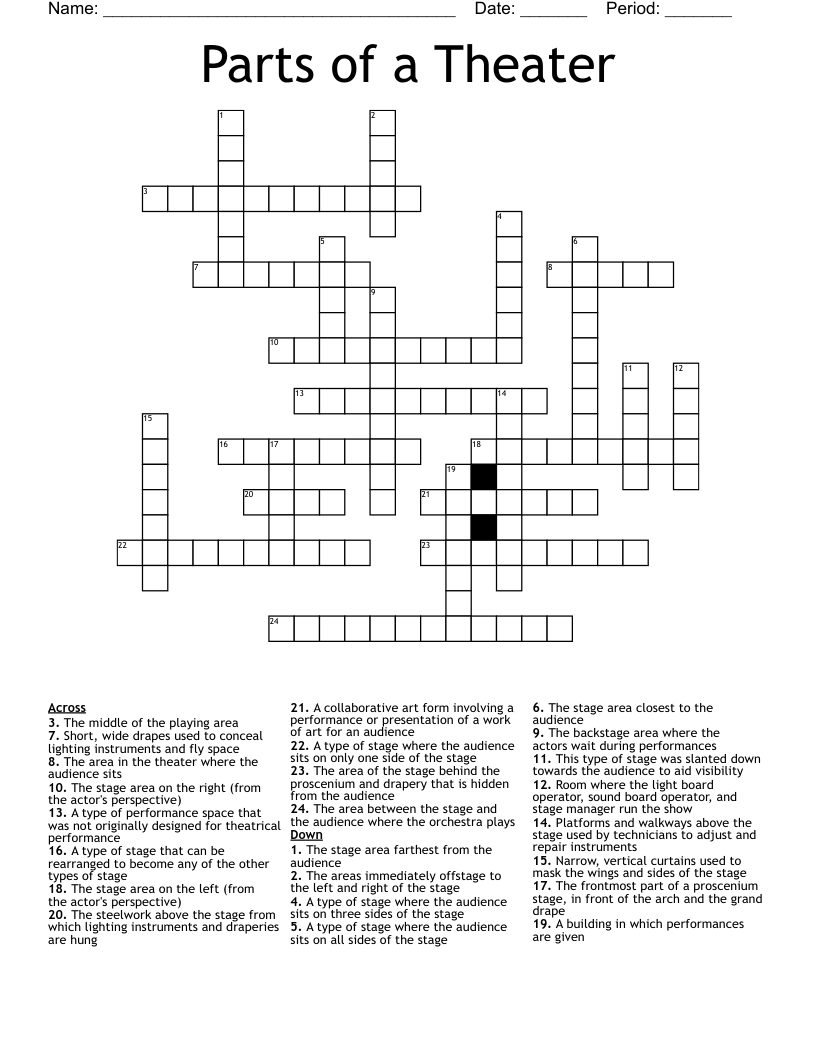
The part of the stage nearest to the audience.
A full rehearsal, with all technical and creative elements brought together. The performance as it will be 'on the performance night'.
Rooms containing clothes rails and mirrors (often surrounded with lights) in which actors change into their costumes and apply make-up.
A lightweight frame covered with scenic canvas, or plywood.
1. To direct the audience's attention to: a specific character. 2. The adjustment of lights to give a clearly defined image.
Every part of the theatre in front of the proscenium arch. Includes foyer areas open to the general public. (The Audience, The Entrance for the Audience)
A color filter used in a lighting instrument to give the light color.
Category or type of performance.
The process of moving set, props and other hardware into a theatre.
Moving an entire production out of the venue.
(Derived from Go Between or Goes Before Optics) A thin piece of metal, wood, or glass used to used to modify the shape of the projected light.
The front curtain, which hangs downstage, just behind the proscenium arch. (It is typically opened and closed during performances to reveal or conceal the stage and scenery from the audience.
Room close to the stage for the actors to meet and relax before or after going on stage.
A ground provides security and ensures safety to individuals whenever a wiring circuit malfunctions or fails.
A call given to the actors half an hour before they will be called to the stage for the beginning of a performance. (On Broadway, it is given 30 minutes before the start time.)