cell Crossword
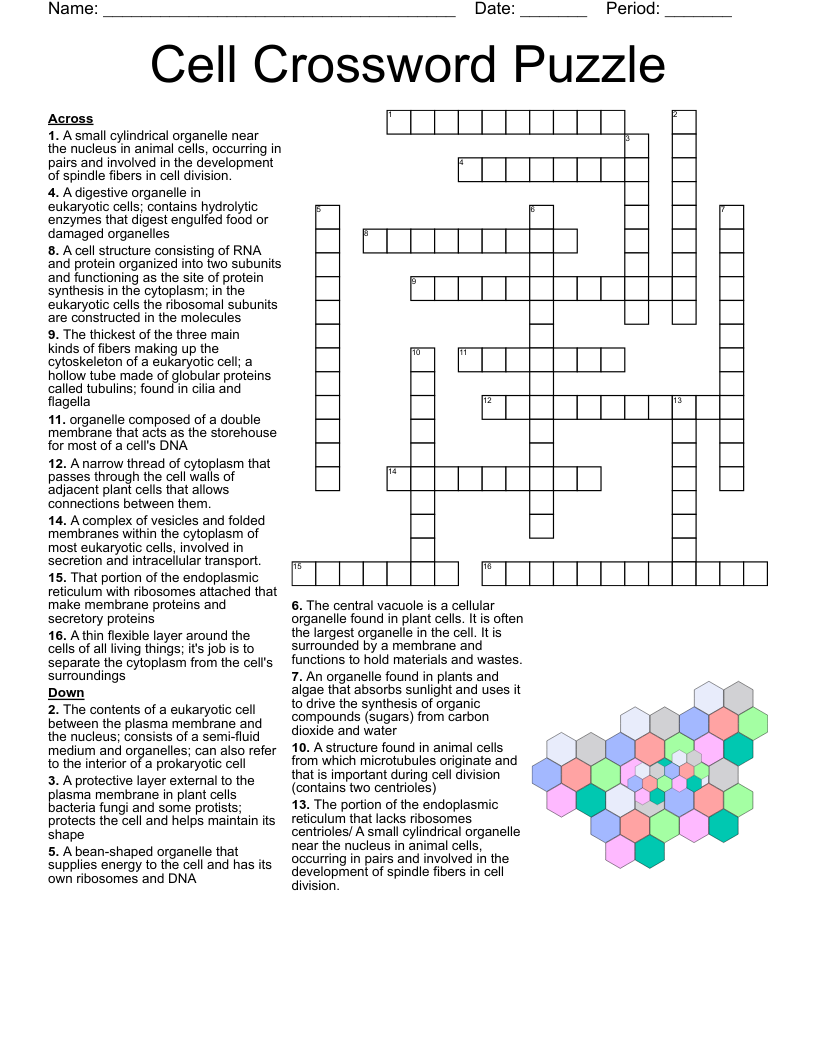
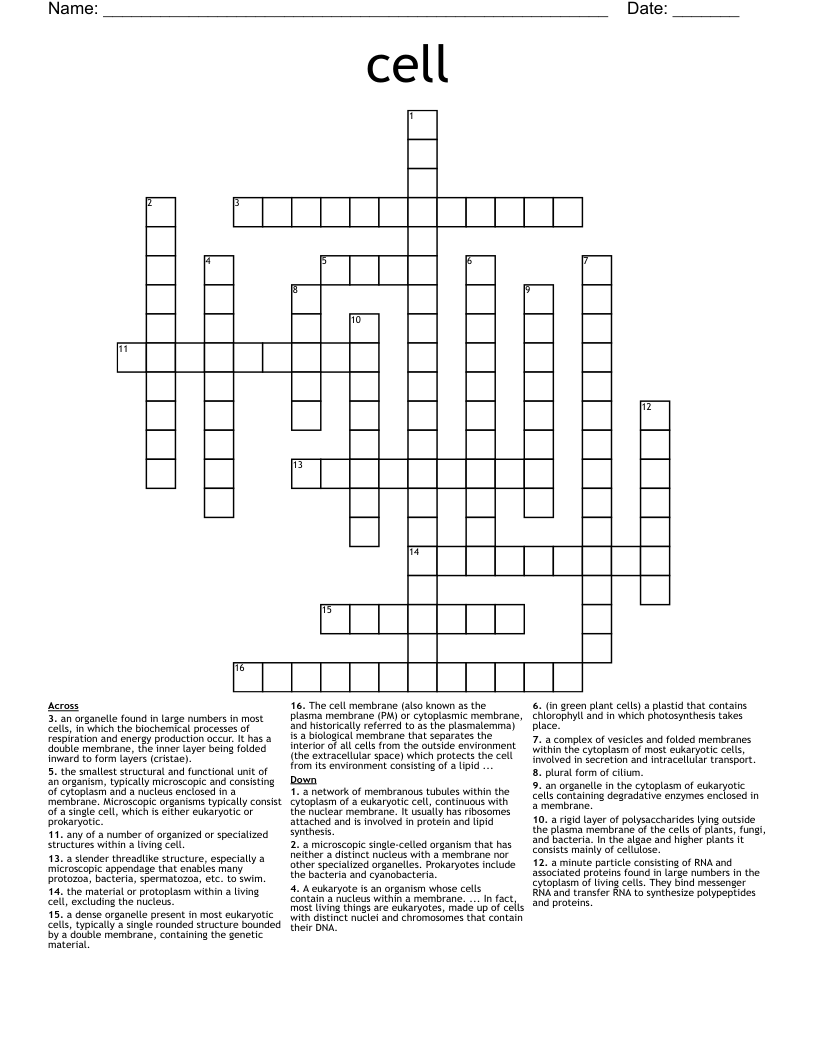
This printable crossword puzzle has 16 clues. Answers range from 4 to 20 letters long. This crossword is also available to download as a Microsoft Word document or a PDF.
Description
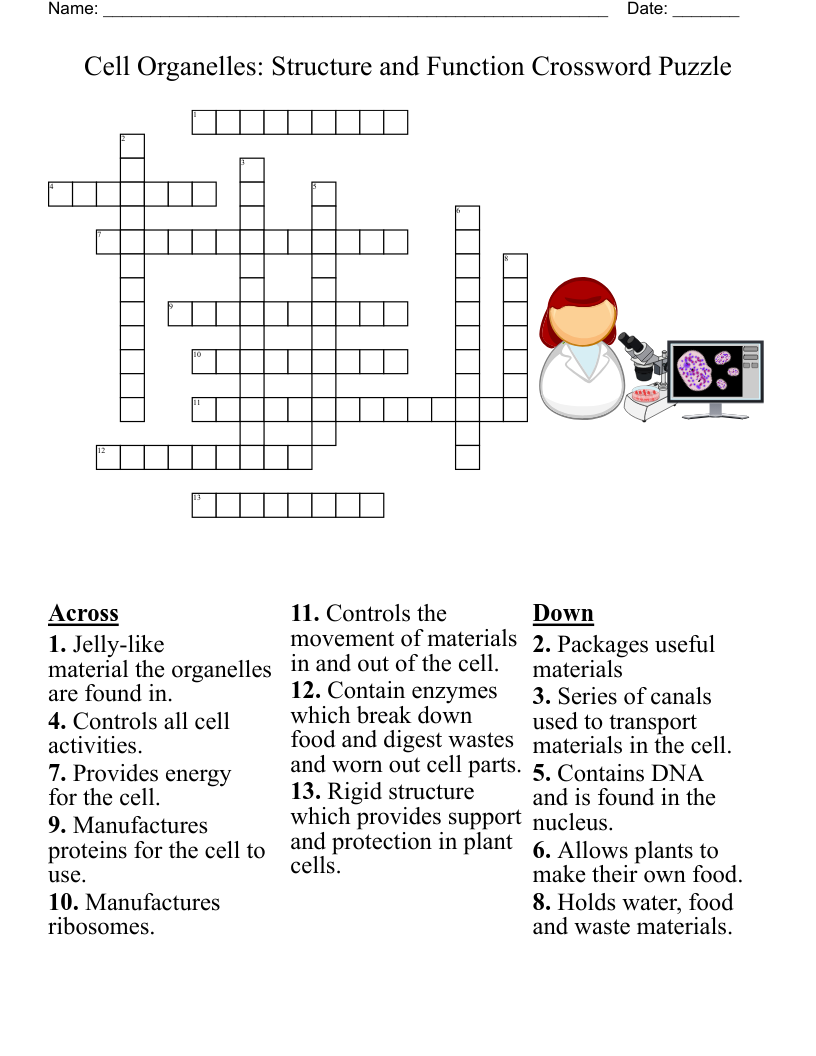
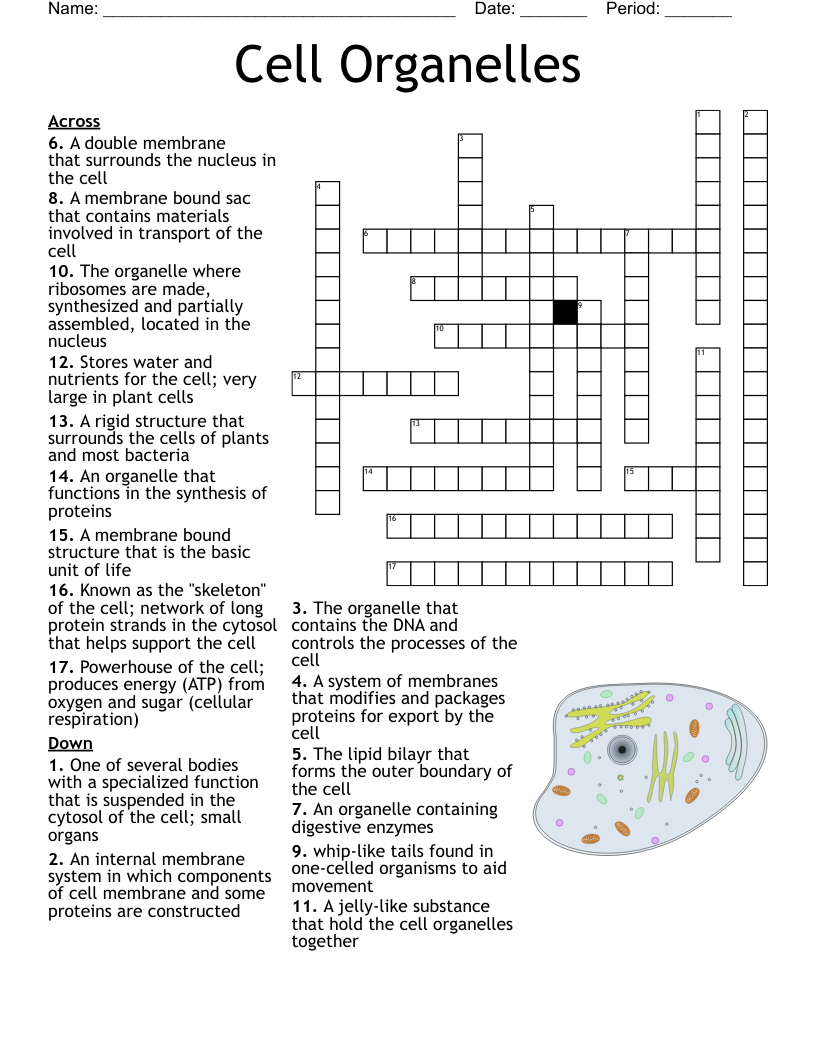
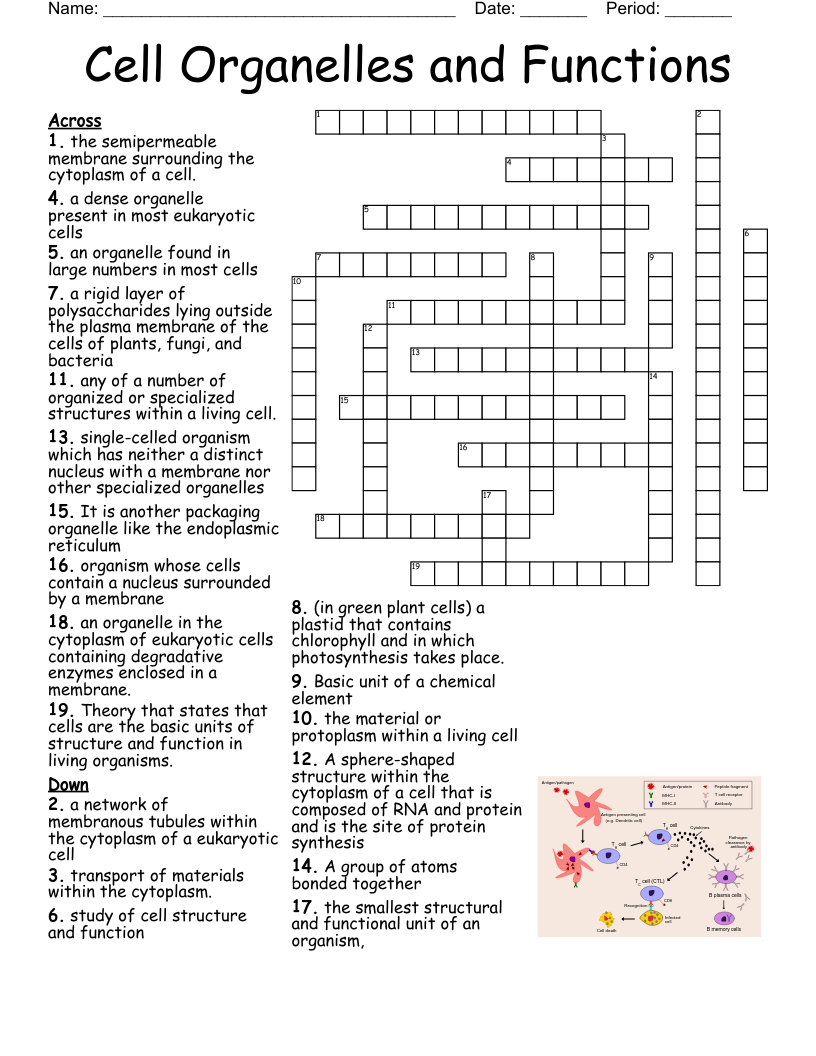
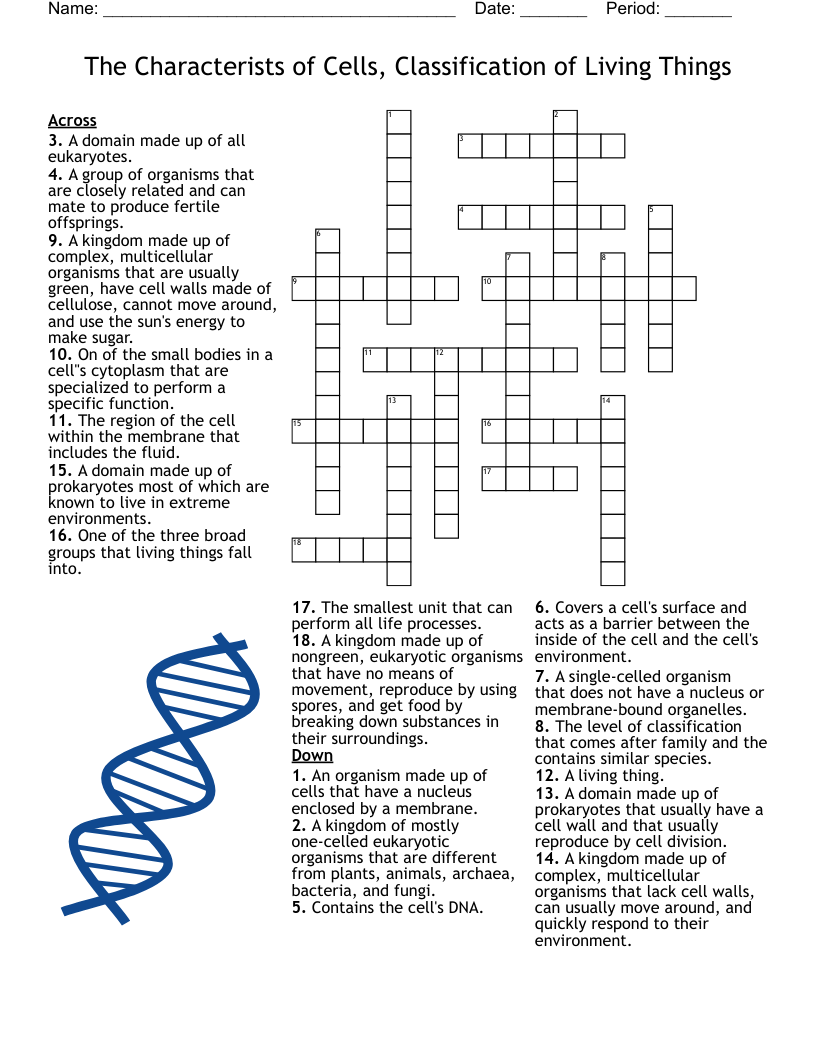
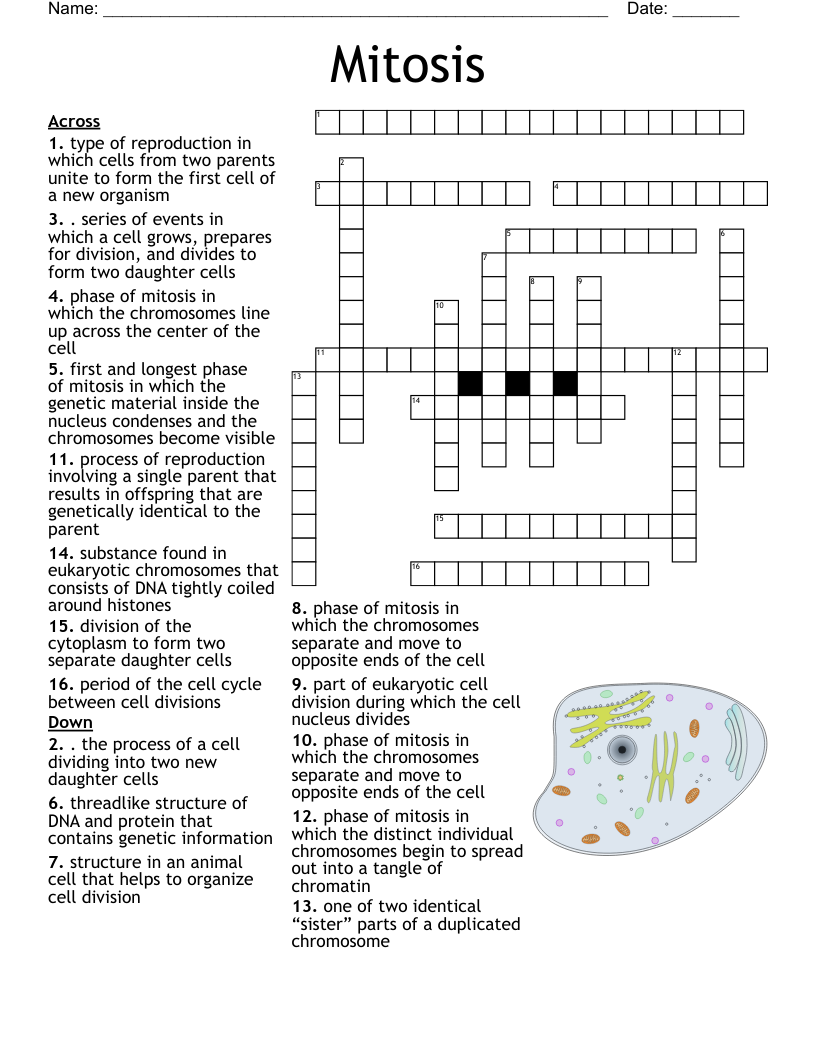
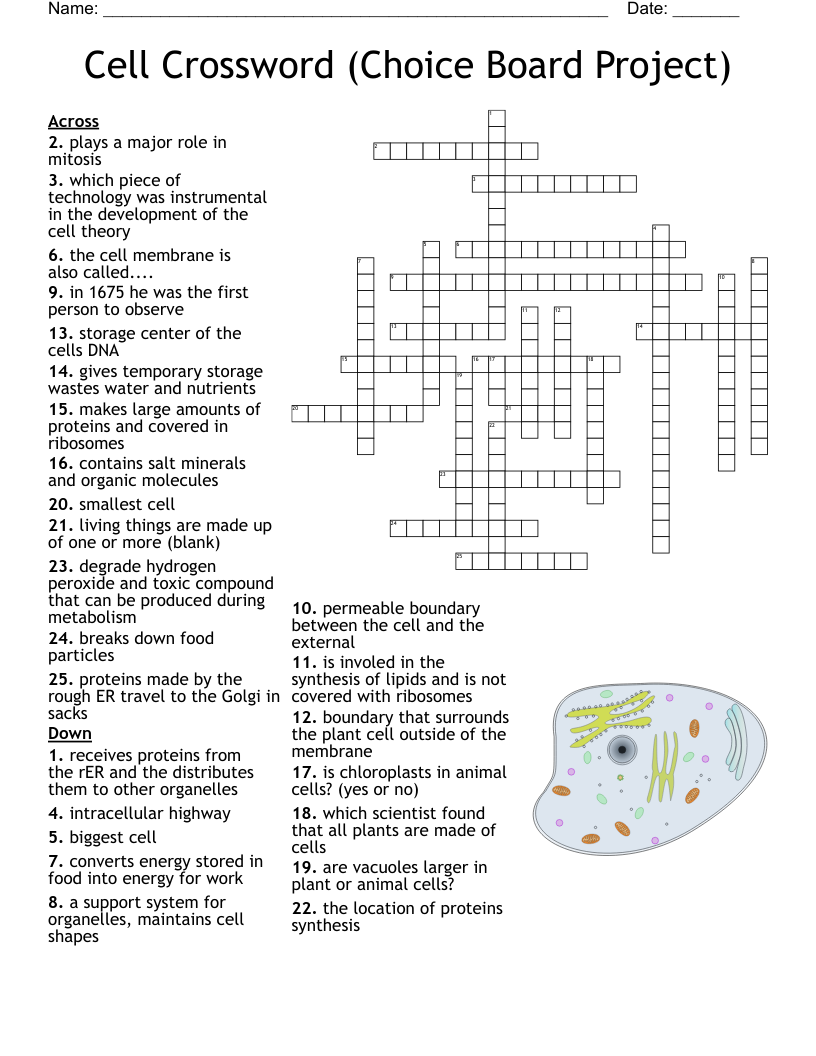
the smallest structural and functional unit of an organism, typically microscopic and consisting of cytoplasm and a nucleus enclosed in a membrane. Microscopic organisms typically consist of a single cell, which is either eukaryotic or prokaryotic.
any of a number of organized or specialized structures within a living cell.
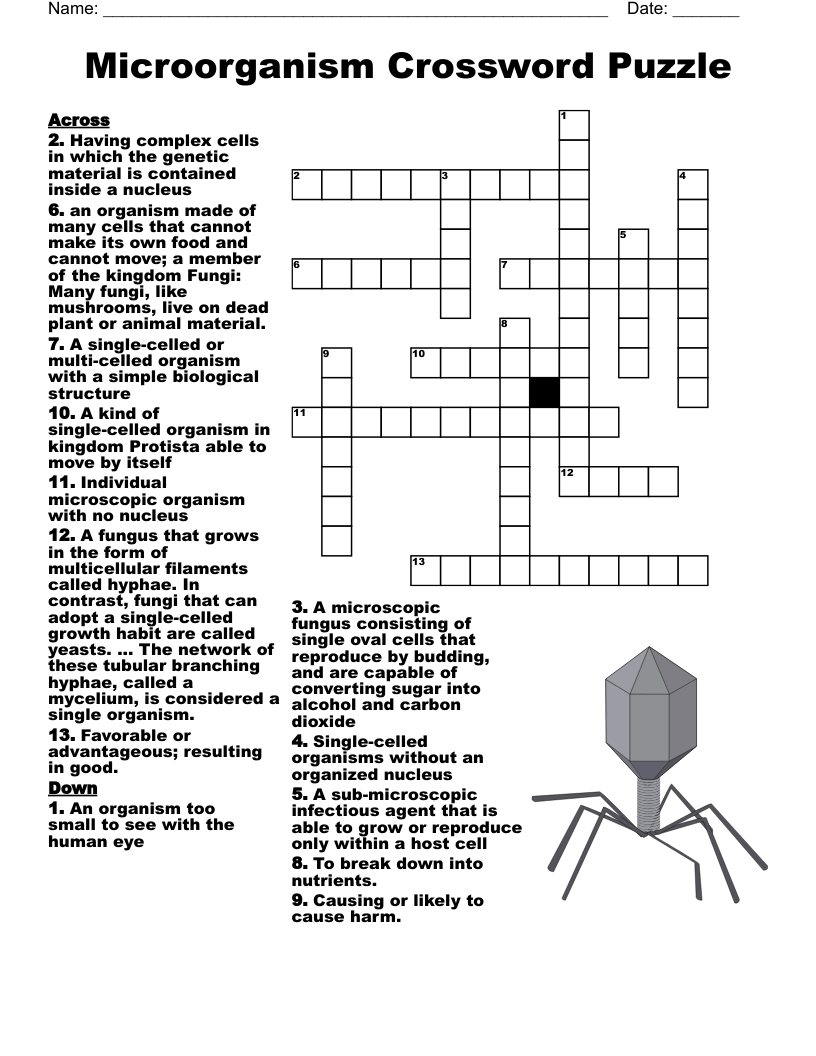
A eukaryote is an organism whose cells contain a nucleus within a membrane. ... In fact, most living things are eukaryotes, made up of cells with distinct nuclei and chromosomes that contain their DNA.
a microscopic single-celled organism that has neither a distinct nucleus with a membrane nor other specialized organelles. Prokaryotes include the bacteria and cyanobacteria.
an organelle found in large numbers in most cells, in which the biochemical processes of respiration and energy production occur. It has a double membrane, the inner layer being folded inward to form layers (cristae).
The cell membrane (also known as the plasma membrane (PM) or cytoplasmic membrane, and historically referred to as the plasmalemma) is a biological membrane that separates the interior of all cells from the outside environment (the extracellular space) which protects the cell from its environment consisting of a lipid ...
a rigid layer of polysaccharides lying outside the plasma membrane of the cells of plants, fungi, and bacteria. In the algae and higher plants it consists mainly of cellulose.
a dense organelle present in most eukaryotic cells, typically a single rounded structure bounded by a double membrane, containing the genetic material.
a minute particle consisting of RNA and associated proteins found in large numbers in the cytoplasm of living cells. They bind messenger RNA and transfer RNA to synthesize polypeptides and proteins.
a network of membranous tubules within the cytoplasm of a eukaryotic cell, continuous with the nuclear membrane. It usually has ribosomes attached and is involved in protein and lipid synthesis.
an organelle in the cytoplasm of eukaryotic cells containing degradative enzymes enclosed in a membrane.
(in green plant cells) a plastid that contains chlorophyll and in which photosynthesis takes place.
a complex of vesicles and folded membranes within the cytoplasm of most eukaryotic cells, involved in secretion and intracellular transport.
the material or protoplasm within a living cell, excluding the nucleus.
a slender threadlike structure, especially a microscopic appendage that enables many protozoa, bacteria, spermatozoa, etc. to swim.
plural form of cilium.