MACROMOLECULES Crossword
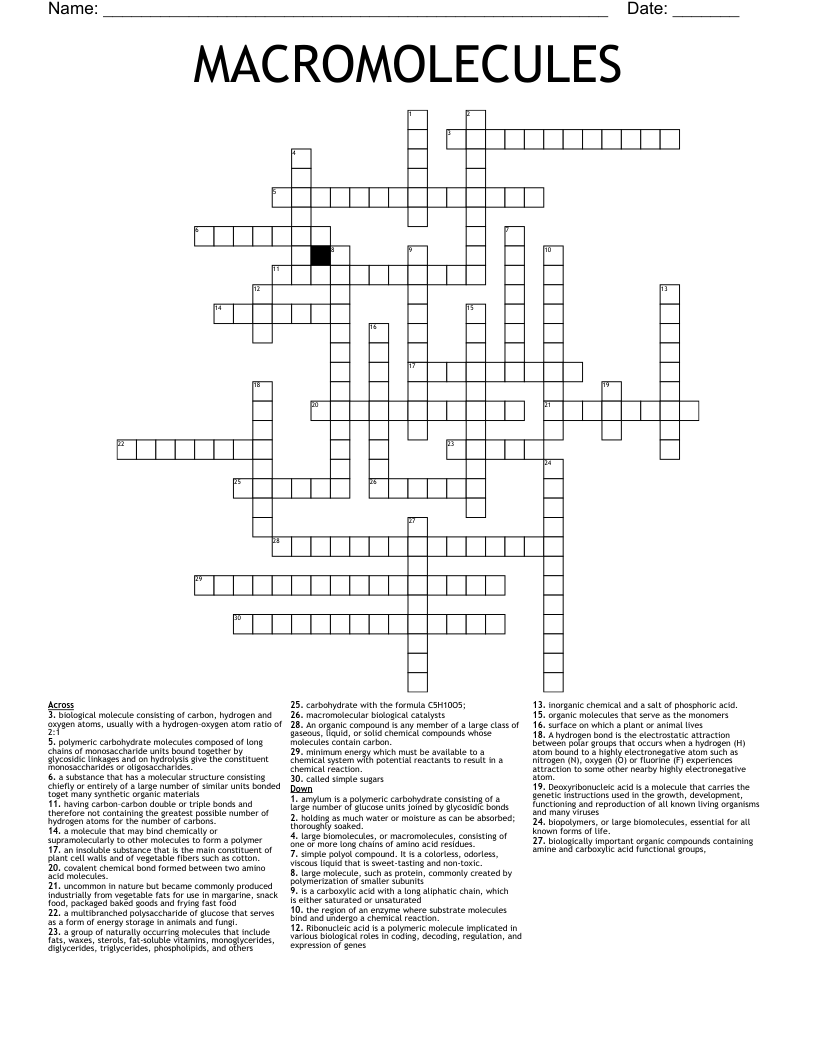
This printable crossword puzzle on the topic of Organic Chemistry & Biochemistry has 30 clues. Answers range from 3 to 16 letters long. This crossword is also available to download as a Microsoft Word document or a PDF.
Description
A hydrogen bond is the electrostatic attraction between polar groups that occurs when a hydrogen (H) atom bound to a highly electronegative atom such as nitrogen (N), oxygen (O) or fluorine (F) experiences attraction to some other nearby highly electronegative atom.
An organic compound is any member of a large class of gaseous, liquid, or solid chemical compounds whose molecules contain carbon.
large molecule, such as protein, commonly created by polymerization of smaller subunits
a molecule that may bind chemically or supramolecularly to other molecules to form a polymer
a substance that has a molecular structure consisting chiefly or entirely of a large number of similar units bonded toget many synthetic organic materials
biological molecule consisting of carbon, hydrogen and oxygen atoms, usually with a hydrogen–oxygen atom ratio of 2:1
called simple sugars
polymeric carbohydrate molecules composed of long chains of monosaccharide units bound together by glycosidic linkages and on hydrolysis give the constituent monosaccharides or oligosaccharides.
macromolecular biological catalysts
surface on which a plant or animal lives
large biomolecules, or macromolecules, consisting of one or more long chains of amino acid residues.
covalent chemical bond formed between two amino acid molecules.
biologically important organic compounds containing amine and carboxylic acid functional groups,
a group of naturally occurring molecules that include fats, waxes, sterols, fat-soluble vitamins, monoglycerides, diglycerides, triglycerides, phospholipids, and others
amylum is a polymeric carbohydrate consisting of a large number of glucose units joined by glycosidic bonds
a multibranched polysaccharide of glucose that serves as a form of energy storage in animals and fungi.
an insoluble substance that is the main constituent of plant cell walls and of vegetable fibers such as cotton.
holding as much water or moisture as can be absorbed; thoroughly soaked.
having carbon–carbon double or triple bonds and therefore not containing the greatest possible number of hydrogen atoms for the number of carbons.
the region of an enzyme where substrate molecules bind and undergo a chemical reaction.
uncommon in nature but became commonly produced industrially from vegetable fats for use in margarine, snack food, packaged baked goods and frying fast food
simple polyol compound. It is a colorless, odorless, viscous liquid that is sweet-tasting and non-toxic.
is a carboxylic acid with a long aliphatic chain, which is either saturated or unsaturated
biopolymers, or large biomolecules, essential for all known forms of life.
organic molecules that serve as the monomers
inorganic chemical and a salt of phosphoric acid.
carbohydrate with the formula C5H10O5;
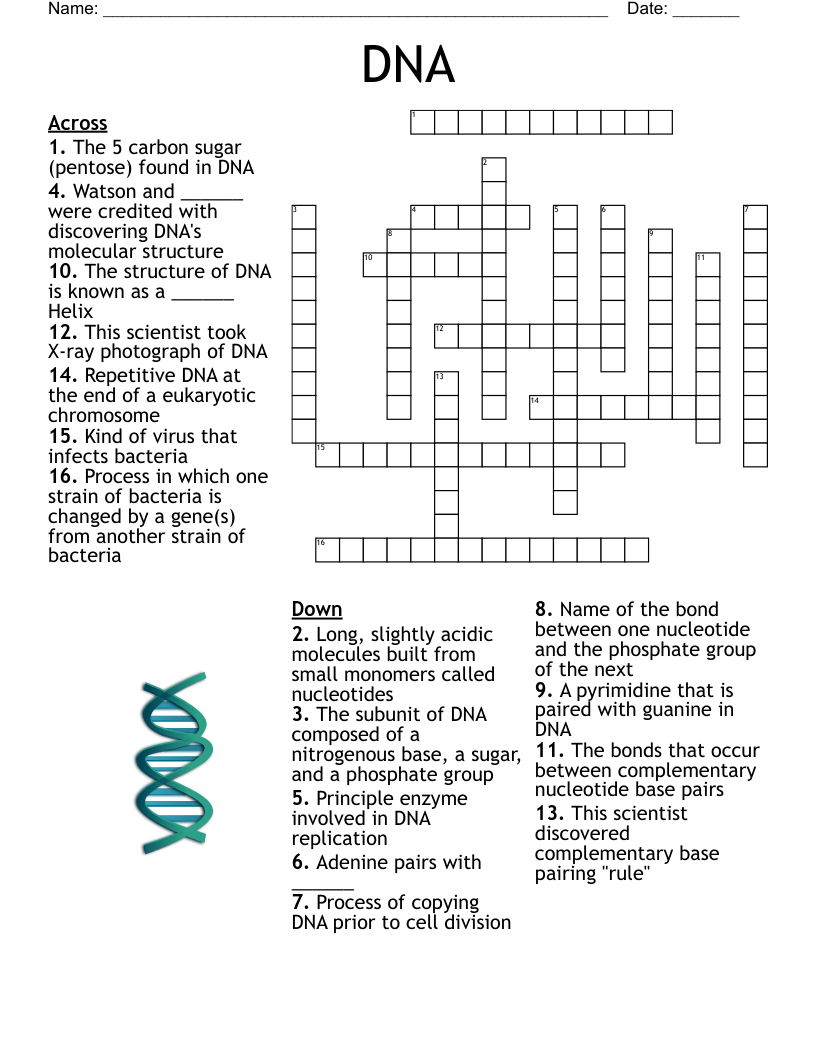
Deoxyribonucleic acid is a molecule that carries the genetic instructions used in the growth, development, functioning and reproduction of all known living organisms and many viruses
Ribonucleic acid is a polymeric molecule implicated in various biological roles in coding, decoding, regulation, and expression of genes
minimum energy which must be available to a chemical system with potential reactants to result in a chemical reaction.