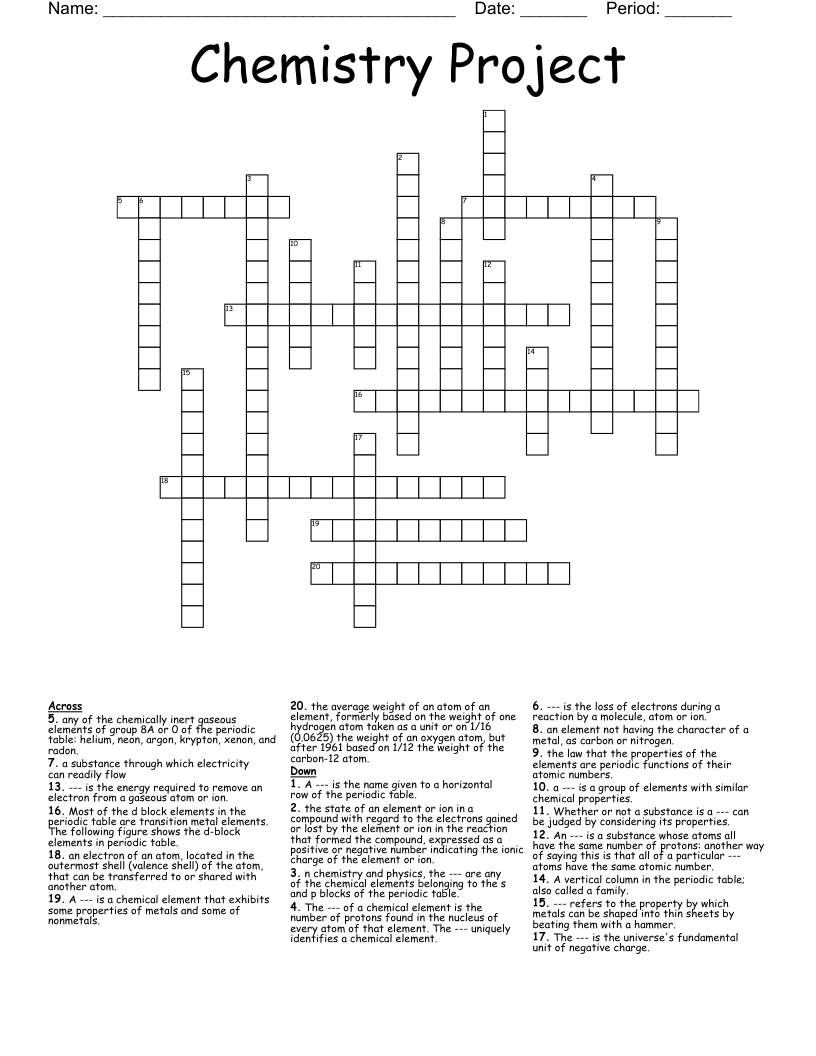
Chemistry Project Crossword
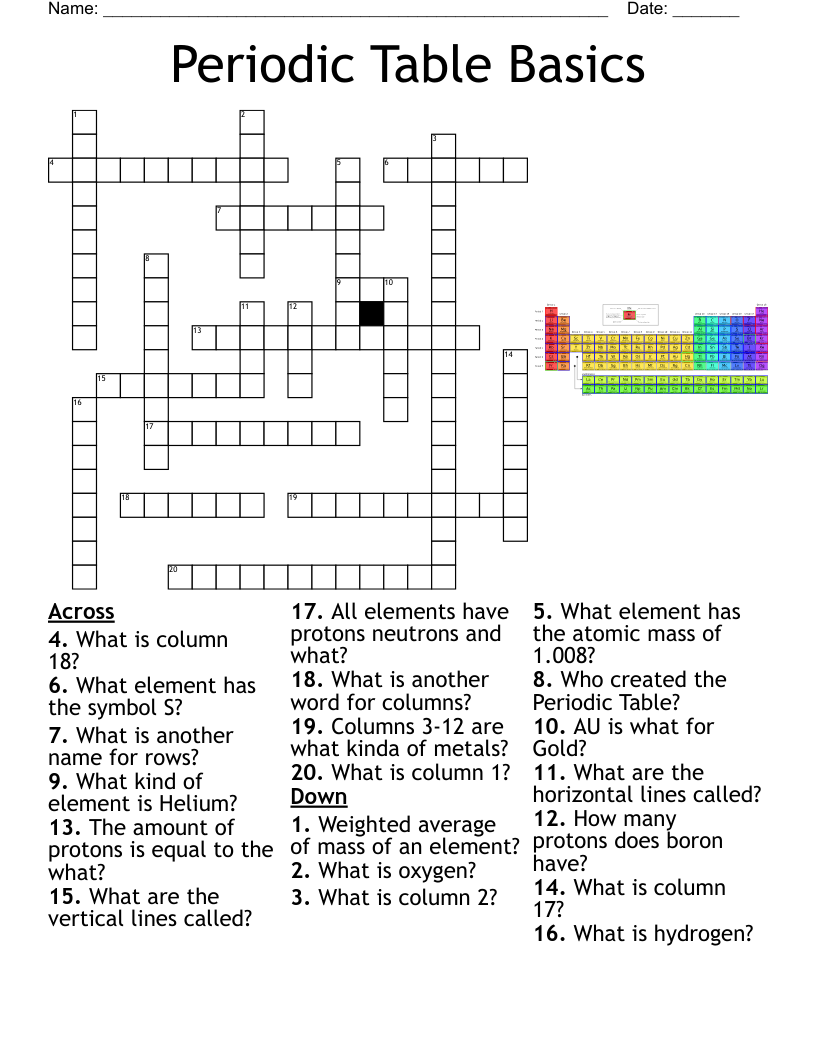
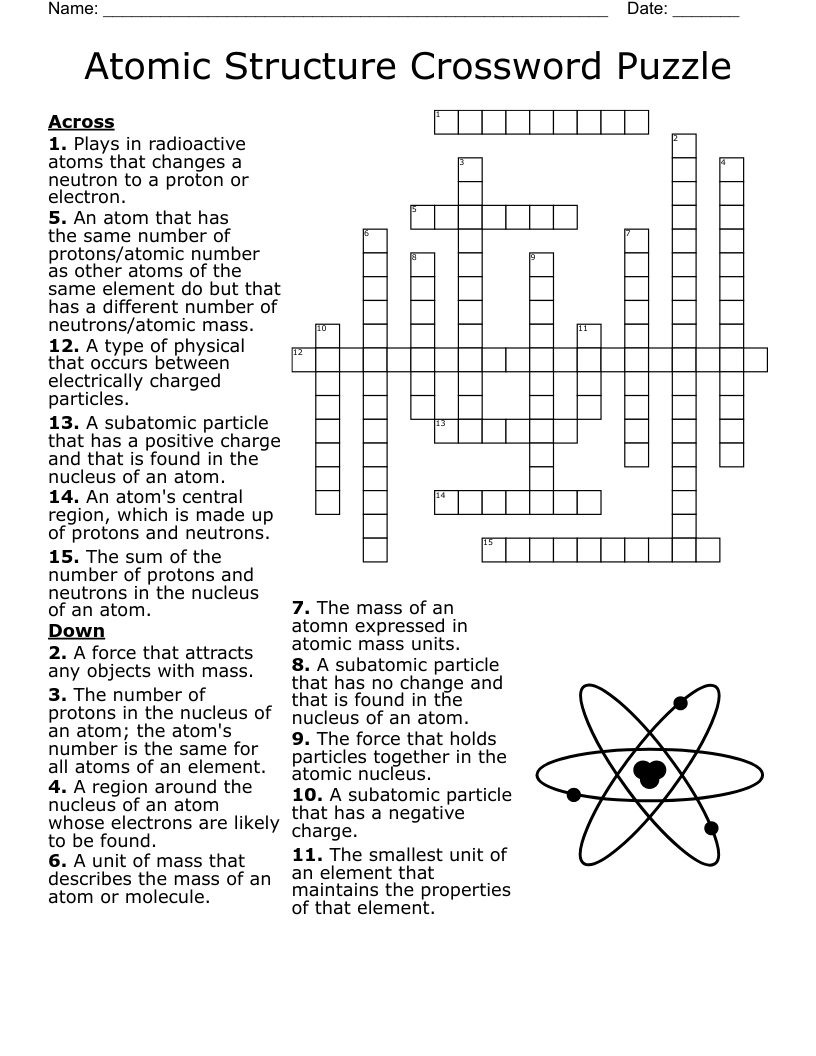
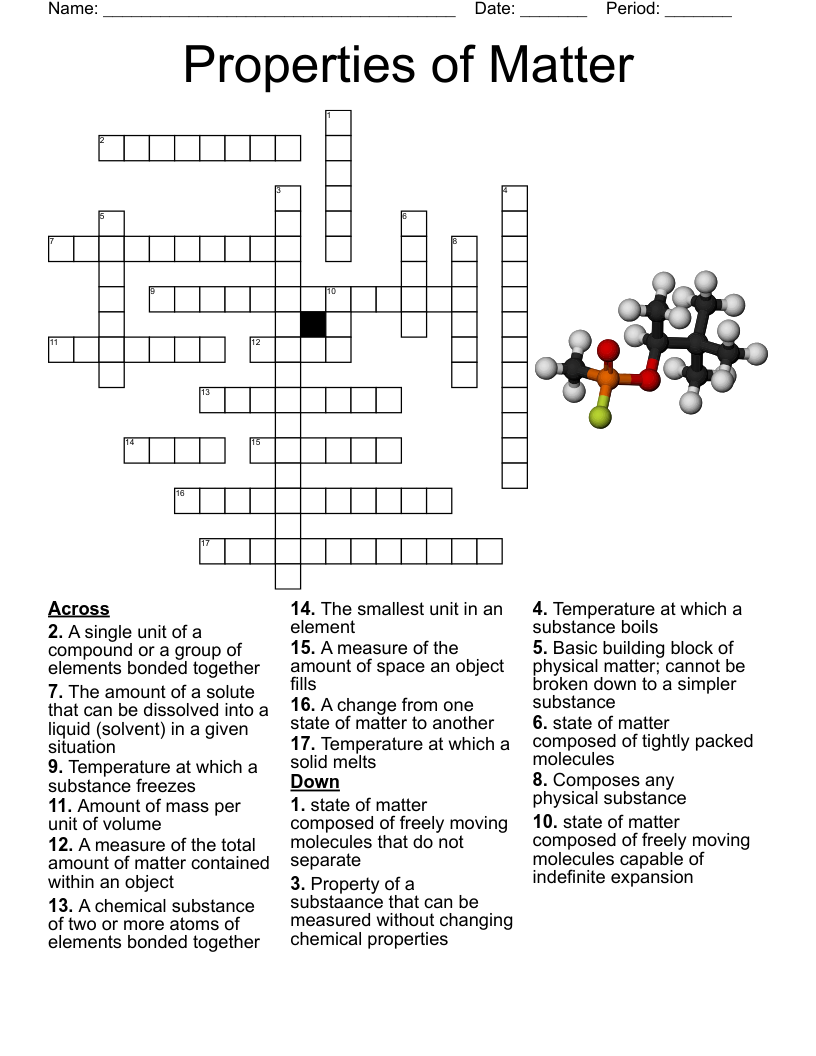
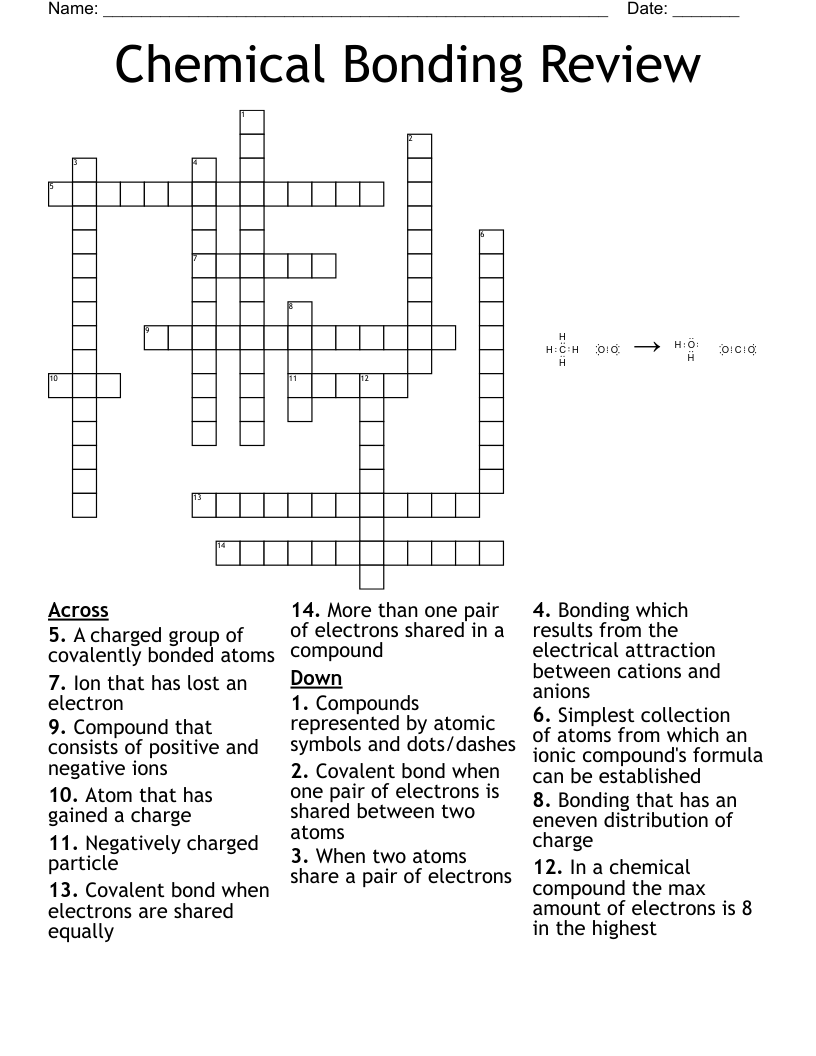
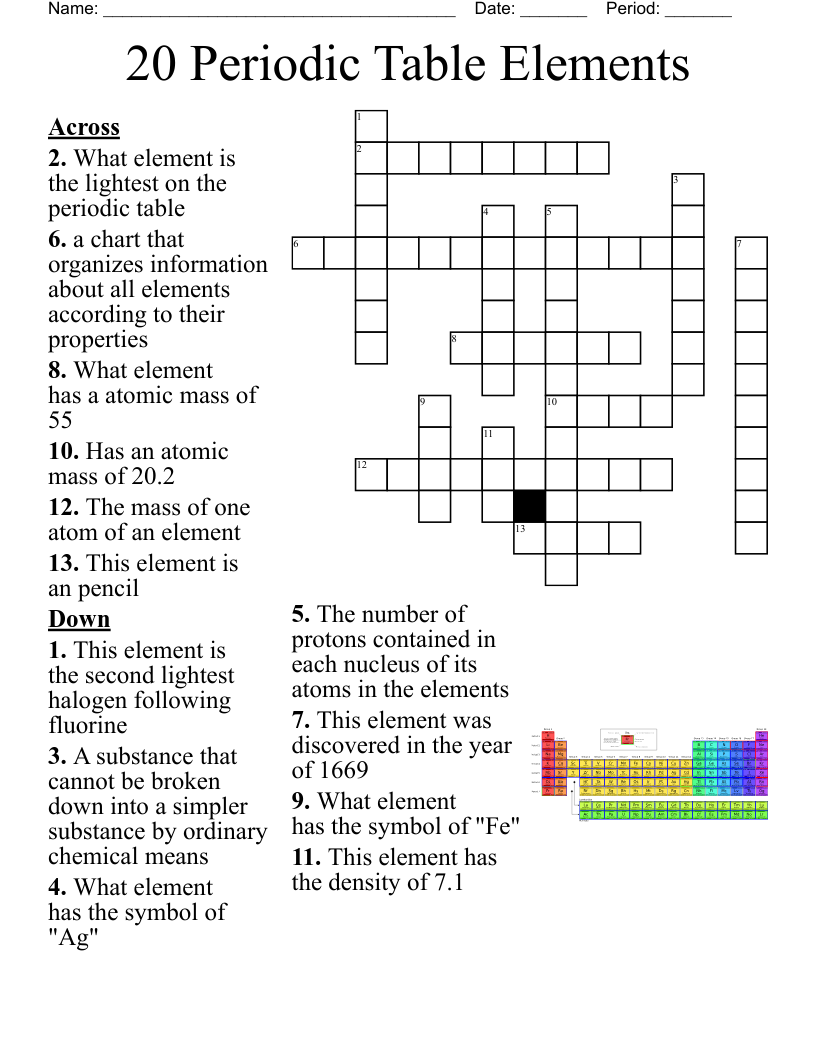
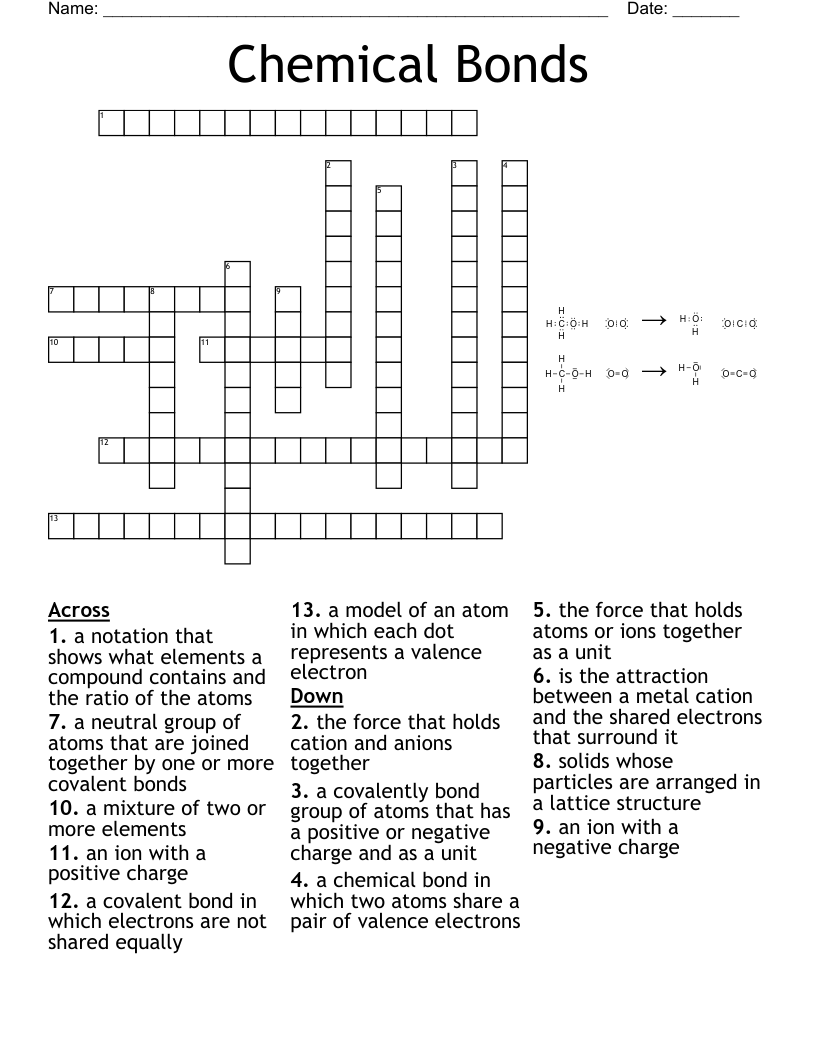
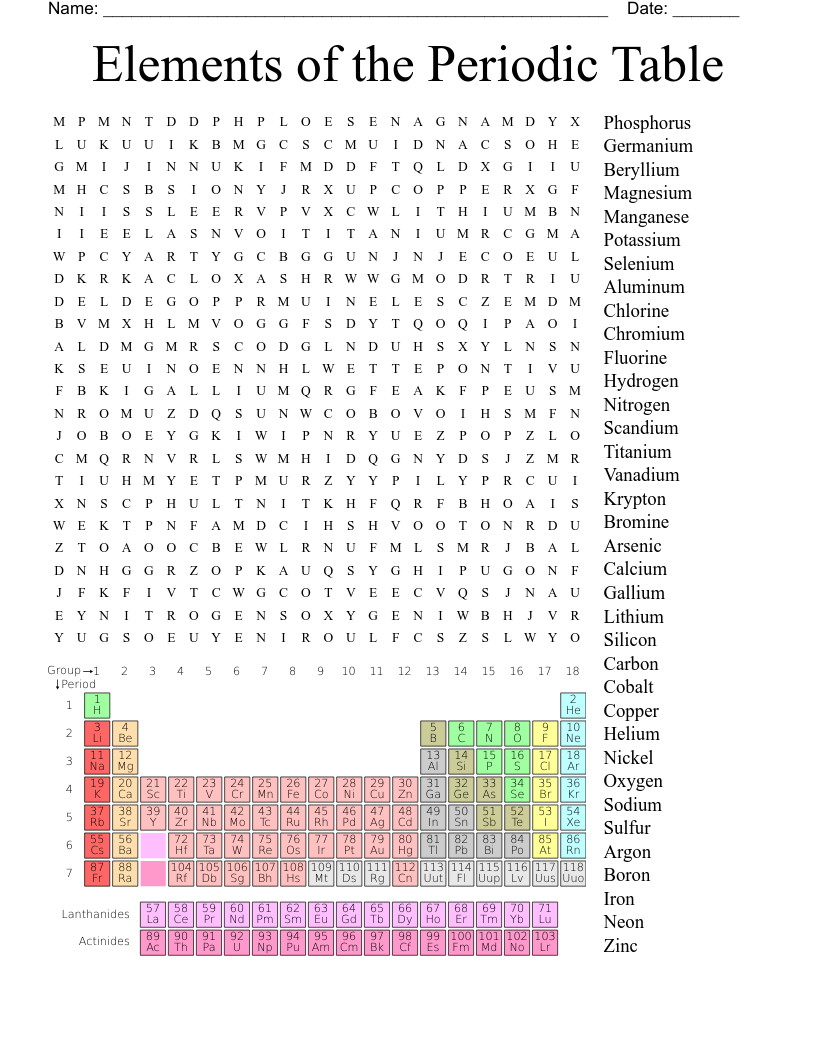
This printable crossword puzzle on the topic of Elements & Periodic Table has 20 clues. Answers range from 5 to 17 letters long. This crossword is also available to download as a Microsoft Word document or a PDF.
Description
The --- of a chemical element is the number of protons found in the nucleus of every atom of that element. The --- uniquely identifies a chemical element.
An --- is a substance whose atoms all have the same number of protons: another way of saying this is that all of a particular --- atoms have the same atomic number.
a --- is a group of elements with similar chemical properties.
A vertical column in the periodic table; also called a family.
--- refers to the property by which metals can be shaped into thin sheets by beating them with a hammer.
A --- is a chemical element that exhibits some properties of metals and some of nonmetals.
Whether or not a substance is a --- can be judged by considering its properties.
any of the chemically inert gaseous elements of group 8A or 0 of the periodic table: helium, neon, argon, krypton, xenon, and radon.
A --- is the name given to a horizontal row of the periodic table.
the average weight of an atom of an element, formerly based on the weight of one hydrogen atom taken as a unit or on 1/16 (0.0625) the weight of an oxygen atom, but after 1961 based on 1/12 the weight of the carbon-12 atom.
a substance through which electricity can readily flow
an element not having the character of a metal, as carbon or nitrogen.
The --- is the universe's fundamental unit of negative charge.
an electron of an atom, located in the outermost shell (valence shell) of the atom, that can be transferred to or shared with another atom.
Most of the d block elements in the periodic table are transition metal elements. The following figure shows the d-block elements in periodic table.
--- is the loss of electrons during a reaction by a molecule, atom or ion.
the state of an element or ion in a compound with regard to the electrons gained or lost by the element or ion in the reaction that formed the compound, expressed as a positive or negative number indicating the ionic charge of the element or ion.
the law that the properties of the elements are periodic functions of their atomic numbers.
n chemistry and physics, the --- are any of the chemical elements belonging to the s and p blocks of the periodic table.
--- is the energy required to remove an electron from a gaseous atom or ion.