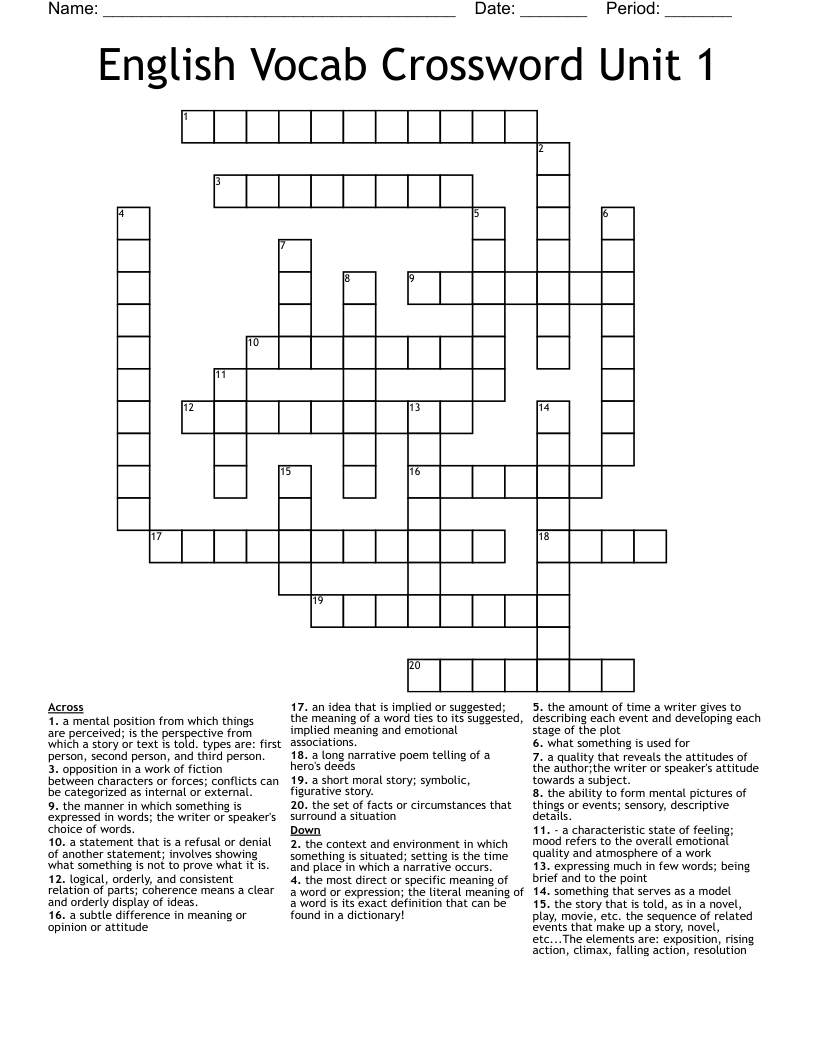
English Vocab Crossword Unit 1
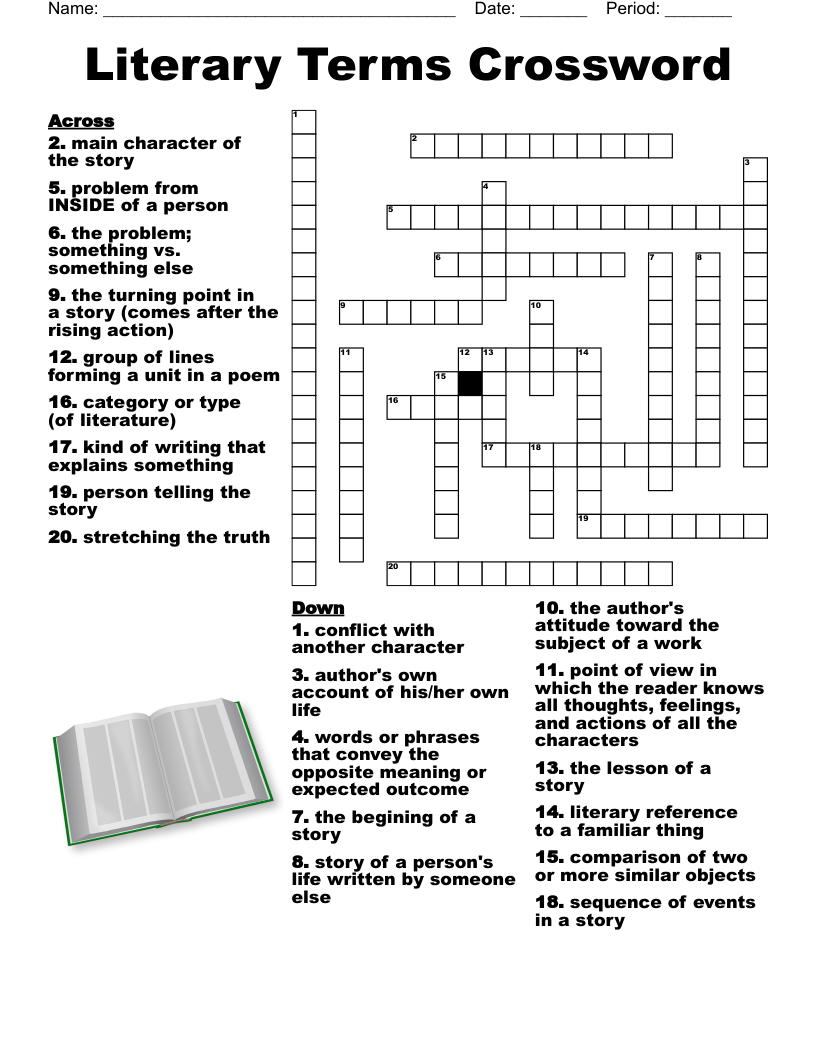
This printable crossword puzzle on the topic of Figurative Language & Literary Devices has 20 clues. Answers range from 4 to 11 letters long. This crossword is also available to download as a Microsoft Word document or a PDF.
Description
logical, orderly, and consistent relation of parts; coherence means a clear and orderly display of ideas.
what something is used for
- a characteristic state of feeling; mood refers to the overall emotional quality and atmosphere of a work
the context and environment in which something is situated; setting is the time and place in which a narrative occurs.
the amount of time a writer gives to describing each event and developing each stage of the plot
a long narrative poem telling of a hero's deeds
a short moral story; symbolic, figurative story.
the most direct or specific meaning of a word or expression; the literal meaning of a word is its exact definition that can be found in a dictionary!
opposition in a work of fiction between characters or forces; conflicts can be categorized as internal or external.
a subtle difference in meaning or opinion or attitude
something that serves as a model
the ability to form mental pictures of things or events; sensory, descriptive details.
the manner in which something is expressed in words; the writer or speaker's choice of words.
a mental position from which things are perceived; is the perspective from which a story or text is told. types are: first person, second person, and third person.
the story that is told, as in a novel, play, movie, etc. the sequence of related events that make up a story, novel, etc...The elements are: exposition, rising action, climax, falling action, resolution
a quality that reveals the attitudes of the author;the writer or speaker's attitude towards a subject.
expressing much in few words; being brief and to the point
an idea that is implied or suggested; the meaning of a word ties to its suggested, implied meaning and emotional associations.
the set of facts or circumstances that surround a situation
a statement that is a refusal or denial of another statement; involves showing what something is not to prove what it is.