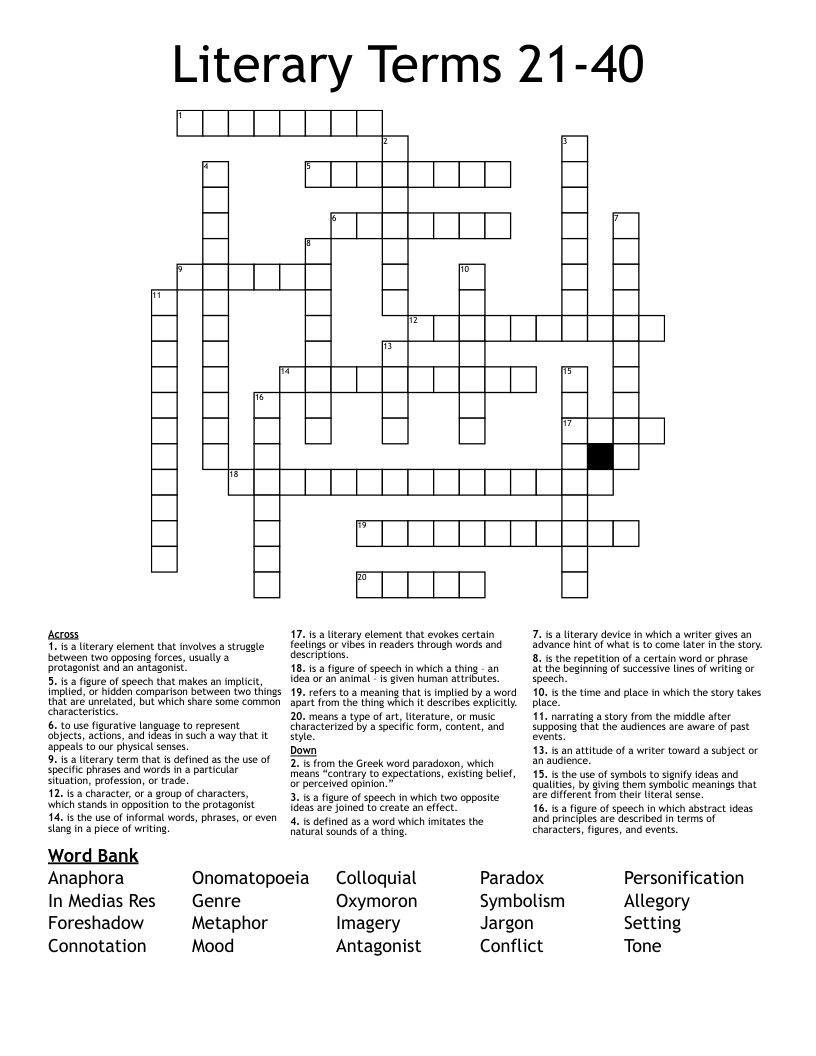
Literary Terms 21-40 Crossword
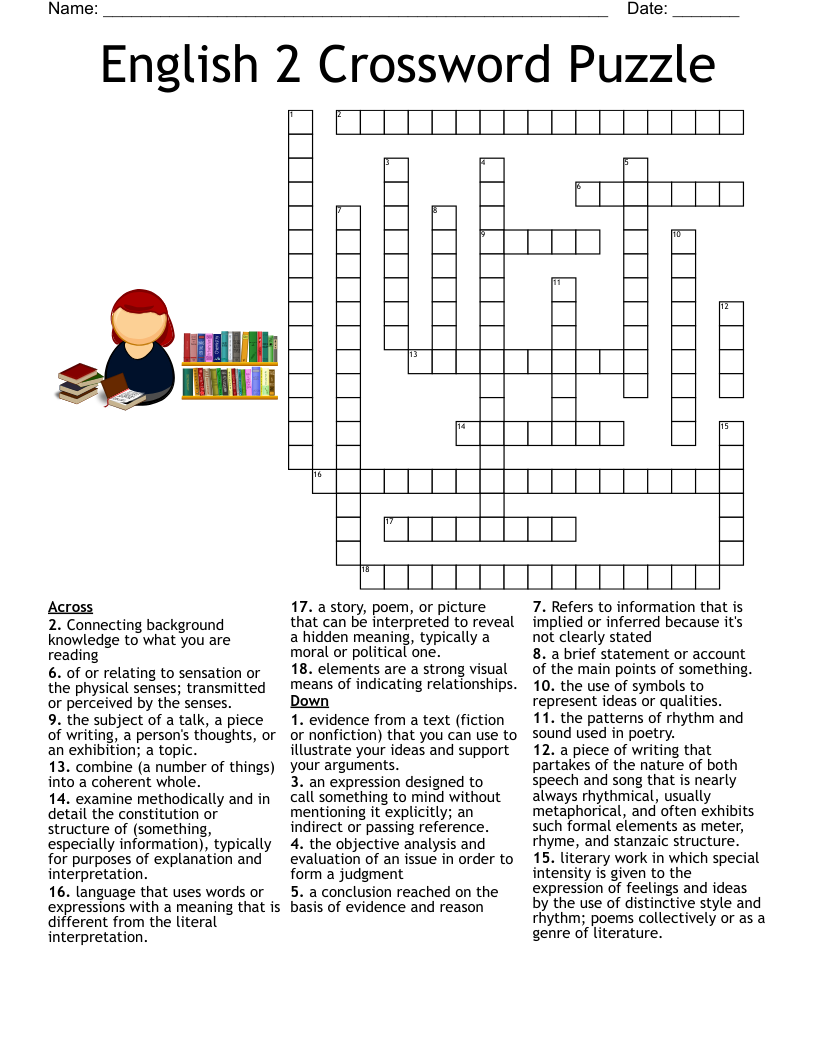
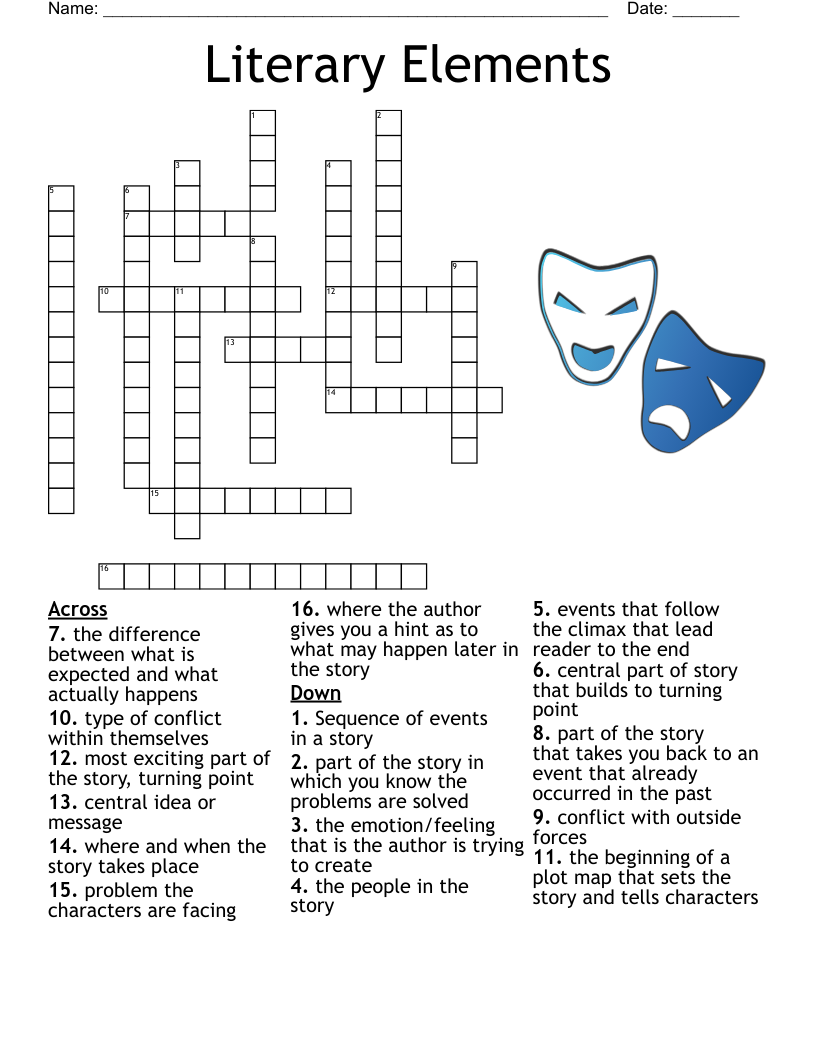
This printable crossword puzzle on the topic of Figurative Language & Literary Devices has 20 clues. Answers range from 4 to 15 letters long. This crossword is also available to download as a Microsoft Word document or a PDF.
Description
is the time and place in which the story takes place.
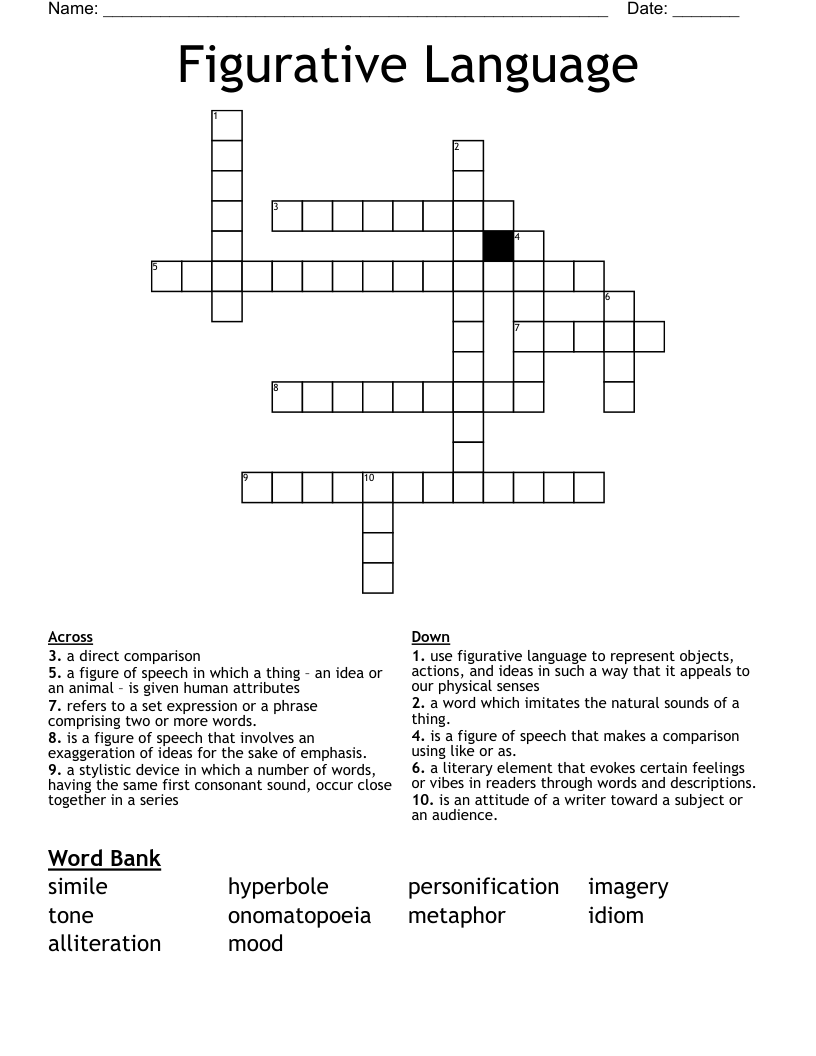
is an attitude of a writer toward a subject or an audience.
to use figurative language to represent objects, actions, and ideas in such a way that it appeals to our physical senses.
is a figure of speech in which a thing – an idea or an animal – is given human attributes.
is defined as a word which imitates the natural sounds of a thing.
is a literary device in which a writer gives an advance hint of what is to come later in the story.
is the repetition of a certain word or phrase at the beginning of successive lines of writing or speech.
narrating a story from the middle after supposing that the audiences are aware of past events.
is a character, or a group of characters, which stands in opposition to the protagonist
is a literary element that evokes certain feelings or vibes in readers through words and descriptions.
is a literary element that involves a struggle between two opposing forces, usually a protagonist and an antagonist.
is the use of symbols to signify ideas and qualities, by giving them symbolic meanings that are different from their literal sense.
is a figure of speech that makes an implicit, implied, or hidden comparison between two things that are unrelated, but which share some common characteristics.
is a figure of speech in which two opposite ideas are joined to create an effect.
is the use of informal words, phrases, or even slang in a piece of writing.
is a literary term that is defined as the use of specific phrases and words in a particular situation, profession, or trade.
means a type of art, literature, or music characterized by a specific form, content, and style.
refers to a meaning that is implied by a word apart from the thing which it describes explicitly.
is from the Greek word paradoxon, which means “contrary to expectations, existing belief, or perceived opinion.”
is a figure of speech in which abstract ideas and principles are described in terms of characters, figures, and events.