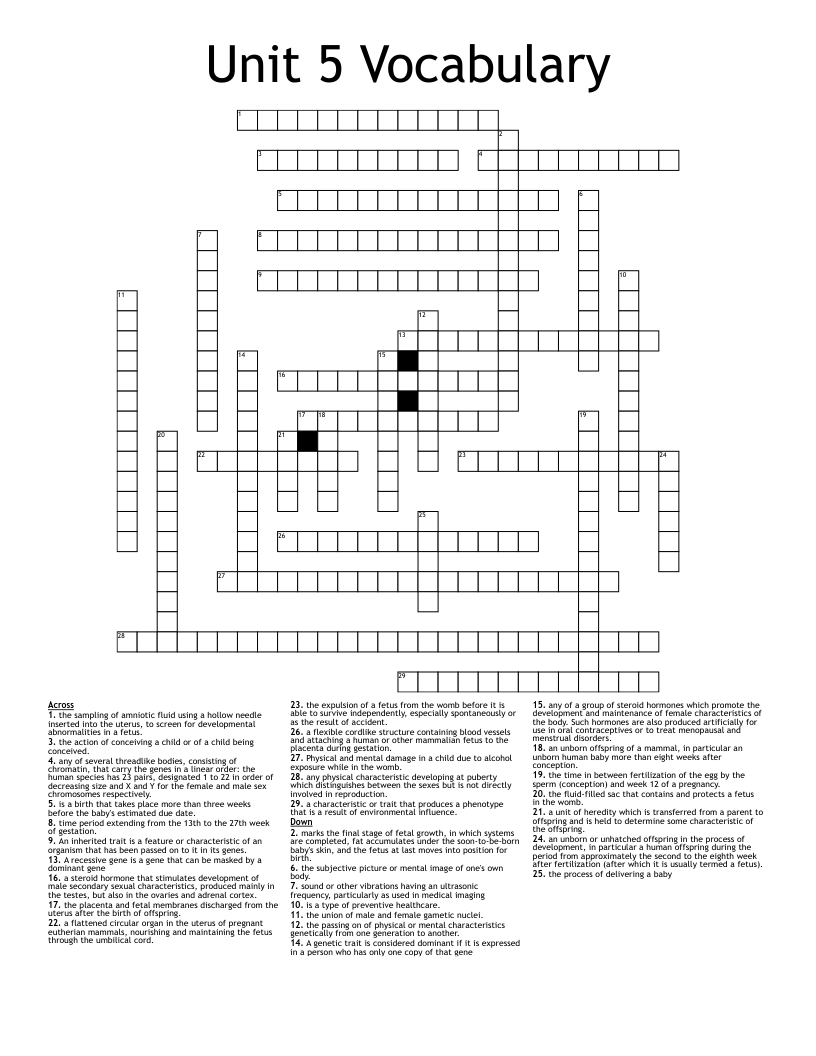
Unit 5 Vocabulary Crossword
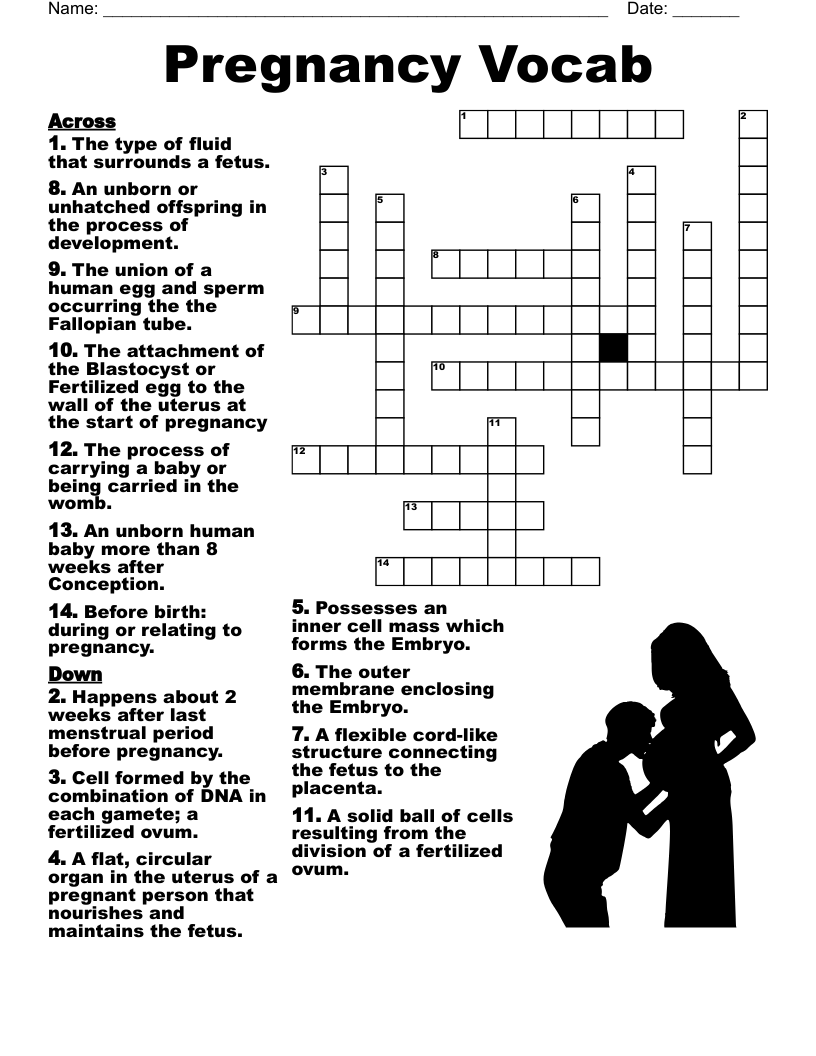
This printable crossword puzzle on the topic of Genetics & DNA has 29 clues. Answers range from 4 to 27 letters long. This crossword is also available to download as a Microsoft Word document or a PDF.
Description
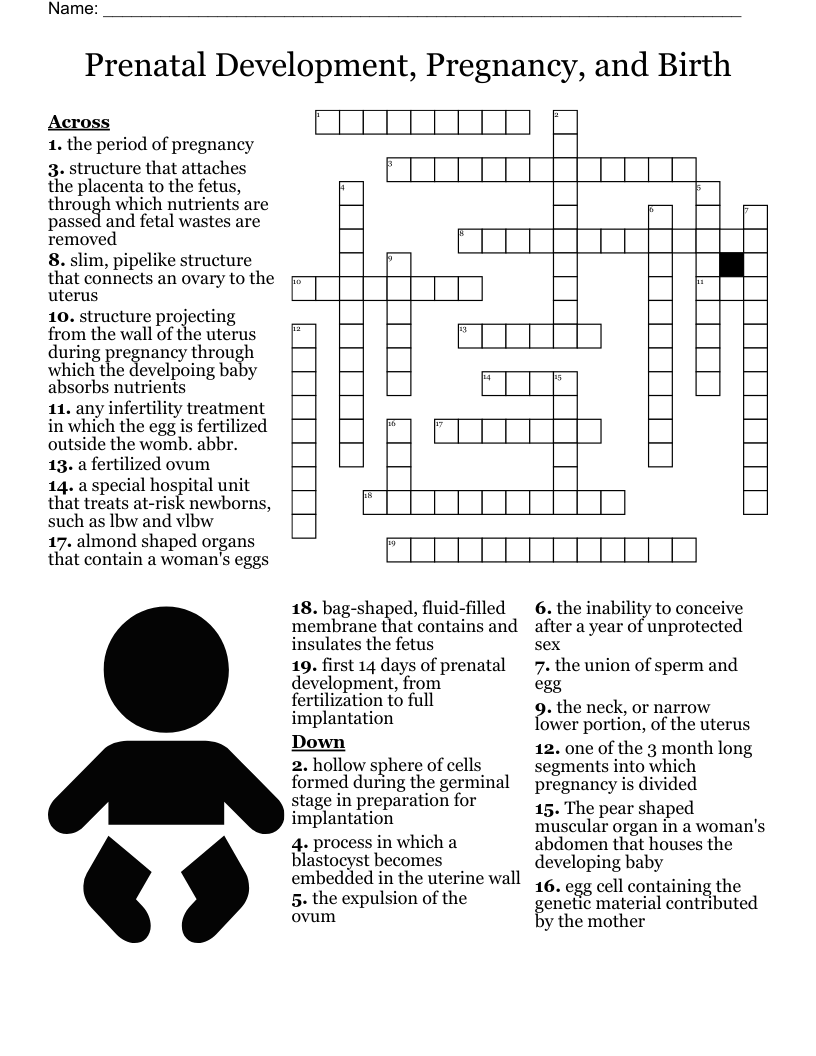
the union of male and female gametic nuclei.
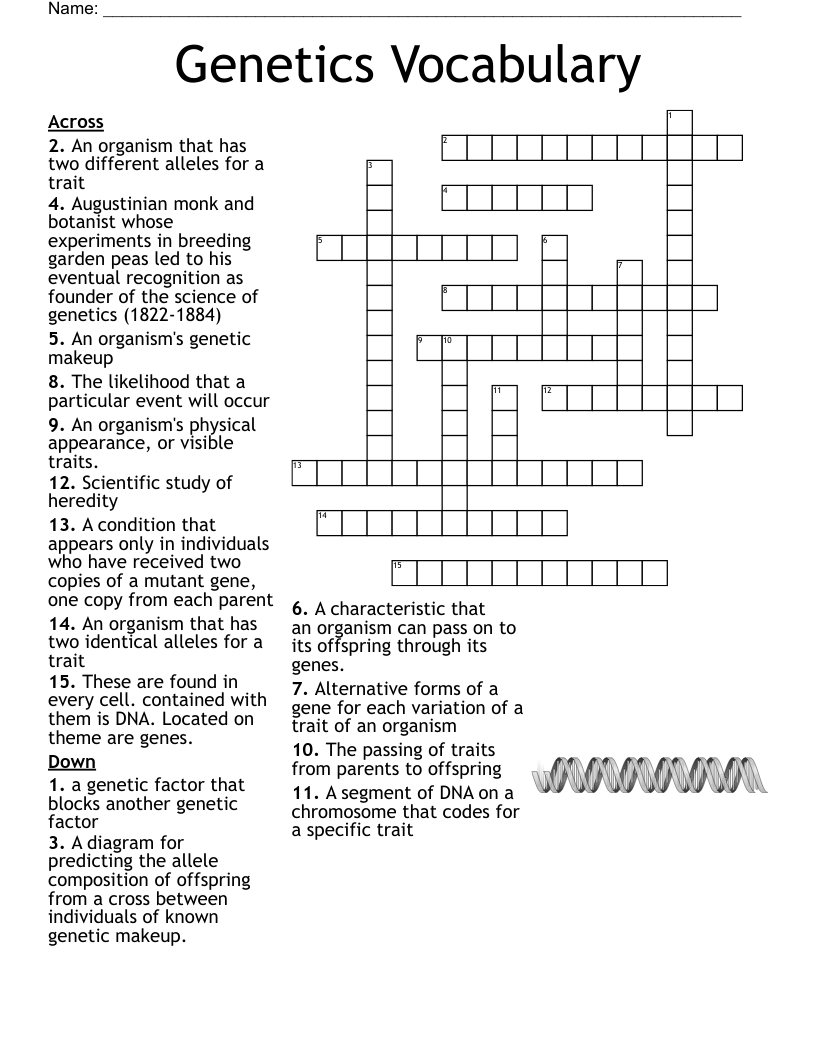
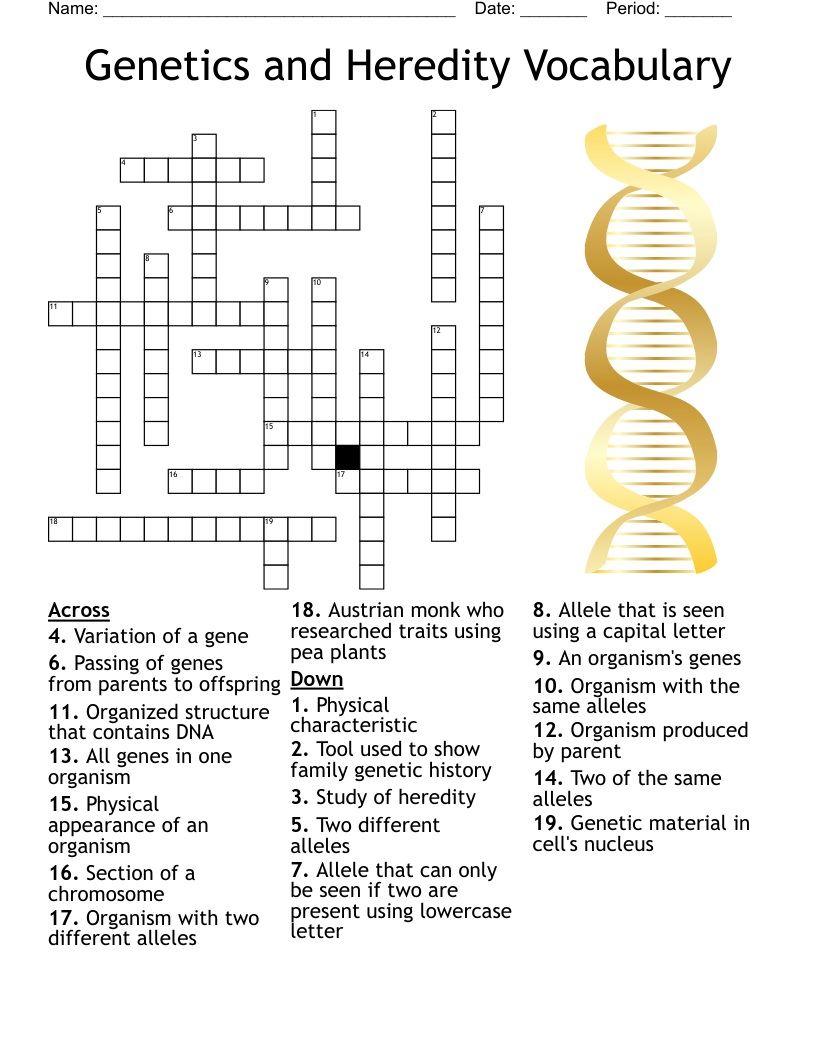
any of several threadlike bodies, consisting of chromatin, that carry the genes in a linear order: the human species has 23 pairs, designated 1 to 22 in order of decreasing size and X and Y for the female and male sex chromosomes respectively.
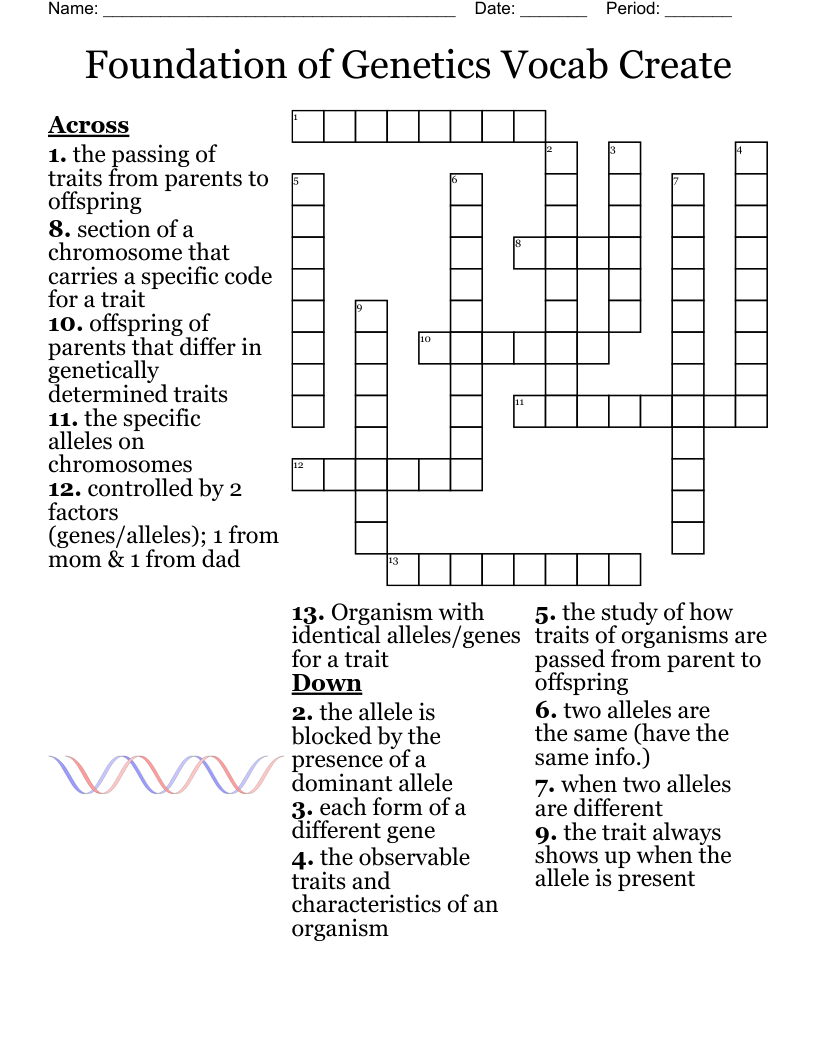
a unit of heredity which is transferred from a parent to offspring and is held to determine some characteristic of the offspring.
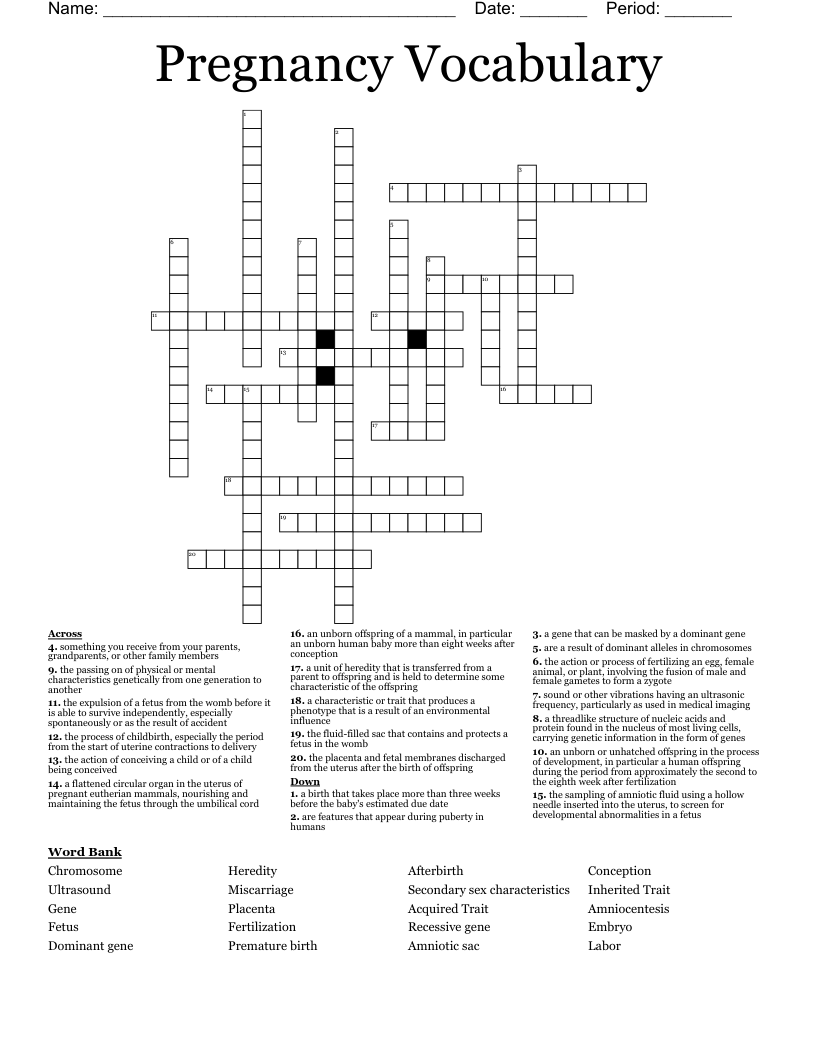
the sampling of amniotic fluid using a hollow needle inserted into the uterus, to screen for developmental abnormalities in a fetus.
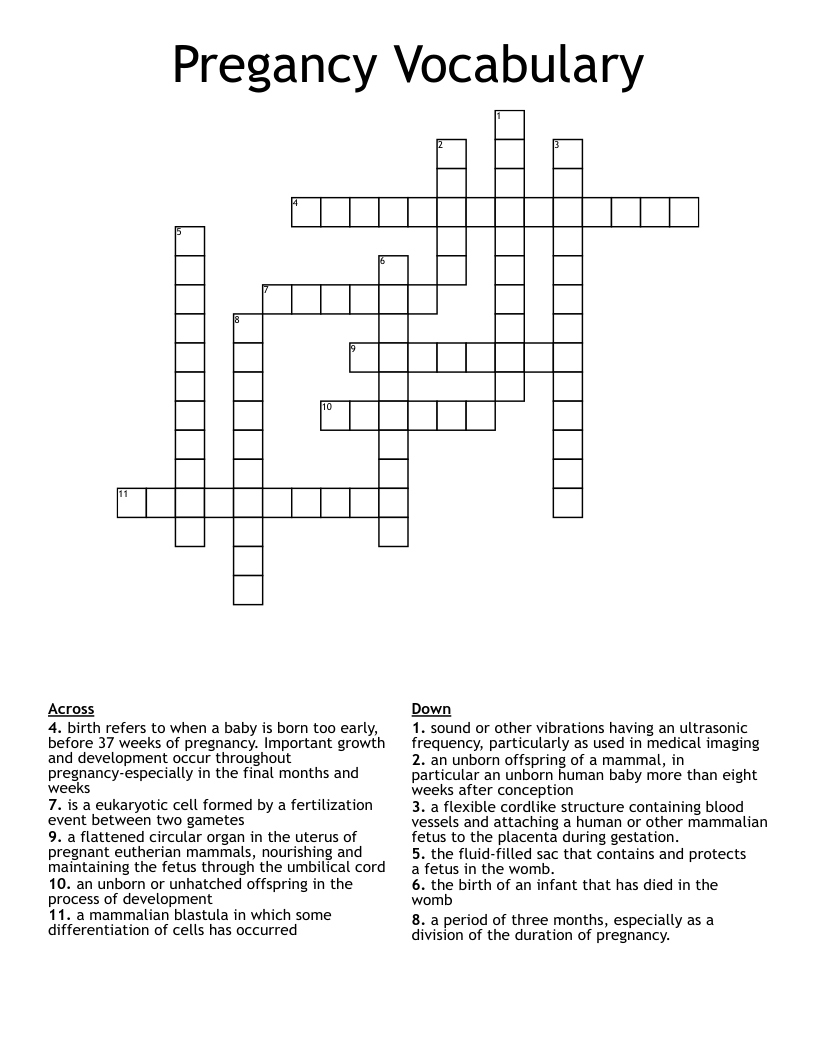
sound or other vibrations having an ultrasonic frequency, particularly as used in medical imaging
an unborn or unhatched offspring in the process of development, in particular a human offspring during the period from approximately the second to the eighth week after fertilization (after which it is usually termed a fetus).
a flattened circular organ in the uterus of pregnant eutherian mammals, nourishing and maintaining the fetus through the umbilical cord.
Physical and mental damage in a child due to alcohol exposure while in the womb.
the process of delivering a baby
the placenta and fetal membranes discharged from the uterus after the birth of offspring.
the action of conceiving a child or of a child being conceived.
the passing on of physical or mental characteristics genetically from one generation to another.
An inherited trait is a feature or characteristic of an organism that has been passed on to it in its genes.
a characteristic or trait that produces a phenotype that is a result of environmental influence.
the fluid-filled sac that contains and protects a fetus in the womb.
A genetic trait is considered dominant if it is expressed in a person who has only one copy of that gene
A recessive gene is a gene that can be masked by a dominant gene
a flexible cordlike structure containing blood vessels and attaching a human or other mammalian fetus to the placenta during gestation.
is a type of preventive healthcare.
an unborn offspring of a mammal, in particular an unborn human baby more than eight weeks after conception.
is a birth that takes place more than three weeks before the baby's estimated due date.
the expulsion of a fetus from the womb before it is able to survive independently, especially spontaneously or as the result of accident.
any physical characteristic developing at puberty which distinguishes between the sexes but is not directly involved in reproduction.
any of a group of steroid hormones which promote the development and maintenance of female characteristics of the body. Such hormones are also produced artificially for use in oral contraceptives or to treat menopausal and menstrual disorders.
a steroid hormone that stimulates development of male secondary sexual characteristics, produced mainly in the testes, but also in the ovaries and adrenal cortex.
the subjective picture or mental image of one's own body.
the time in between fertilization of the egg by the sperm (conception) and week 12 of a pregnancy.
time period extending from the 13th to the 27th week of gestation.
marks the final stage of fetal growth, in which systems are completed, fat accumulates under the soon-to-be-born baby's skin, and the fetus at last moves into position for birth.