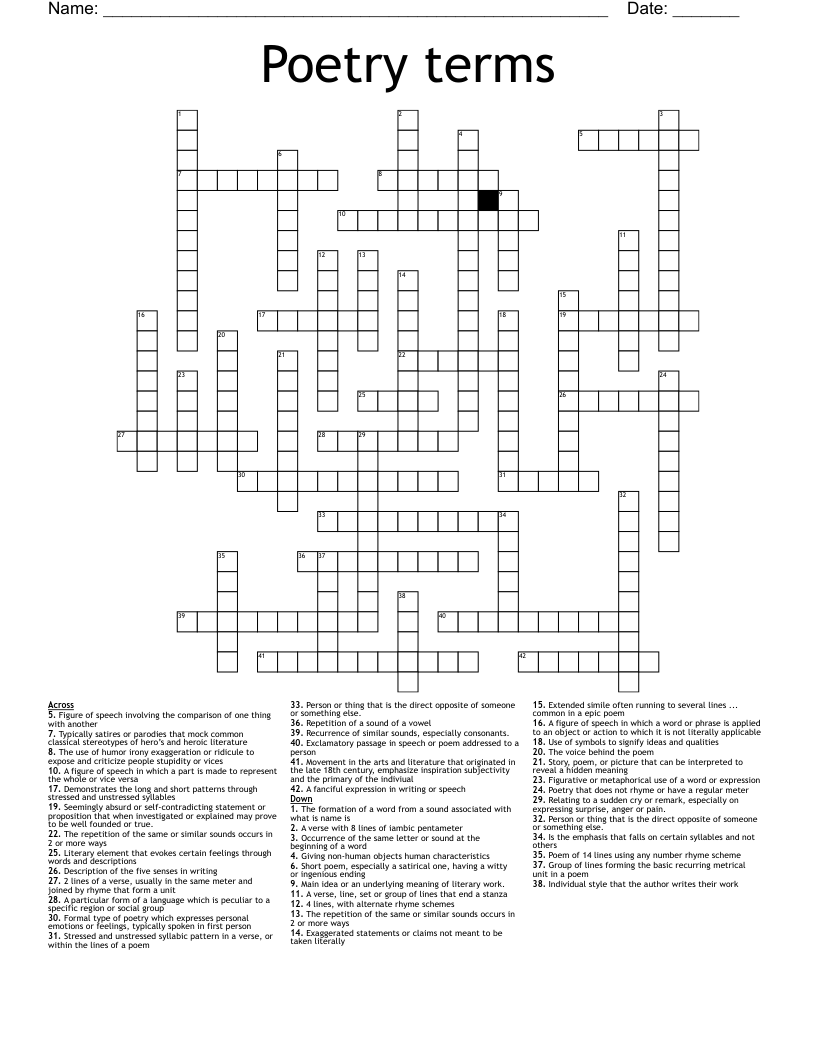
Poetry terms Crossword
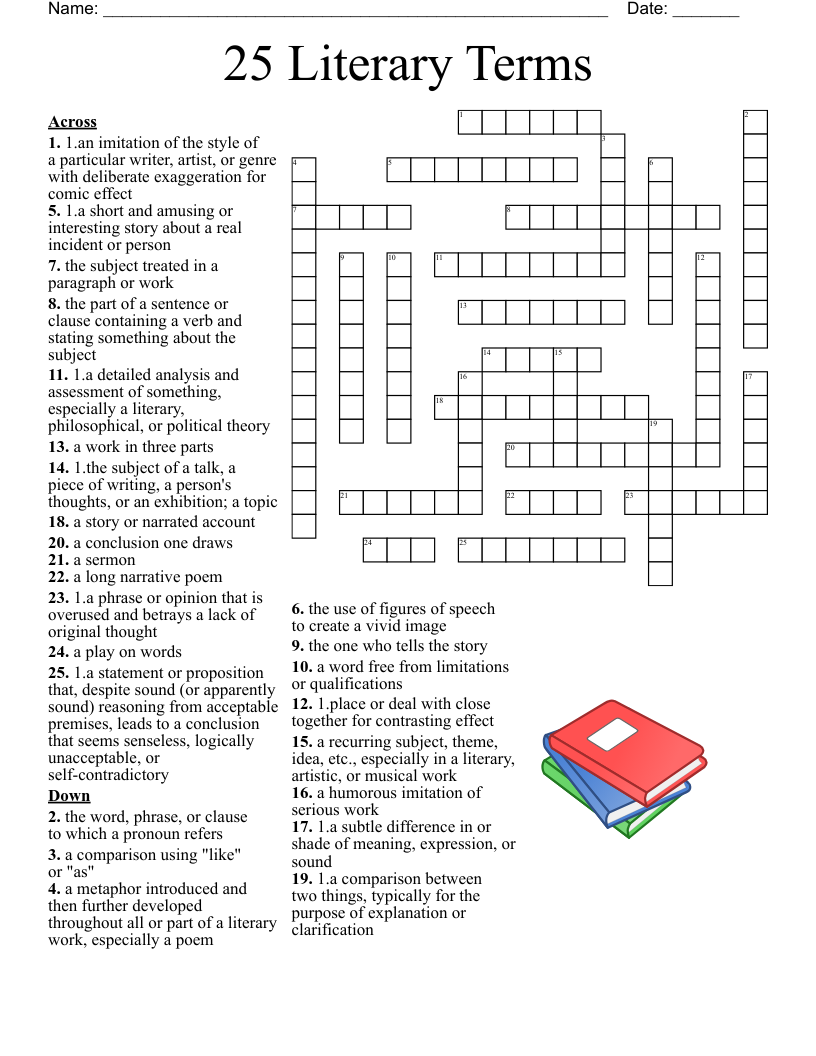
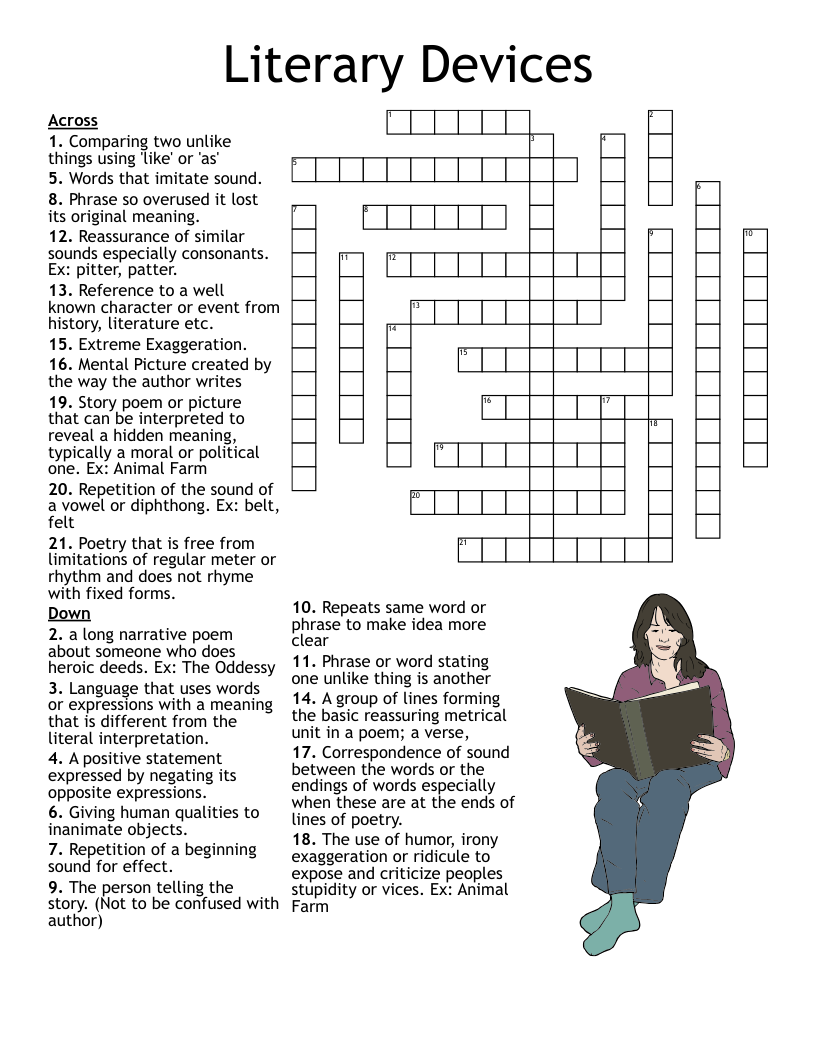
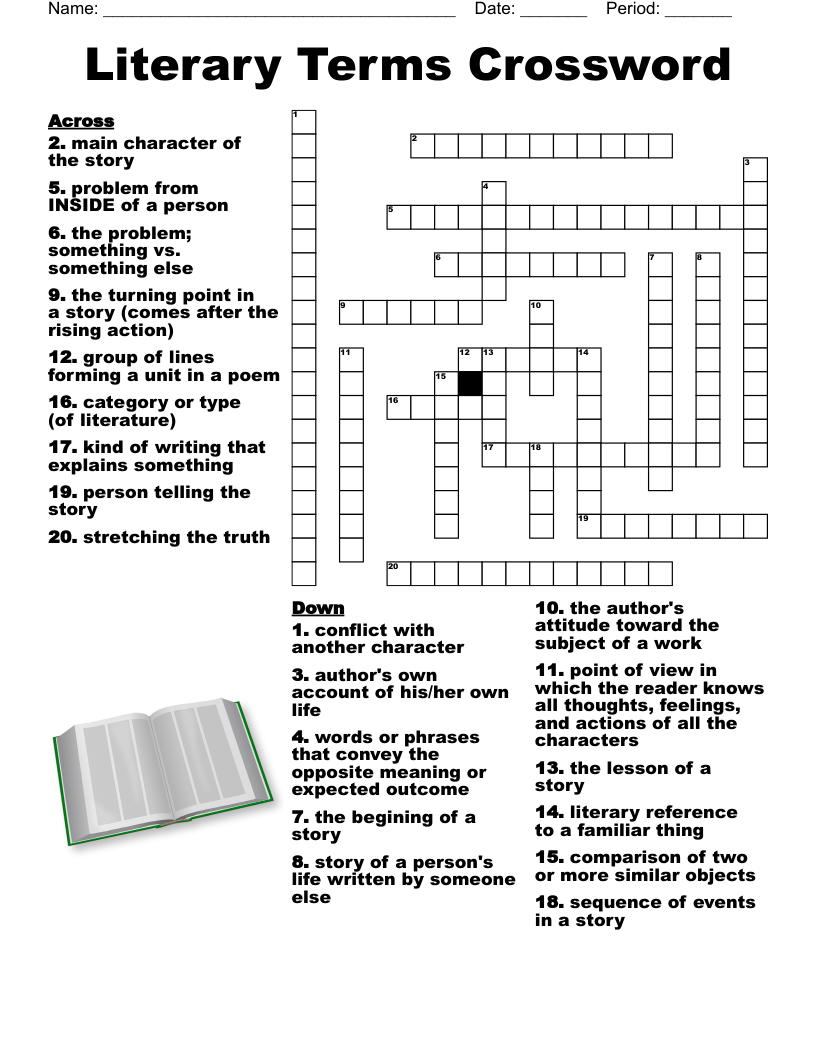
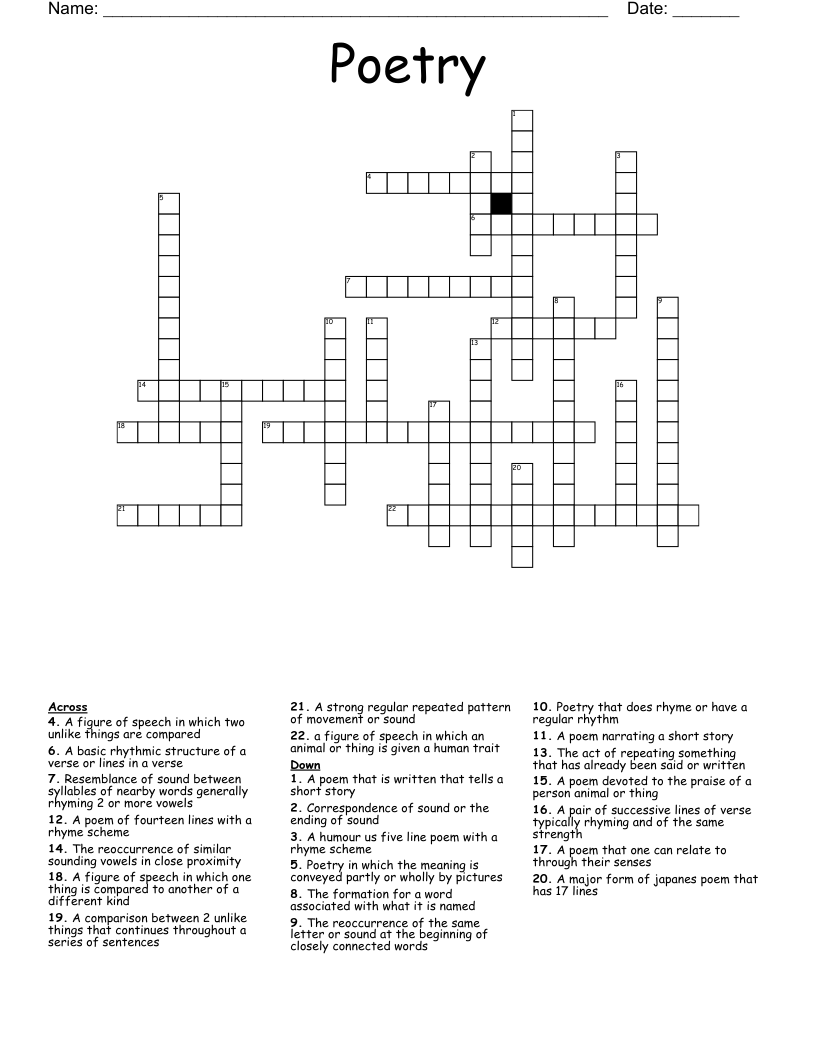
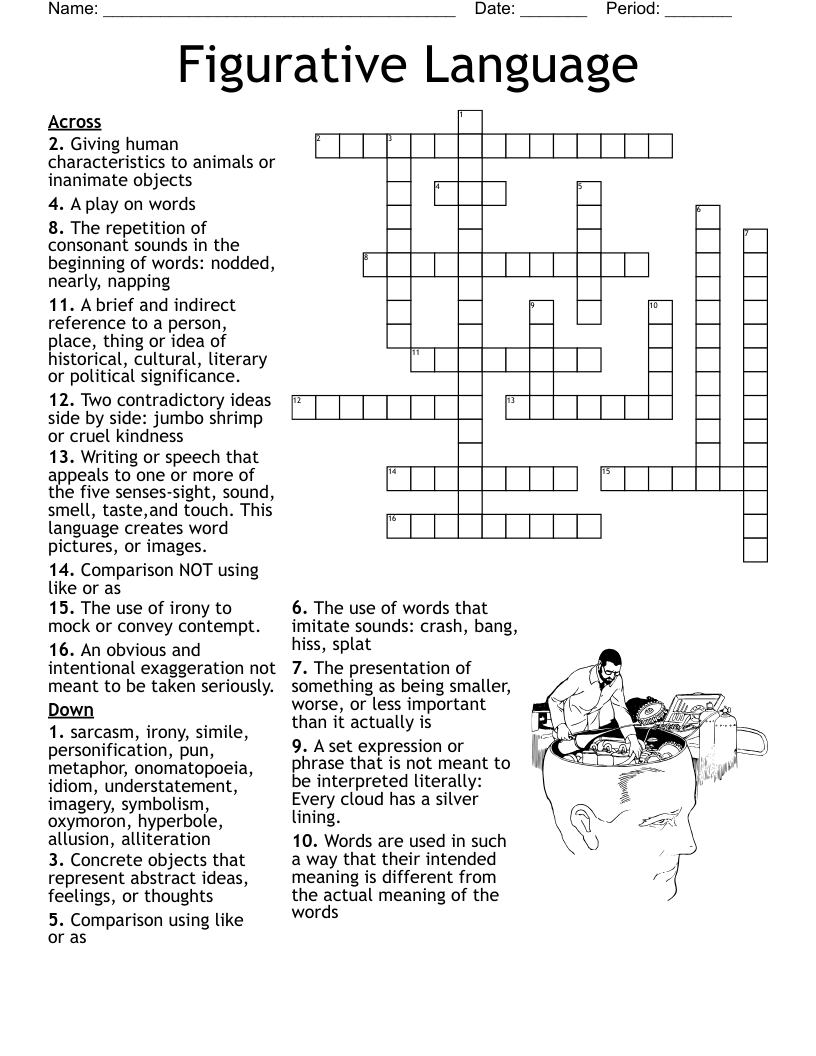
This printable crossword puzzle on the topic of Figurative Language & Literary Devices has 42 clues. Answers range from 4 to 15 letters long. This crossword is also available to download as a Microsoft Word document or a PDF.
Description
Person or thing that is the direct opposite of someone or something else.
Relating to a sudden cry or remark, especially on expressing surprise, anger or pain.
A fanciful expression in writing or speech
Repetition of a sound of a vowel
Recurrence of similar sounds, especially consonants.
2 lines of a verse, usually in the same meter and joined by rhyme that form a unit
A particular form of a language which is peculiar to a specific region or social group
Extended simile often running to several lines ... common in a epic poem
Short poem, especially a satirical one, having a witty or ingenious ending
Poetry that does not rhyme or have a regular meter
Exaggerated statements or claims not meant to be taken literally
Description of the five senses in writing
Formal type of poetry which expresses personal emotions or feelings, typically spoken in first person
A figure of speech in which a word or phrase is applied to an object or action to which it is not literally applicable
Stressed and unstressed syllabic pattern in a verse, or within the lines of a poem
Typically satires or parodies that mock common classical stereotypes of hero’s and heroic literature
Literary element that evokes certain feelings through words and descriptions
A verse with 8 lines of iambic pentameter
The formation of a word from a sound associated with what is name is
Seemingly absurd or self-contradicting statement or proposition that when investigated or explained may prove to be well founded or true.
Giving non-human objects human characteristics
4 lines, with alternate rhyme schemes
A verse, line, set or group of lines that end a stanza
The repetition of the same or similar sounds occurs in 2 or more ways
Demonstrates the long and short patterns through stressed and unstressed syllables
The repetition of the same or similar sounds occurs in 2 or more ways
Movement in the arts and literature that originated in the late 18th century, emphasize inspiration subjectivity and the primary of the indiviual
The use of humor irony exaggeration or ridicule to expose and criticize people stupidity or vices
Figure of speech involving the comparison of one thing with another
Poem of 14 lines using any number rhyme scheme
The voice behind the poem
Group of lines forming the basic recurring metrical unit in a poem
Is the emphasis that falls on certain syllables and not others
Use of symbols to signify ideas and qualities
A figure of speech in which a part is made to represent the whole or vice versa
Main idea or an underlying meaning of literary work.
Figurative or metaphorical use of a word or expression
Individual style that the author writes their work
Story, poem, or picture that can be interpreted to reveal a hidden meaning
Occurrence of the same letter or sound at the beginning of a word
Person or thing that is the direct opposite of someone or something else.
Exclamatory passage in speech or poem addressed to a person