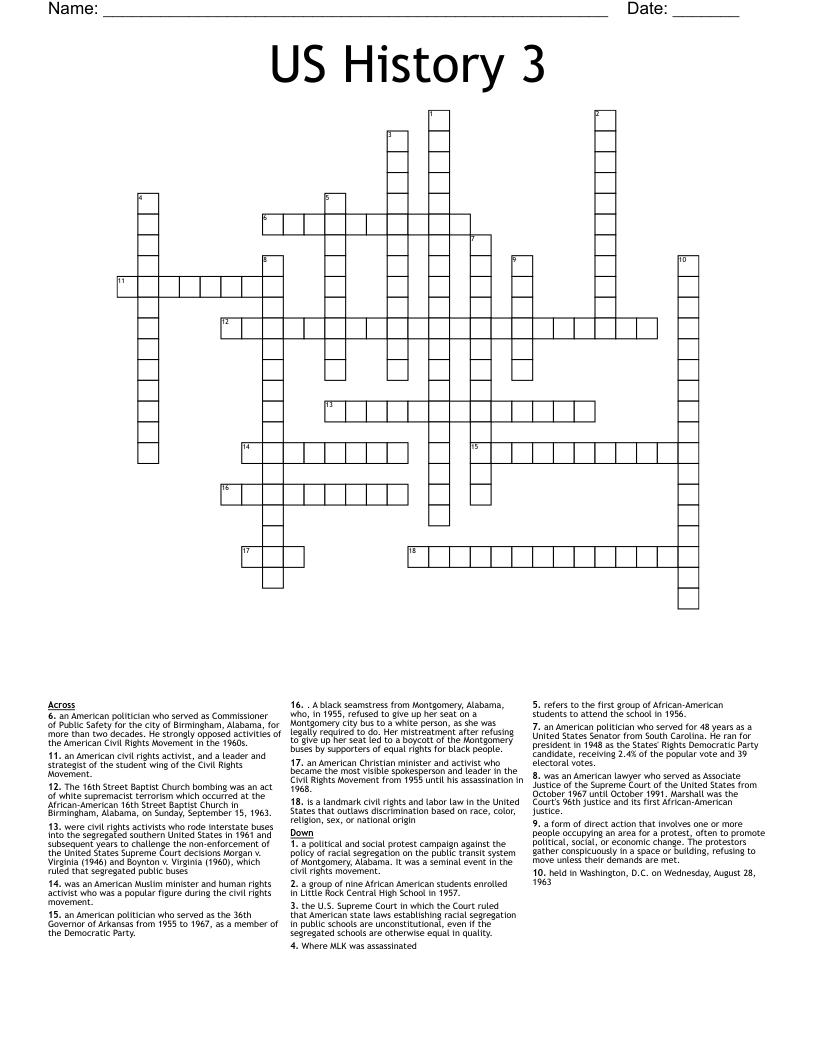
US History 3 Crossword
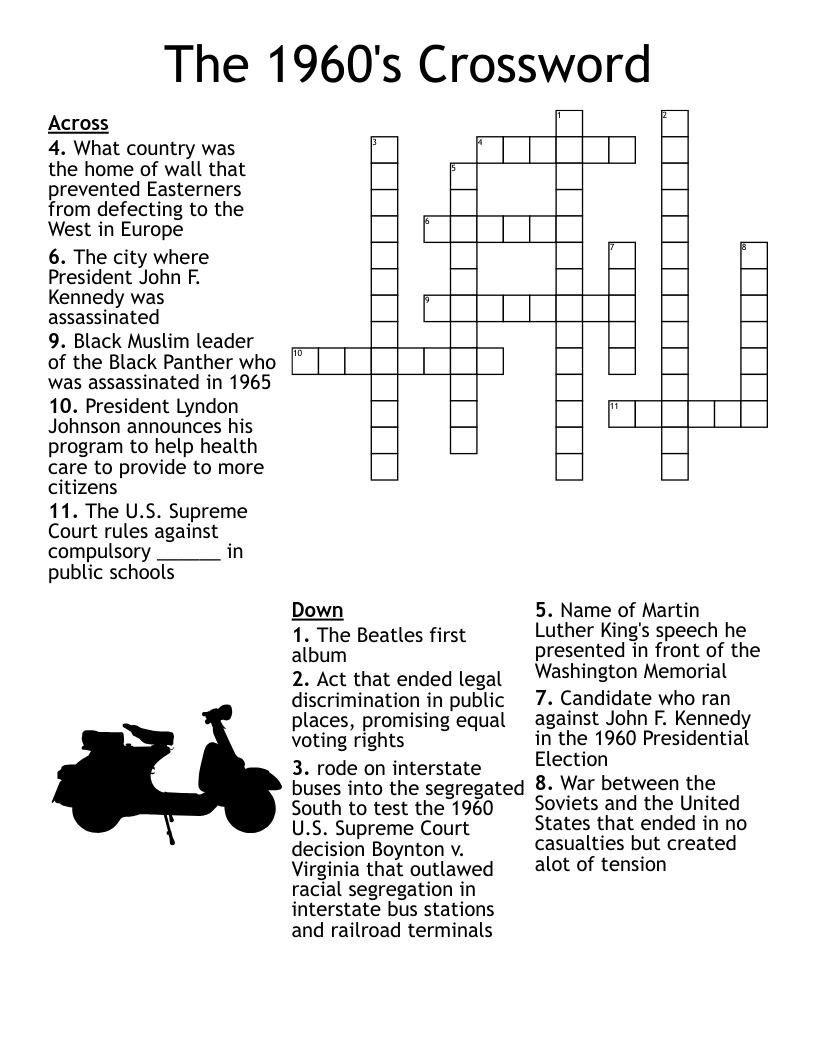
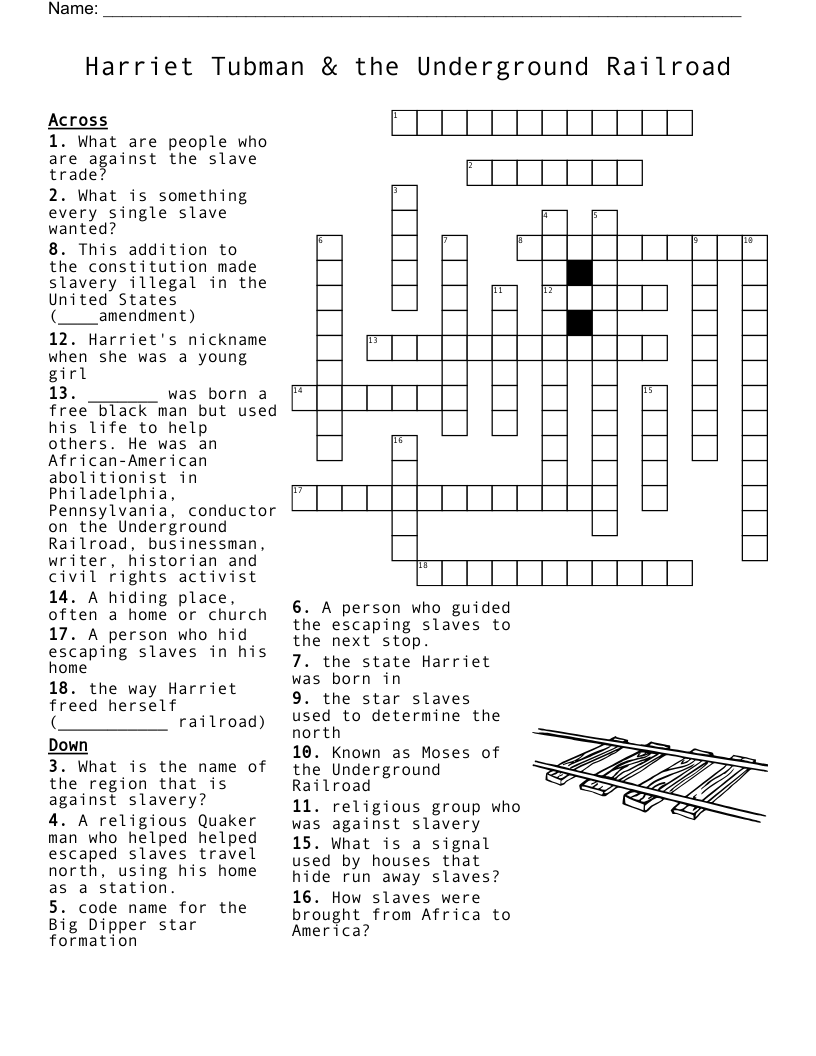
This printable crossword puzzle on the topic of Civil Rights & Social Movements has 18 clues. Answers range from 3 to 21 letters long. This crossword is also available to download as a Microsoft Word document or a PDF.
Description
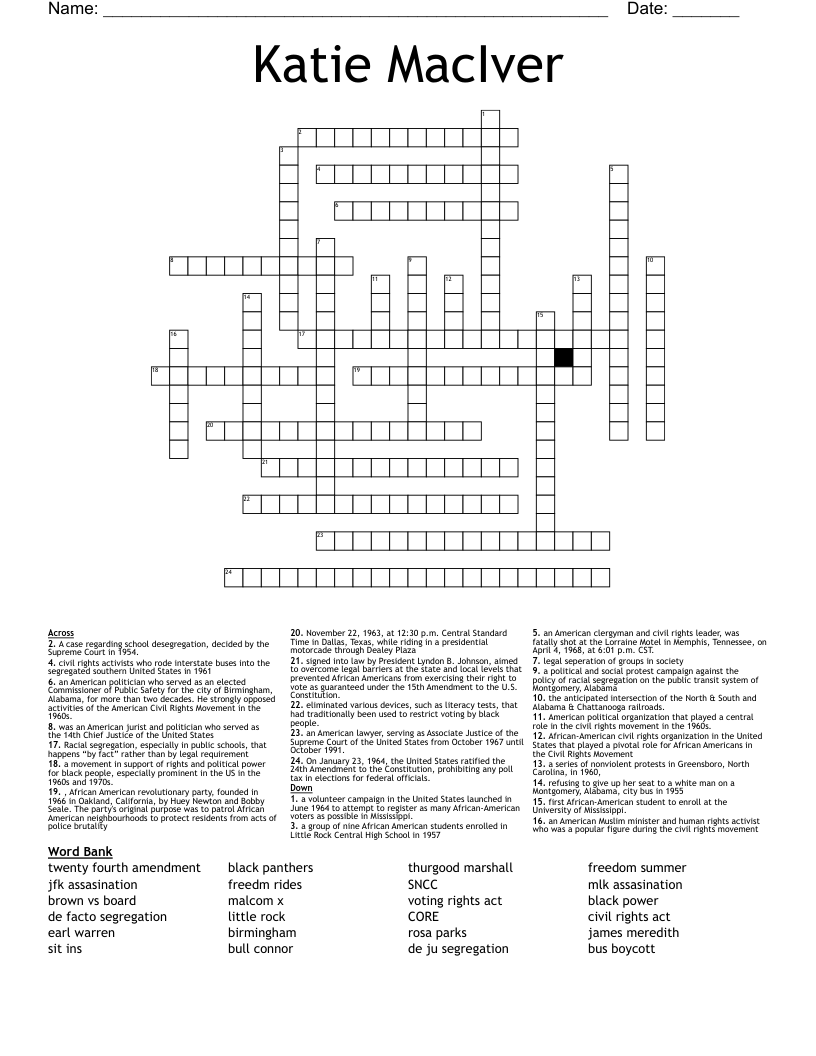
the U.S. Supreme Court in which the Court ruled that American state laws establishing racial segregation in public schools are unconstitutional, even if the segregated schools are otherwise equal in quality.
was an American Muslim minister and human rights activist who was a popular figure during the civil rights movement.
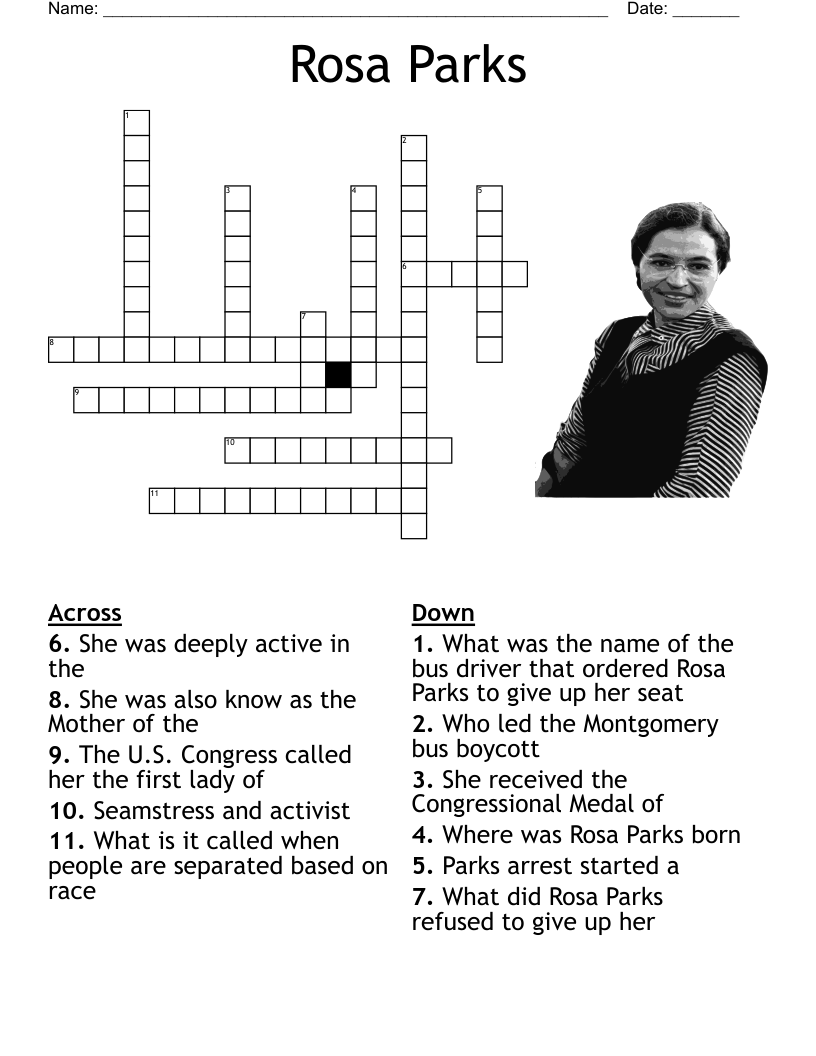
. A black seamstress from Montgomery, Alabama, who, in 1955, refused to give up her seat on a Montgomery city bus to a white person, as she was legally required to do. Her mistreatment after refusing to give up her seat led to a boycott of the Montgomery buses by supporters of equal rights for black people.
was an American lawyer who served as Associate Justice of the Supreme Court of the United States from October 1967 until October 1991. Marshall was the Court's 96th justice and its first African-American justice.
an American politician who served as Commissioner of Public Safety for the city of Birmingham, Alabama, for more than two decades. He strongly opposed activities of the American Civil Rights Movement in the 1960s.
an American politician who served as the 36th Governor of Arkansas from 1955 to 1967, as a member of the Democratic Party.
an American politician who served for 48 years as a United States Senator from South Carolina. He ran for president in 1948 as the States' Rights Democratic Party candidate, receiving 2.4% of the popular vote and 39 electoral votes.
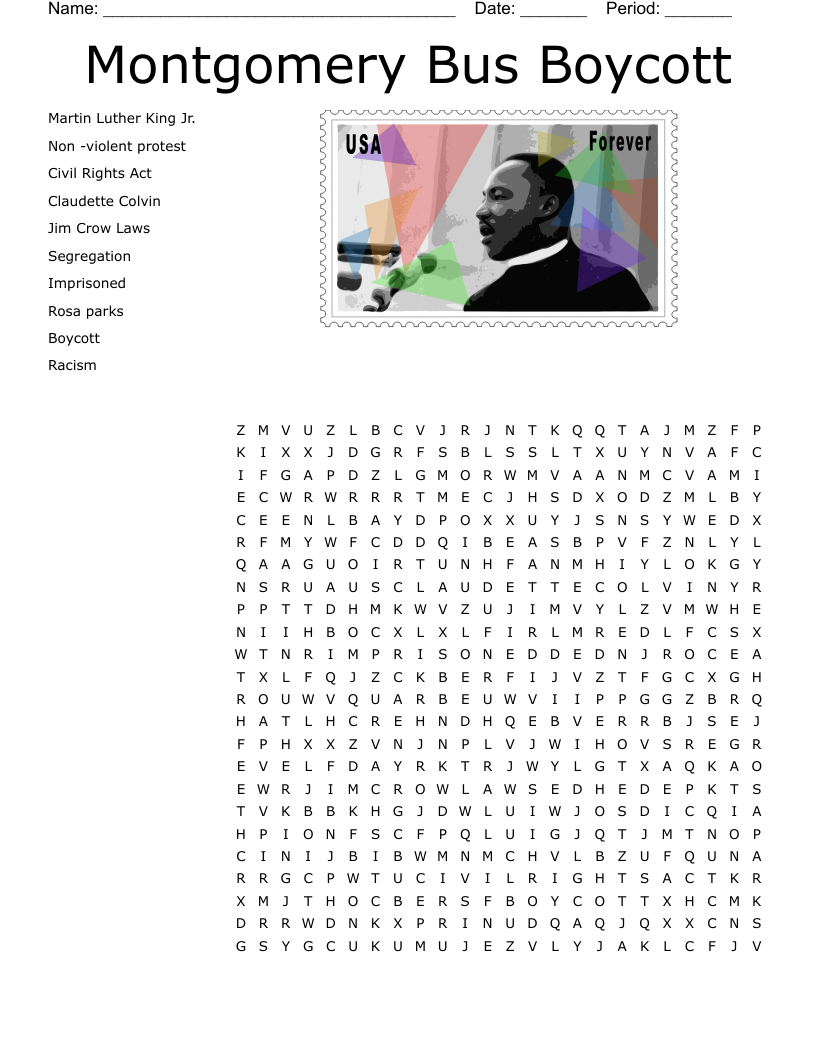
a political and social protest campaign against the policy of racial segregation on the public transit system of Montgomery, Alabama. It was a seminal event in the civil rights movement.
refers to the first group of African-American students to attend the school in 1956.
were civil rights activists who rode interstate buses into the segregated southern United States in 1961 and subsequent years to challenge the non-enforcement of the United States Supreme Court decisions Morgan v. Virginia (1946) and Boynton v. Virginia (1960), which ruled that segregated public buses
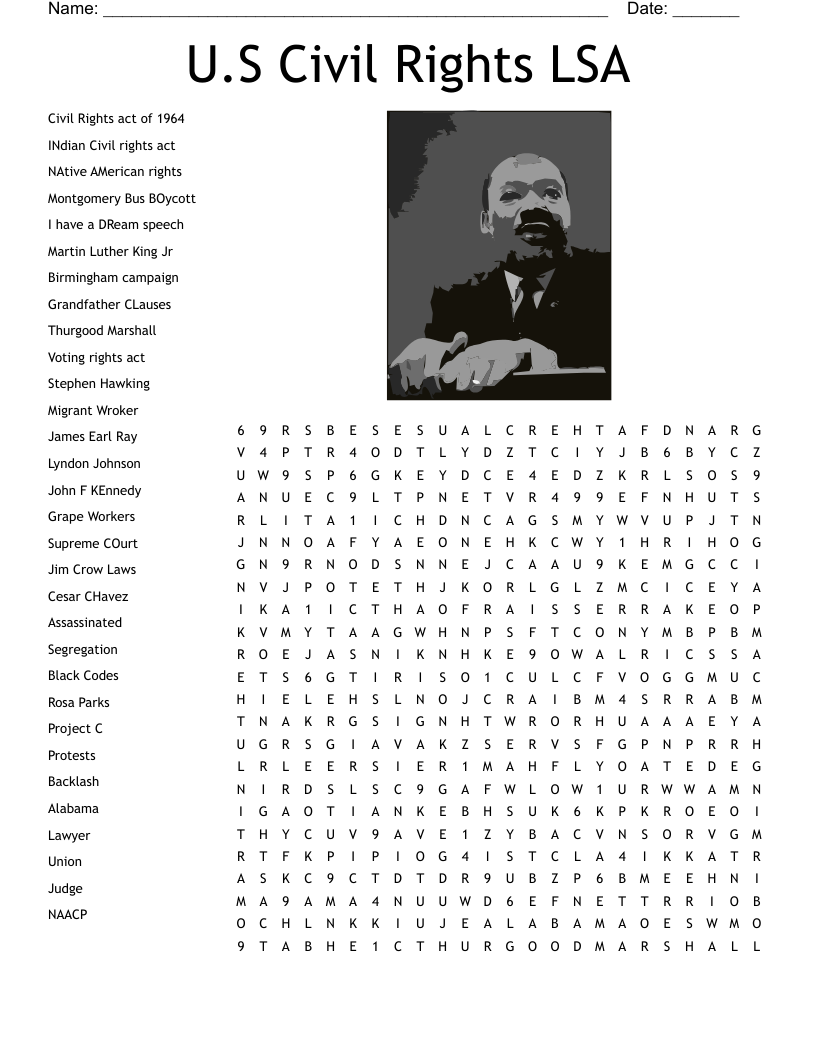
an American Christian minister and activist who became the most visible spokesperson and leader in the Civil Rights Movement from 1955 until his assassination in 1968.
an American civil rights activist, and a leader and strategist of the student wing of the Civil Rights Movement.
a form of direct action that involves one or more people occupying an area for a protest, often to promote political, social, or economic change. The protestors gather conspicuously in a space or building, refusing to move unless their demands are met.
a group of nine African American students enrolled in Little Rock Central High School in 1957.
held in Washington, D.C. on Wednesday, August 28, 1963
Where MLK was assassinated
is a landmark civil rights and labor law in the United States that outlaws discrimination based on race, color, religion, sex, or national origin
The 16th Street Baptist Church bombing was an act of white supremacist terrorism which occurred at the African-American 16th Street Baptist Church in Birmingham, Alabama, on Sunday, September 15, 1963.