8.E.1.2 Crossword
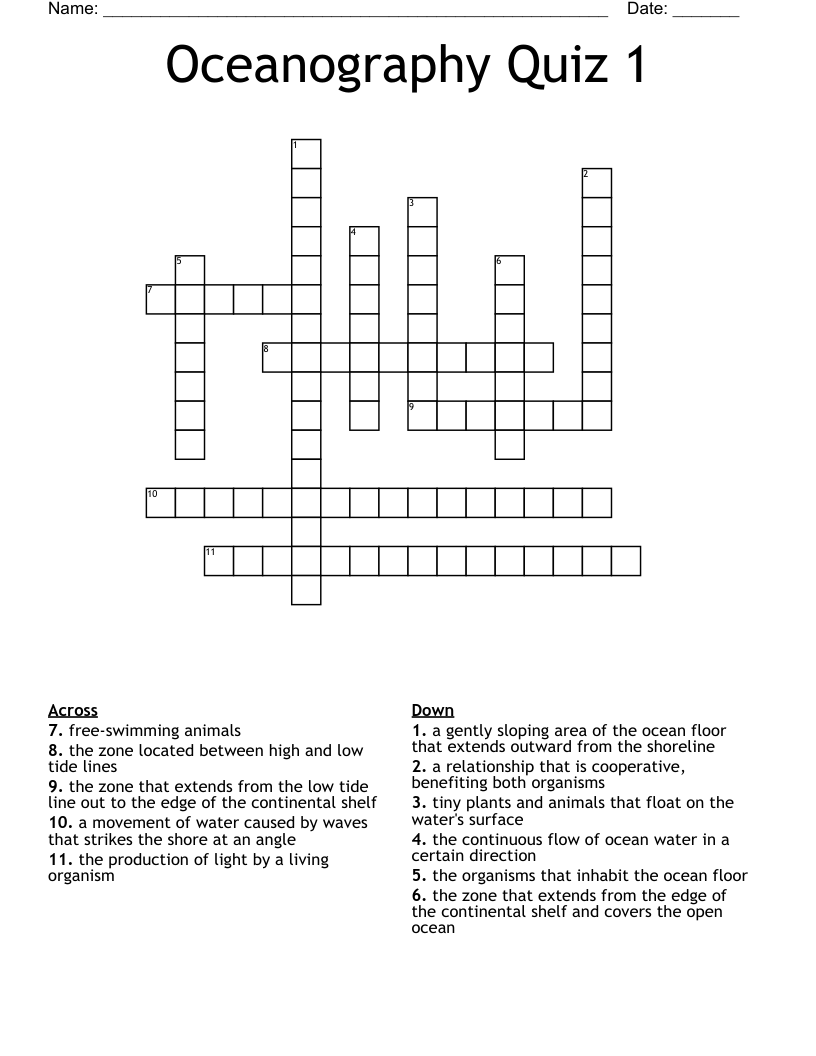
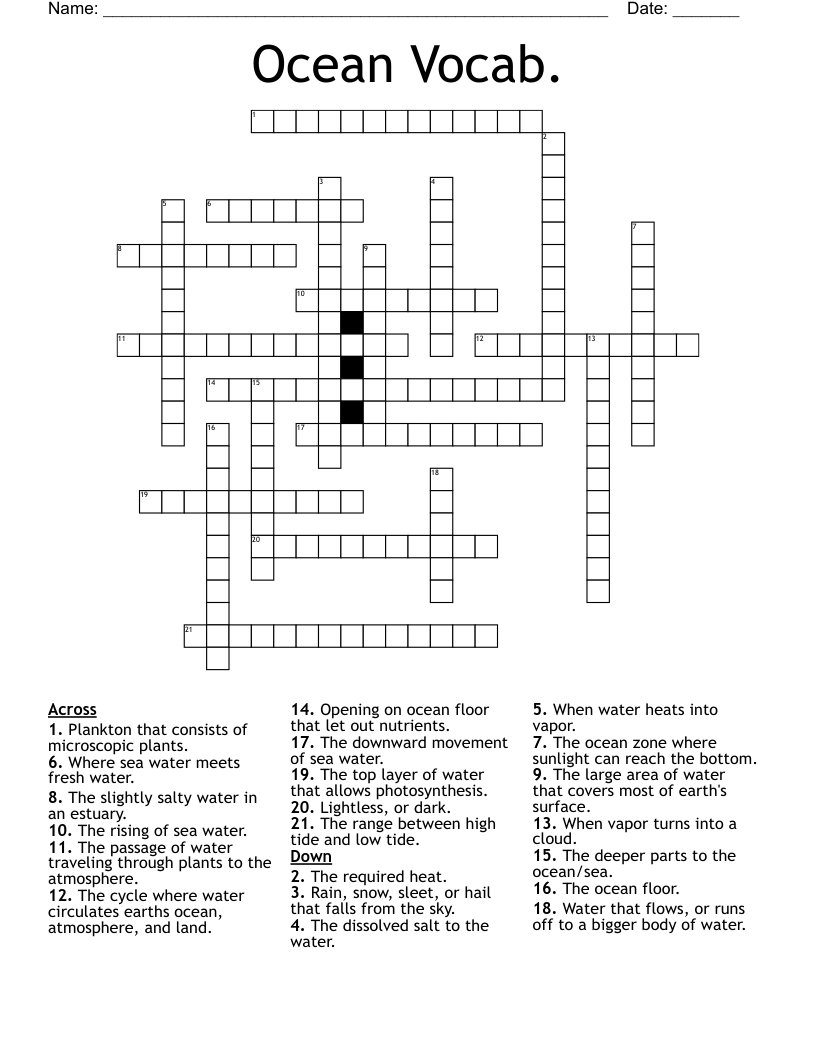
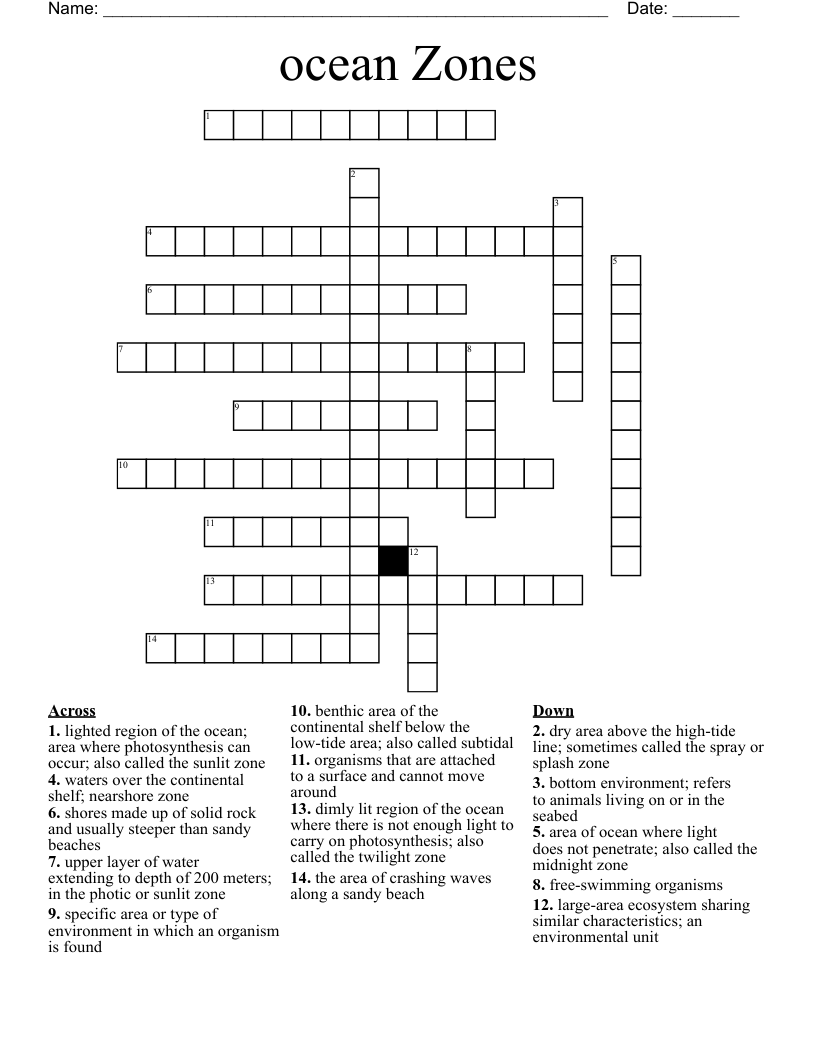
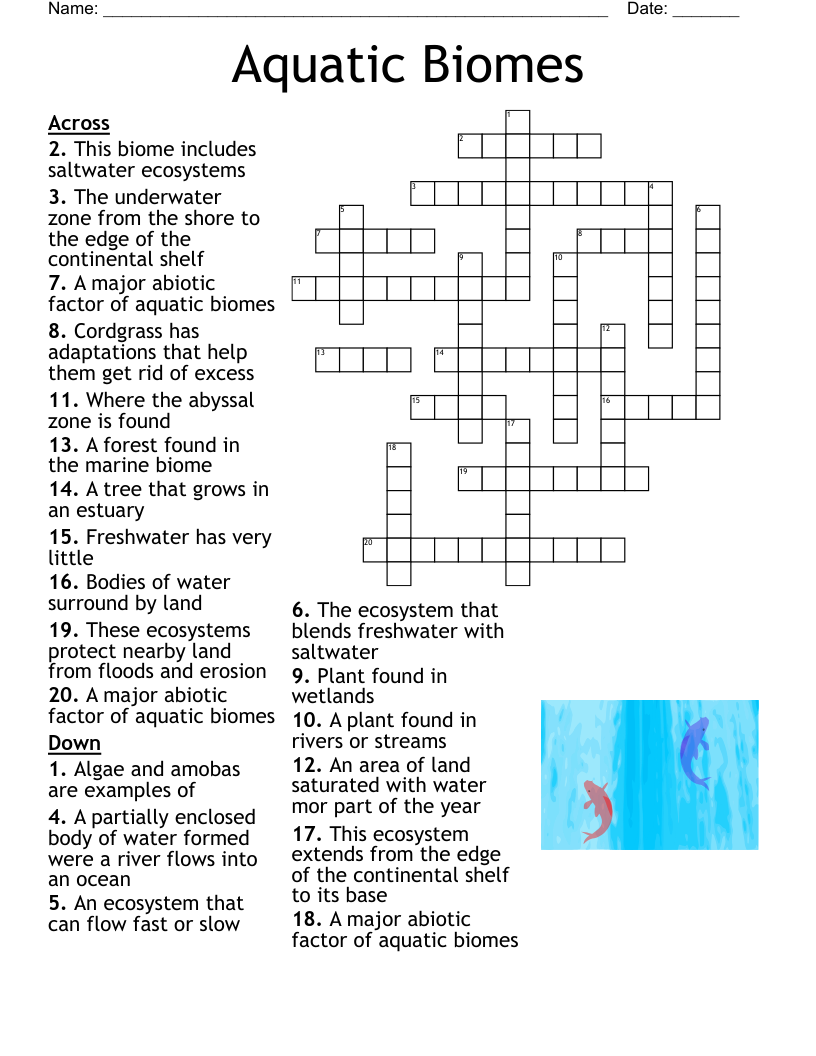
This printable crossword puzzle on the topic of Oceans & Water has 21 clues. Answers range from 8 to 19 letters long. This crossword is also available to download as a Microsoft Word document or a PDF.
Description
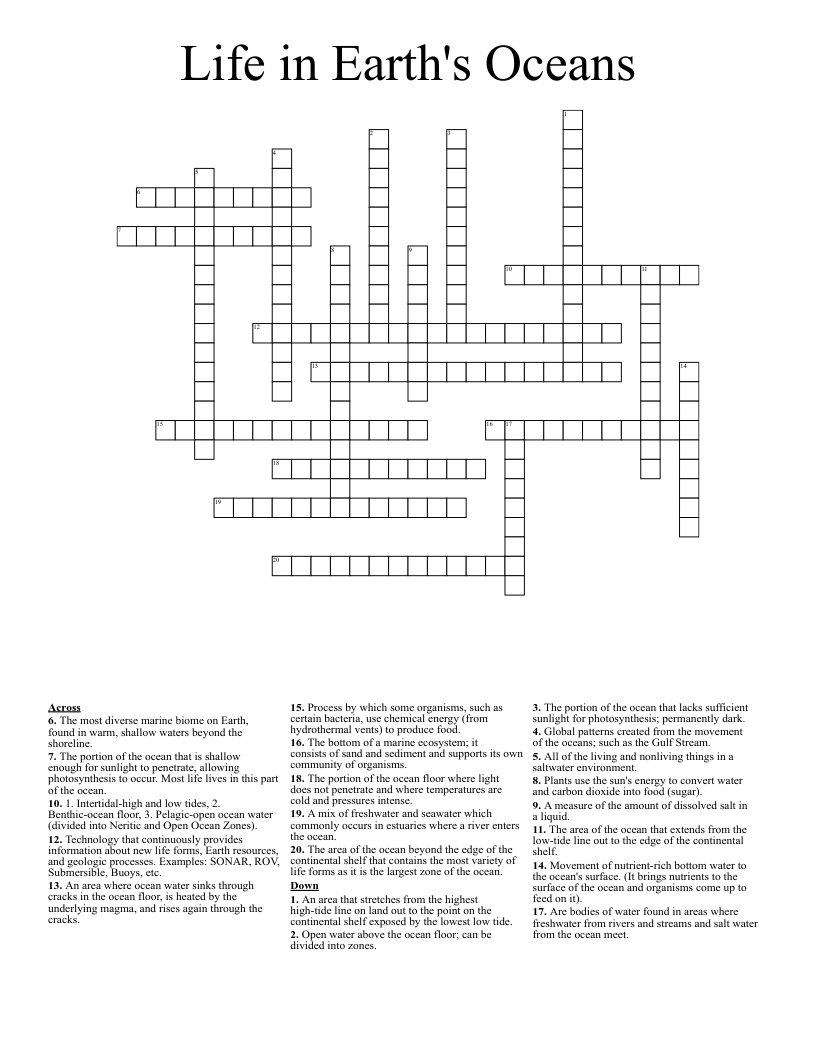
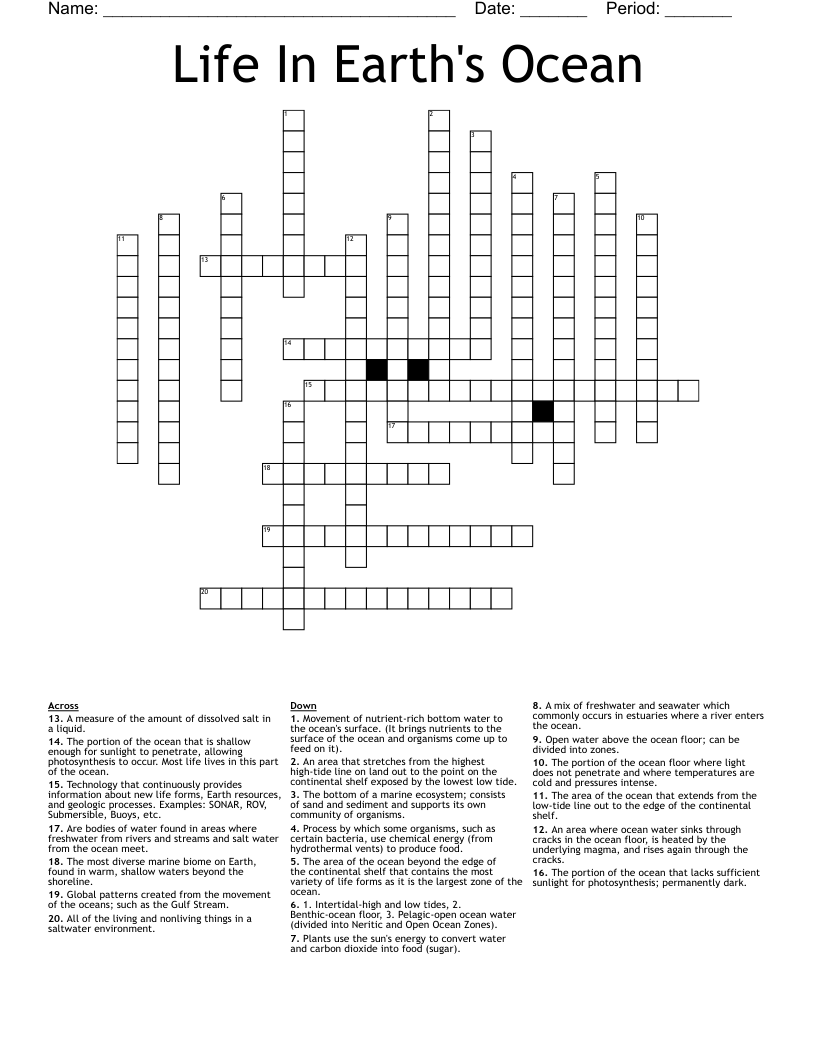
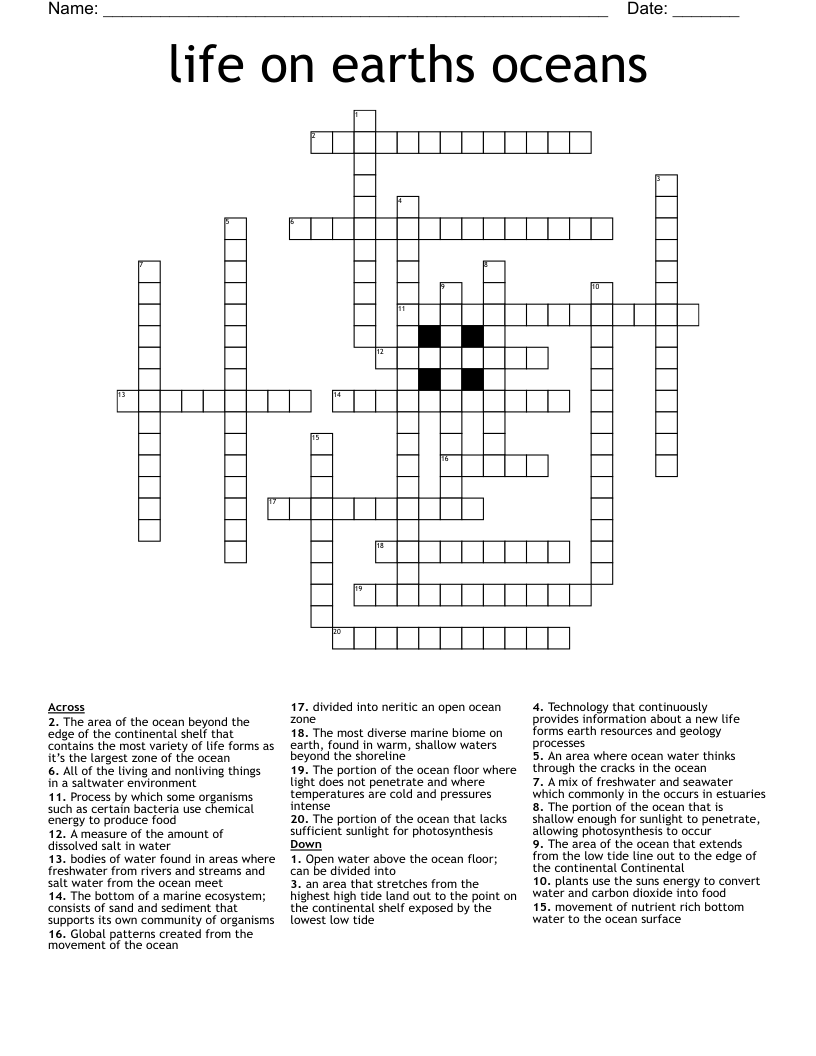
Are bodies of water found in areas where freshwater from rivers and streams and salt water from the ocean meet.
A mix of freshwater and seawater which commonly occurs in estuaries where a river enters the ocean.
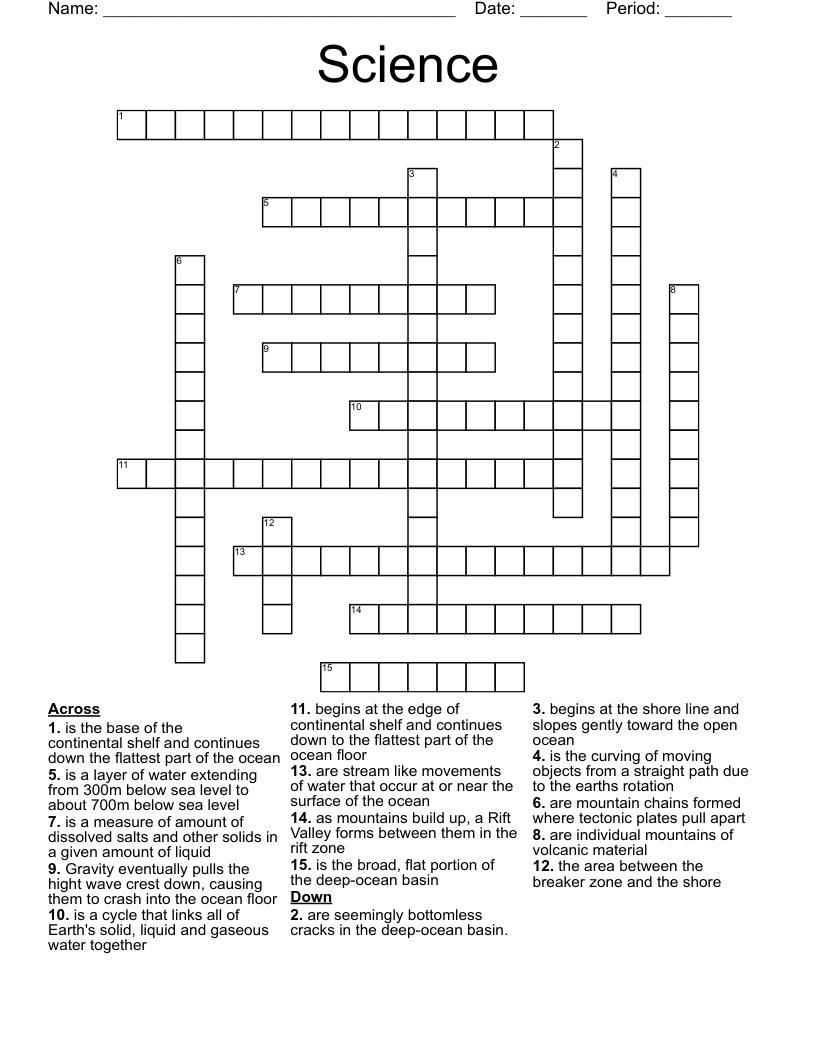
A measure of the amount of dissolved salt in a liquid.
All of the living and nonliving things in a saltwater environment.
The most diverse marine biome on Earth, found in warm, shallow waters beyond the shoreline.
The portion of the ocean that is shallow enough for sunlight to penetrate, allowing photosynthesis to occur. Most life lives in this part of the ocean.
The portion of the ocean that lacks sufficient sunlight for photosynthesis; permanently dark.
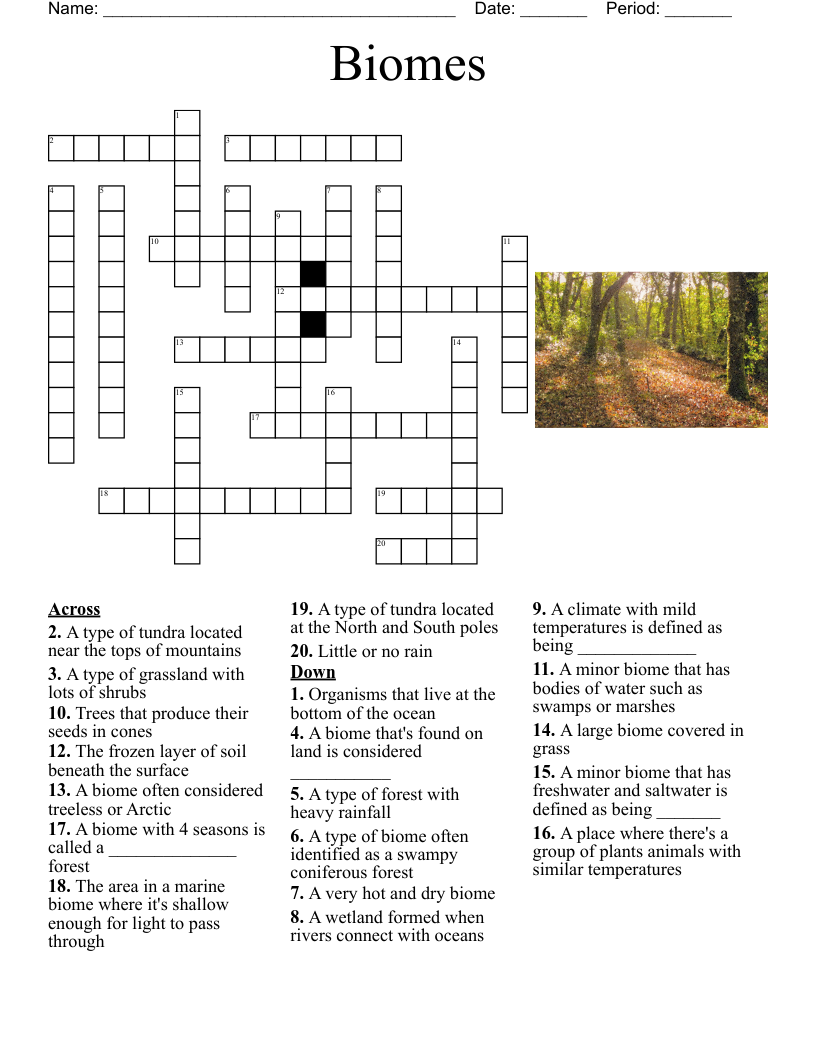
1. Intertidal-high and low tides, 2. Benthic-ocean floor, 3. Pelagic-open ocean water (divided into Neritic and Open Ocean Zones).
An area that stretches from the highest high-tide line on land out to the point on the continental shelf exposed by the lowest low tide.
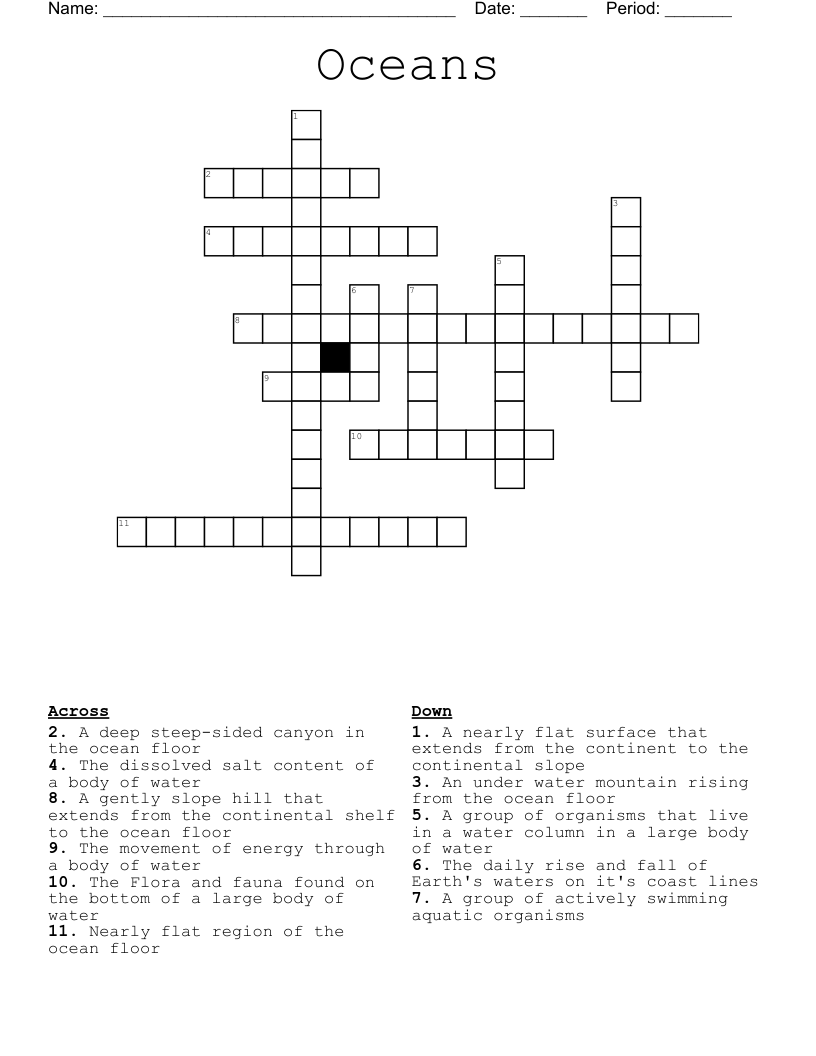
The bottom of a marine ecosystem; consists of sand and sediment and supports its own community of organisms.
Open water above the ocean floor; can be divided into zones.
The area of the ocean that extends from the low-tide line out to the edge of the continental shelf.
The area of the ocean beyond the edge of the continental shelf that contains the most variety of life forms as it is the largest zone of the ocean.
The portion of the ocean floor where light does not penetrate and where temperatures are cold and pressures intense.
Movement of nutrient-rich bottom water to the ocean's surface. (It brings nutrients to the surface of the ocean and organisms come up to feed on it).
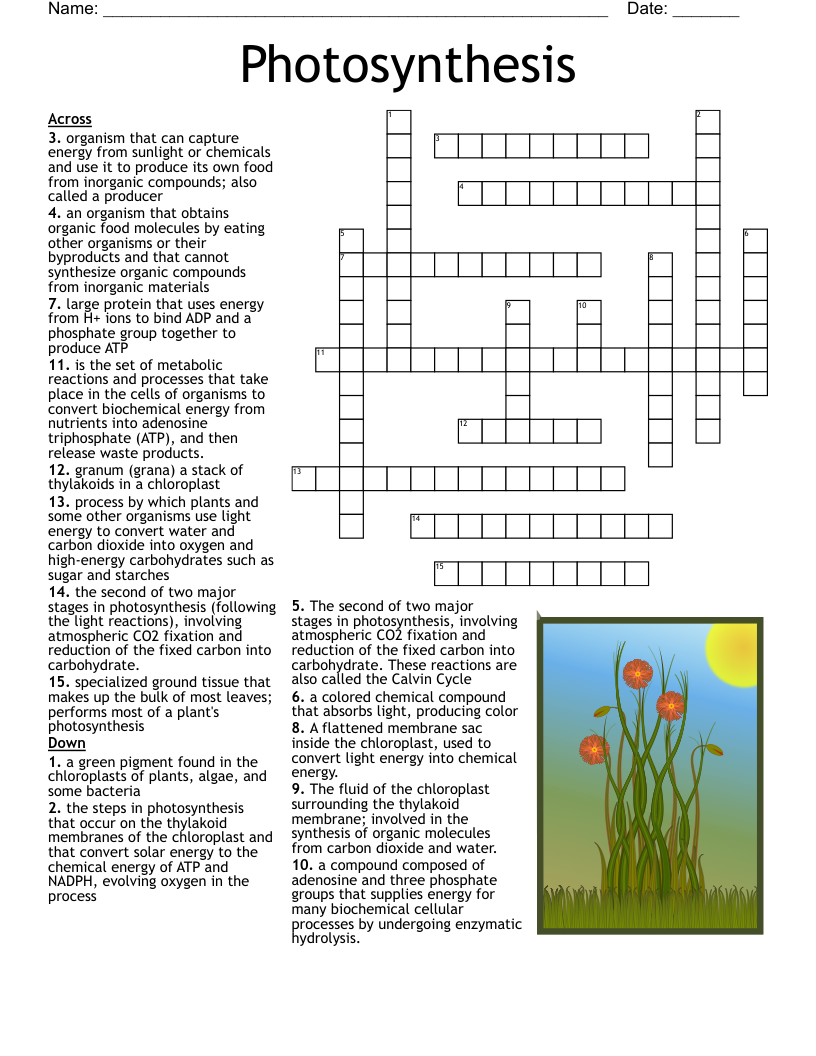
Plants use the sun's energy to convert water and carbon dioxide into food (sugar).
Plants use the sun's energy to convert water and carbon dioxide into food (sugar).
Process by which some organisms, such as certain bacteria, use chemical energy (from hydrothermal vents) to produce food.
An area where ocean water sinks through cracks in the ocean floor, is heated by the underlying magma, and rises again through the cracks.
Global patterns created from the movement of the oceans; such as the Gulf Stream.
Technology that continuously provides information about new life forms, Earth resources, and geologic processes. Examples: SONAR, ROV, Submersible, Buoys, etc.