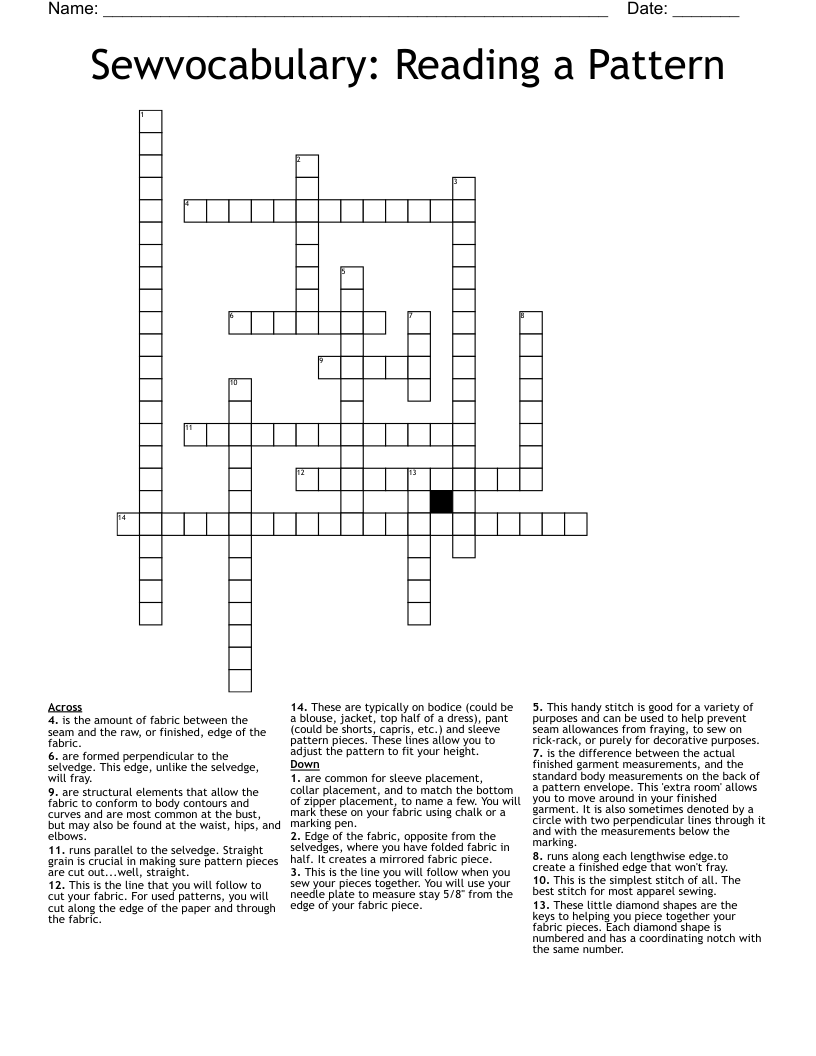
Sewvocabulary: Reading a Pattern Crossword
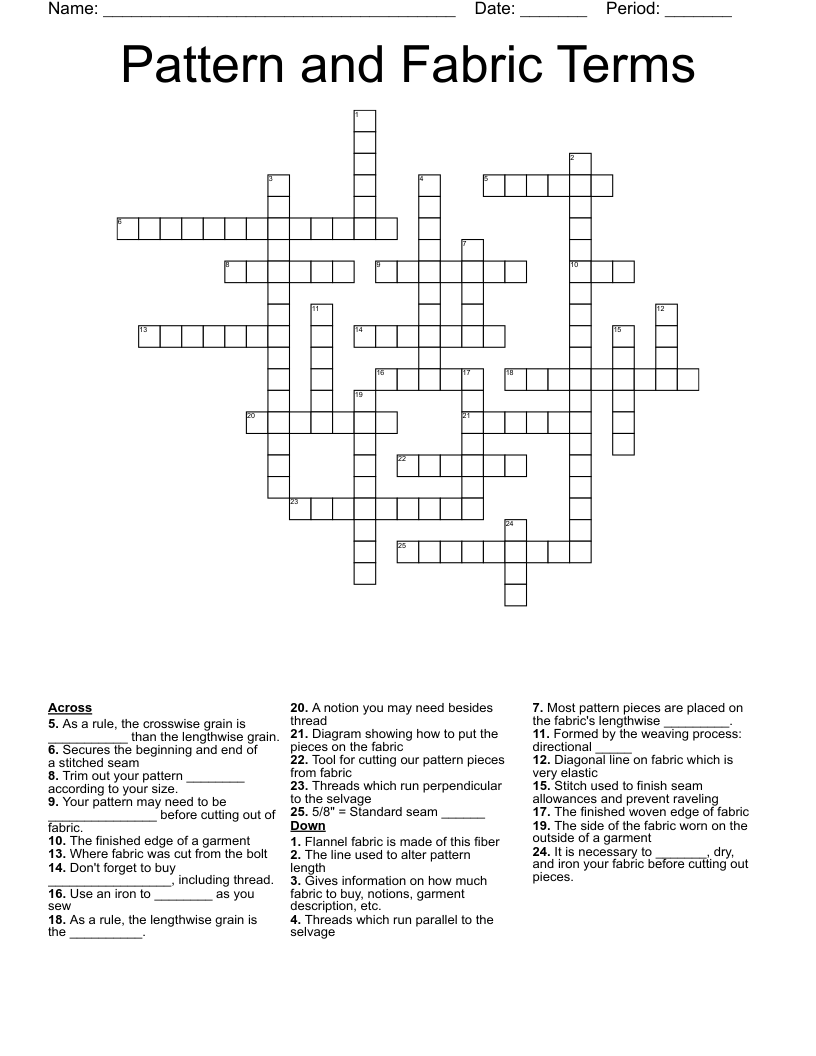
This printable crossword puzzle on the topic of Crafts & Sewing has 14 clues. Answers range from 4 to 23 letters long. This crossword is also available to download as a Microsoft Word document or a PDF.
Description
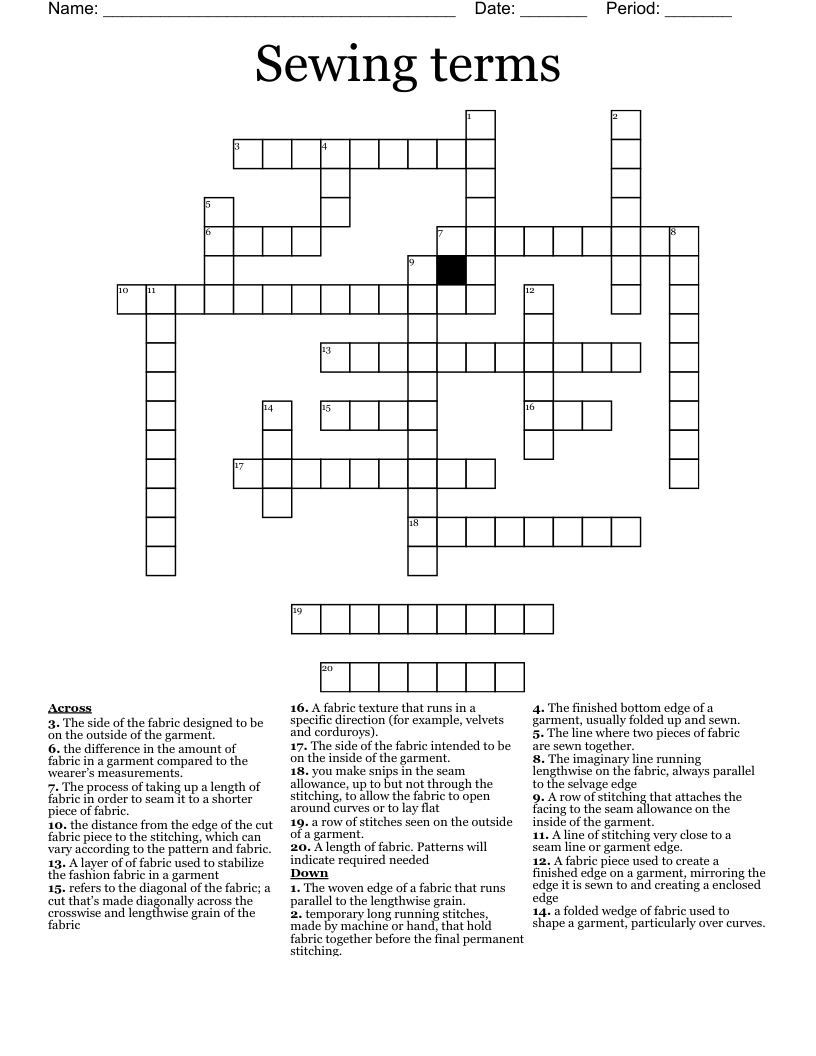
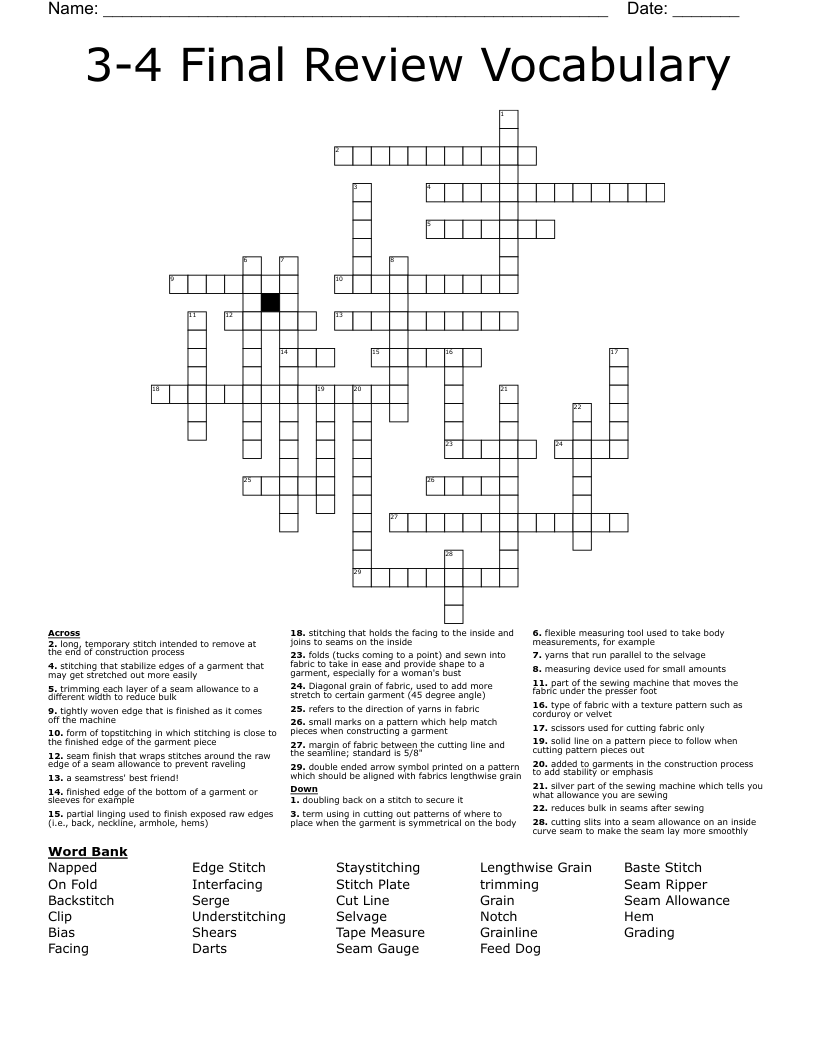
is the amount of fabric between the seam and the raw, or finished, edge of the fabric.
runs parallel to the selvedge. Straight grain is crucial in making sure pattern pieces are cut out...well, straight.
are formed perpendicular to the selvedge. This edge, unlike the selvedge, will fray.
runs along each lengthwise edge.to create a finished edge that won't fray.
This is the line that you will follow to cut your fabric. For used patterns, you will cut along the edge of the paper and through the fabric.
This is the line you will follow when you sew your pieces together. You will use your needle plate to measure stay 5/8" from the edge of your fabric piece.
These little diamond shapes are the keys to helping you piece together your fabric pieces. Each diamond shape is numbered and has a coordinating notch with the same number.
These are typically on bodice (could be a blouse, jacket, top half of a dress), pant (could be shorts, capris, etc.) and sleeve pattern pieces. These lines allow you to adjust the pattern to fit your height.
are common for sleeve placement, collar placement, and to match the bottom of zipper placement, to name a few. You will mark these on your fabric using chalk or a marking pen.
This is the simplest stitch of all. The best stitch for most apparel sewing.
This handy stitch is good for a variety of purposes and can be used to help prevent seam allowances from fraying, to sew on rick-rack, or purely for decorative purposes.
are structural elements that allow the fabric to conform to body contours and curves and are most common at the bust, but may also be found at the waist, hips, and elbows.
is the difference between the actual finished garment measurements, and the standard body measurements on the back of a pattern envelope. This 'extra room' allows you to move around in your finished garment. It is also sometimes denoted by a circle with two perpendicular lines through it and with the measurements below the marking.
Edge of the fabric, opposite from the selvedges, where you have folded fabric in half. It creates a mirrored fabric piece.