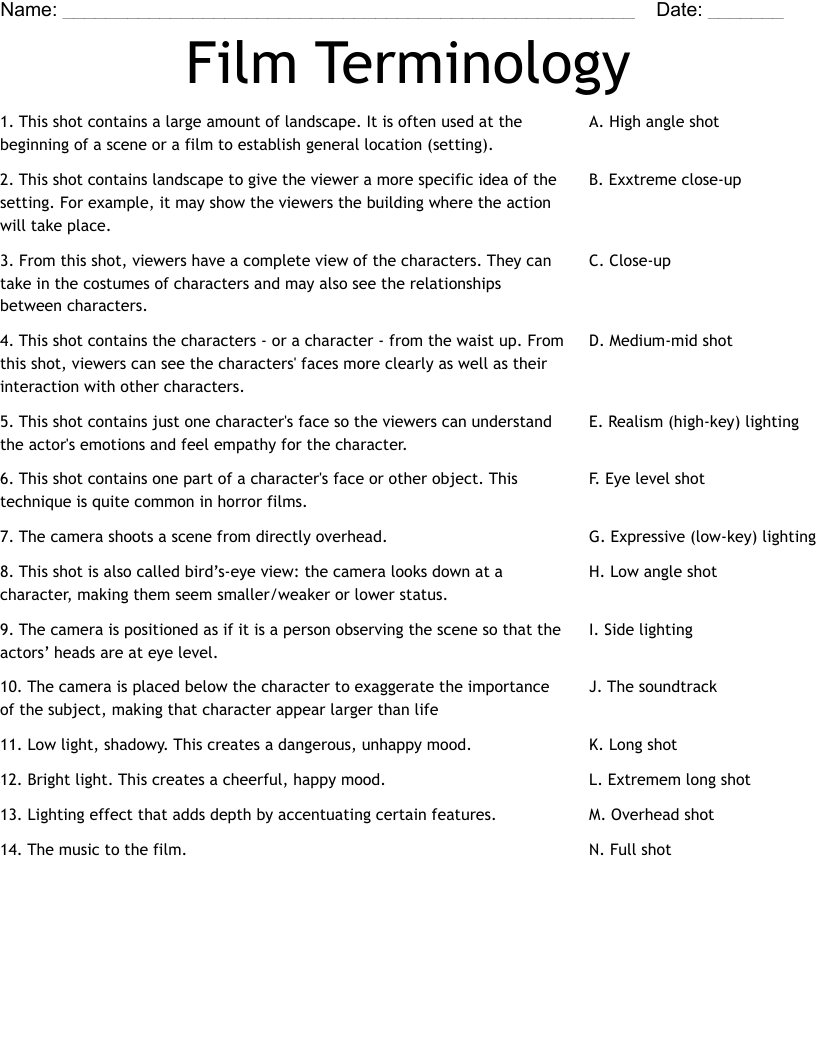
Film Terminology Worksheet
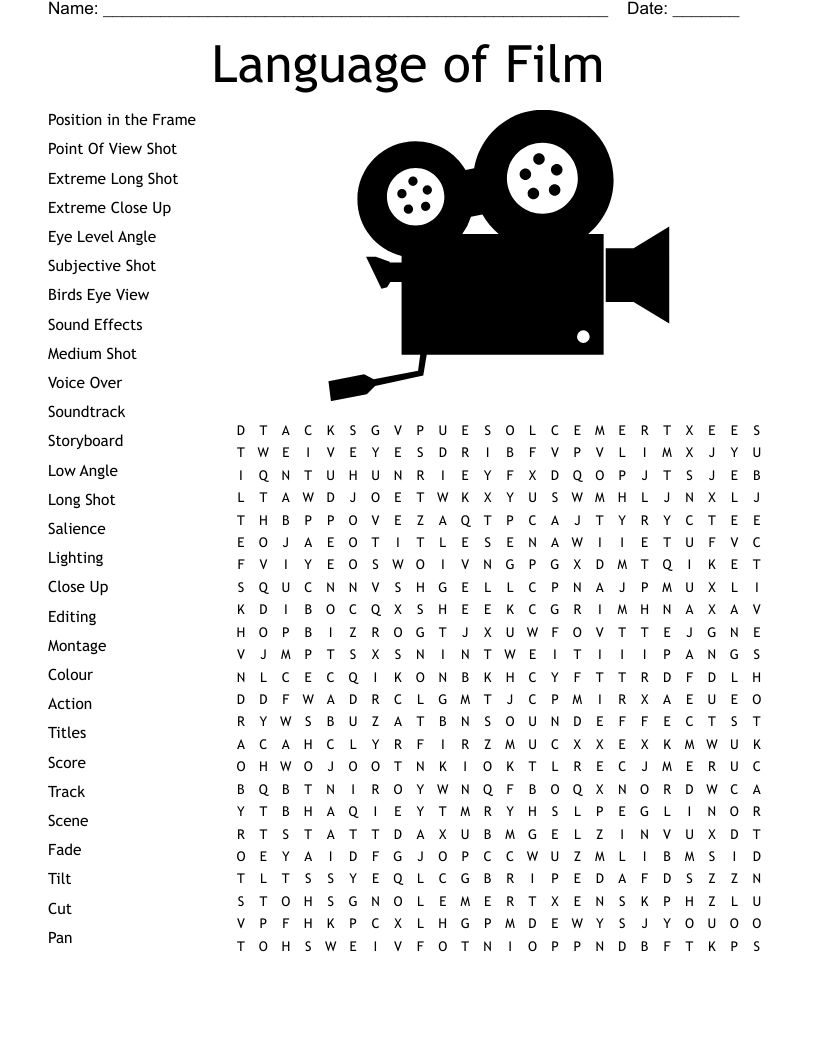
This printable matching worksheet on the topic of Movies & Television has 14 questions and answers to match. This matching worksheet is also available to download as a Microsoft Word document or a PDF.
Description
This shot contains a large amount of landscape. It is often used at the beginning of a scene or a film to establish general location (setting).
This shot contains landscape to give the viewer a more specific idea of the setting. For example, it may show the viewers the building where the action will take place.
From this shot, viewers have a complete view of the characters. They can take in the costumes of characters and may also see the relationships between characters.
This shot contains the characters - or a character - from the waist up. From this shot, viewers can see the characters' faces more clearly as well as their interaction with other characters.
This shot contains just one character's face so the viewers can understand the actor's emotions and feel empathy for the character.
This shot contains one part of a character's face or other object. This technique is quite common in horror films.
The camera shoots a scene from directly overhead.
This shot is also called bird’s-eye view: the camera looks down at a character, making them seem smaller/weaker or lower status.
The camera is positioned as if it is a person observing the scene so that the actors’ heads are at eye level.
The camera is placed below the character to exaggerate the importance of the subject, making that character appear larger than life
Low light, shadowy. This creates a dangerous, unhappy mood.
Bright light. This creates a cheerful, happy mood.
Lighting effect that adds depth by accentuating certain features.
The music to the film.