Vietnam Crossword Puzzle
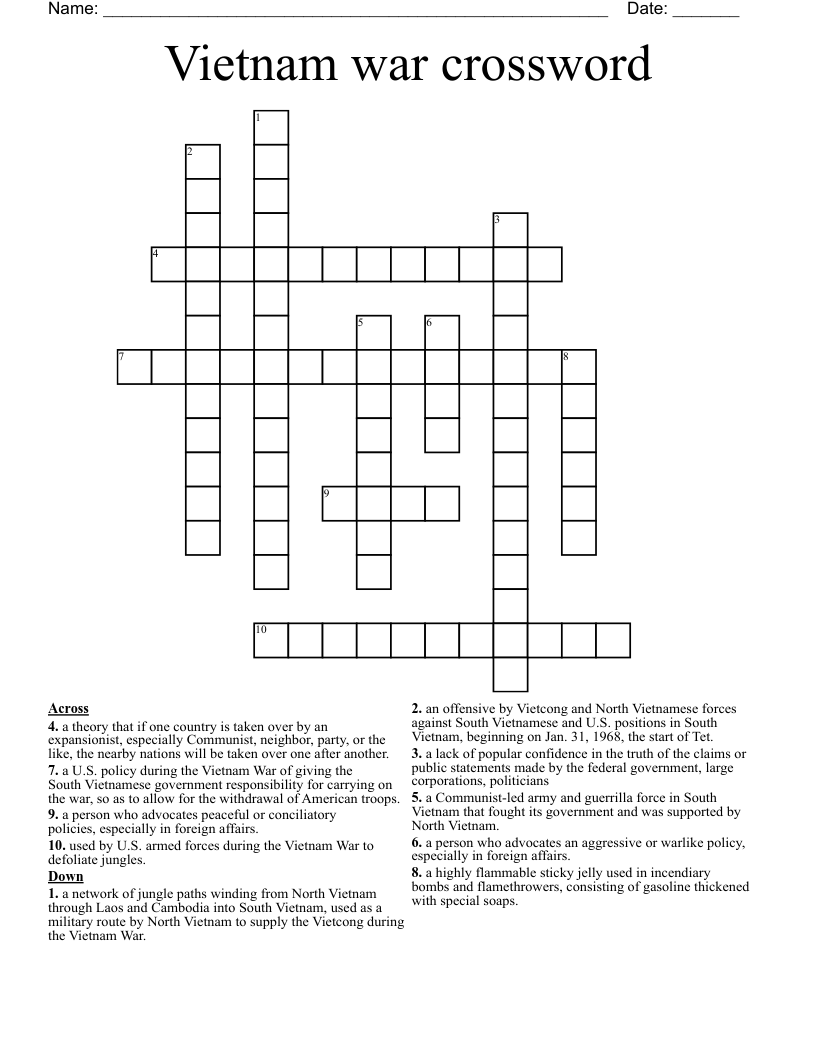
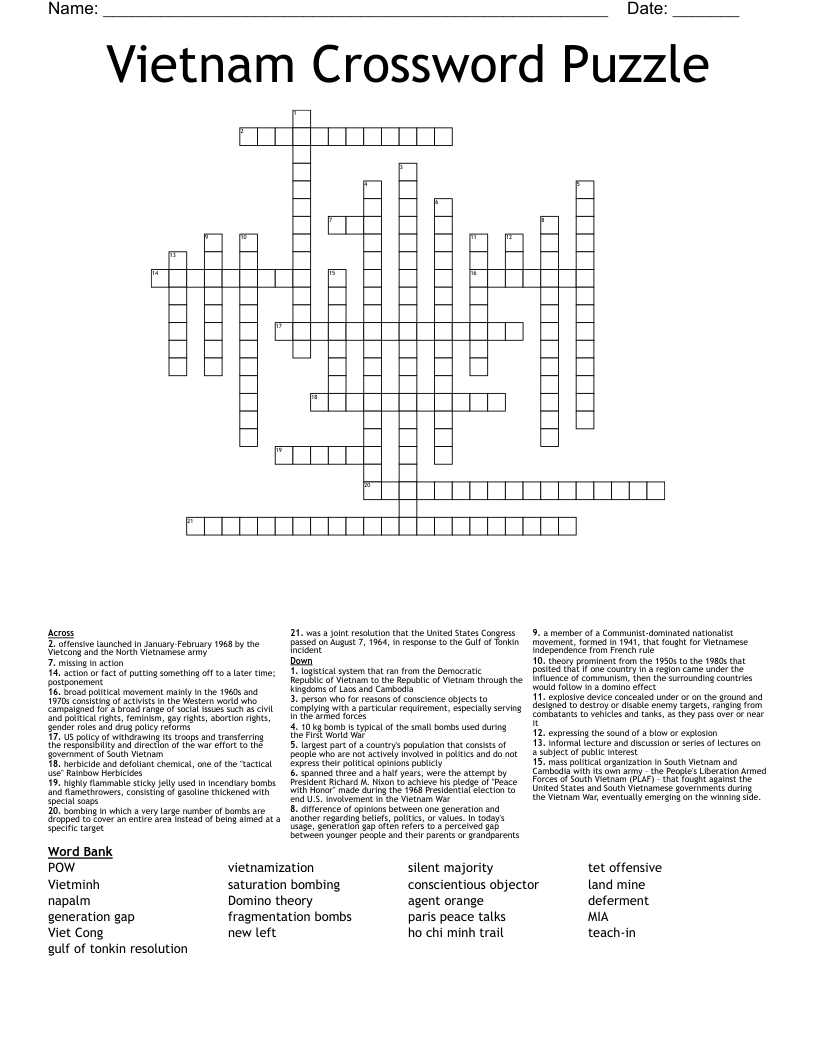
This printable crossword puzzle on the topic of US History (General) has 21 clues. Answers range from 3 to 22 letters long. This crossword is also available to download as a Microsoft Word document or a PDF.
Description
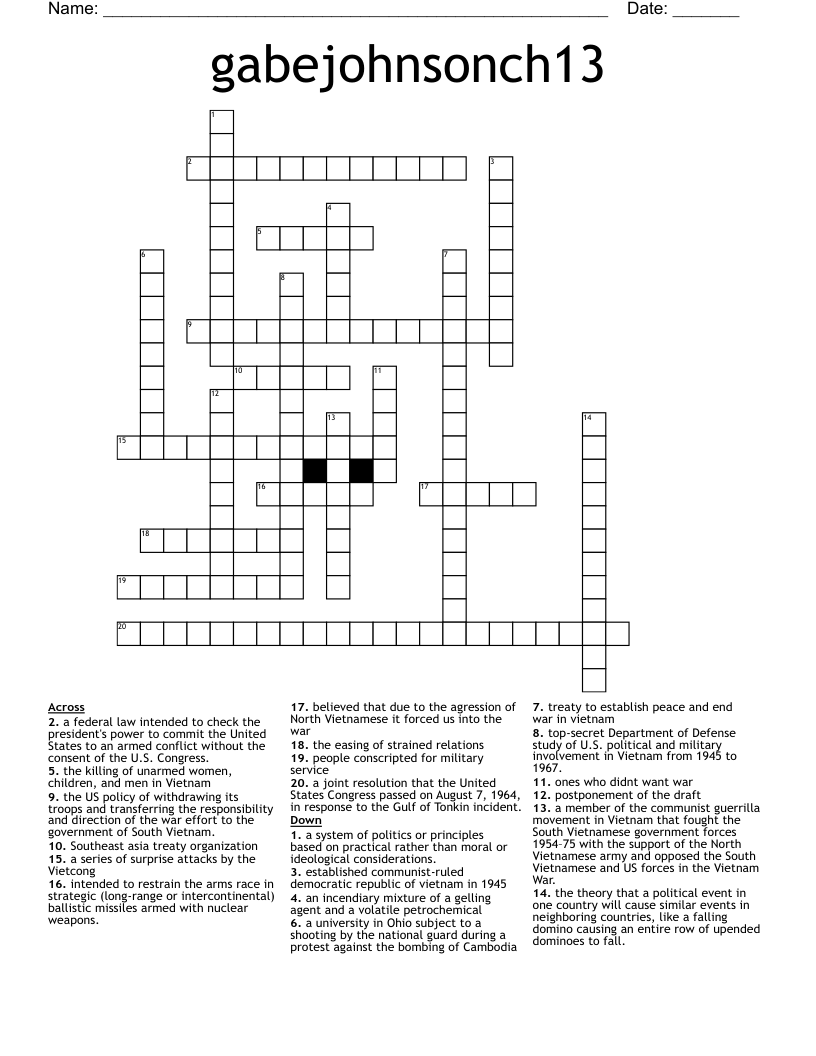
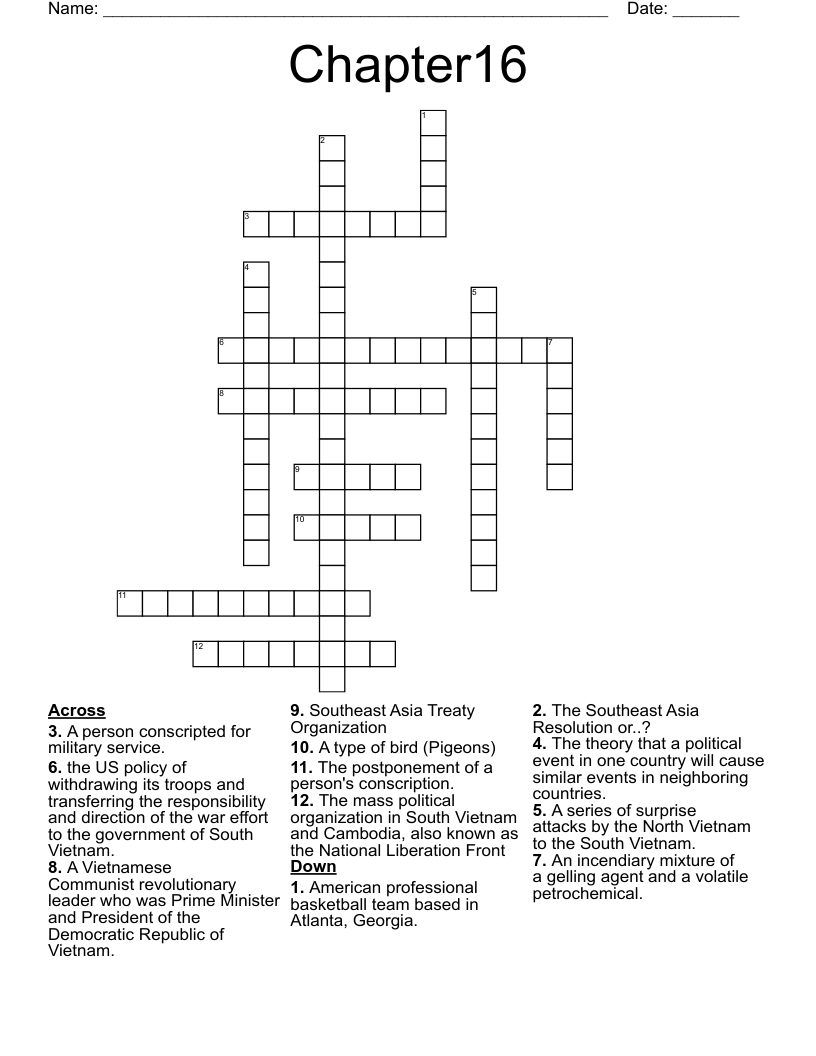
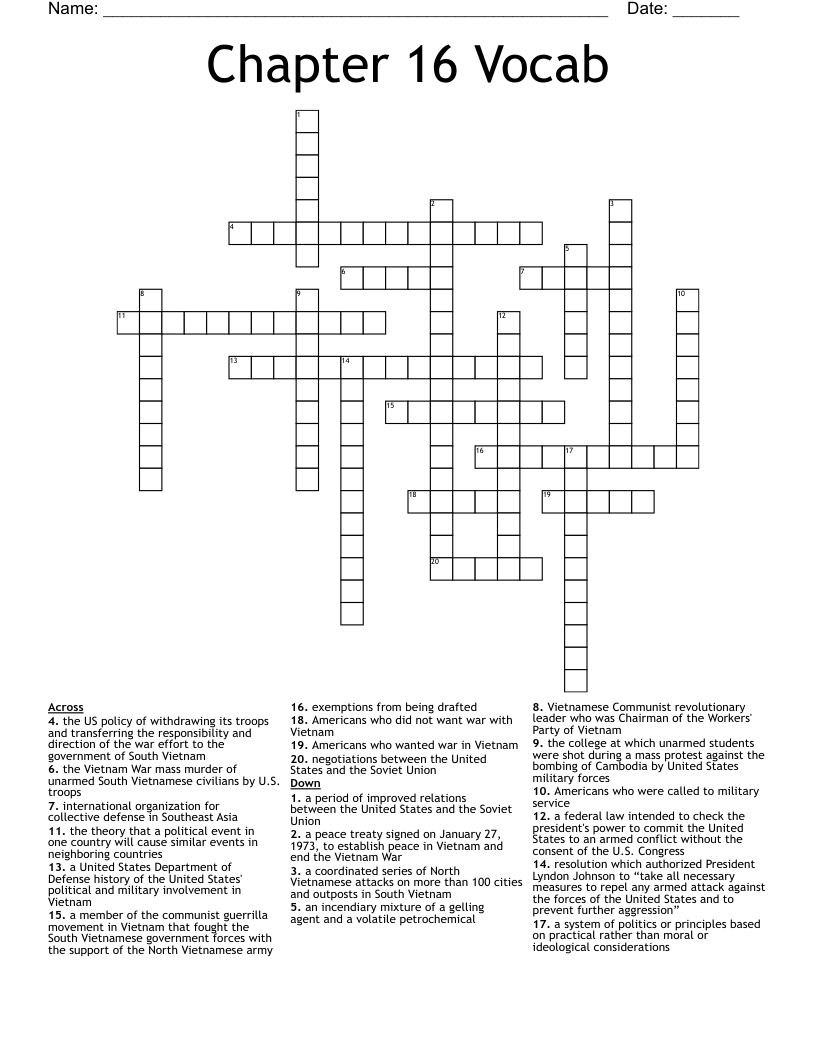
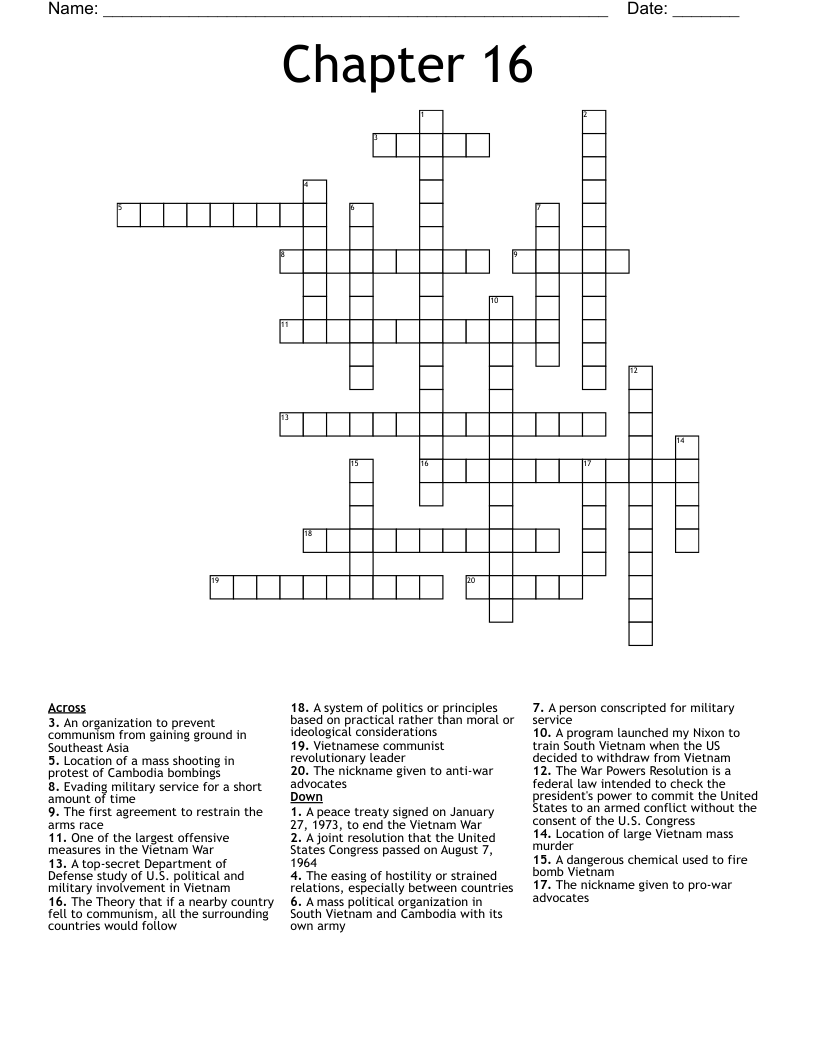
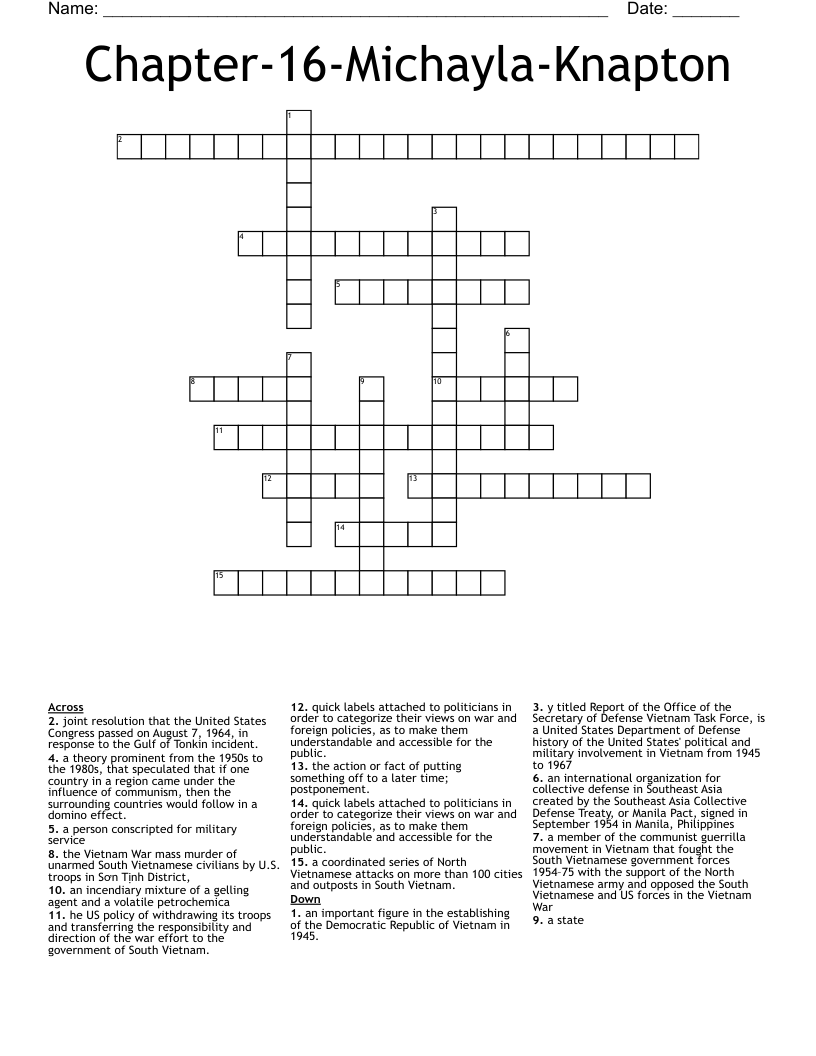
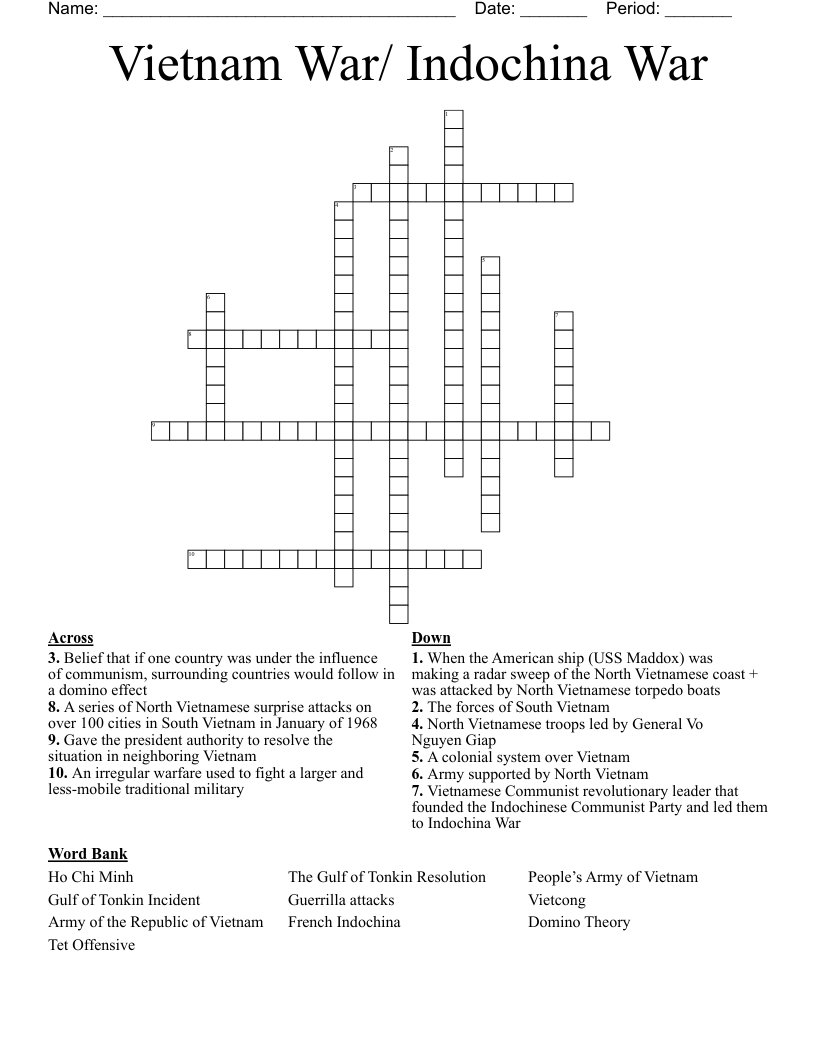
theory prominent from the 1950s to the 1980s that posited that if one country in a region came under the influence of communism, then the surrounding countries would follow in a domino effect
a member of a Communist-dominated nationalist movement, formed in 1941, that fought for Vietnamese independence from French rule
mass political organization in South Vietnam and Cambodia with its own army – the People's Liberation Armed Forces of South Vietnam (PLAF) – that fought against the United States and South Vietnamese governments during the Vietnam War, eventually emerging on the winning side.
was a joint resolution that the United States Congress passed on August 7, 1964, in response to the Gulf of Tonkin incident
explosive device concealed under or on the ground and designed to destroy or disable enemy targets, ranging from combatants to vehicles and tanks, as they pass over or near it
bombing in which a very large number of bombs are dropped to cover an entire area instead of being aimed at a specific target
10 kg bomb is typical of the small bombs used during the First World War
herbicide and defoliant chemical, one of the "tactical use" Rainbow Herbicides
highly flammable sticky jelly used in incendiary bombs and flamethrowers, consisting of gasoline thickened with special soaps
logistical system that ran from the Democratic Republic of Vietnam to the Republic of Vietnam through the kingdoms of Laos and Cambodia
offensive launched in January–February 1968 by the Vietcong and the North Vietnamese army
difference of opinions between one generation and another regarding beliefs, politics, or values. In today's usage, generation gap often refers to a perceived gap between younger people and their parents or grandparents
broad political movement mainly in the 1960s and 1970s consisting of activists in the Western world who campaigned for a broad range of social issues such as civil and political rights, feminism, gay rights, abortion rights, gender roles and drug policy reforms
informal lecture and discussion or series of lectures on a subject of public interest
person who for reasons of conscience objects to complying with a particular requirement, especially serving in the armed forces
action or fact of putting something off to a later time; postponement
spanned three and a half years, were the attempt by President Richard M. Nixon to achieve his pledge of "Peace with Honor" made during the 1968 Presidential election to end U.S. involvement in the Vietnam War
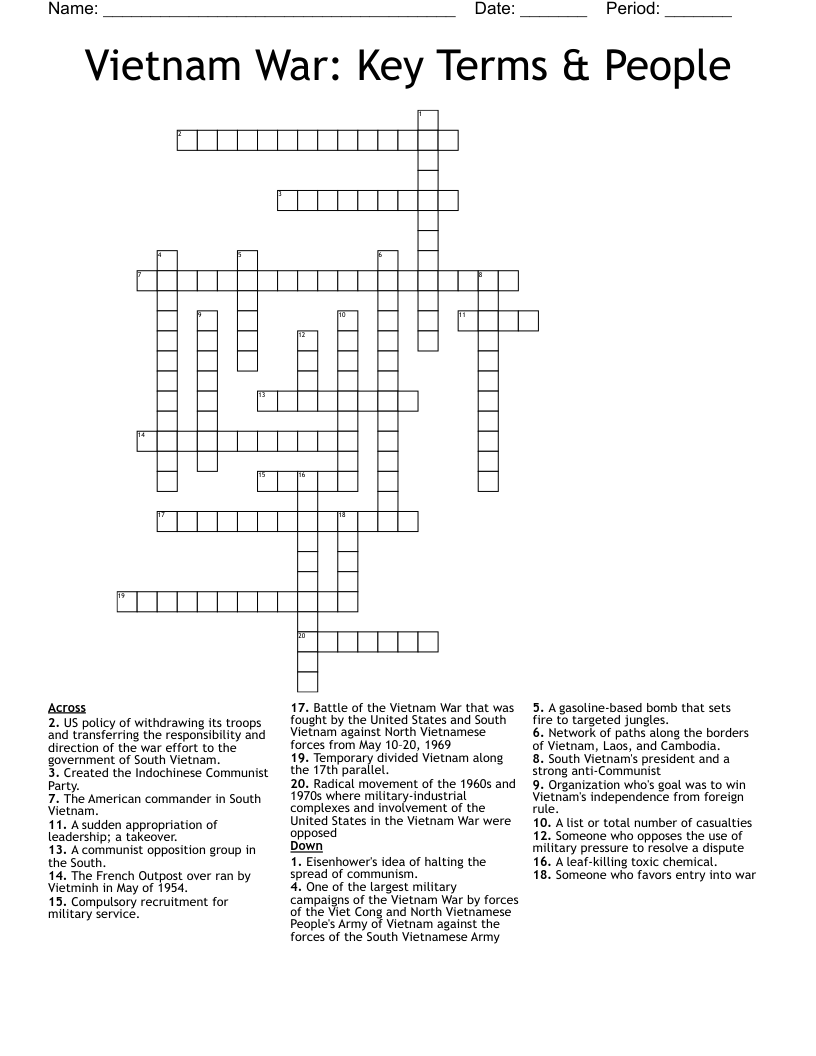
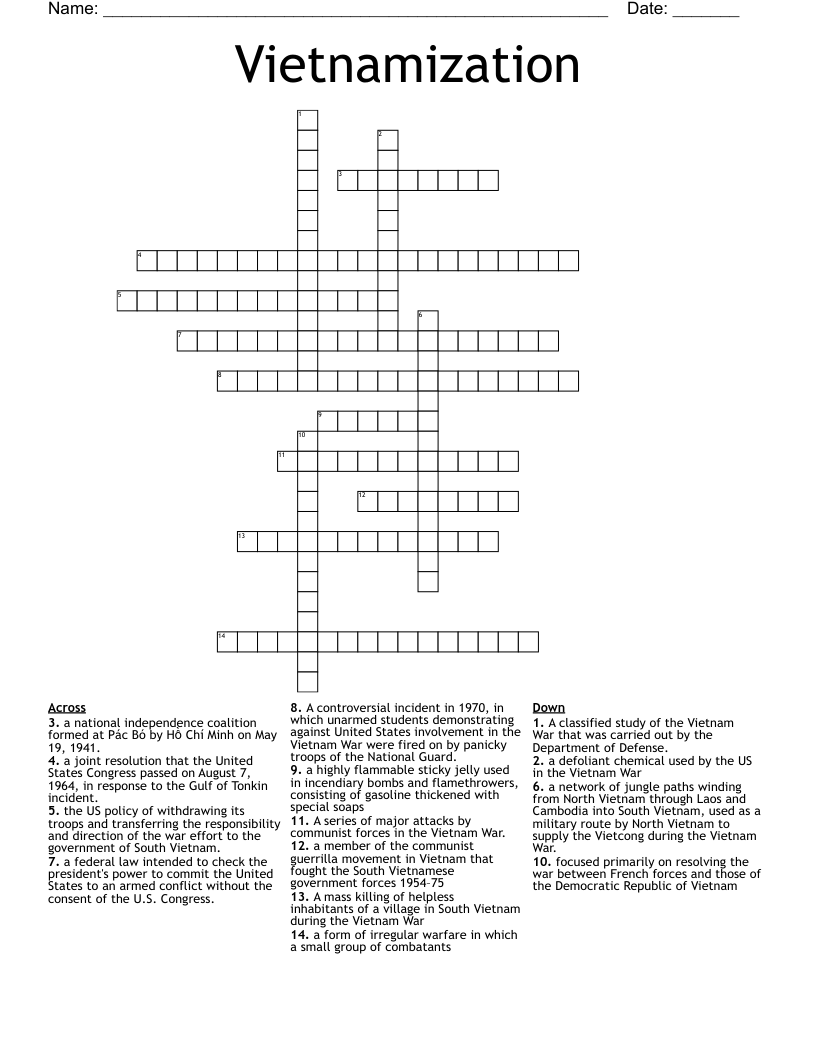
US policy of withdrawing its troops and transferring the responsibility and direction of the war effort to the government of South Vietnam
largest part of a country's population that consists of people who are not actively involved in politics and do not express their political opinions publicly
expressing the sound of a blow or explosion
missing in action