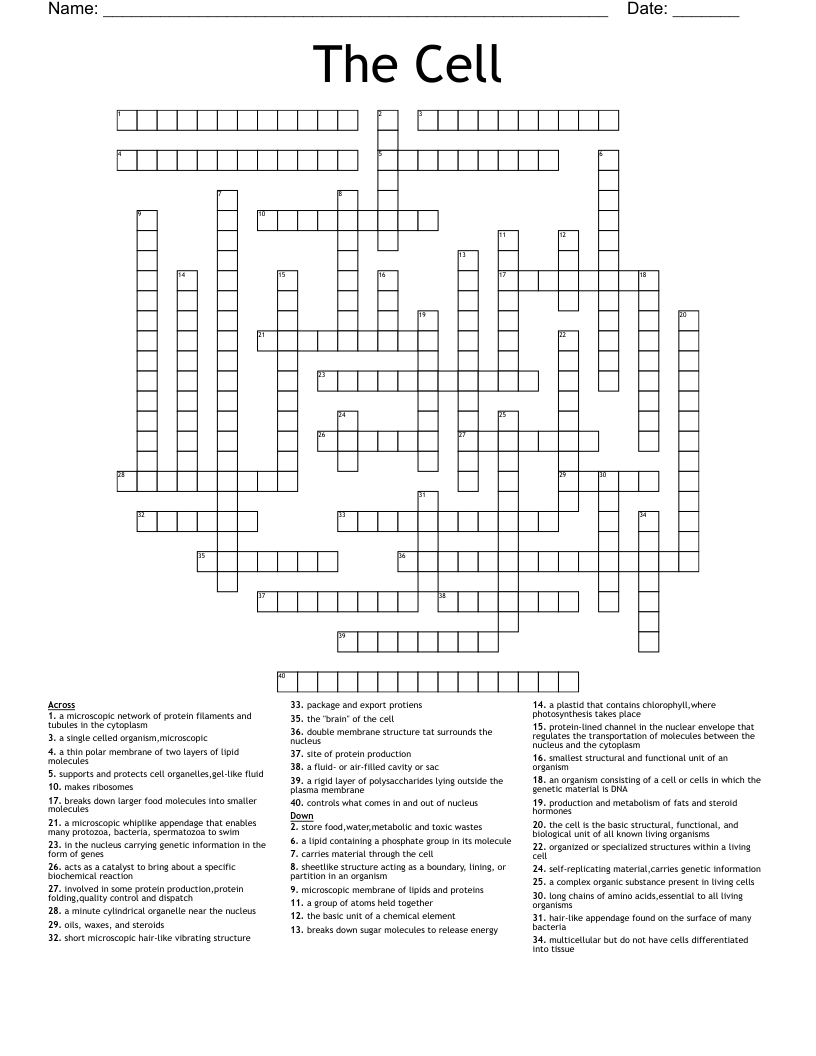
The Cell Crossword
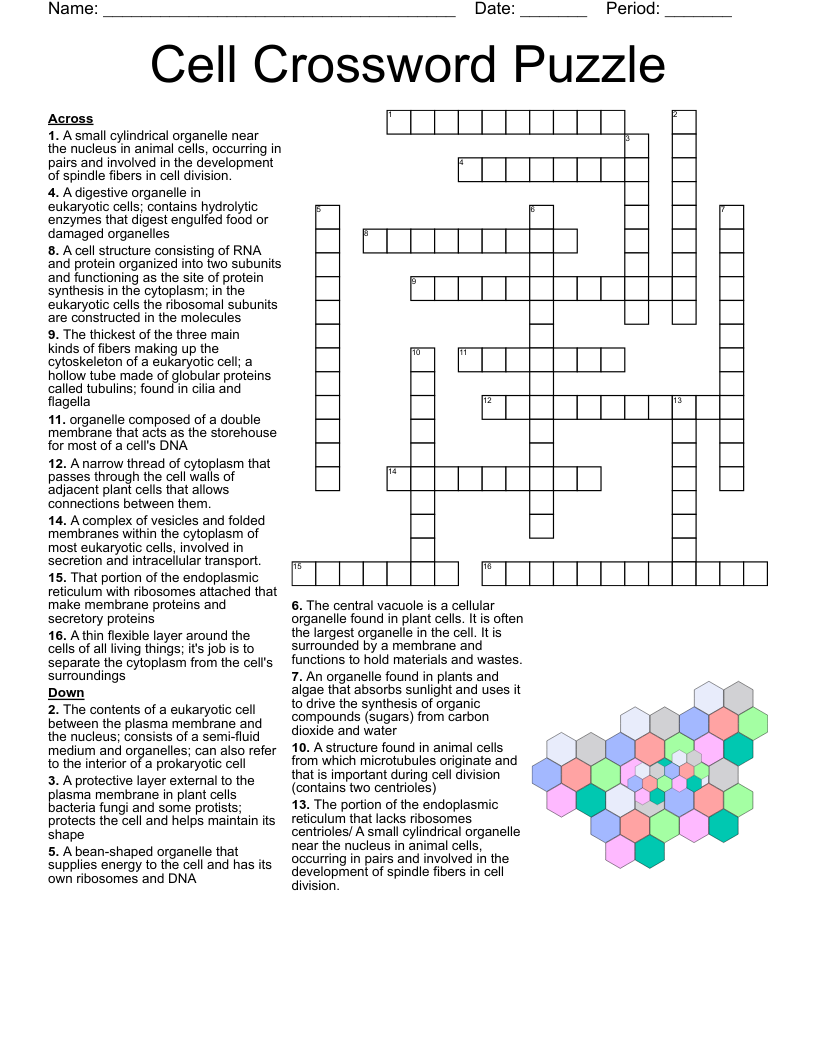
This printable crossword puzzle on the topic of Cell Biology has 40 clues. Answers range from 3 to 20 letters long. This crossword is also available to download as a Microsoft Word document or a PDF.
Description
the "brain" of the cell
site of protein production
carries material through the cell
breaks down larger food molecules into smaller molecules
production and metabolism of fats and steroid hormones
involved in some protein production,protein folding,quality control and dispatch
store food,water,metabolic and toxic wastes
package and export protiens
breaks down sugar molecules to release energy
in the nucleus carrying genetic information in the form of genes
makes ribosomes
controls what comes in and out of nucleus
microscopic membrane of lipids and proteins
supports and protects cell organelles,gel-like fluid
self-replicating material,carries genetic information
a complex organic substance present in living cells
a lipid containing a phosphate group in its molecule
long chains of amino acids,essential to all living organisms
oils, waxes, and steroids
a group of atoms held together
the basic unit of a chemical element
an organism consisting of a cell or cells in which the genetic material is DNA
a single celled organism,microscopic
organized or specialized structures within a living cell
smallest structural and functional unit of an organism
a plastid that contains chlorophyll,where photosynthesis takes place
a fluid- or air-filled cavity or sac
the cell is the basic structural, functional, and biological unit of all known living organisms
a thin polar membrane of two layers of lipid molecules
a microscopic network of protein filaments and tubules in the cytoplasm
short microscopic hair-like vibrating structure
a microscopic whiplike appendage that enables many protozoa, bacteria, spermatozoa to swim
acts as a catalyst to bring about a specific biochemical reaction
double membrane structure tat surrounds the nucleus
protein-lined channel in the nuclear envelope that regulates the transportation of molecules between the nucleus and the cytoplasm
hair-like appendage found on the surface of many bacteria
sheetlike structure acting as a boundary, lining, or partition in an organism
multicellular but do not have cells differentiated into tissue
a rigid layer of polysaccharides lying outside the plasma membrane
a minute cylindrical organelle near the nucleus