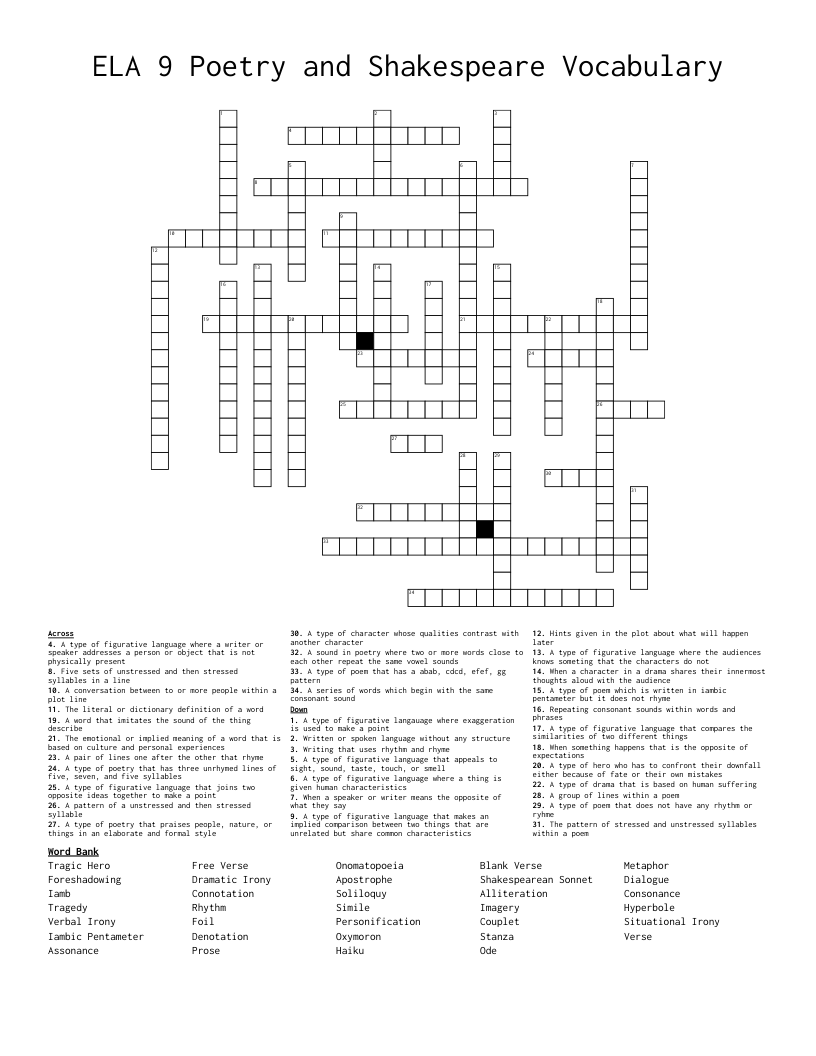
ELA 9 Poetry and Shakespeare Vocabulary Crossword
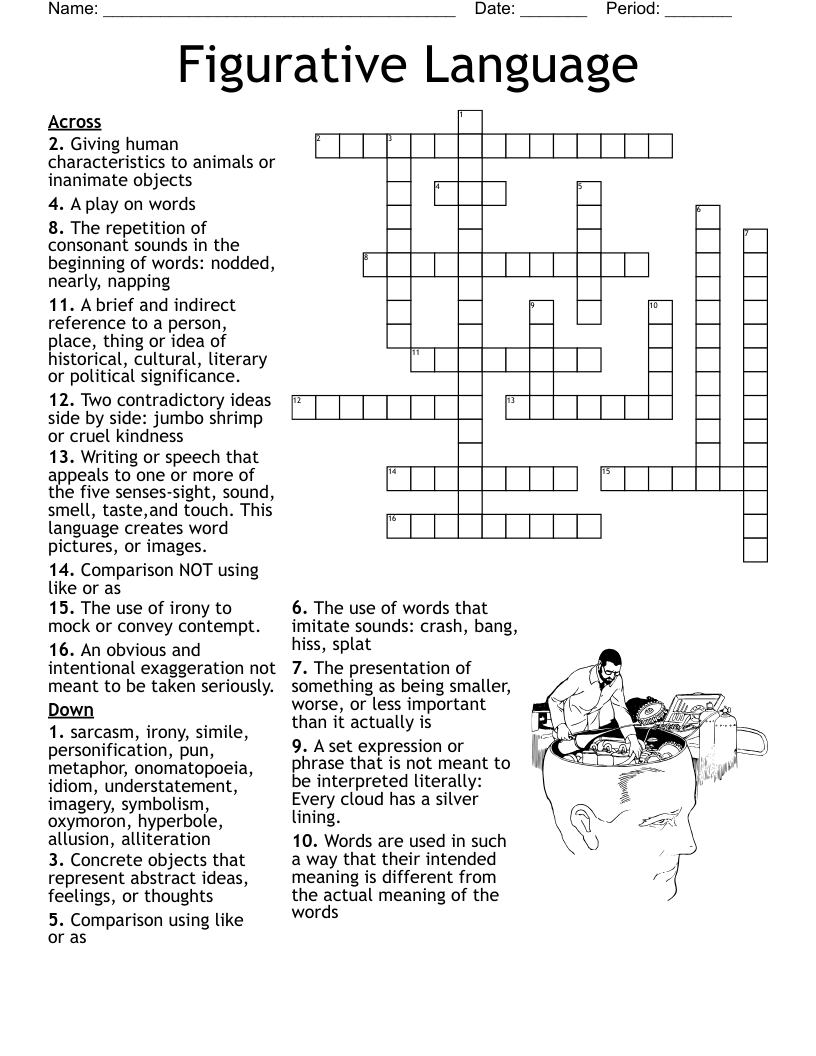
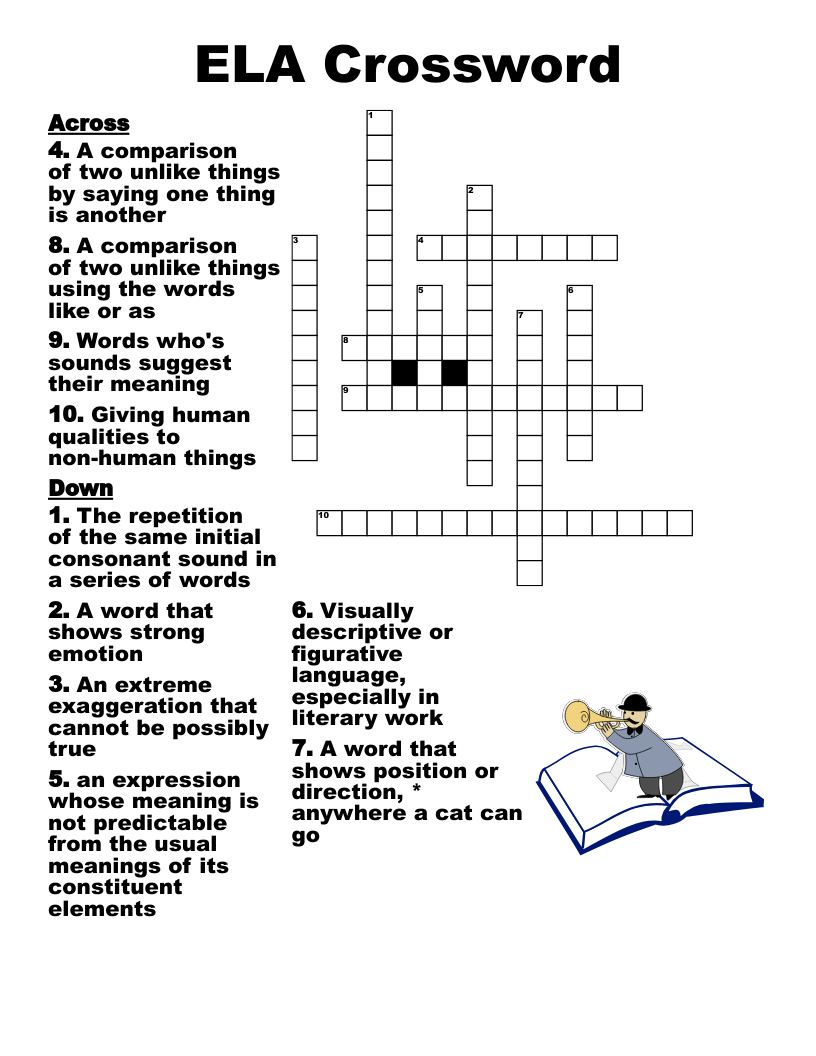
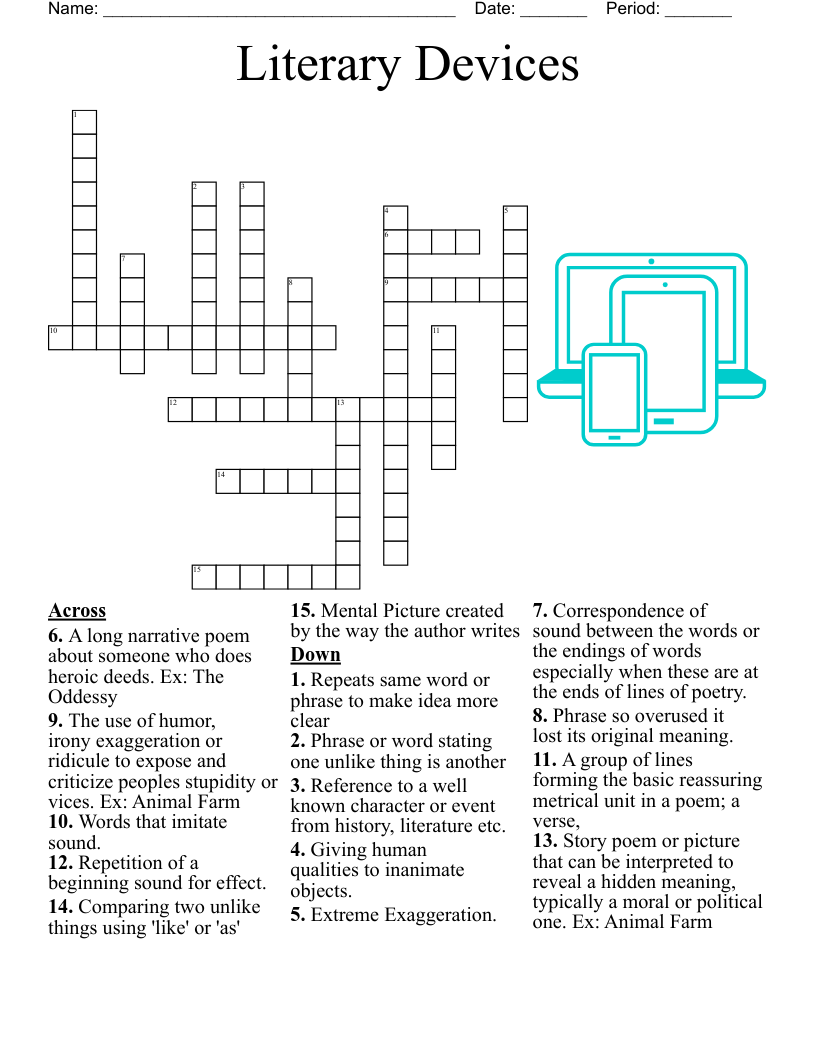
This printable crossword puzzle on the topic of Figurative Language & Literary Devices has 34 clues. Answers range from 3 to 19 letters long. This crossword is also available to download as a Microsoft Word document or a PDF.
Description
The literal or dictionary definition of a word
When a character in a drama shares their innermost thoughts aloud with the audience
A type of poetry that praises people, nature, or things in an elaborate and formal style
A sound in poetry where two or more words close to each other repeat the same vowel sounds
A type of poetry that has three unrhymed lines of five, seven, and five syllables
A type of drama that is based on human suffering
The emotional or implied meaning of a word that is based on culture and personal experiences
A pair of lines one after the other that rhyme
A type of character whose qualities contrast with another character
A type of hero who has to confront their downfall either because of fate or their own mistakes
Repeating consonant sounds within words and phrases
A word that imitates the sound of the thing describe
The pattern of stressed and unstressed syllables within a poem
A type of poem that does not have any rhythm or ryhme
A conversation between to or more people within a plot line
Hints given in the plot about what will happen later
A series of words which begin with the same consonant sound
A group of lines within a poem
A type of figurative language where a thing is given human characteristics
A type of poem that has a abab, cdcd, efef, gg pattern
A type of poem which is written in iambic pentameter but it does not rhyme
A type of figurative language that appeals to sight, sound, taste, touch, or smell
A type of figurative language that compares the similarities of two different things
A type of figurative language that joins two opposite ideas together to make a point
A type of figurative language that makes an implied comparison between two things that are unrelated but share common characteristics
A type of figurative language where the audiences knows someting that the characters do not
A type of figurative langauage where exaggeration is used to make a point
A type of figurative language where a writer or speaker addresses a person or object that is not physically present
Written or spoken language without any structure
Writing that uses rhythm and rhyme
When a speaker or writer means the opposite of what they say
When something happens that is the opposite of expectations
A pattern of a unstressed and then stressed syllable
Five sets of unstressed and then stressed syllables in a line