Energy Vocab Crossword
This printable crossword puzzle on the topic of Environmental Science has 27 clues. Answers range from 3 to 20 letters long. This crossword is also available to download as a Microsoft Word document or a PDF.
Description
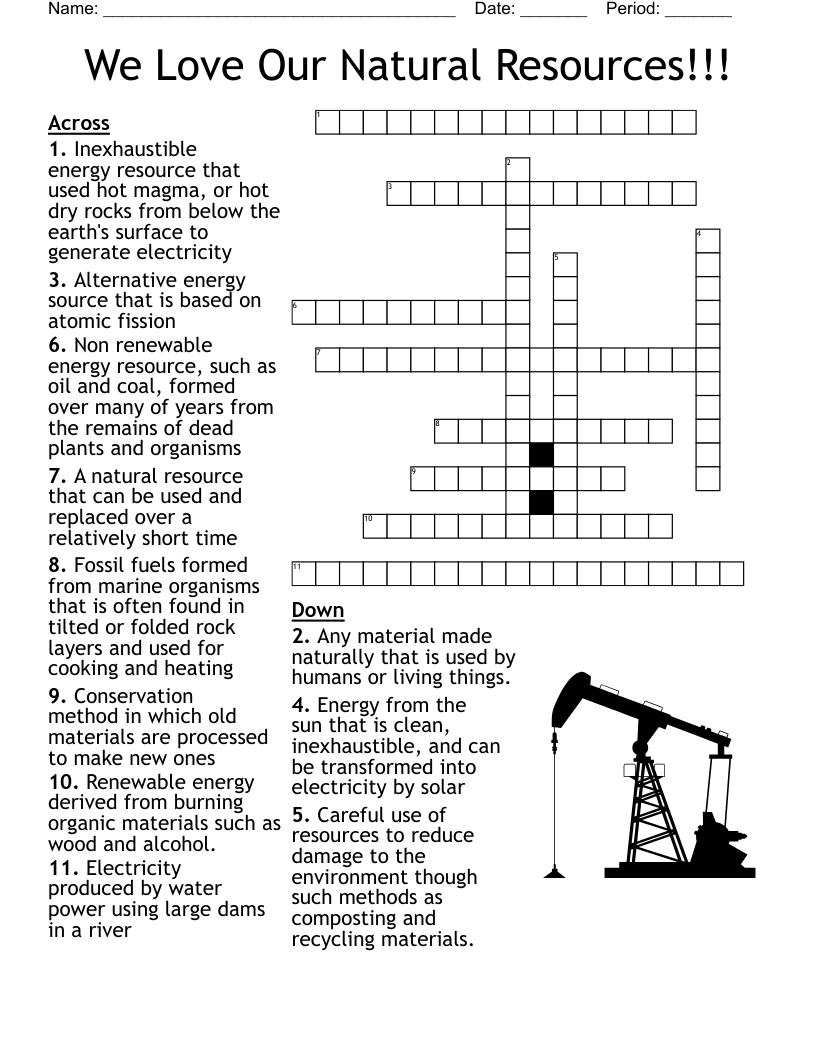
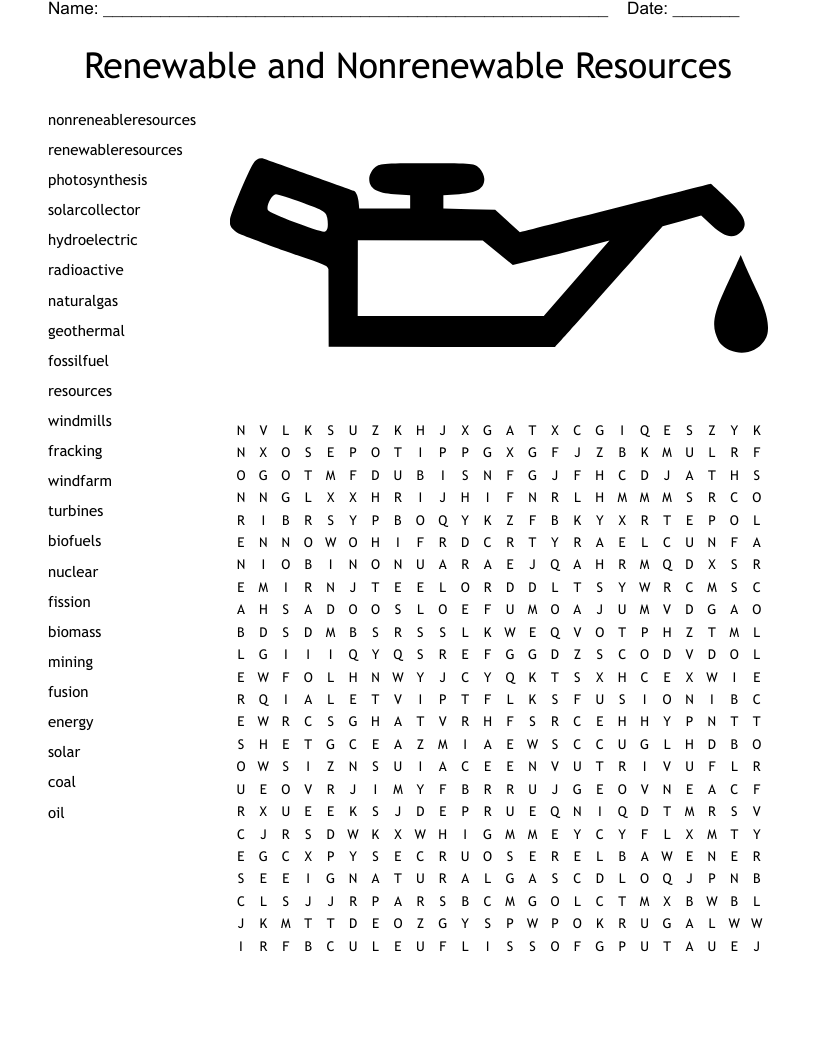
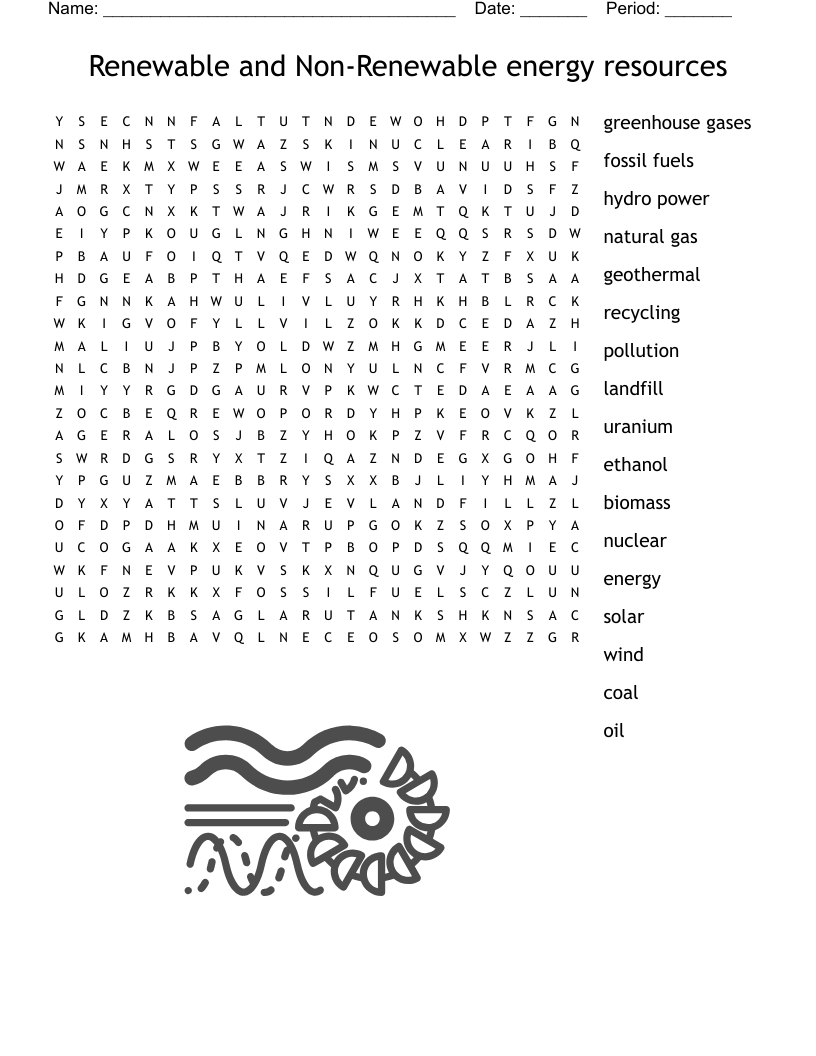
Coal, oil, natural gas, and other fuels that are ancient remains of plants and animals.
energy derived from sources that are not fossil fuels
Any source of energy that can be continually produced and is inexhaustible given current conditions.
A source of energy that is a finite supply capable of being exhausted.
Fuels, such as wood, ethanol or methanol, that are created from the fermentation of plants or from straight plant products.
Compounds composed of only carbon and hydrogen
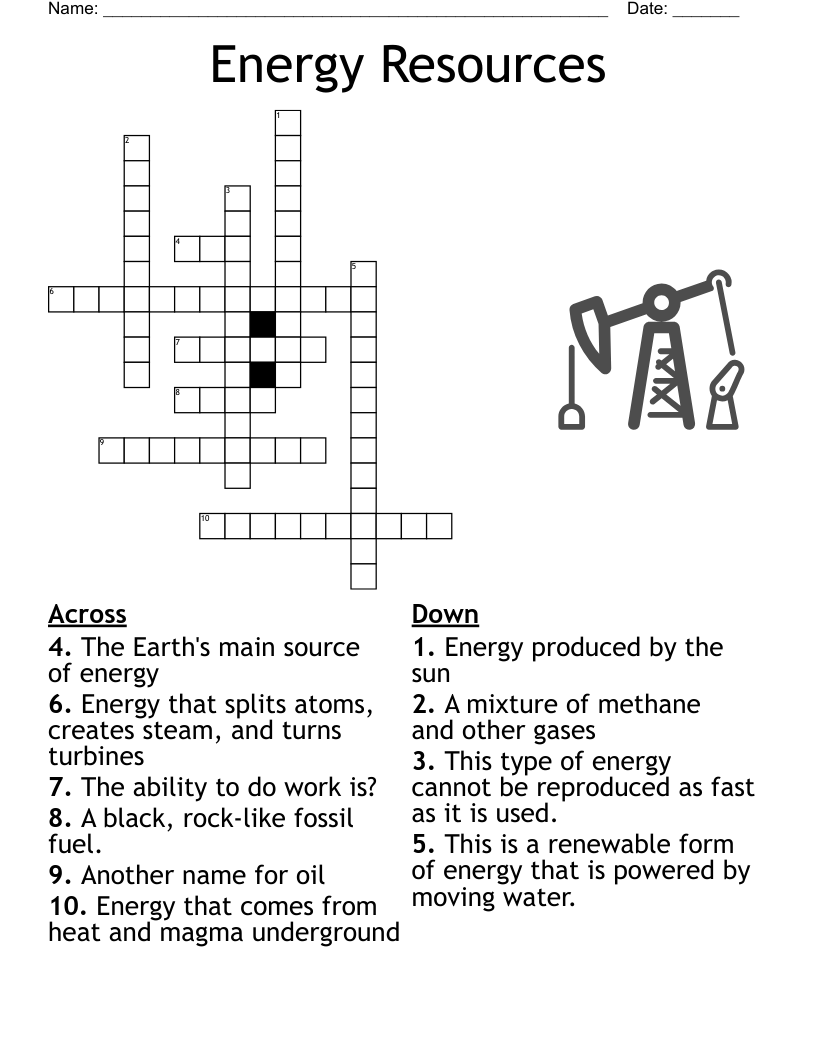
the use of controlled nuclear reactions to produce steam, which in turn drives turbines to produce electricity
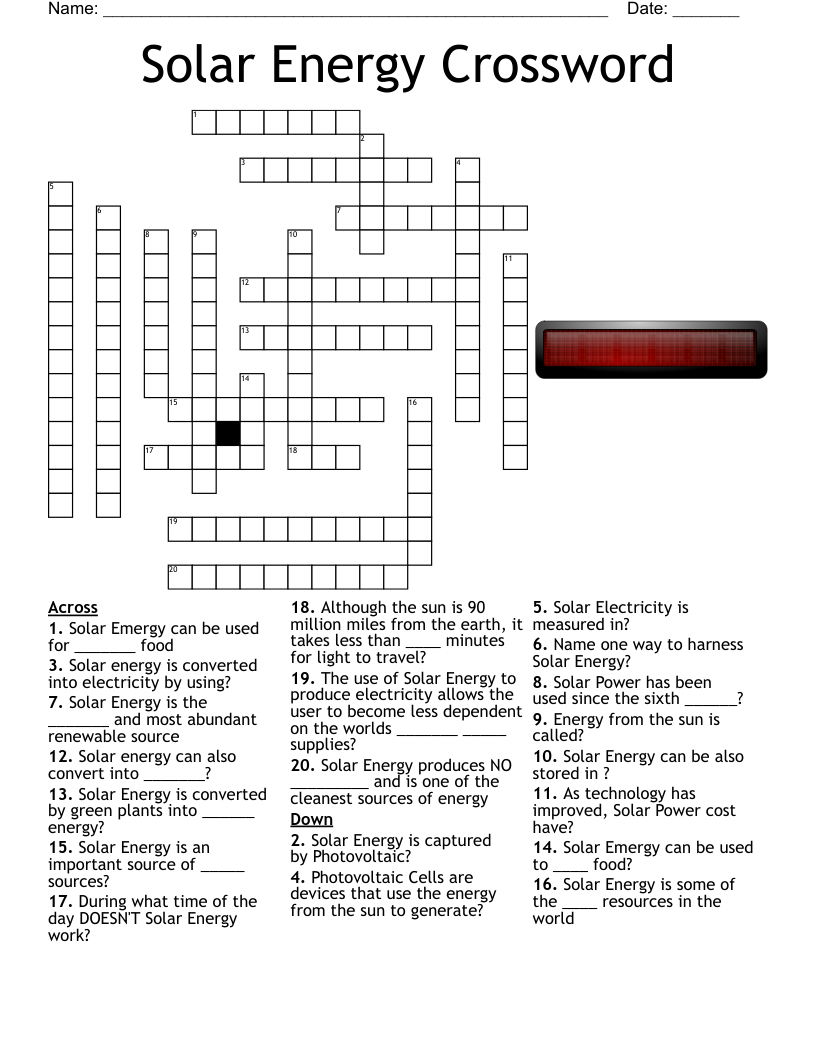
energy from the sun that is converted into thermal or electrical energy
The use of a windmill to drive an electric generator
The capture of energy from the burning of organic matter and organic waste (aka, burning biofuel)
Electricity generated by flowing water
A form of power obtained from steam or hot water coming from within the earth's interior
Natural situation in which heat is retained in Earth's atmosphere by carbon dioxide, methane, water vapor, and other gases
A fossil fuel in the gaseous state
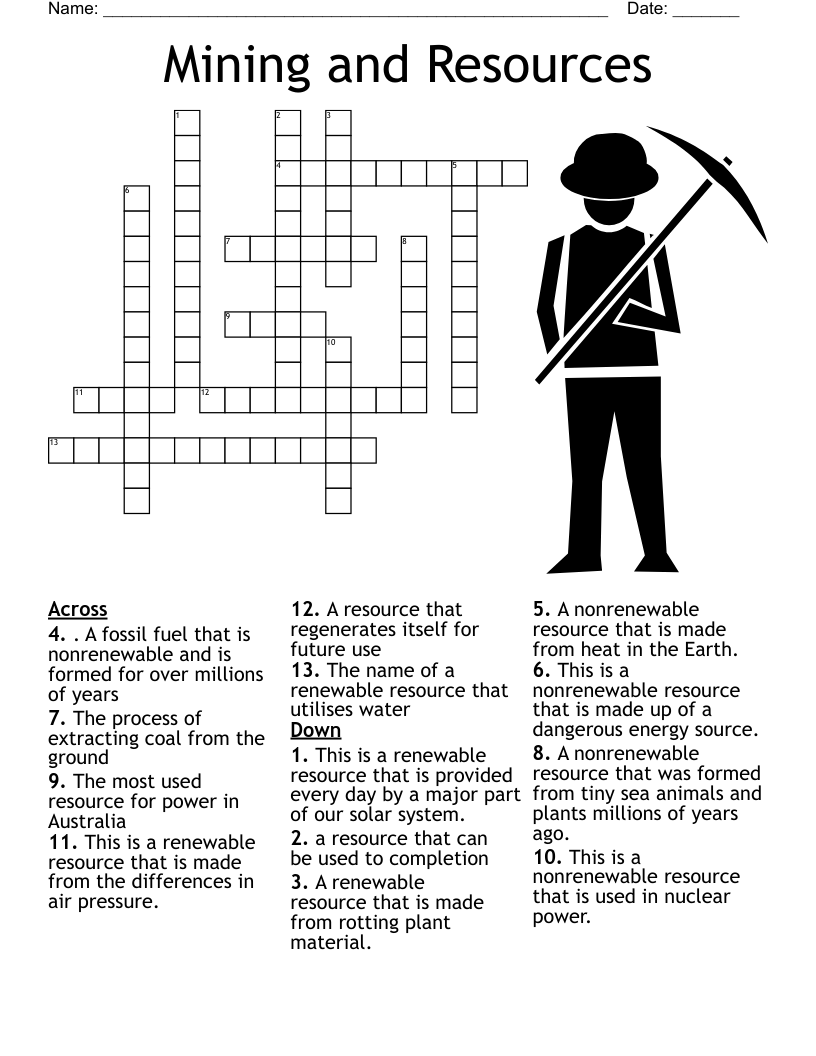
A solid fossil fuel
A liquid fossil fuel
An oily, dark-colored, flammable liquid found in the earth, consisting mainly of a mixture of various hydrocarbons. Gasoline, kerosene, fuel oil, paraffin, and lubricants are made from petroleum.
A change in the world's climate
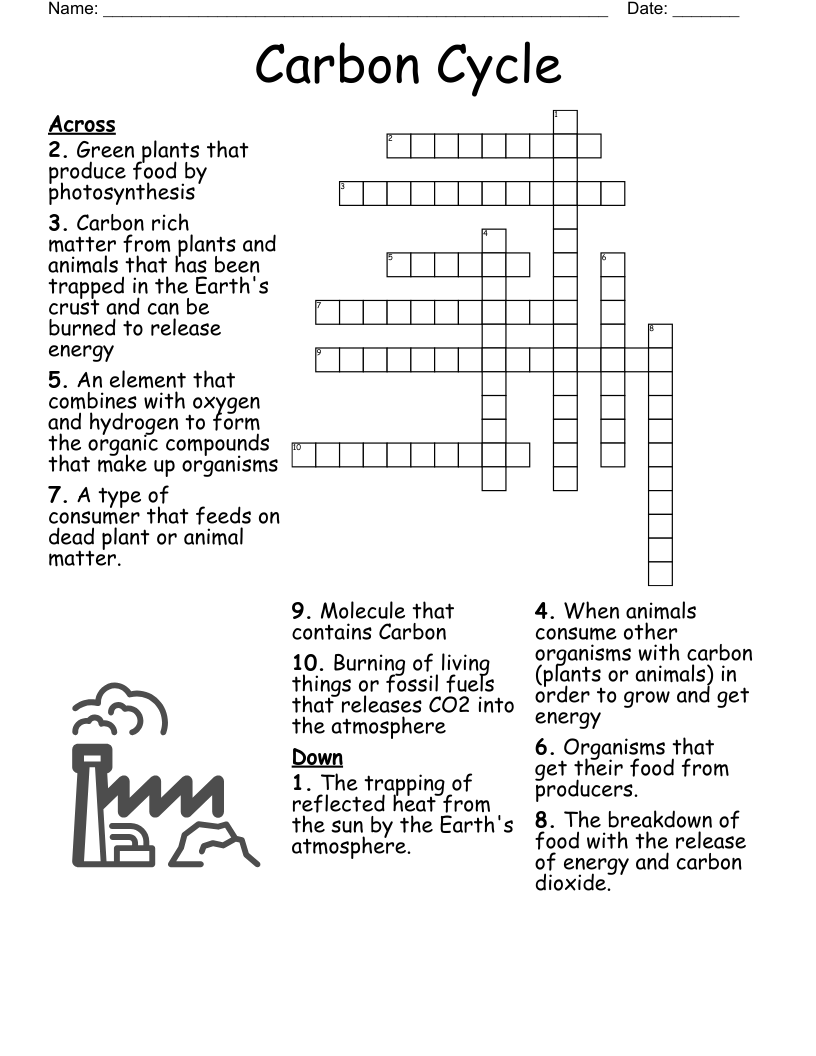
one of the most important elements to life, it can form 4 covalent bonds with other atoms and is the most common element in most large molecules found in living things
The splitting of an atomic nucleus to release energy.
Creation of energy by joining the nuclei of two hydrogen atoms to form helium.
a device that safely starts and controls a fission chain reaction
radioactive by-products from nuclear power generation, nuclear medicine, and so on.
a solar energy cell, usually made from silicon, that collects solar rays to generate electricity
Largest number of individuals of a population that a environment can support
A material found in air, water, or soil that is harmful to humans or other organisms
A machine for producing power in which a wheel or rotor is made to revolve by a fast-moving flow of water, steam, gas, or air.