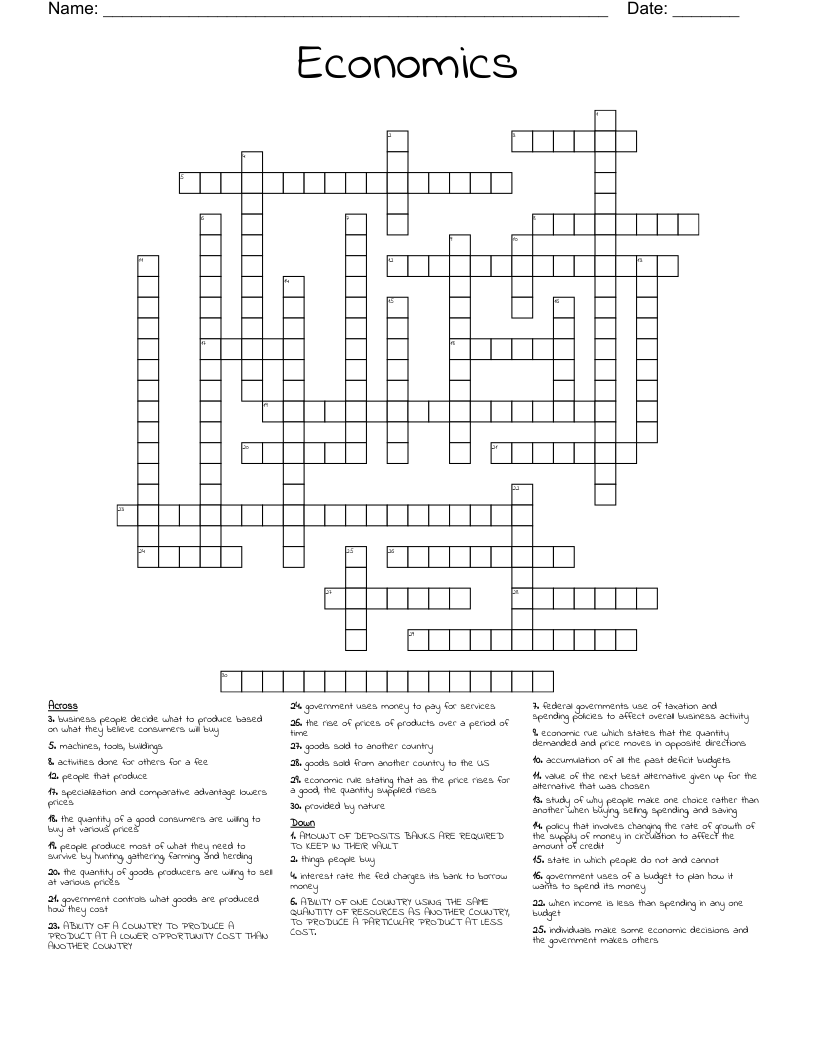
Economics Crossword
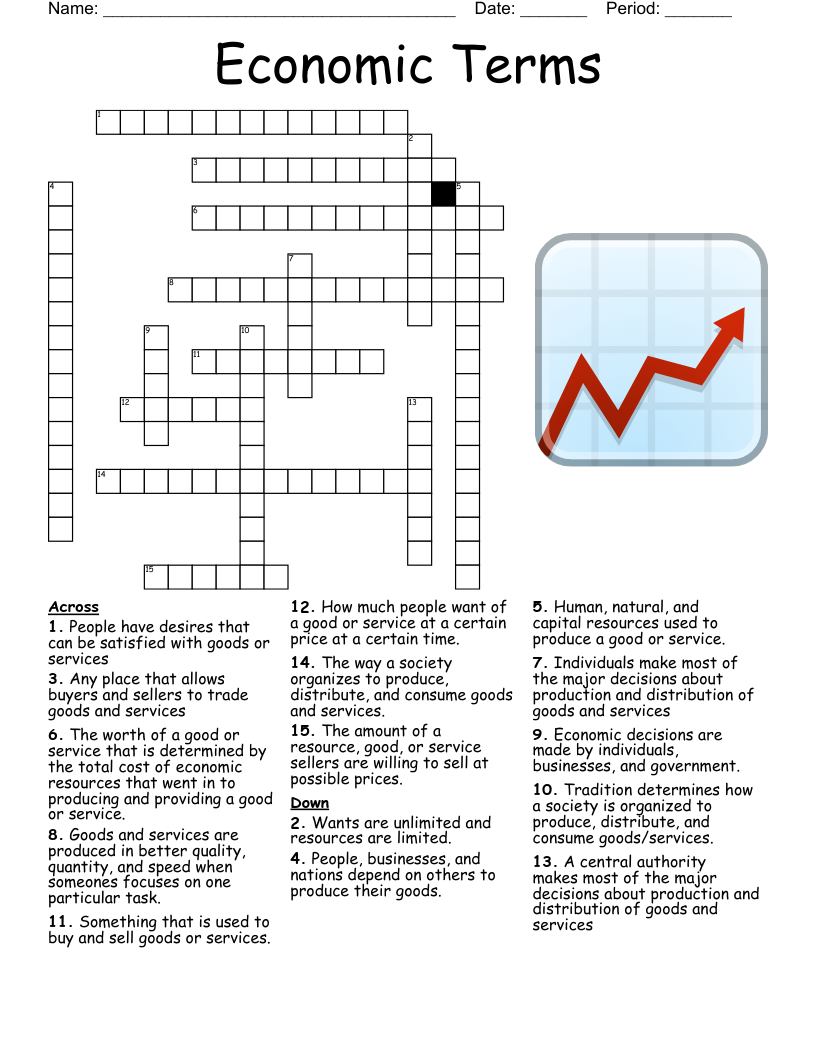
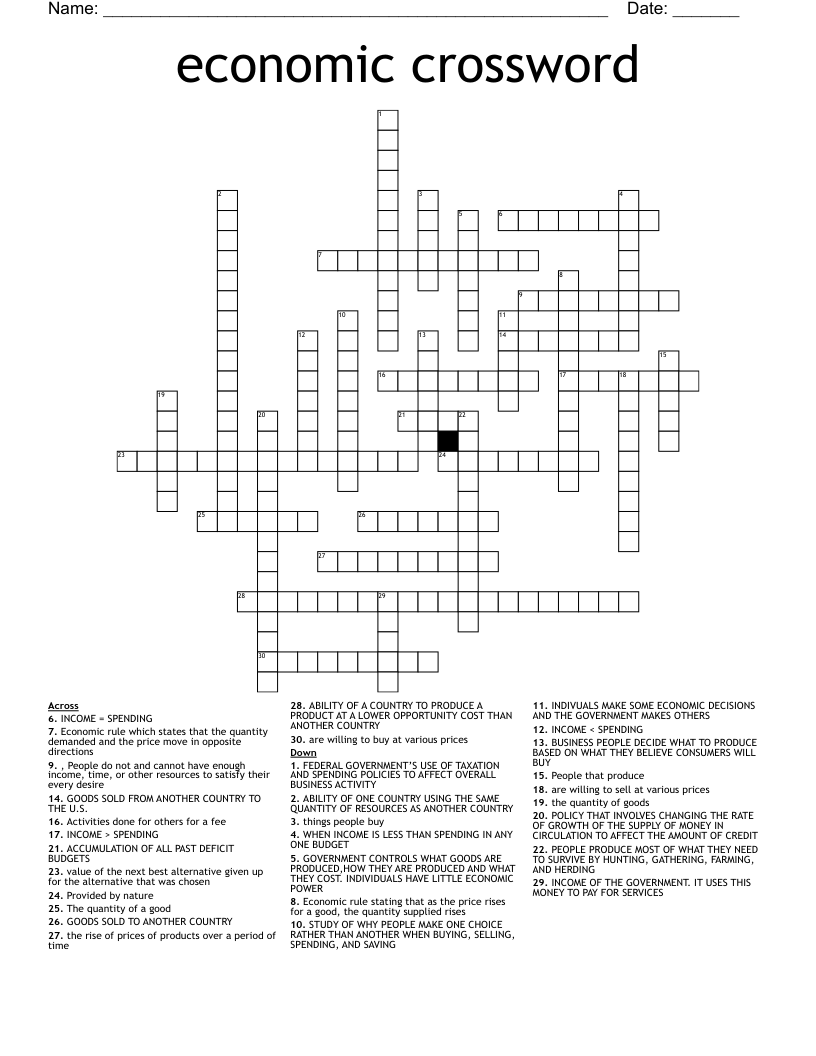
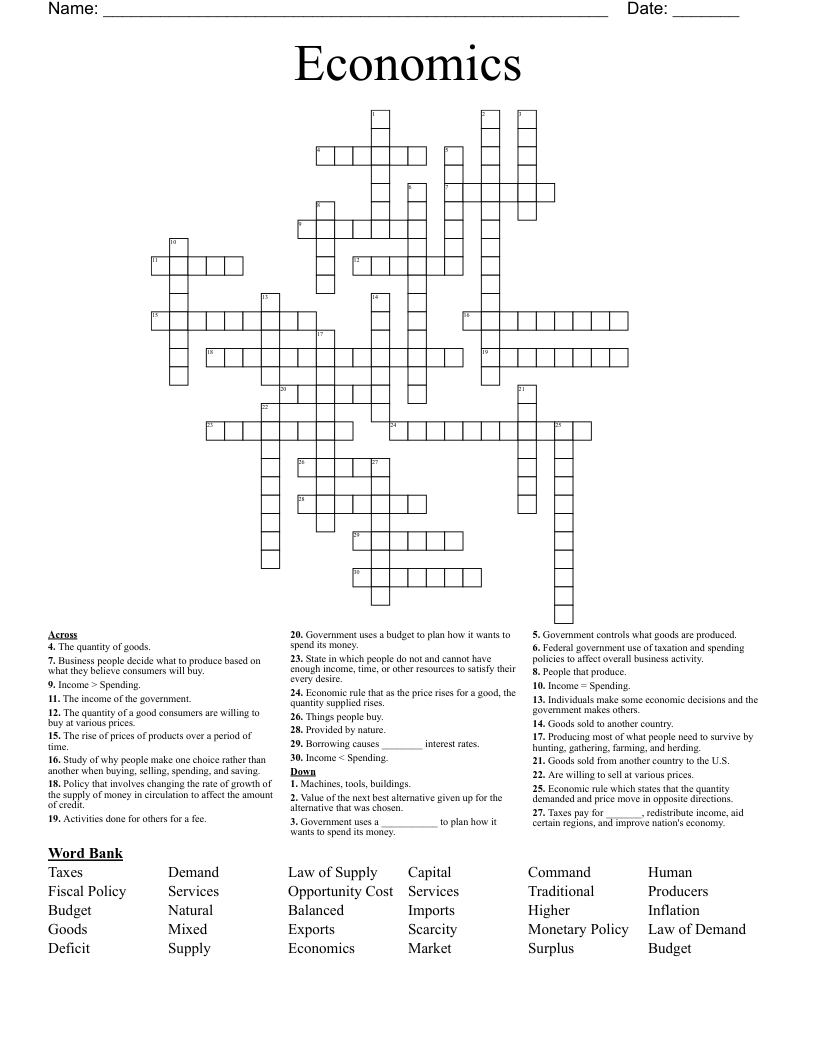
This printable crossword puzzle on the topic of Economics & Business has 30 clues. Answers range from 4 to 20 letters long. This crossword is also available to download as a Microsoft Word document or a PDF.
Description
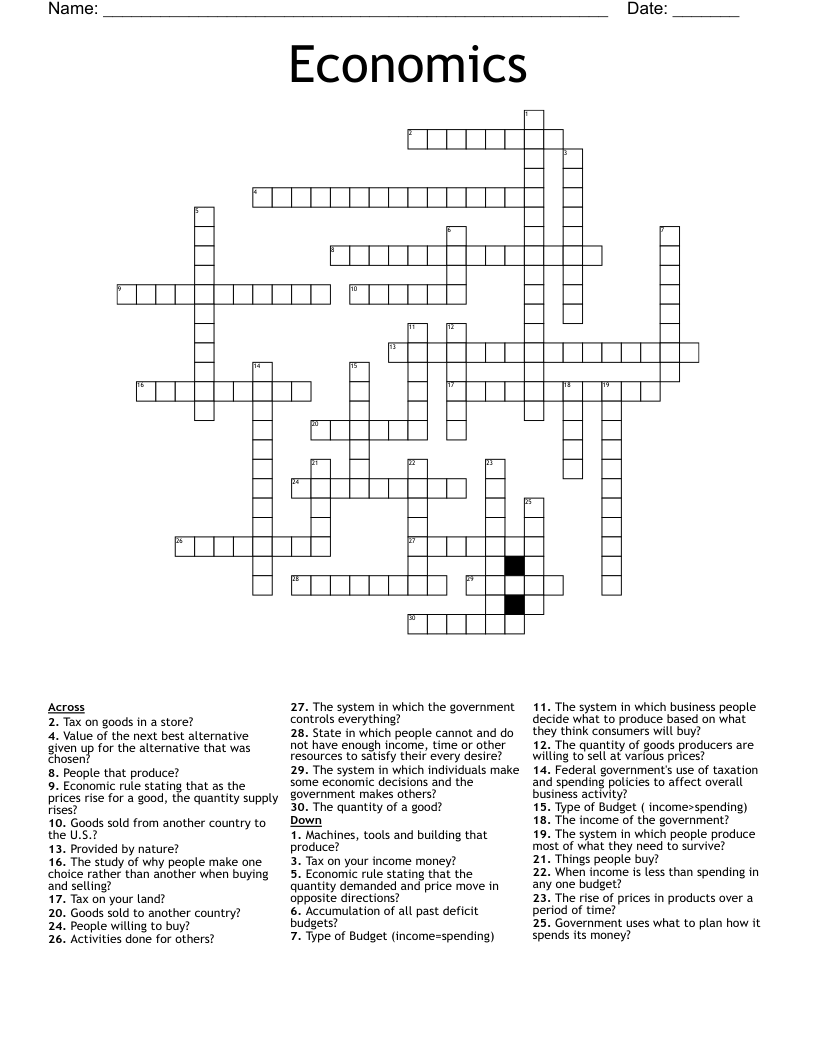
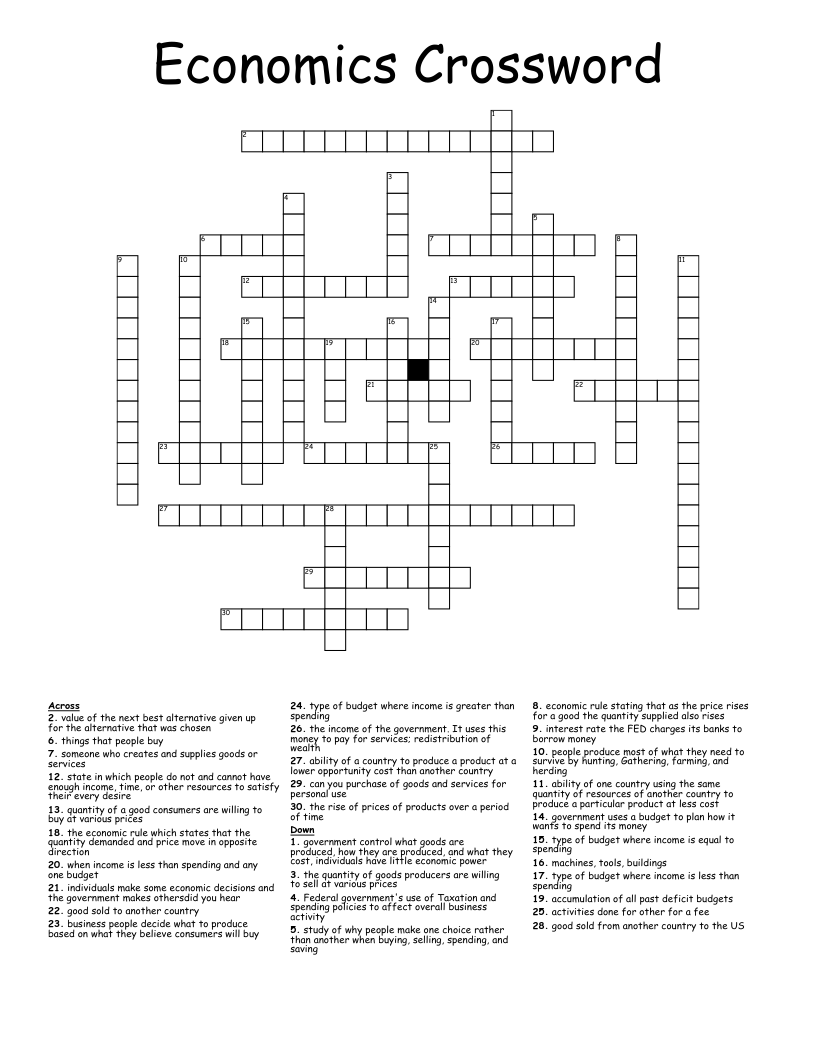
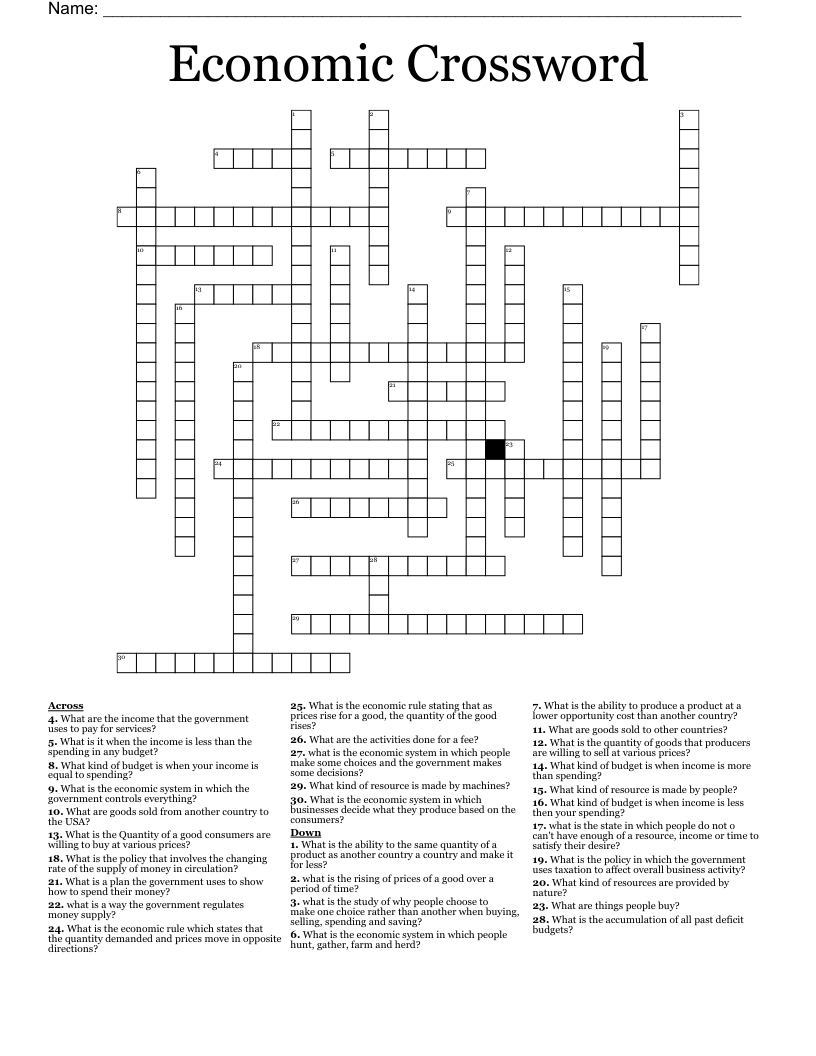
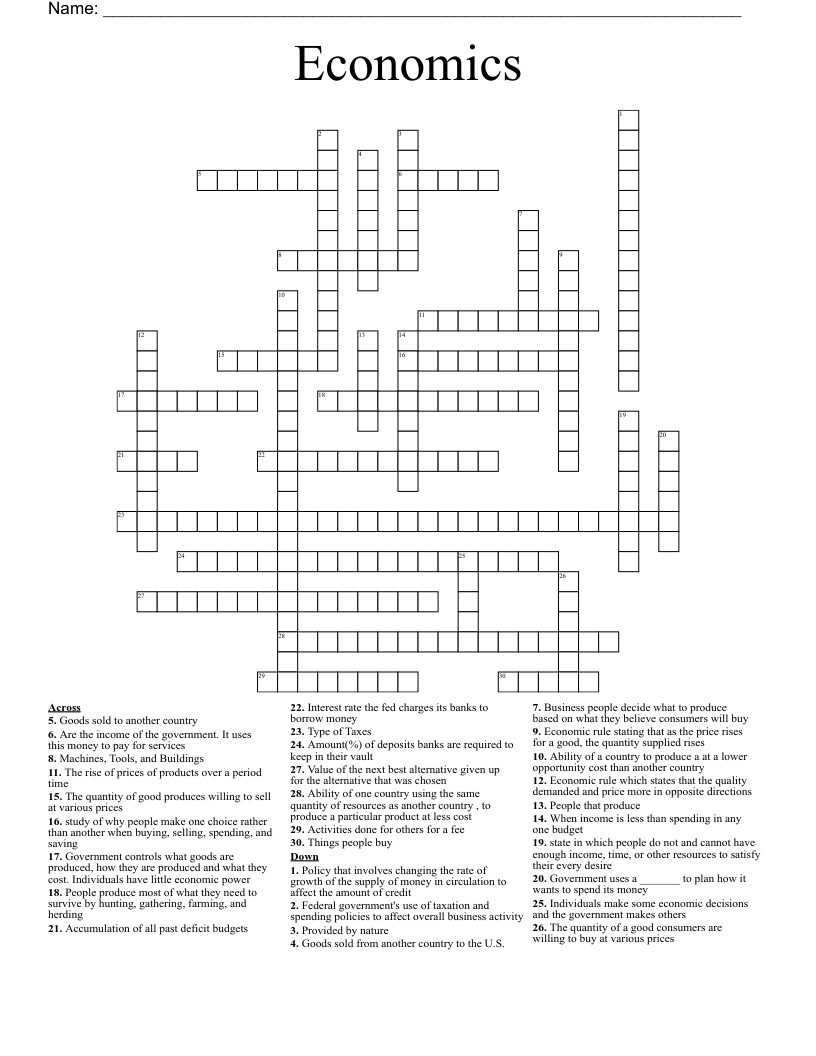
study of why people make one choice rather than another when buying, selling, spending, and saving
things people buy
activities done for others for a fee
state in which people do not and cannot
value of the next best alternative given up for the alternative that was chosen
the quantity of goods producers are willing to sell at various prices
economic rule stating that as the price rises for a good, the quantity supplied rises
the quantity of a good consumers are willing to buy at various prices
economic rue which states that the quantity demanded and price moves in opposite directions
the rise of prices of products over a period of time
business people decide what to produce based on what they believe consumers will buy
government controls what goods are produced how they cost
individuals make some economic decisions and the government makes others
federal governments use of taxation and spending policies to affect overall business activity
government uses money to pay for services
government uses of a budget to plan how it wants to spend its money
when income is less than spending in any one budget
accumulation of all the past deficit budgets
goods sold to another country
goods sold from another country to the US
provided by nature
people that produce
machines, tools, buildings
people produce most of what they need to survive by hunting, gathering, farming, and herding
policy that involves changing the rate of growth of the supply of money in circulation to affect the amount of credit
interest rate the fed charges its bank to borrow money
AMOUNT OF DEPOSITS BANKS ARE REQUIRED TO KEEP IN THEIR VAULT
ABILITY OF ONE COUNTRY USING THE SAME QUANTITY OF RESOURCES AS ANOTHER COUNTRY, TO PRODUCE A PARTICULAR PRODUCT AT LESS COST.
ABILITY OF A COUNTRY TO PRODUCE A PRODUCT AT A LOWER OPPORTUNITY COST THAN ANOTHER COUNTRY
specialization and comparative advantage lowers prices