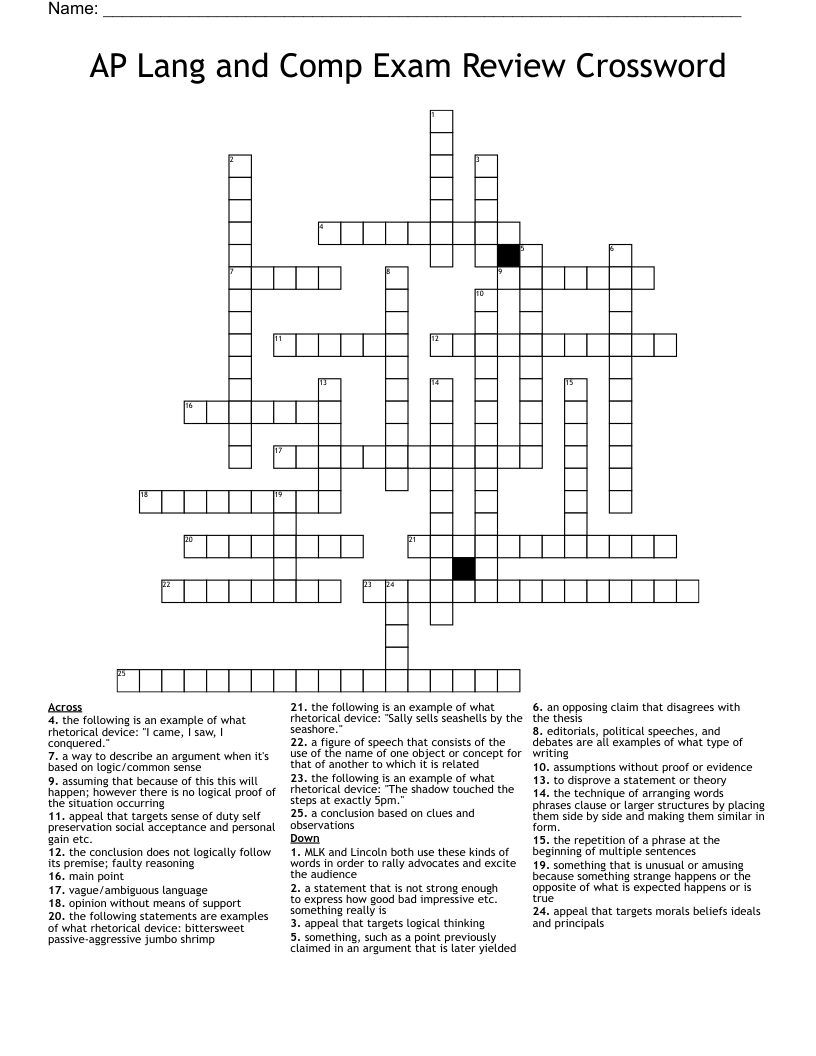
AP Lang and Comp Exam Review Crossword
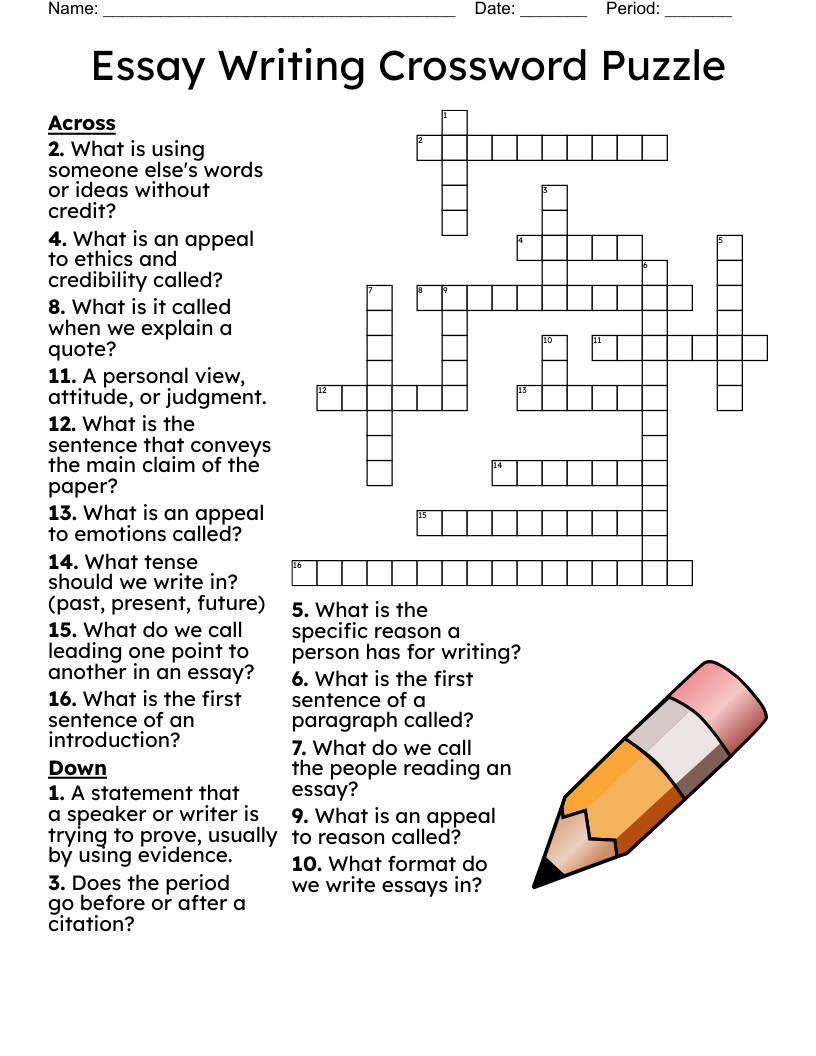
This printable crossword puzzle on the topic of Figurative Language & Literary Devices has 25 clues. Answers range from 5 to 18 letters long. This crossword is also available to download as a Microsoft Word document or a PDF.
Description
a figure of speech that consists of the use of the name of one object or concept for that of another to which it is related
the following is an example of what rhetorical device: "The shadow touched the steps at exactly 5pm."
to disprove a statement or theory
an opposing claim that disagrees with the thesis
a way to describe an argument when it's based on logic/common sense
vague/ambiguous language
opinion without means of support
a conclusion based on clues and observations
editorials, political speeches, and debates are all examples of what type of writing
something, such as a point previously claimed in an argument that is later yielded
main point
the conclusion does not logically follow its premise; faulty reasoning
assumptions without proof or evidence
assuming that because of this this will happen; however there is no logical proof of the situation occurring
the following is an example of what rhetorical device: "I came, I saw, I conquered."
the following is an example of what rhetorical device: "Sally sells seashells by the seashore."
the repetition of a phrase at the beginning of multiple sentences
appeal that targets logical thinking
appeal that targets morals beliefs ideals and principals
appeal that targets sense of duty self preservation social acceptance and personal gain etc.
MLK and Lincoln both use these kinds of words in order to rally advocates and excite the audience
a statement that is not strong enough to express how good bad impressive etc. something really is
the following statements are examples of what rhetorical device: bittersweet passive-aggressive jumbo shrimp
the technique of arranging words phrases clause or larger structures by placing them side by side and making them similar in form.
something that is unusual or amusing because something strange happens or the opposite of what is expected happens or is true