Bizarre Foods Around the World Worksheet
This printable matching worksheet on the topic of Cooking & Food has 10 questions and answers to match. This matching worksheet is also available to download as a Microsoft Word document or a PDF.
Description
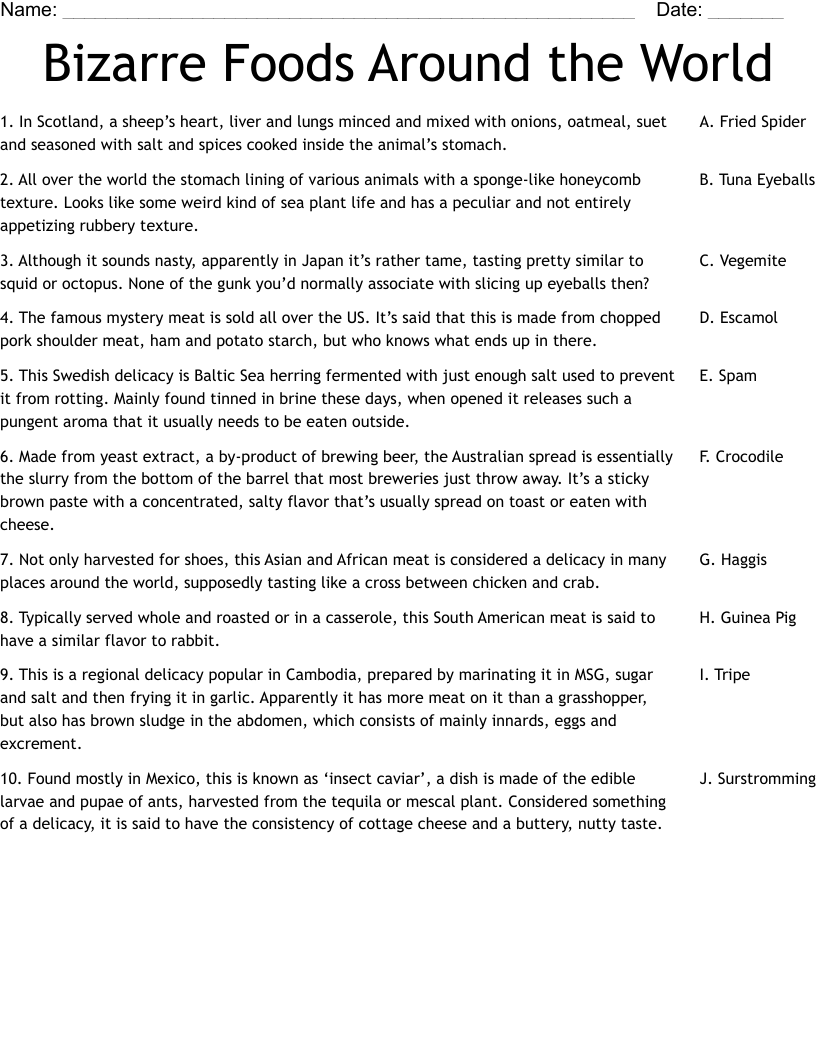
In Scotland, a sheep’s heart, liver and lungs minced and mixed with onions, oatmeal, suet and seasoned with salt and spices cooked inside the animal’s stomach.
All over the world the stomach lining of various animals with a sponge-like honeycomb texture. Looks like some weird kind of sea plant life and has a peculiar and not entirely appetizing rubbery texture.
Although it sounds nasty, apparently in Japan it’s rather tame, tasting pretty similar to squid or octopus. None of the gunk you’d normally associate with slicing up eyeballs then?
The famous mystery meat is sold all over the US. It’s said that this is made from chopped pork shoulder meat, ham and potato starch, but who knows what ends up in there.
This Swedish delicacy is Baltic Sea herring fermented with just enough salt used to prevent it from rotting. Mainly found tinned in brine these days, when opened it releases such a pungent aroma that it usually needs to be eaten outside.
Made from yeast extract, a by-product of brewing beer, the Australian spread is essentially the slurry from the bottom of the barrel that most breweries just throw away. It’s a sticky brown paste with a concentrated, salty flavor that’s usually spread on toast or eaten with cheese.
Not only harvested for shoes, this Asian and African meat is considered a delicacy in many places around the world, supposedly tasting like a cross between chicken and crab.
Typically served whole and roasted or in a casserole, this South American meat is said to have a similar flavor to rabbit.
This is a regional delicacy popular in Cambodia, prepared by marinating it in MSG, sugar and salt and then frying it in garlic. Apparently it has more meat on it than a grasshopper, but also has brown sludge in the abdomen, which consists of mainly innards, eggs and excrement.
Found mostly in Mexico, this is known as ‘insect caviar’, a dish is made of the edible larvae and pupae of ants, harvested from the tequila or mescal plant. Considered something of a delicacy, it is said to have the consistency of cottage cheese and a buttery, nutty taste.