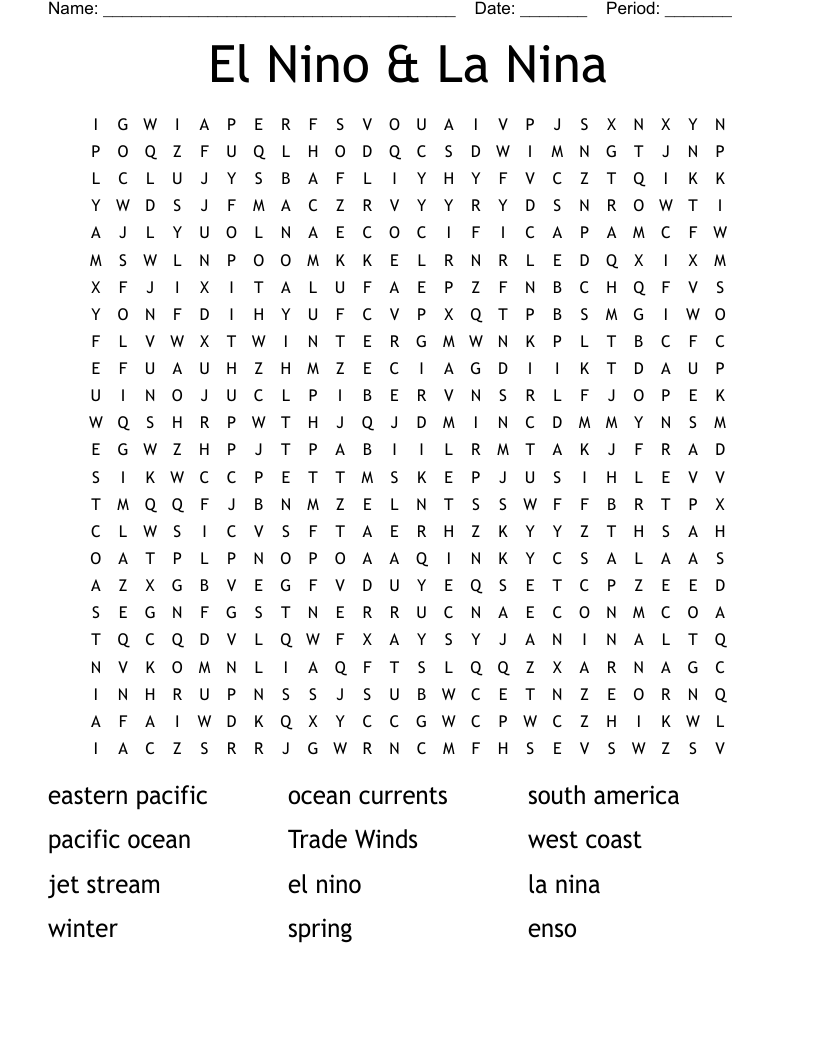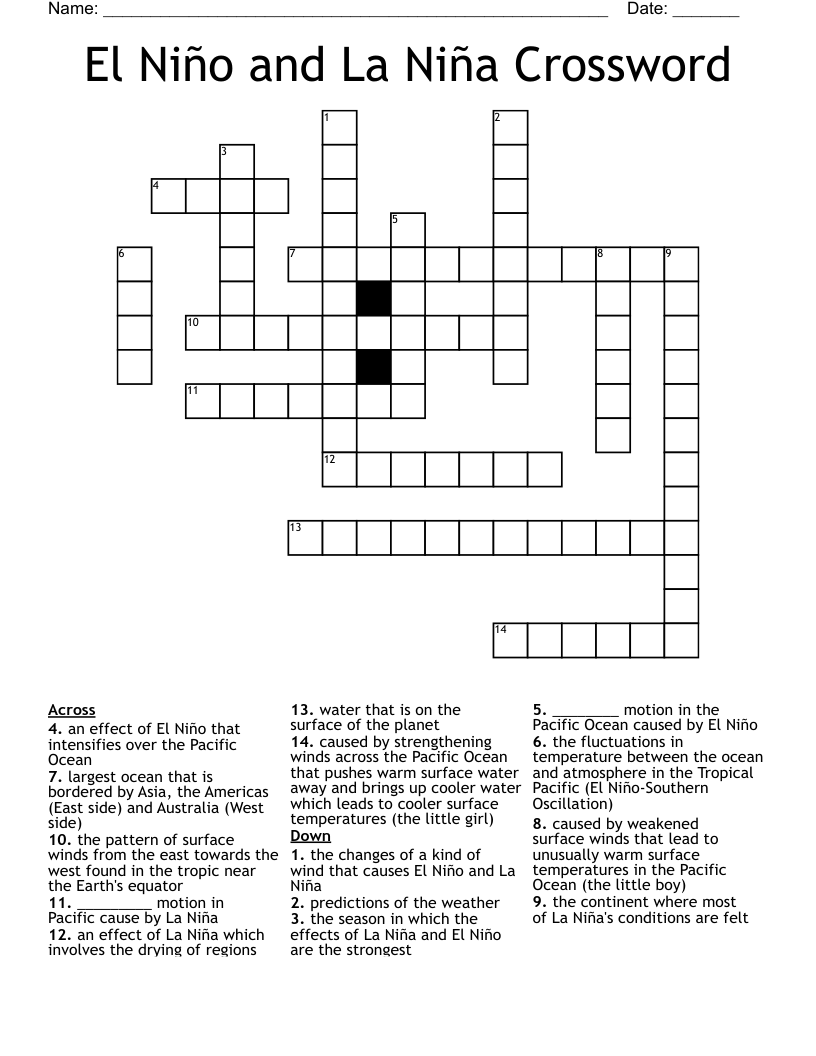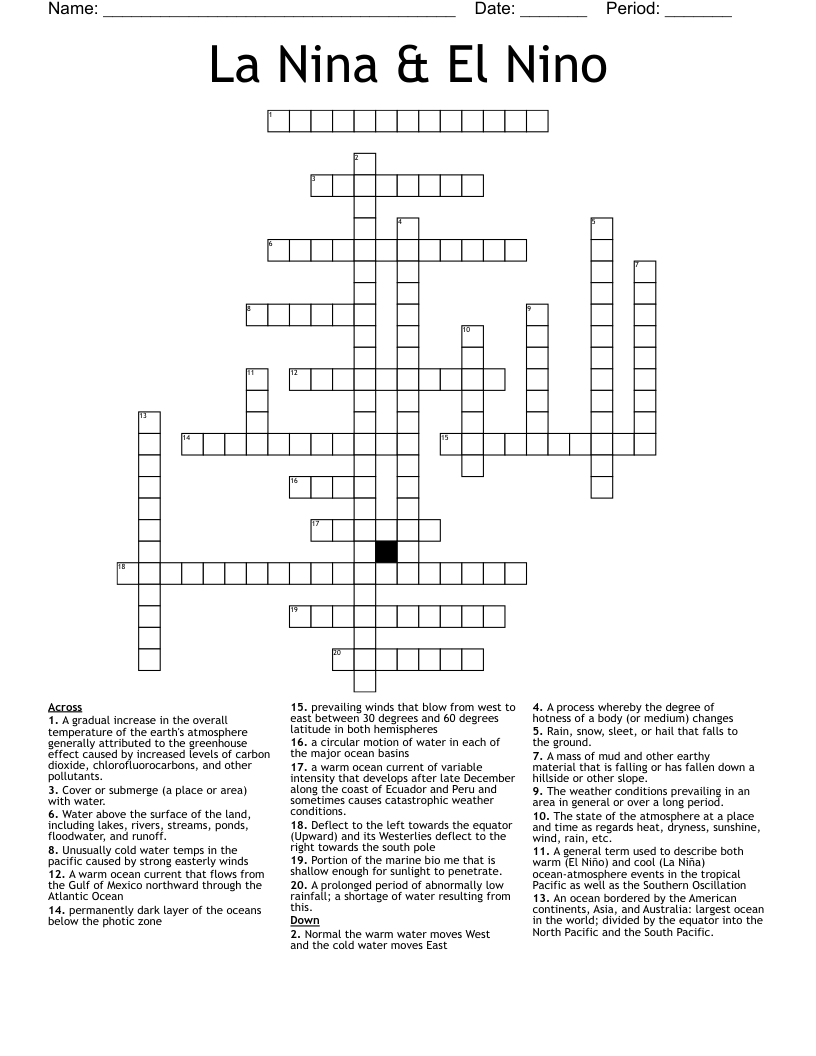
La Nina & El Nino Crossword
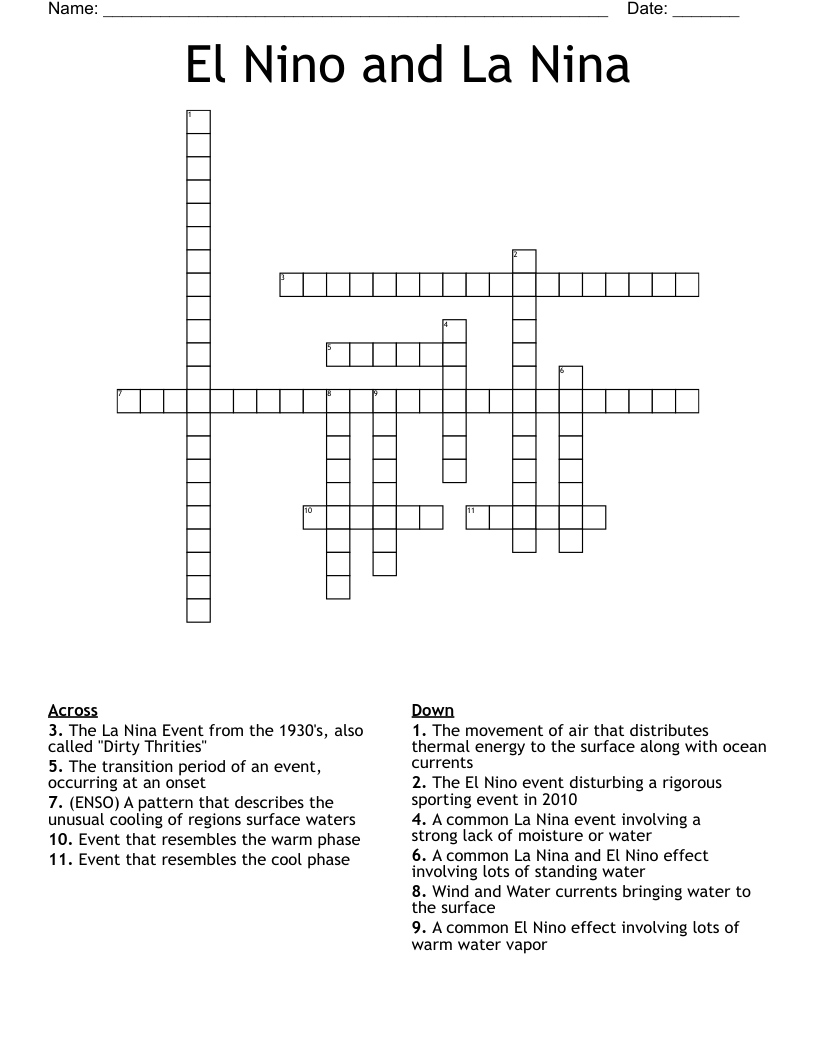
This printable crossword puzzle on the topic of Weather & Climate has 20 clues. Answers range from 4 to 25 letters long. This crossword is also available to download as a Microsoft Word document or a PDF.
Description
a warm ocean current of variable intensity that develops after late December along the coast of Ecuador and Peru and sometimes causes catastrophic weather conditions.
Unusually cold water temps in the pacific caused by strong easterly winds
a circular motion of water in each of the major ocean basins
A warm ocean current that flows from the Gulf of Mexico northward through the Atlantic Ocean
prevailing winds that blow from west to east between 30 degrees and 60 degrees latitude in both hemispheres
Portion of the marine bio me that is shallow enough for sunlight to penetrate.
permanently dark layer of the oceans below the photic zone
Water above the surface of the land, including lakes, rivers, streams, ponds, floodwater, and runoff.
Deflect to the left towards the equator (Upward) and its Westerlies deflect to the right towards the south pole
Rain, snow, sleet, or hail that falls to the ground.
A prolonged period of abnormally low rainfall; a shortage of water resulting from this.
The weather conditions prevailing in an area in general or over a long period.
The state of the atmosphere at a place and time as regards heat, dryness, sunshine, wind, rain, etc.
An ocean bordered by the American continents, Asia, and Australia: largest ocean in the world; divided by the equator into the North Pacific and the South Pacific.
Cover or submerge (a place or area) with water.
A mass of mud and other earthy material that is falling or has fallen down a hillside or other slope.
A process whereby the degree of hotness of a body (or medium) changes
A gradual increase in the overall temperature of the earth's atmosphere generally attributed to the greenhouse effect caused by increased levels of carbon dioxide, chlorofluorocarbons, and other pollutants.
Normal the warm water moves West and the cold water moves East
A general term used to describe both warm (El Niño) and cool (La Niña) ocean-atmosphere events in the tropical Pacific as well as the Southern Oscillation