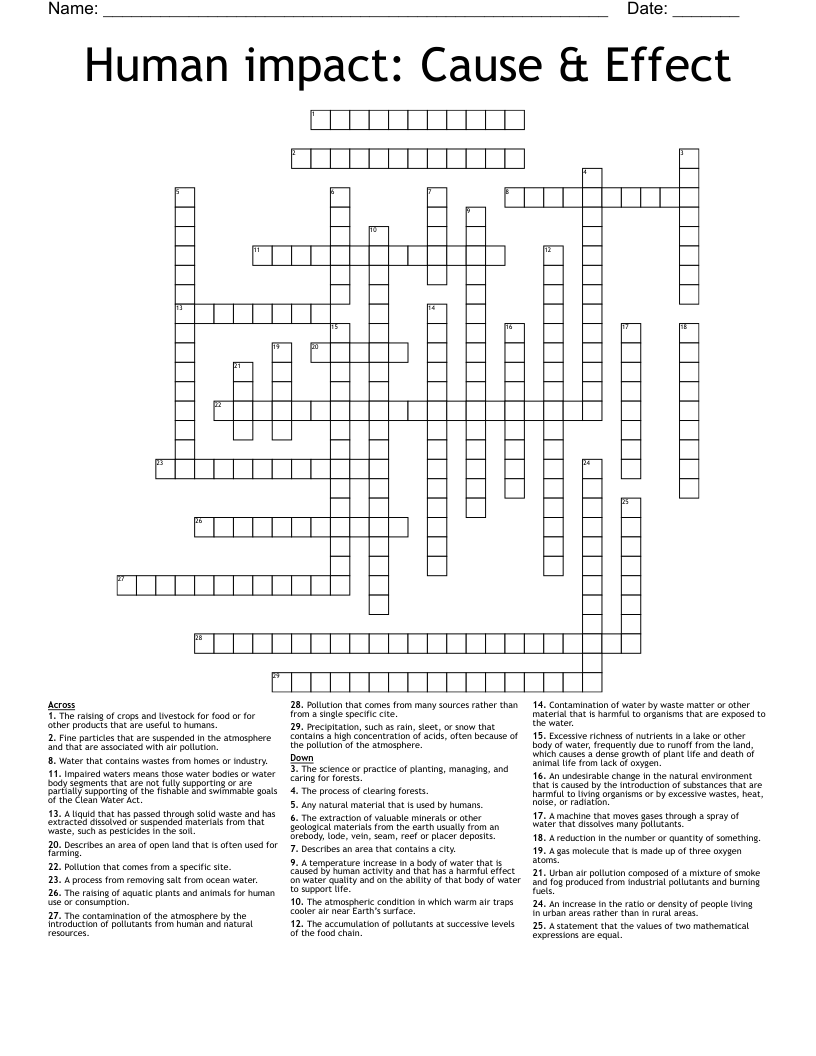
Human impact: Cause & Effect Crossword
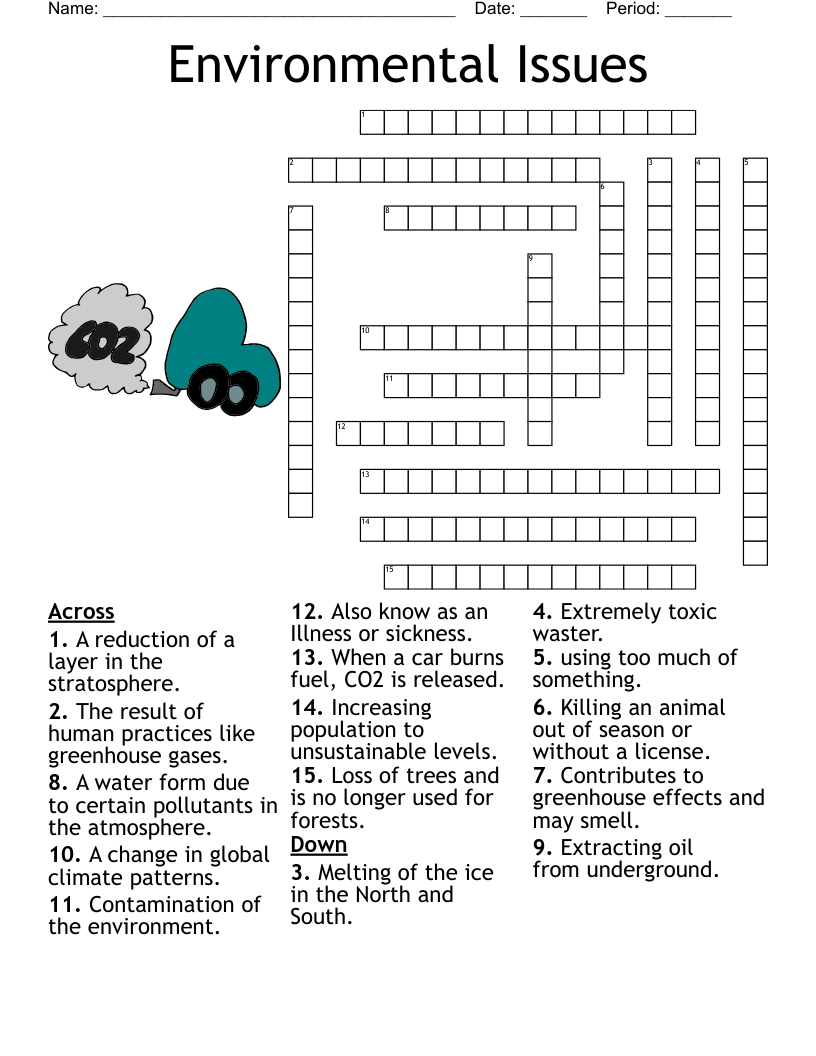
This printable crossword puzzle on the topic of Environmental Science has 29 clues. Answers range from 4 to 24 letters long. This crossword is also available to download as a Microsoft Word document or a PDF.
Description
Precipitation, such as rain, sleet, or snow that contains a high concentration of acids, often because of the pollution of the atmosphere.
The raising of crops and livestock for food or for other products that are useful to humans.
The contamination of the atmosphere by the introduction of pollutants from human and natural resources.
Any natural material that is used by humans.
Pollution that comes from many sources rather than from a single specific cite.
A gas molecule that is made up of three oxygen atoms.
Fine particles that are suspended in the atmosphere and that are associated with air pollution.
The raising of aquatic plants and animals for human use or consumption.
The accumulation of pollutants at successive levels of the food chain.
The process of clearing forests.
A reduction in the number or quantity of something.
A process from removing salt from ocean water.
A statement that the values of two mathematical expressions are equal.
Excessive richness of nutrients in a lake or other body of water, frequently due to runoff from the land, which causes a dense growth of plant life and death of animal life from lack of oxygen.
The science or practice of planting, managing, and caring for forests.
Impaired waters means those water bodies or water body segments that are not fully supporting or are partially supporting of the fishable and swimmable goals of the Clean Water Act.
A liquid that has passed through solid waste and has extracted dissolved or suspended materials from that waste, such as pesticides in the soil.
The extraction of valuable minerals or other geological materials from the earth usually from an orebody, lode, vein, seam, reef or placer deposits.
Pollution that comes from a specific site.
An undesirable change in the natural environment that is caused by the introduction of substances that are harmful to living organisms or by excessive wastes, heat, noise, or radiation.
Describes an area of open land that is often used for farming.
A machine that moves gases through a spray of water that dissolves many pollutants.
Urban air pollution composed of a mixture of smoke and fog produced from industrial pollutants and burning fuels.
The atmospheric condition in which warm air traps cooler air near Earth’s surface.
A temperature increase in a body of water that is caused by human activity and that has a harmful effect on water quality and on the ability of that body of water to support life.
Describes an area that contains a city.
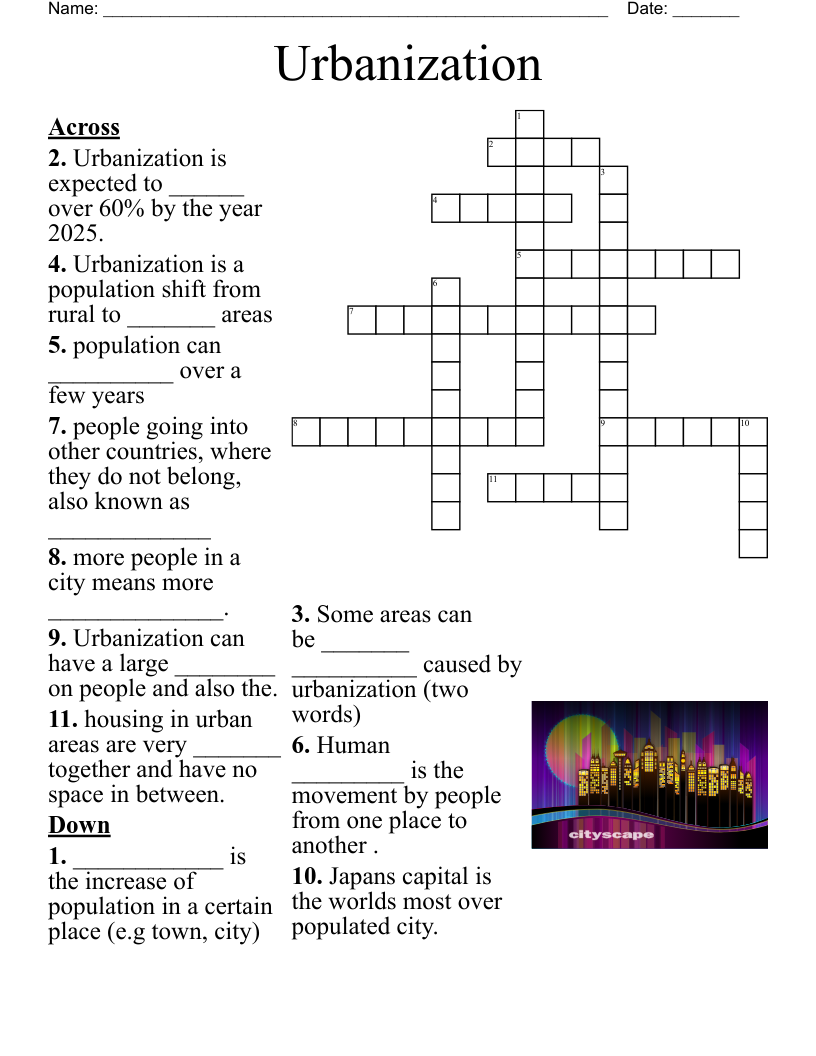
An increase in the ratio or density of people living in urban areas rather than in rural areas.
Water that contains wastes from homes or industry.
Contamination of water by waste matter or other material that is harmful to organisms that are exposed to the water.