Clean Water Act Crossword
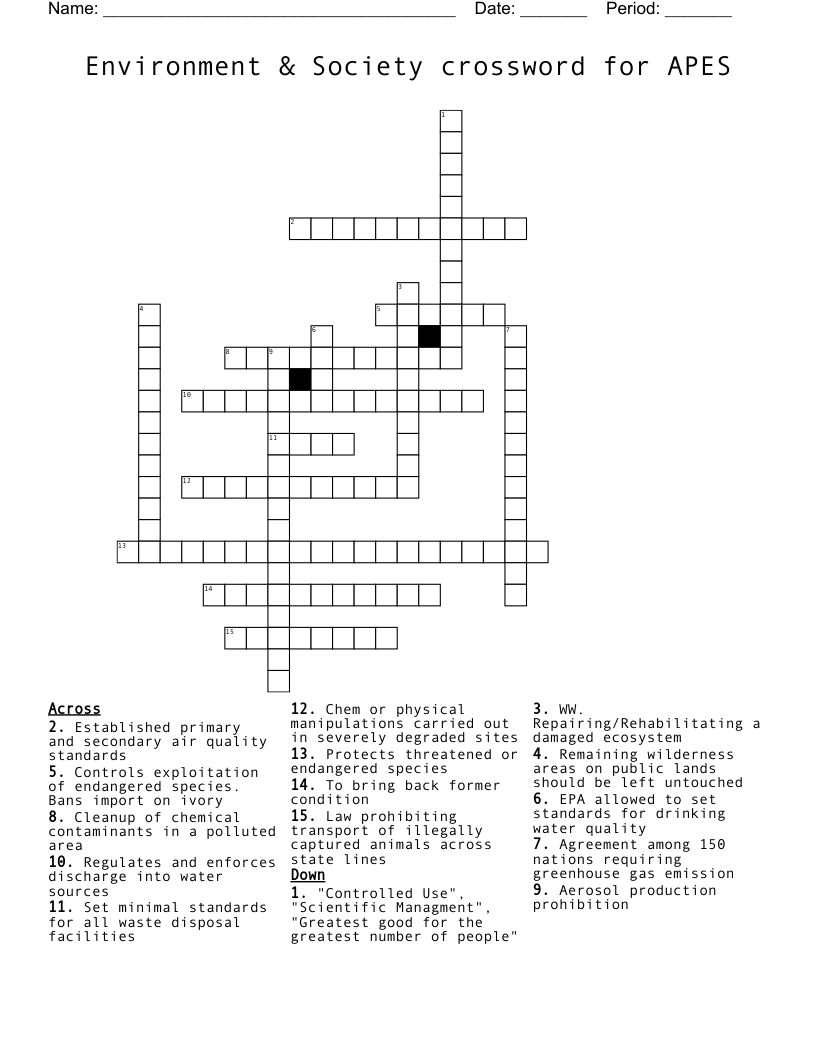
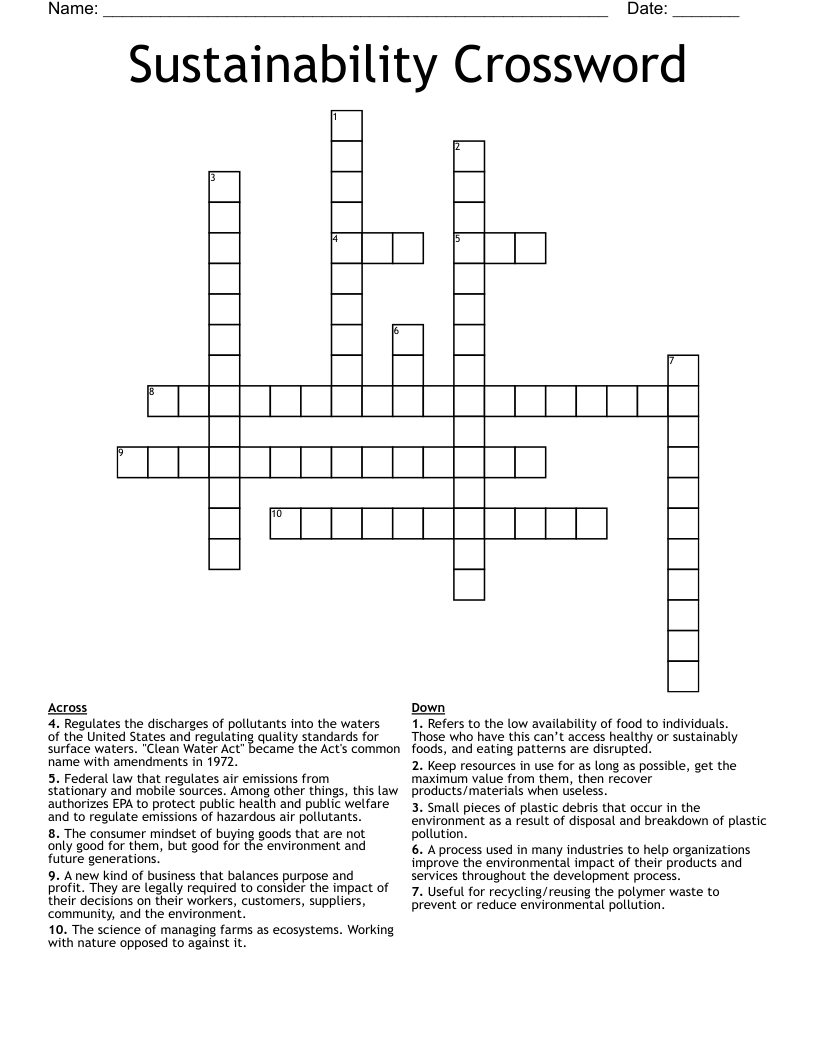
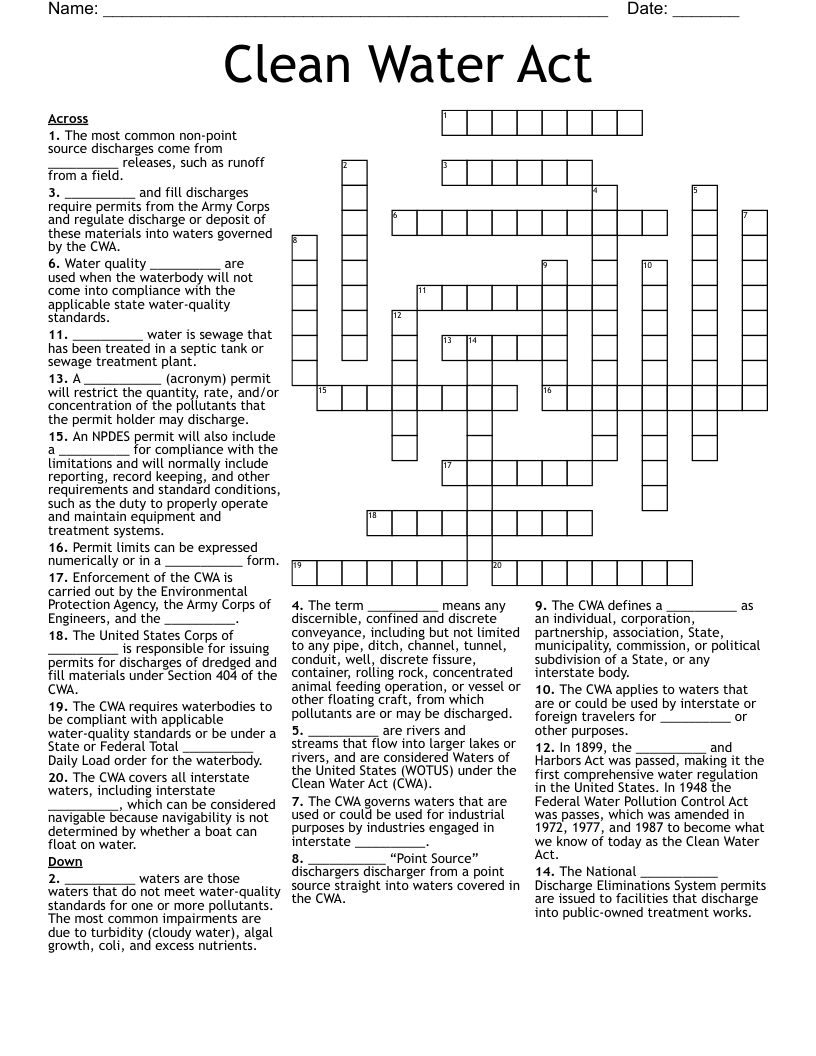
This printable crossword puzzle on the topic of Law & Legal has 20 clues. Answers range from 5 to 11 letters long. This crossword is also available to download as a Microsoft Word document or a PDF.
Description
__________ are rivers and streams that flow into larger lakes or rivers, and are considered Waters of the United States (WOTUS) under the Clean Water Act (CWA).
The CWA governs waters that are used or could be used for industrial purposes by industries engaged in interstate __________.
The term __________ means any discernible, confined and discrete conveyance, including but not limited to any pipe, ditch, channel, tunnel, conduit, well, discrete fissure, container, rolling rock, concentrated animal feeding operation, or vessel or other floating craft, from which pollutants are or may be discharged.
The CWA defines a __________ as an individual, corporation, partnership, association, State, municipality, commission, or political subdivision of a State, or any interstate body.
The National ___________ Discharge Eliminations System permits are issued to facilities that discharge into public-owned treatment works.
An NPDES permit will also include a __________ for compliance with the limitations and will normally include reporting, record keeping, and other requirements and standard conditions, such as the duty to properly operate and maintain equipment and treatment systems.
Water quality __________ are used when the waterbody will not come into compliance with the applicable state water-quality standards.
___________ “Point Source” dischargers discharger from a point source straight into waters covered in the CWA.
The United States Corps of __________ is responsible for issuing permits for discharges of dredged and fill materials under Section 404 of the CWA.
__________ water is sewage that has been treated in a septic tank or sewage treatment plant.
The CWA covers all interstate waters, including interstate __________, which can be considered navigable because navigability is not determined by whether a boat can float on water.
The CWA applies to waters that are or could be used by interstate or foreign travelers for __________ or other purposes.
In 1899, the __________ and Harbors Act was passed, making it the first comprehensive water regulation in the United States. In 1948 the Federal Water Pollution Control Act was passes, which was amended in 1972, 1977, and 1987 to become what we know of today as the Clean Water Act.
The CWA requires waterbodies to be compliant with applicable water-quality standards or be under a State or Federal Total __________ Daily Load order for the waterbody.
The most common non-point source discharges come from __________ releases, such as runoff from a field.
Enforcement of the CWA is carried out by the Environmental Protection Agency, the Army Corps of Engineers, and the __________.
__________ and fill discharges require permits from the Army Corps and regulate discharge or deposit of these materials into waters governed by the CWA.
Permit limits can be expressed numerically or in a ___________ form.
__________ waters are those waters that do not meet water-quality standards for one or more pollutants. The most common impairments are due to turbidity (cloudy water), algal growth, coli, and excess nutrients.
A ___________ (acronym) permit will restrict the quantity, rate, and/or concentration of the pollutants that the permit holder may discharge.