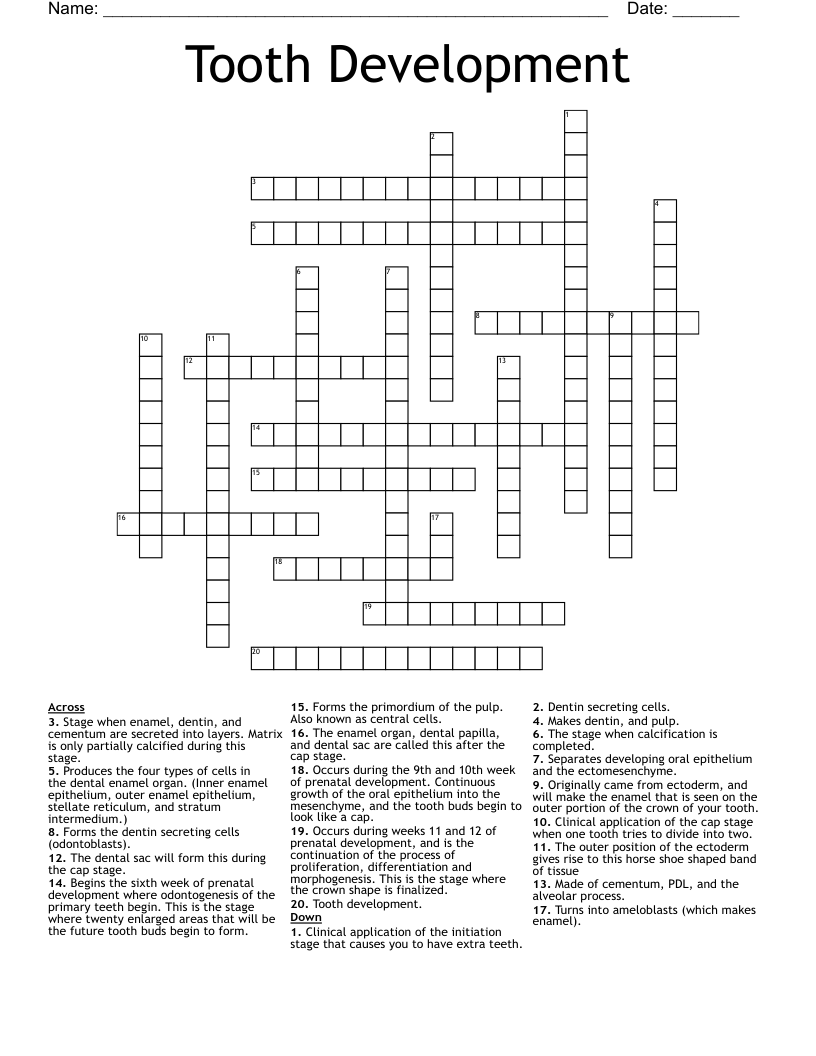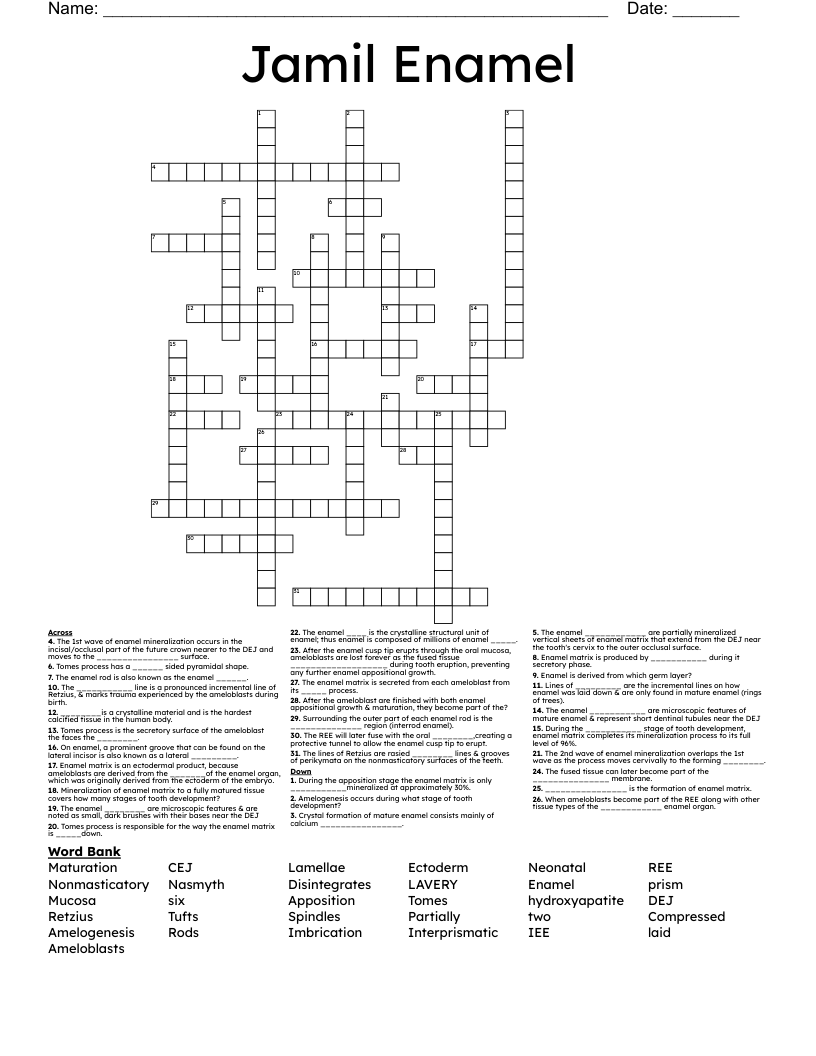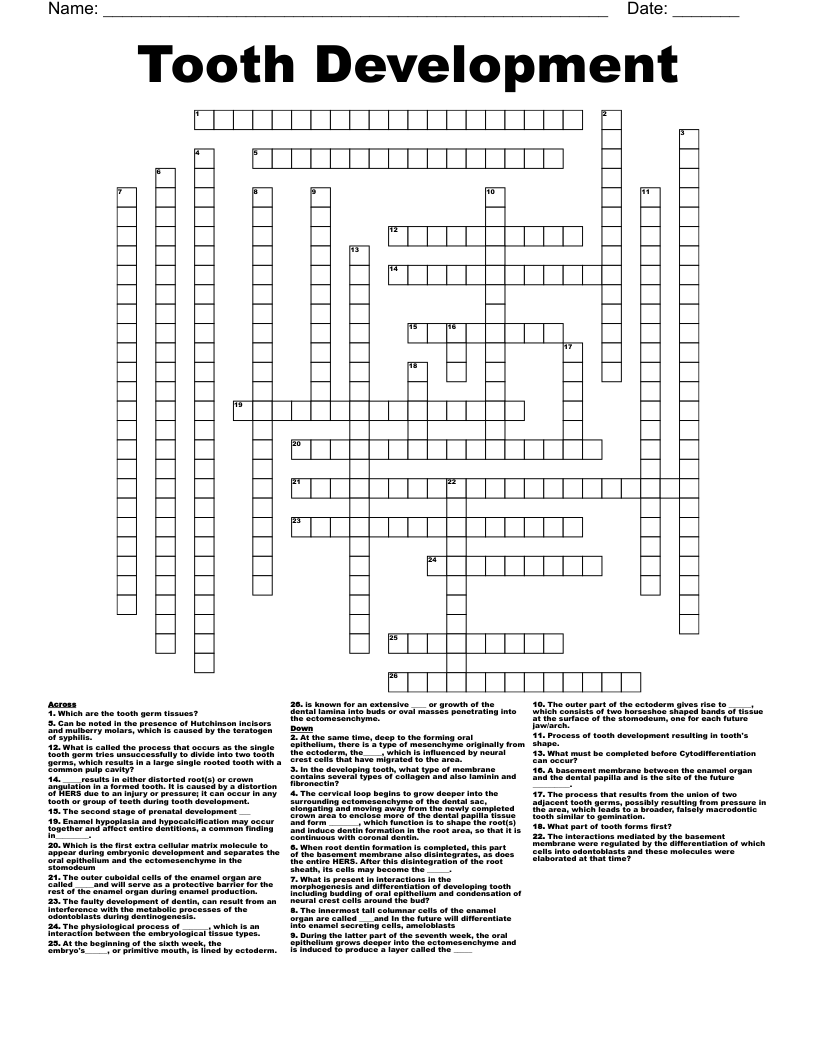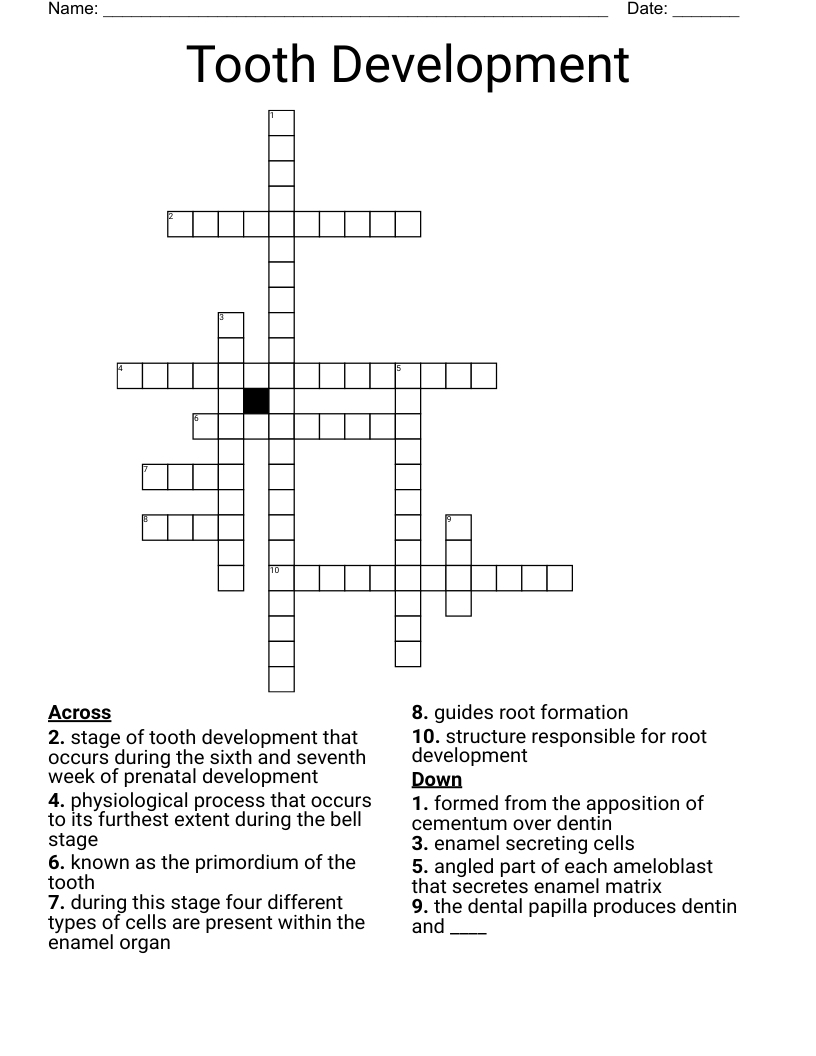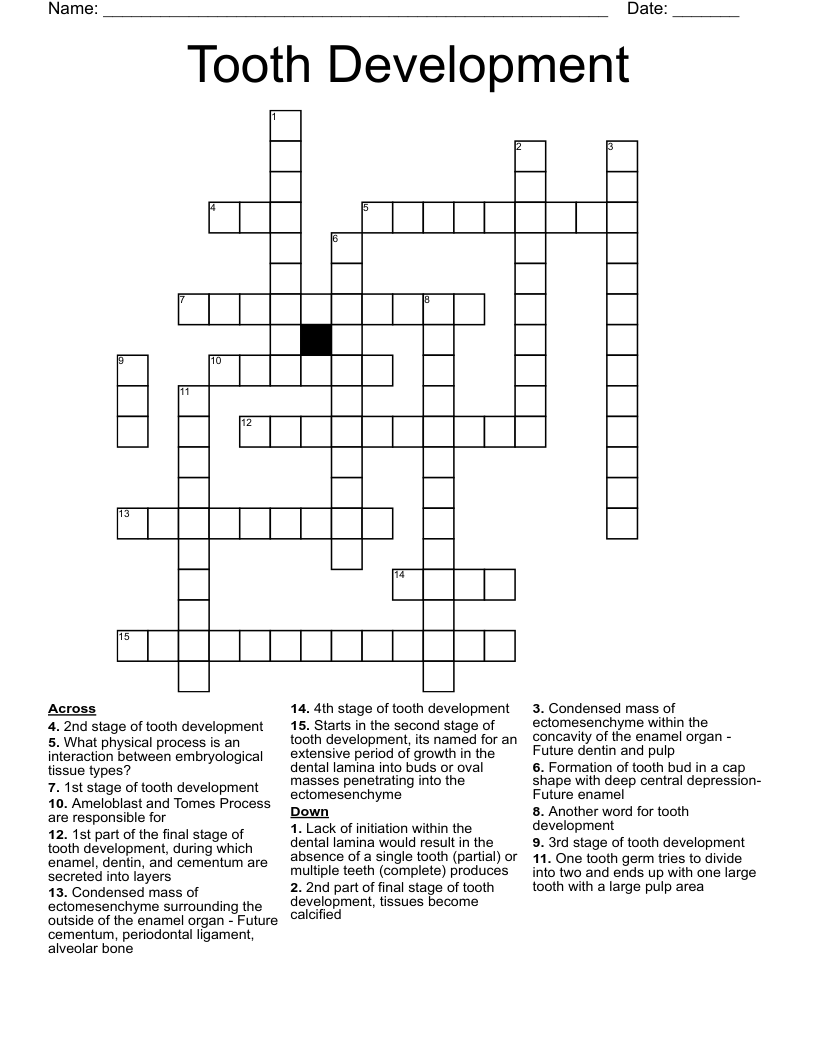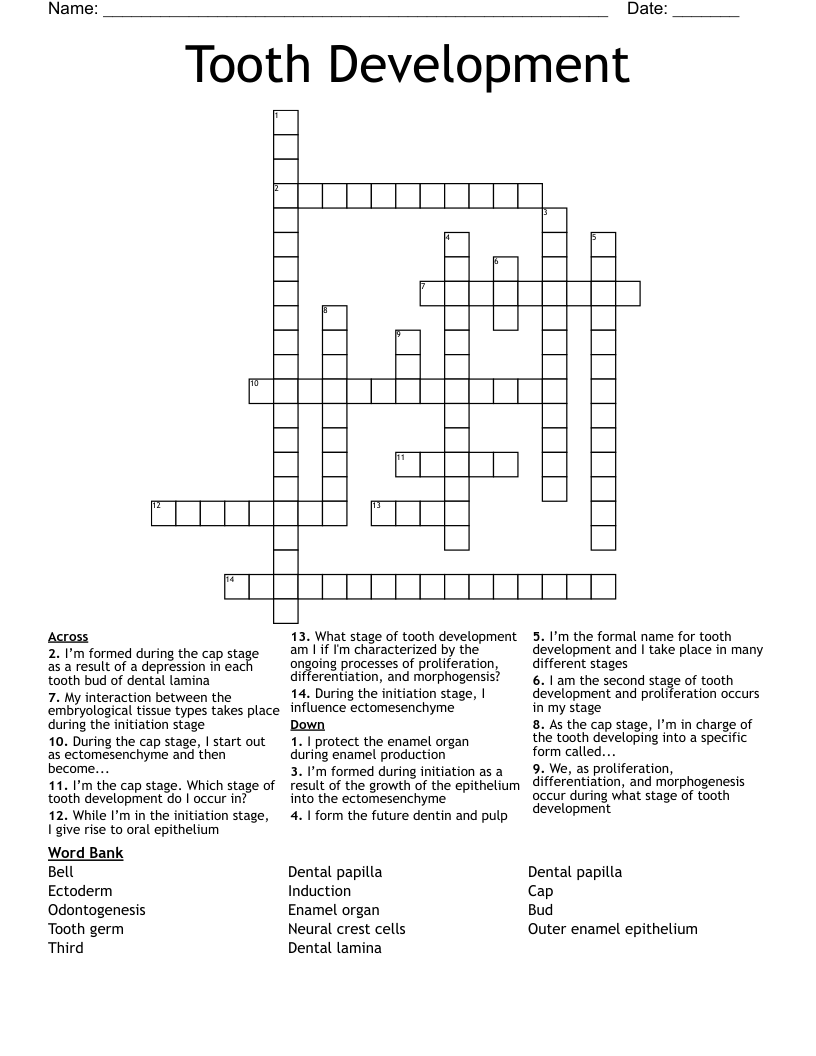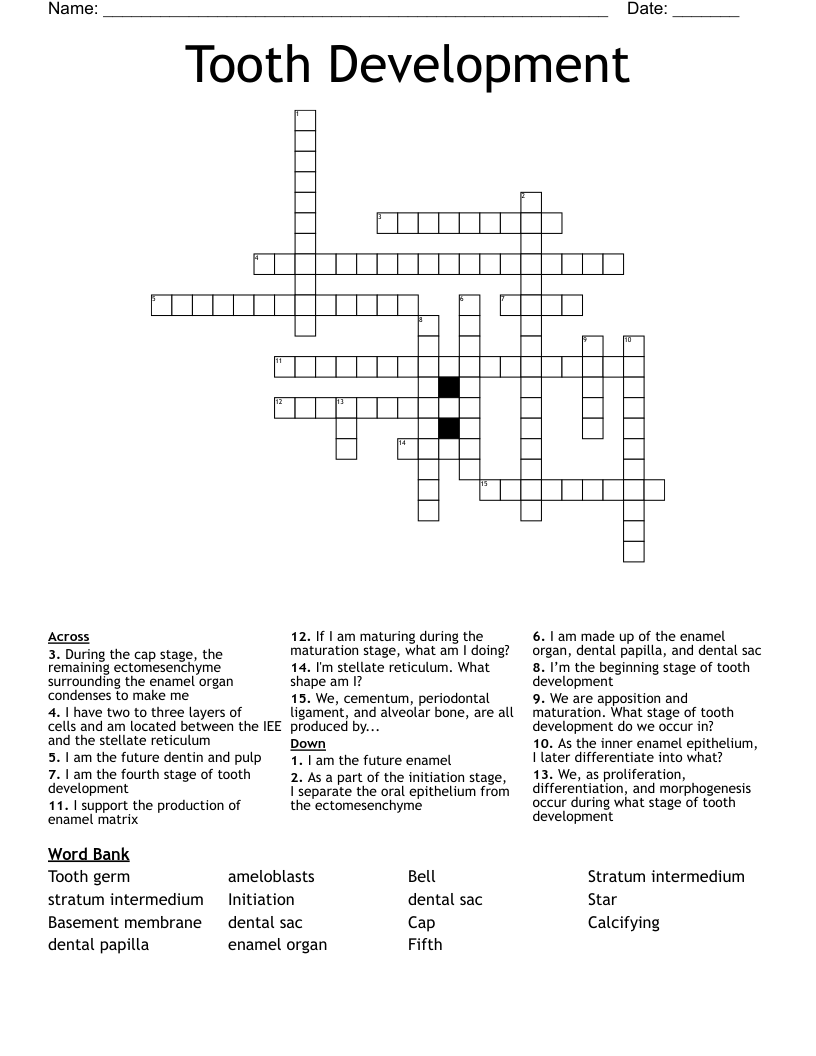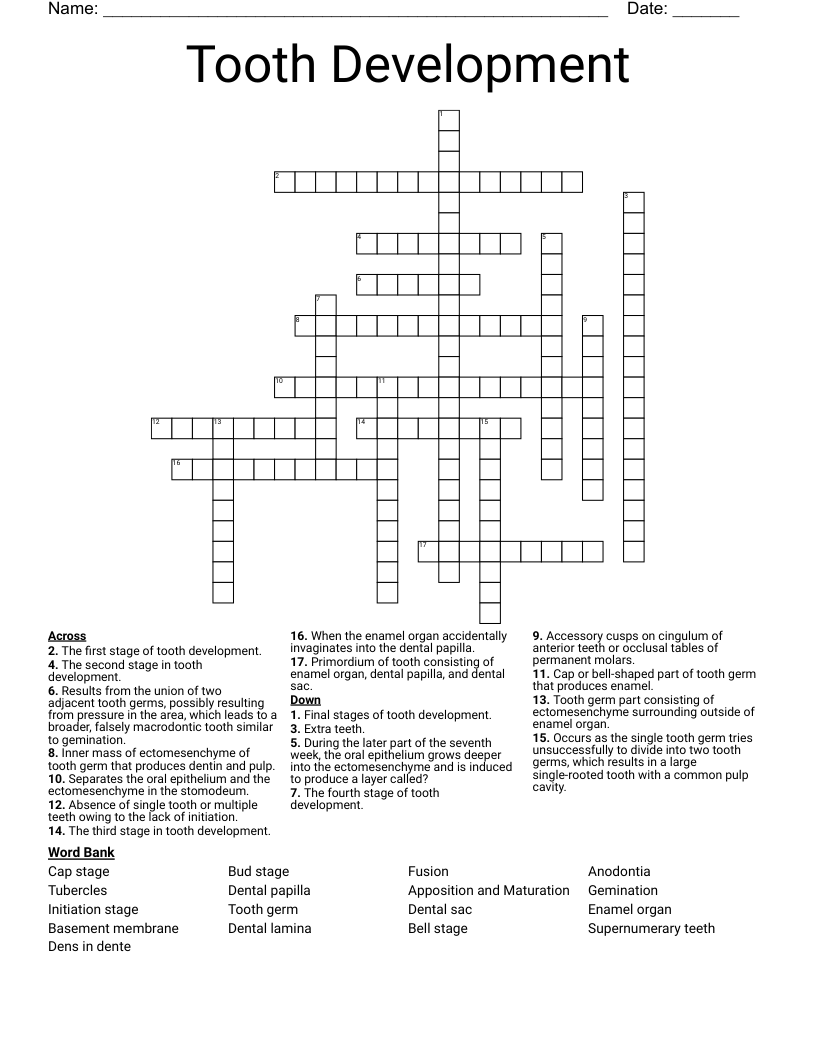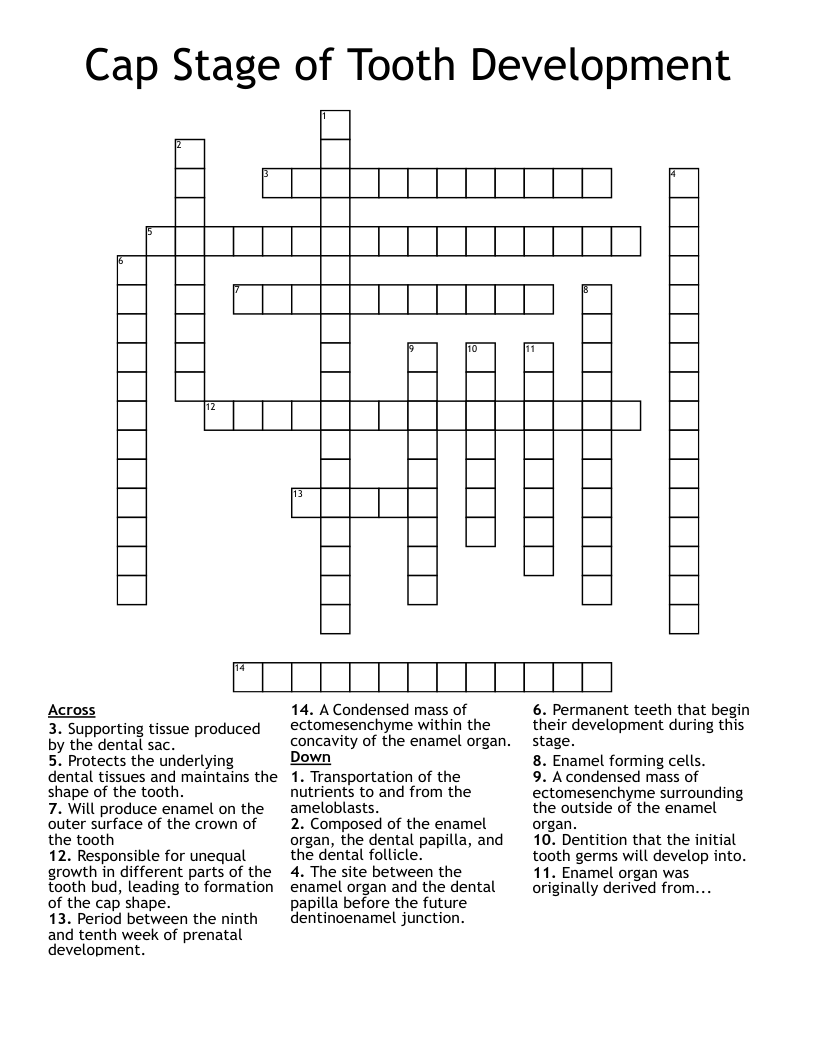
Stages of Tooth Development for the Primary Dentition & Developmental Disturbances Worksheet
This printable matching worksheet on the topic of Dental & Optometry has 24 questions and answers to match. This matching worksheet is also available to download as a Microsoft Word document or a PDF.
Description
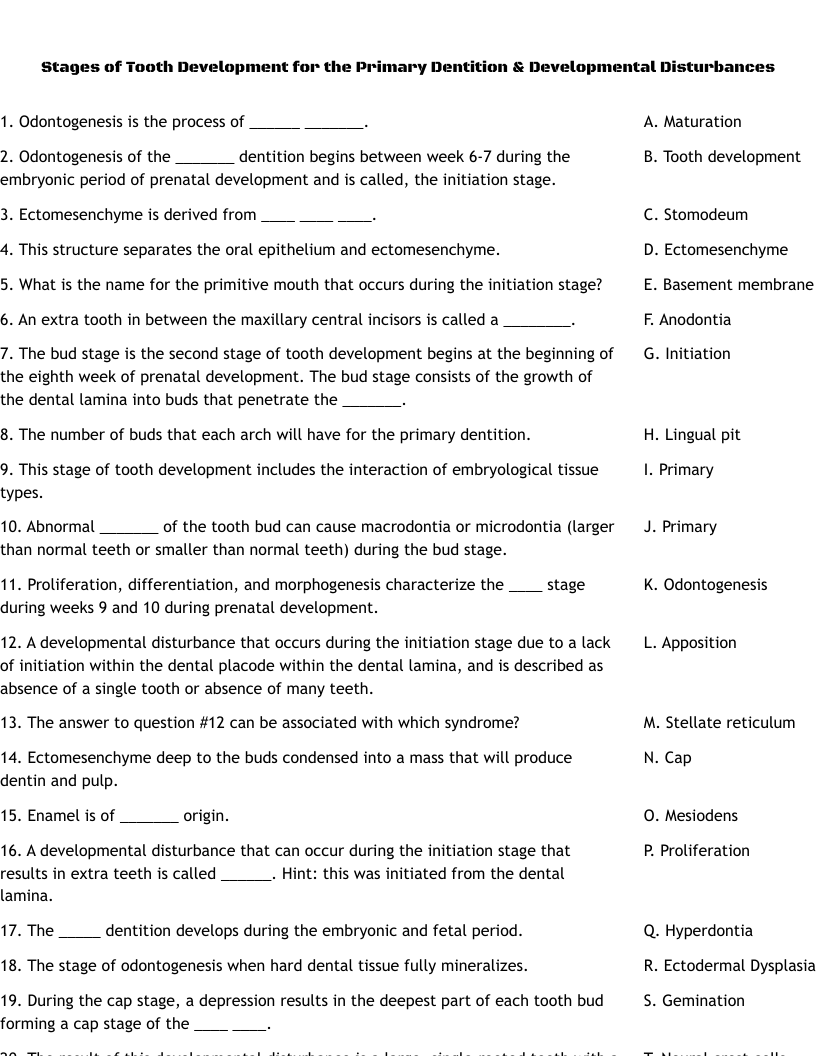
Odontogenesis is the process of ______ _______.
Odontogenesis of the _______ dentition begins between week 6-7 during the embryonic period of prenatal development and is called, the initiation stage.
Ectomesenchyme is derived from ____ ____ ____.
This structure separates the oral epithelium and ectomesenchyme.
What is the name for the primitive mouth that occurs during the initiation stage?
An extra tooth in between the maxillary central incisors is called a ________.
The bud stage is the second stage of tooth development begins at the beginning of the eighth week of prenatal development. The bud stage consists of the growth of the dental lamina into buds that penetrate the _______.
The number of buds that each arch will have for the primary dentition.
This stage of tooth development includes the interaction of embryological tissue types.
Abnormal _______ of the tooth bud can cause macrodontia or microdontia (larger than normal teeth or smaller than normal teeth) during the bud stage.
Proliferation, differentiation, and morphogenesis characterize the ____ stage during weeks 9 and 10 during prenatal development.
A developmental disturbance that occurs during the initiation stage due to a lack of initiation within the dental placode within the dental lamina, and is described as absence of a single tooth or absence of many teeth.
The answer to question #12 can be associated with which syndrome?
Ectomesenchyme deep to the buds condensed into a mass that will produce dentin and pulp.
Enamel is of _______ origin.
A developmental disturbance that can occur during the initiation stage that results in extra teeth is called ______. Hint: this was initiated from the dental lamina.
The _____ dentition develops during the embryonic and fetal period.
The stage of odontogenesis when hard dental tissue fully mineralizes.
During the cap stage, a depression results in the deepest part of each tooth bud forming a cap stage of the ____ ____.
The result of this developmental disturbance is a large, single-rooted tooth with a large common pulp cavity.
The enamel organ abnormally invaginates into the dental papilla resulting in the developmental disturbance: dens in dente. A tooth affected by this developmental disturbance typically has a deep _____ _____. This developmental disturbance can occur during the cap stage.
Enamel organ layers during the bell stage consist of: OEE, which is a protective barrier for the enamel organ, and the IEE consists of columnar cells of the enamel organ, which will differentiate into ameloblasts. Which two layers are between the OEE and IEE? Hint: these two layers support the production of enamel. _____ ________ and stratum intermedium.
The stage with formation of the following partially mineralized dental tissue: enamel, dentin, and cementum.
Apposition and maturation are the final stages of ___________.