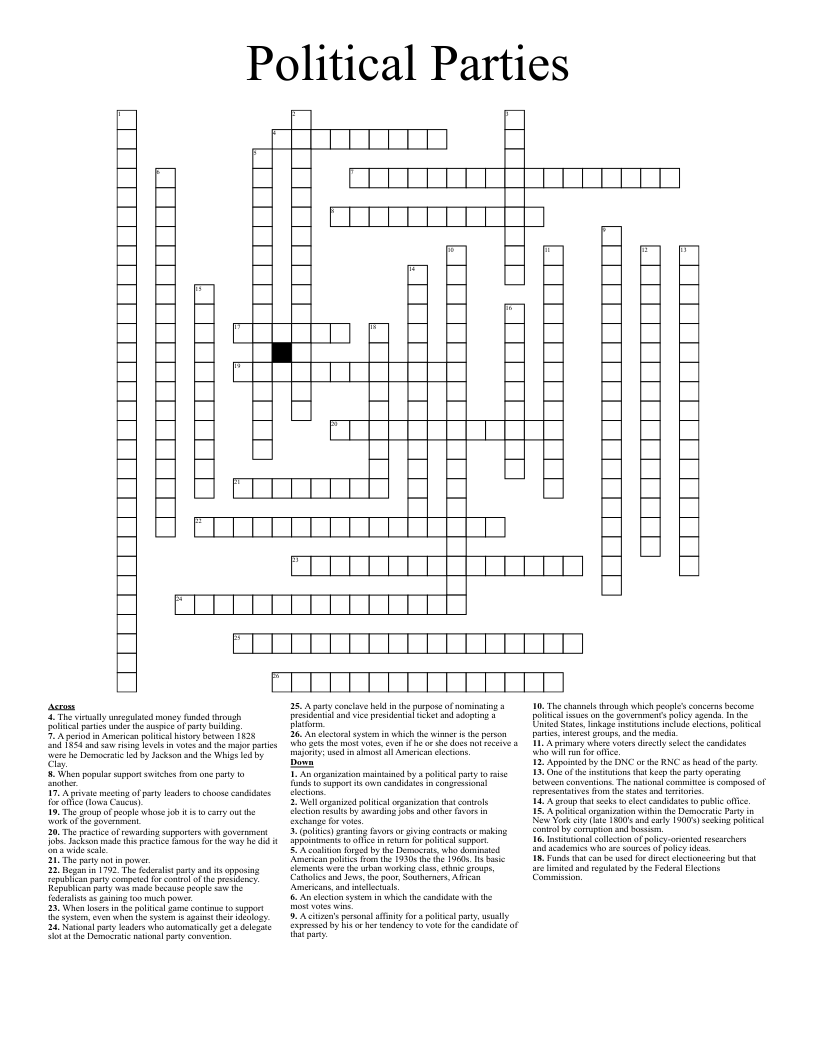
Political Parties Crossword
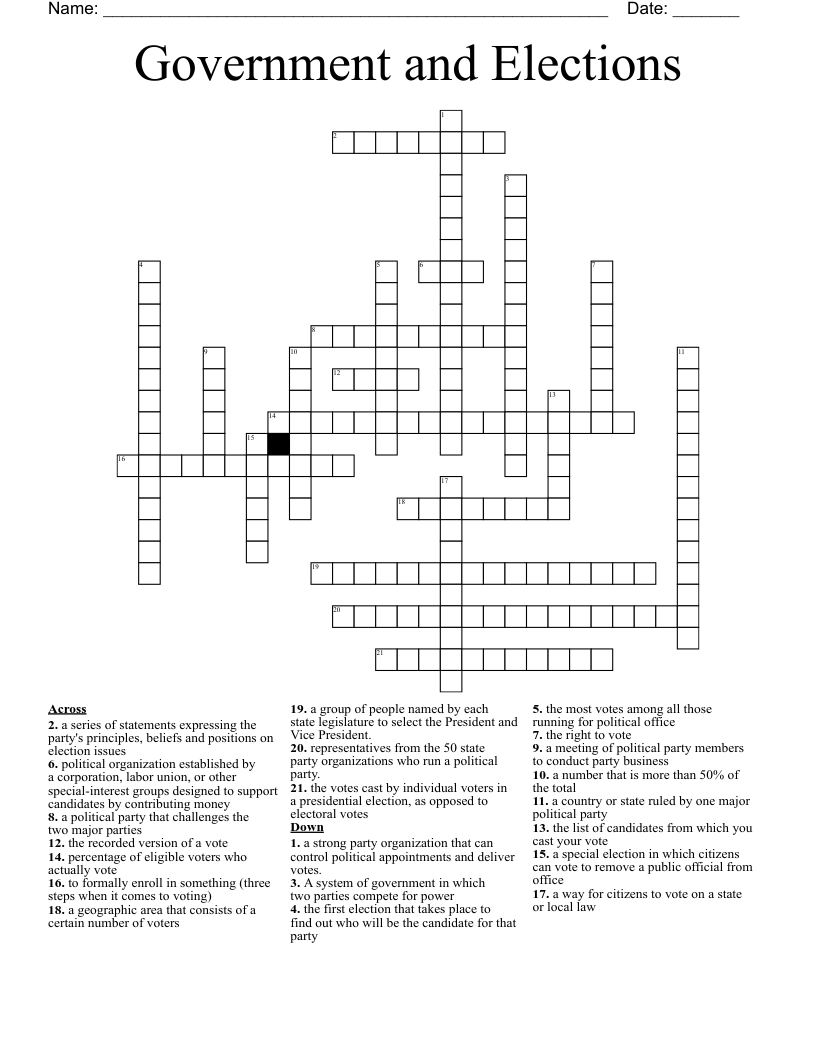
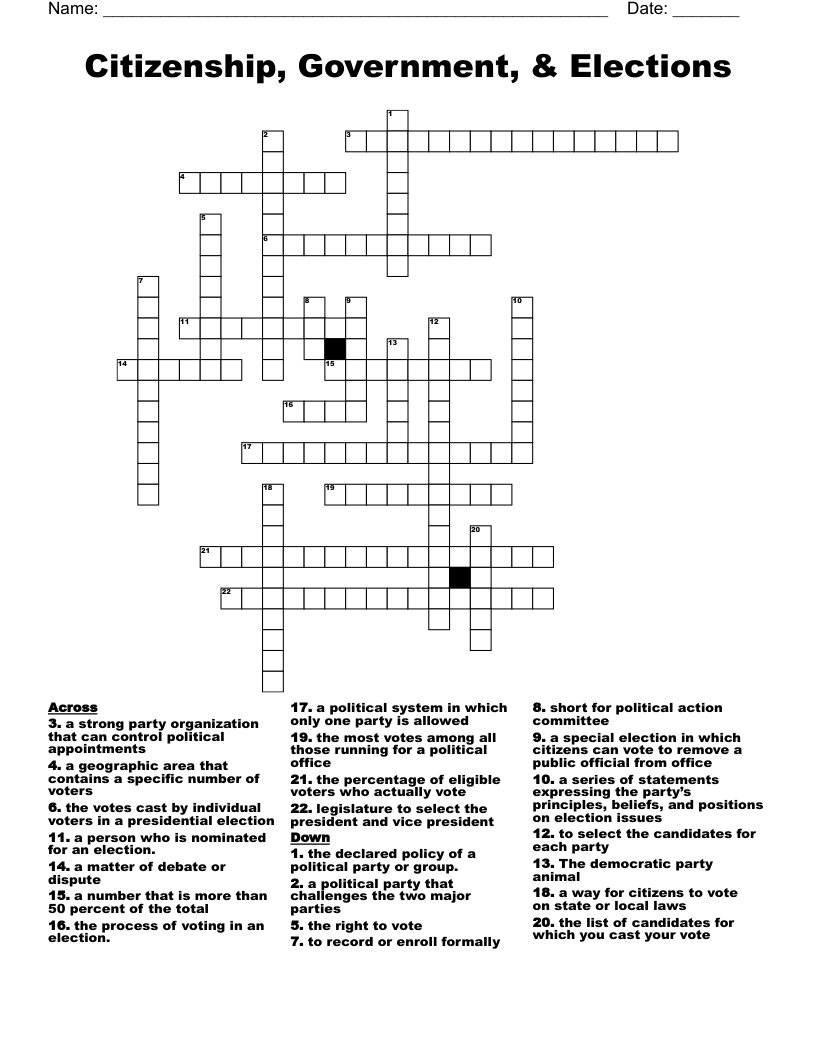
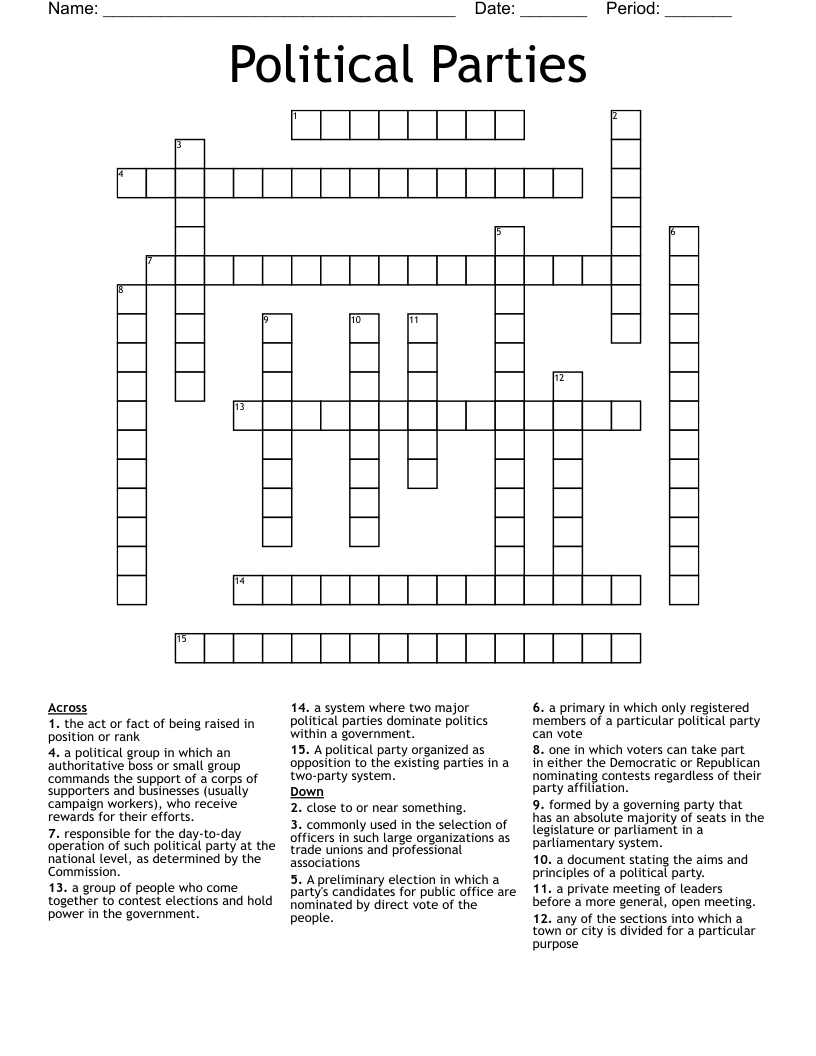
This printable crossword puzzle on the topic of Politics & Elections has 26 clues. Answers range from 6 to 30 letters long. This crossword is also available to download as a Microsoft Word document or a PDF.
Description
A party conclave held in the purpose of nominating a presidential and vice presidential ticket and adopting a platform.
Institutional collection of policy-oriented researchers and academics who are sources of policy ideas.
The virtually unregulated money funded through political parties under the auspice of party building.
Funds that can be used for direct electioneering but that are limited and regulated by the Federal Elections Commission.
A citizen's personal affinity for a political party, usually expressed by his or her tendency to vote for the candidate of that party.
A group that seeks to elect candidates to public office.
A primary where voters directly select the candidates who will run for office.
One of the institutions that keep the party operating between conventions. The national committee is composed of representatives from the states and territories.
An organization maintained by a political party to raise funds to support its own candidates in congressional elections.
Appointed by the DNC or the RNC as head of the party.
National party leaders who automatically get a delegate slot at the Democratic national party convention.
An election system in which the candidate with the most votes wins.
Well organized political organization that controls election results by awarding jobs and other favors in exchange for votes.
A political organization within the Democratic Party in New York city (late 1800's and early 1900's) seeking political control by corruption and bossism.
(politics) granting favors or giving contracts or making appointments to office in return for political support.
An electoral system in which the winner is the person who gets the most votes, even if he or she does not receive a majority; used in almost all American elections.
A private meeting of party leaders to choose candidates for office (Iowa Caucus).
The channels through which people's concerns become political issues on the government's policy agenda. In the United States, linkage institutions include elections, political parties, interest groups, and the media.
When losers in the political game continue to support the system, even when the system is against their ideology.
The party not in power.
When popular support switches from one party to another.
Began in 1792. The federalist party and its opposing republican party competed for control of the presidency. Republican party was made because people saw the federalists as gaining too much power.
A period in American political history between 1828 and 1854 and saw rising levels in votes and the major parties were he Democratic led by Jackson and the Whigs led by Clay.
A coalition forged by the Democrats, who dominated American politics from the 1930s the the 1960s. Its basic elements were the urban working class, ethnic groups, Catholics and Jews, the poor, Southerners, African Americans, and intellectuals.
The practice of rewarding supporters with government jobs. Jackson made this practice famous for the way he did it on a wide scale.
The group of people whose job it is to carry out the work of the government.