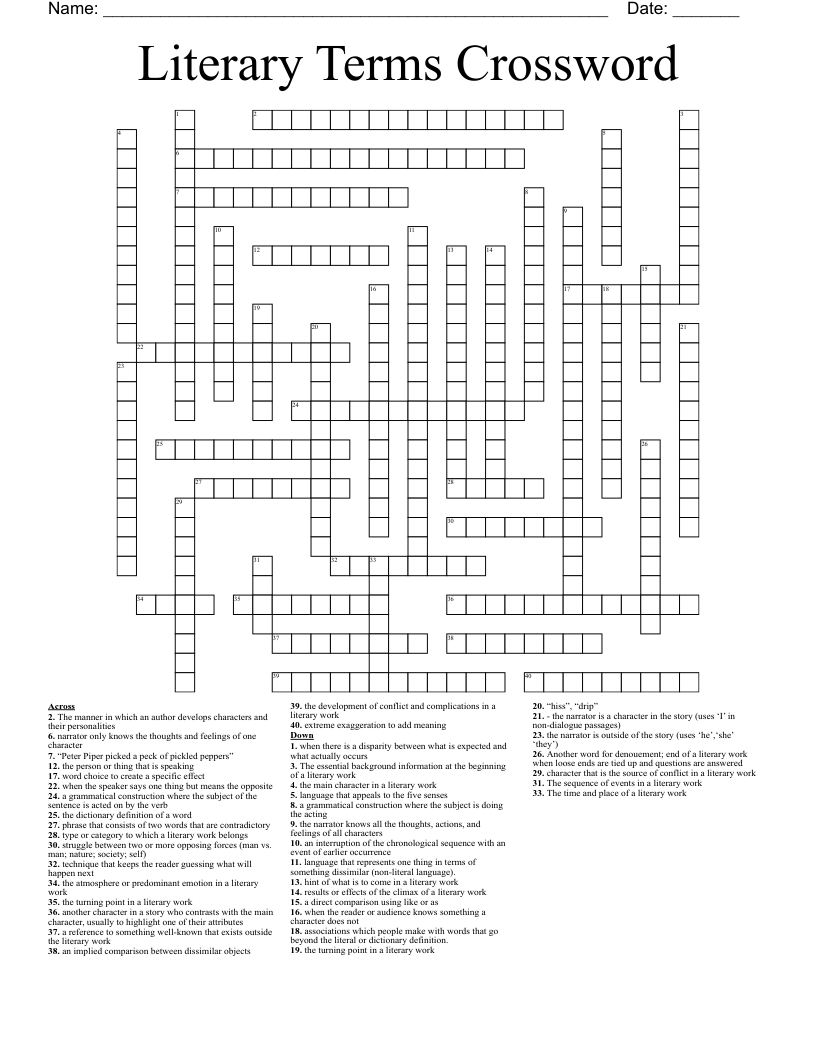
Literary Terms Crossword
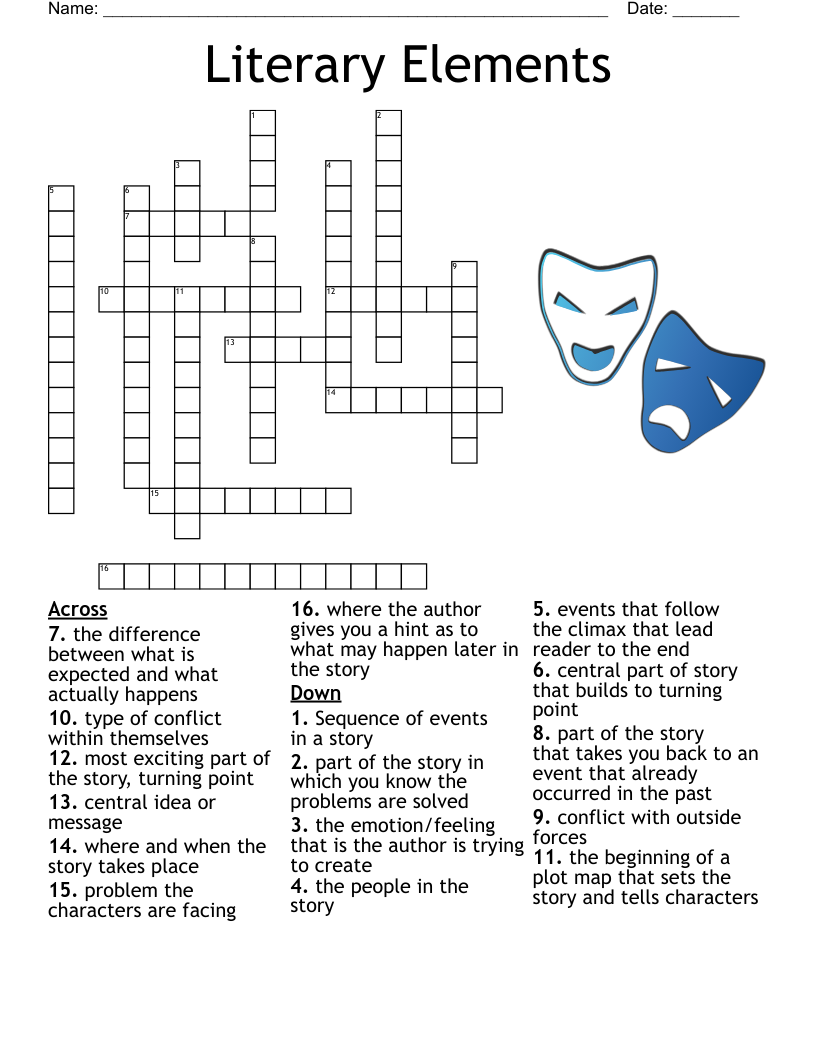
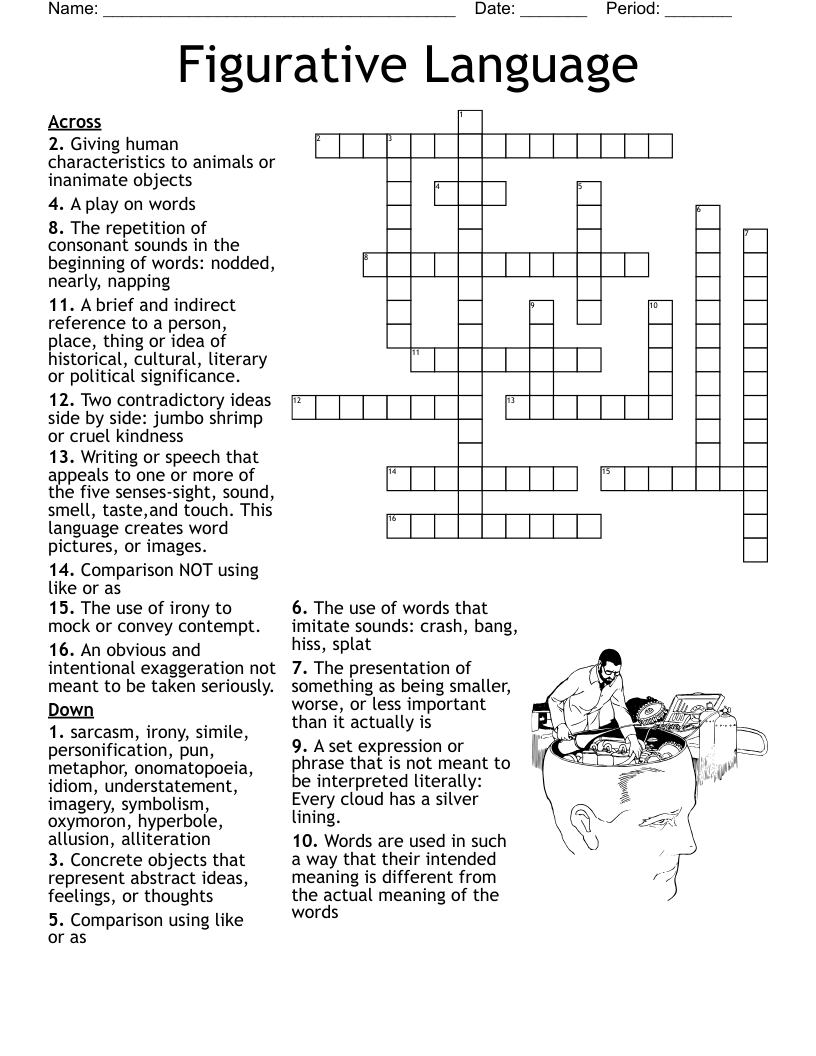
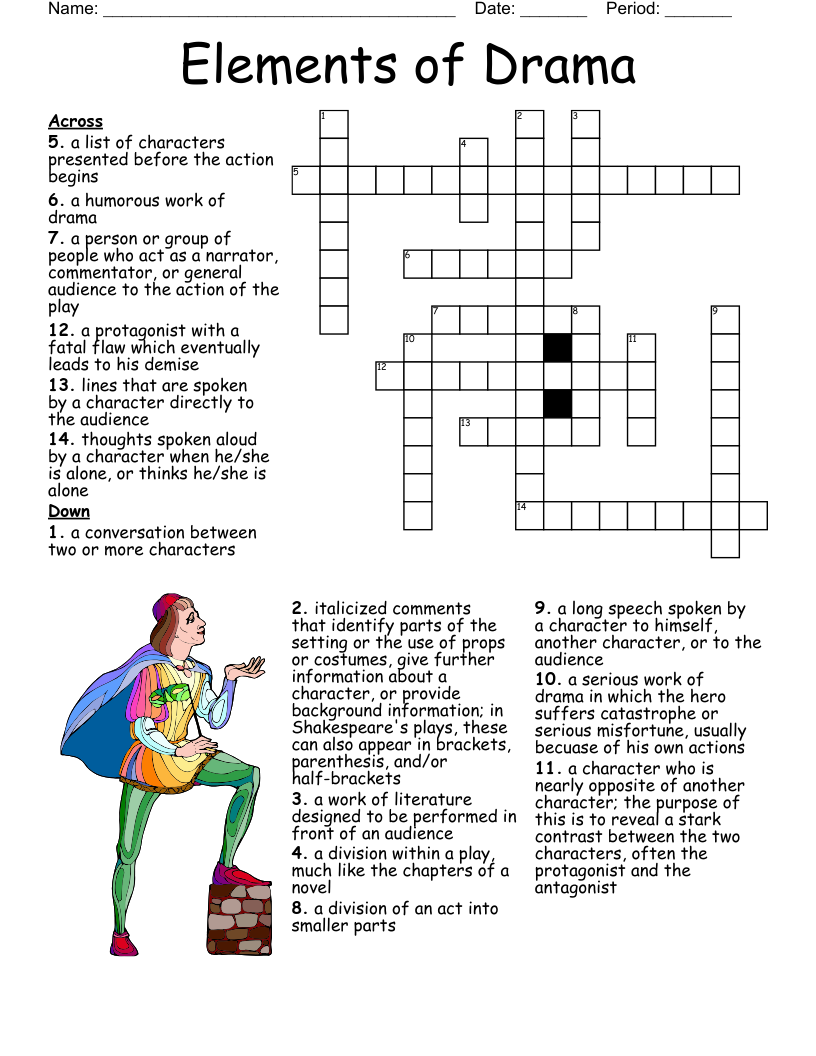
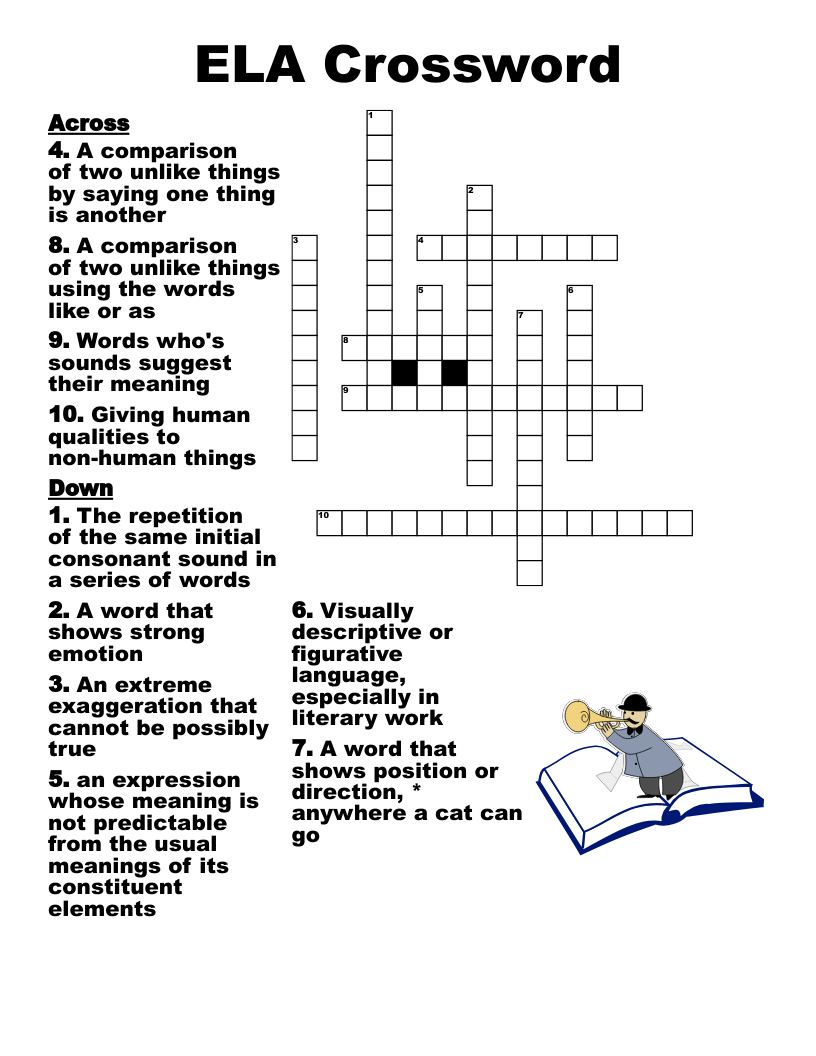
This printable crossword puzzle on the topic of Figurative Language & Literary Devices has 40 clues. Answers range from 4 to 21 letters long. This crossword is also available to download as a Microsoft Word document or a PDF.
Description
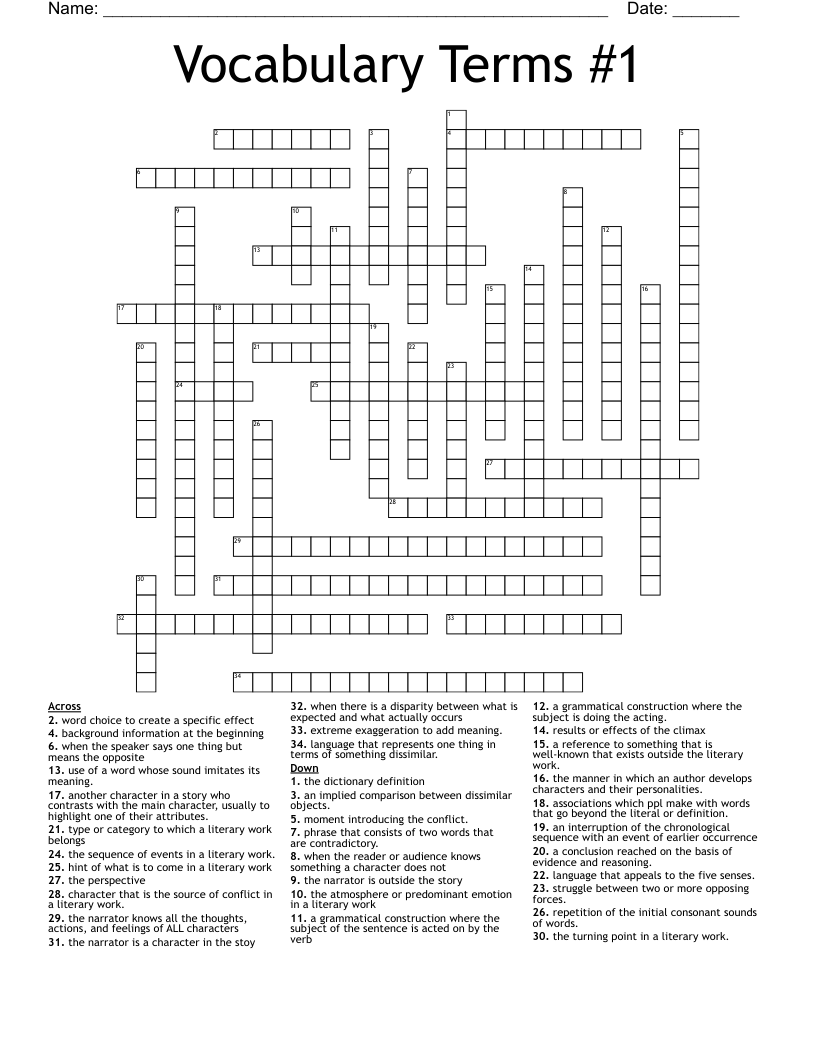
a grammatical construction where the subject is doing the acting
“Peter Piper picked a peck of pickled peppers”
a reference to something well-known that exists outside the literary work
character that is the source of conflict in a literary work
The manner in which an author develops characters and their personalities
another character in a story who contrasts with the main character, usually to highlight one of their attributes
the turning point in a literary work
the turning point in a literary work
struggle between two or more opposing forces (man vs. man; nature; society; self)
associations which people make with words that go beyond the literal or dictionary definition.
the dictionary definition of a word
word choice to create a specific effect
The essential background information at the beginning of a literary work
results or effects of the climax of a literary work
language that represents one thing in terms of something dissimilar (non-literal language).
an interruption of the chronological sequence with an event of earlier occurrence
hint of what is to come in a literary work
type or category to which a literary work belongs
extreme exaggeration to add meaning
language that appeals to the five senses
when the reader or audience knows something a character does not
when there is a disparity between what is expected and what actually occurs
when the speaker says one thing but means the opposite
an implied comparison between dissimilar objects
the atmosphere or predominant emotion in a literary work
“hiss”, “drip”
phrase that consists of two words that are contradictory
a grammatical construction where the subject of the sentence is acted on by the verb
The sequence of events in a literary work
- the narrator is a character in the story (uses ‘I’ in non-dialogue passages)
the narrator is outside of the story (uses ‘he’,‘she’ ‘they’)
the narrator knows all the thoughts, actions, and feelings of all characters
narrator only knows the thoughts and feelings of one character
the main character in a literary work
Another word for denouement; end of a literary work when loose ends are tied up and questions are answered
the development of conflict and complications in a literary work
The time and place of a literary work
a direct comparison using like or as
the person or thing that is speaking
technique that keeps the reader guessing what will happen next