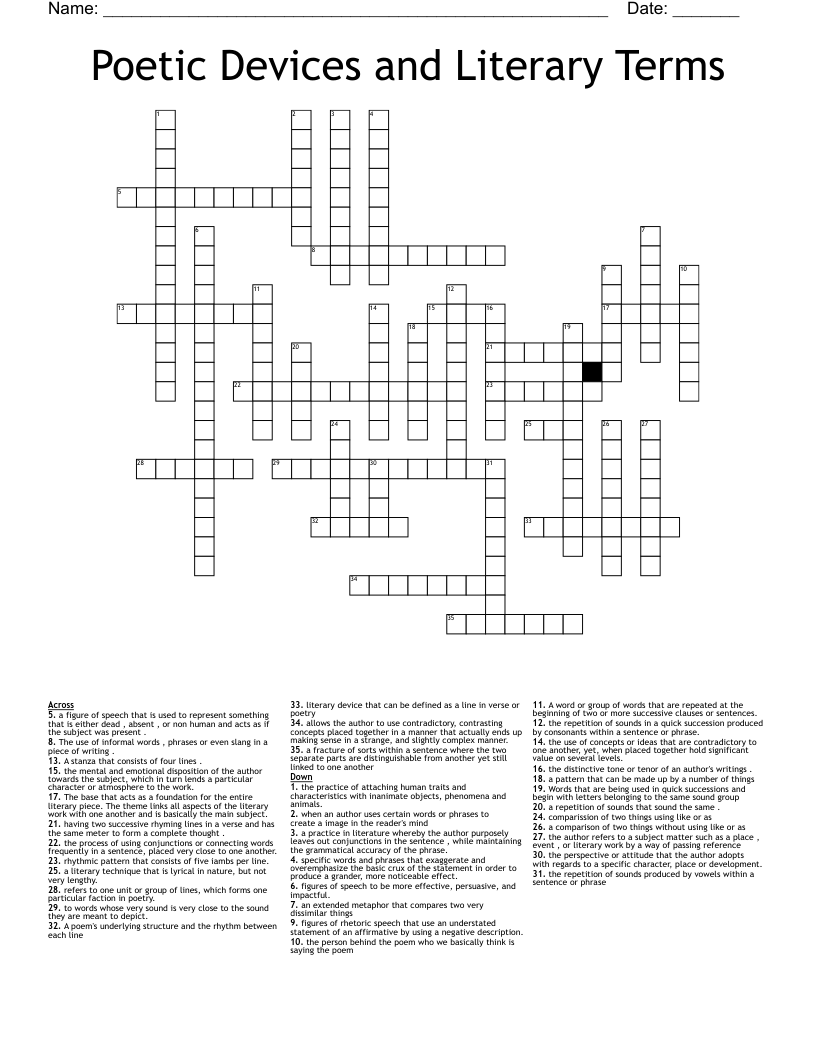
Poetic Devices and Literary Terms Crossword
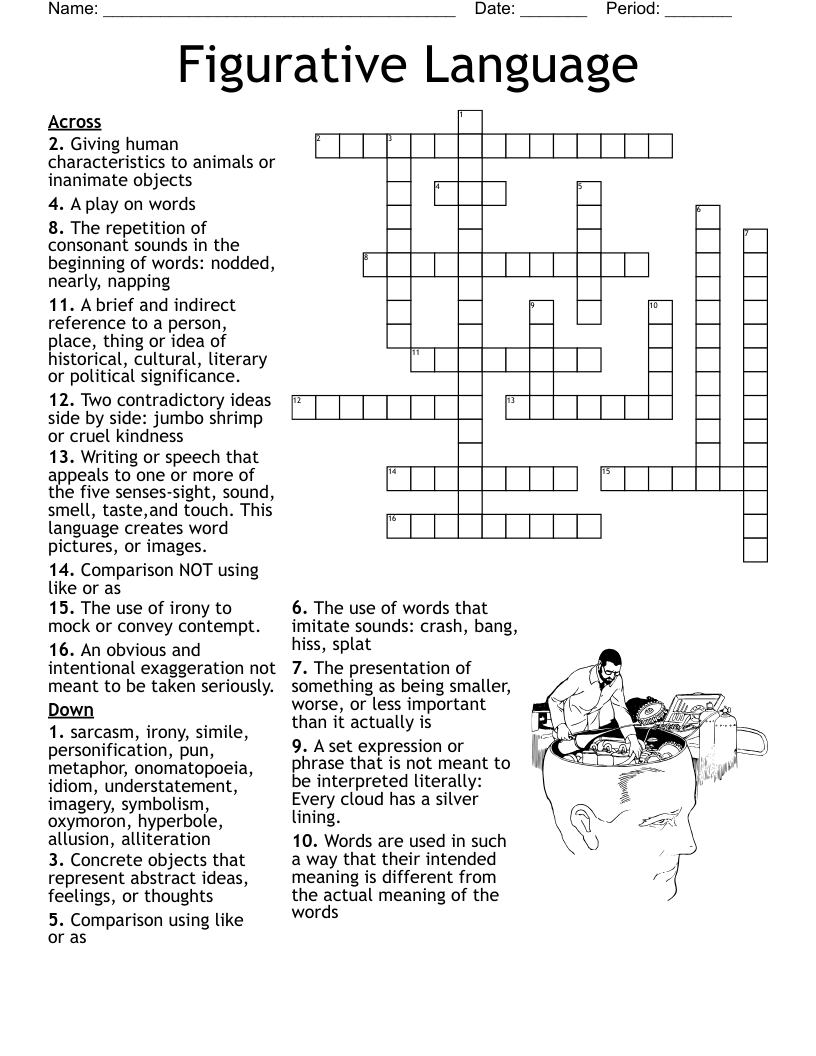
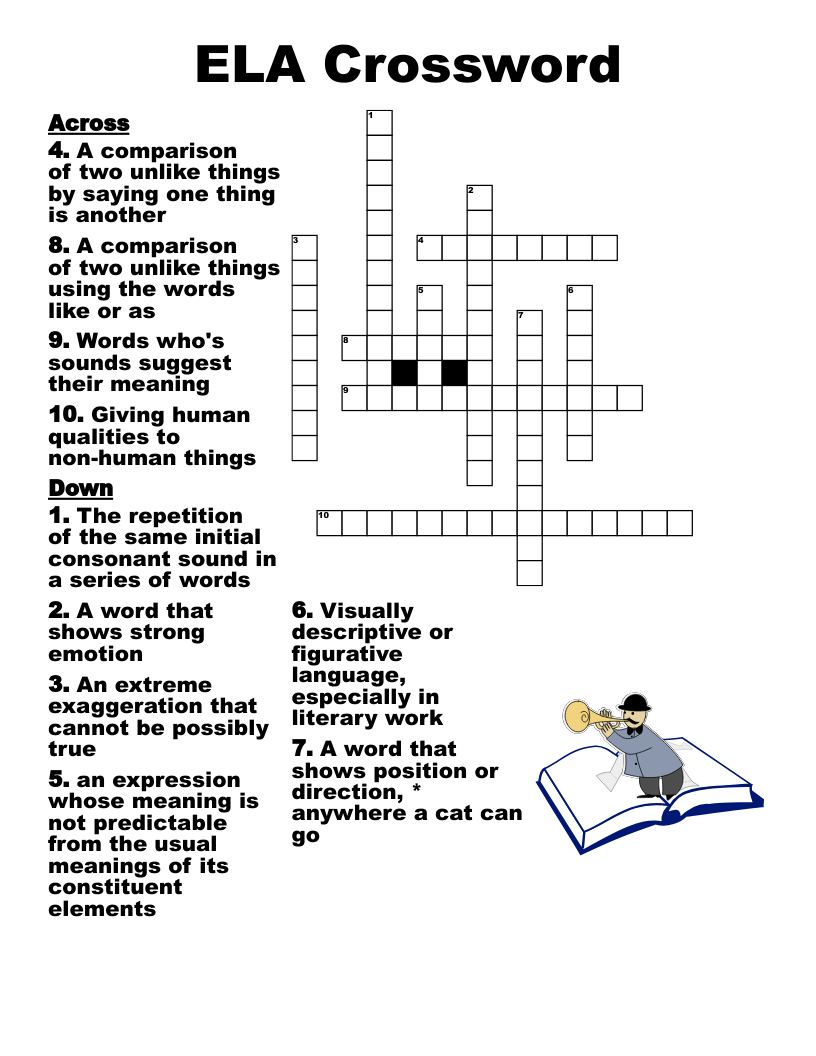
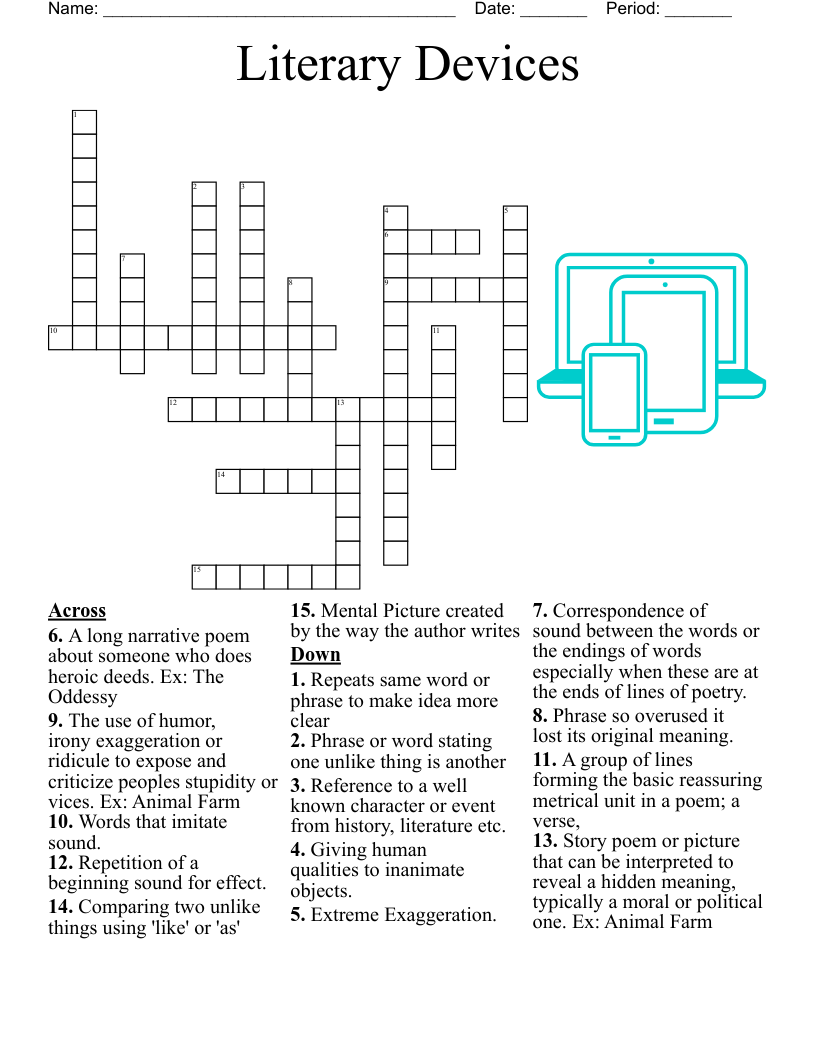
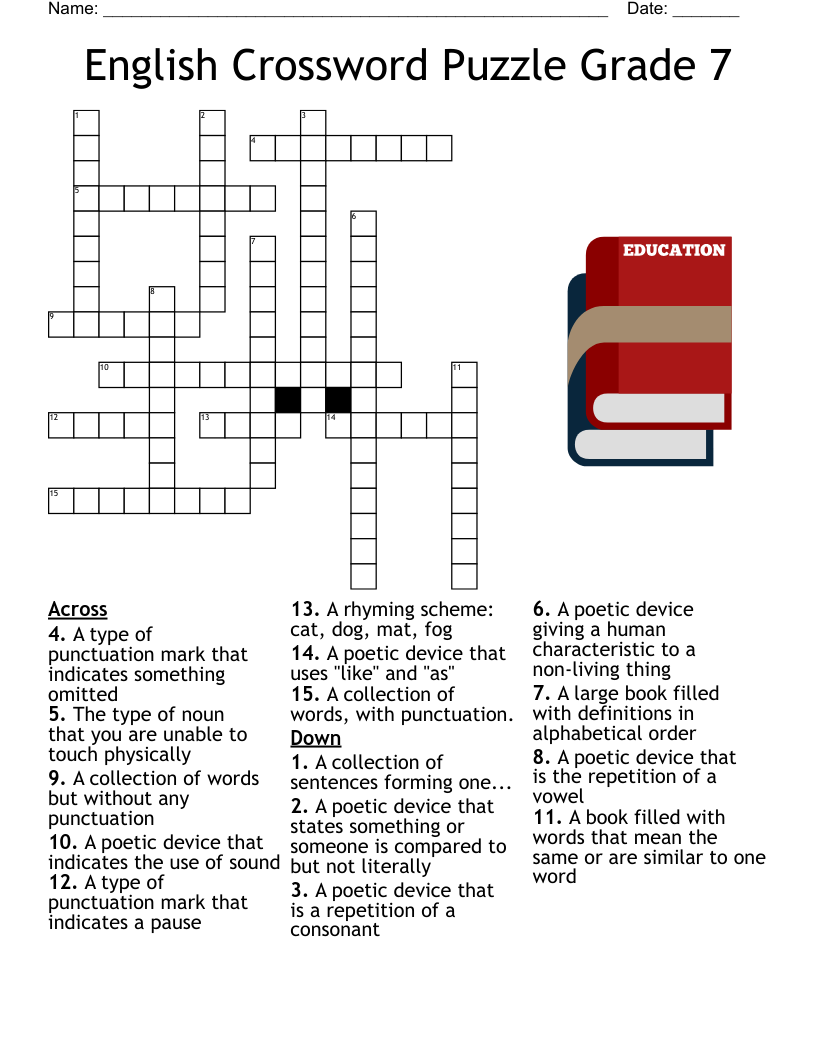
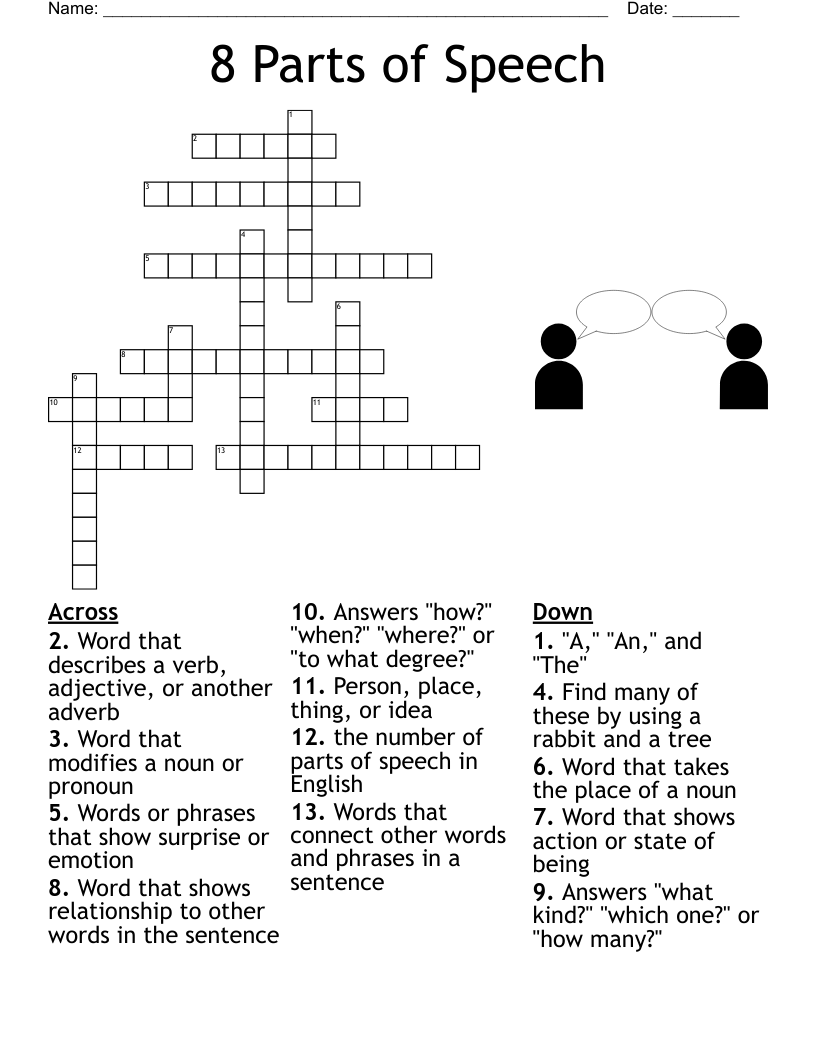
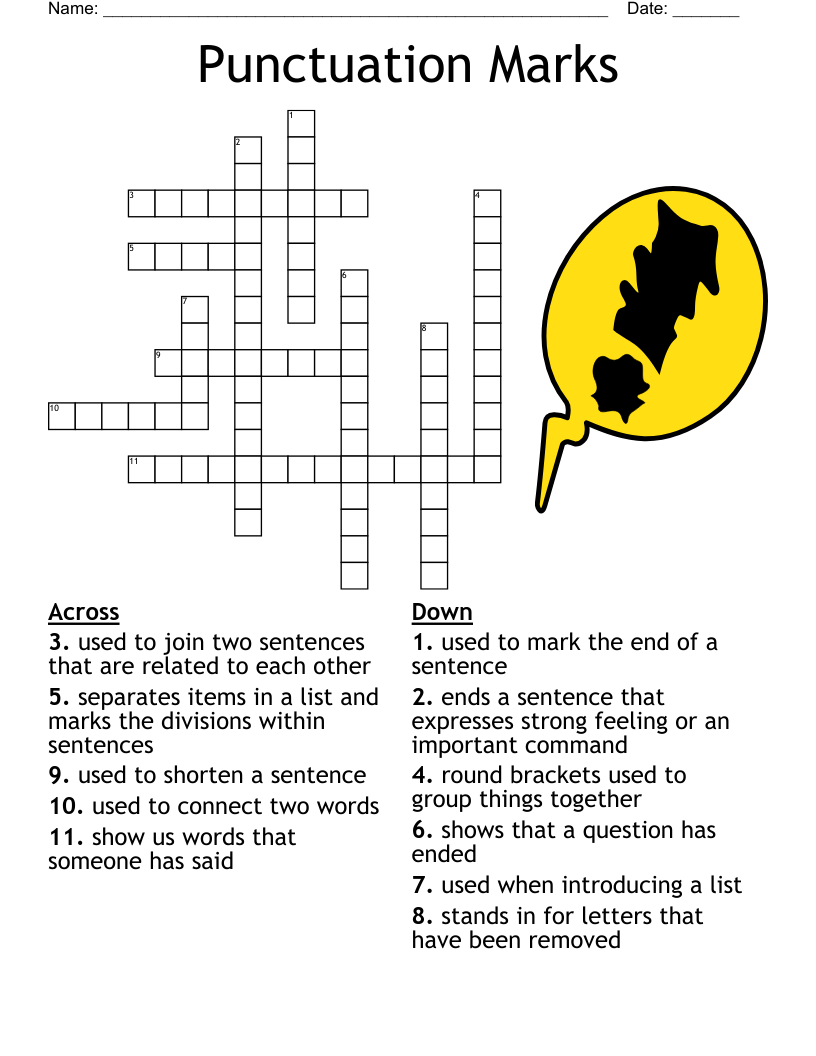
This printable crossword puzzle on the topic of Figurative Language & Literary Devices has 35 clues. Answers range from 3 to 18 letters long. This crossword is also available to download as a Microsoft Word document or a PDF.
Description
The base that acts as a foundation for the entire literary piece. The theme links all aspects of the literary work with one another and is basically the main subject.
A poem's underlying structure and the rhythm between each line
when an author uses certain words or phrases to create a image in the reader's mind
the perspective or attitude that the author adopts with regards to a specific character, place or development.
the use of concepts or ideas that are contradictory to one another, yet, when placed together hold significant value on several levels.
a practice in literature whereby the author purposely leaves out conjunctions in the sentence , while maintaining the grammatical accuracy of the phrase.
a figure of speech that is used to represent something that is either dead , absent , or non human and acts as if the subject was present .
a pattern that can be made up by a number of things
A stanza that consists of four lines .
rhythmic pattern that consists of five iambs per line.
a repetition of sounds that sound the same .
allows the author to use contradictory, contrasting concepts placed together in a manner that actually ends up making sense in a strange, and slightly complex manner.
a comparison of two things without using like or as
The use of informal words , phrases or even slang in a piece of writing .
the mental and emotional disposition of the author towards the subject, which in turn lends a particular character or atmosphere to the work.
the repetition of sounds in a quick succession produced by consonants within a sentence or phrase.
refers to one unit or group of lines, which forms one particular faction in poetry.
A word or group of words that are repeated at the beginning of two or more successive clauses or sentences.
the repetition of sounds produced by vowels within a sentence or phrase
the practice of attaching human traits and characteristics with inanimate objects, phenomena and animals.
the process of using conjunctions or connecting words frequently in a sentence, placed very close to one another.
figures of rhetoric speech that use an understated statement of an affirmative by using a negative description.
to words whose very sound is very close to the sound they are meant to depict.
Words that are being used in quick successions and begin with letters belonging to the same sound group
specific words and phrases that exaggerate and overemphasize the basic crux of the statement in order to produce a grander, more noticeable effect.
the person behind the poem who we basically think is saying the poem
a literary technique that is lyrical in nature, but not very lengthy.
an extended metaphor that compares two very dissimilar things
a fracture of sorts within a sentence where the two separate parts are distinguishable from another yet still linked to one another
having two successive rhyming lines in a verse and has the same meter to form a complete thought .
literary device that can be defined as a line in verse or poetry
the author refers to a subject matter such as a place , event , or literary work by a way of passing reference
comparission of two things using like or as
figures of speech to be more effective, persuasive, and impactful.
the distinctive tone or tenor of an author's writings .