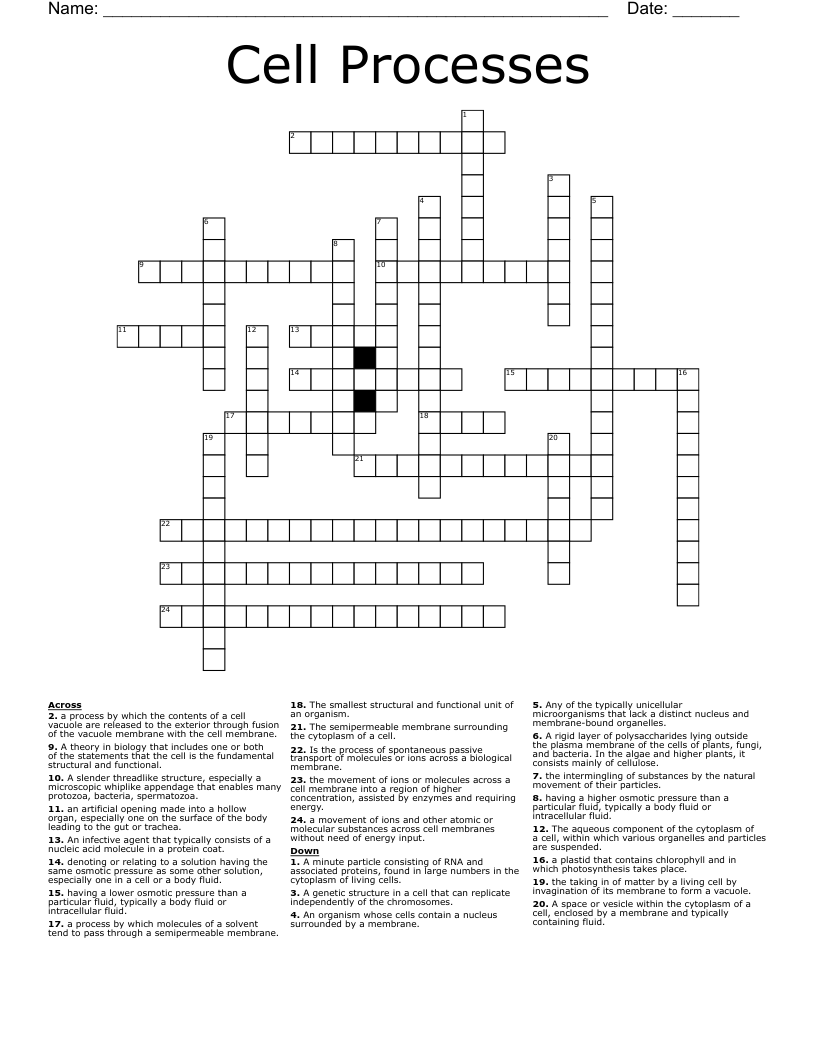
Cell Processes Crossword
This printable crossword puzzle on the topic of Cell Biology has 24 clues. Answers range from 4 to 20 letters long. This crossword is also available to download as a Microsoft Word document or a PDF.
Description
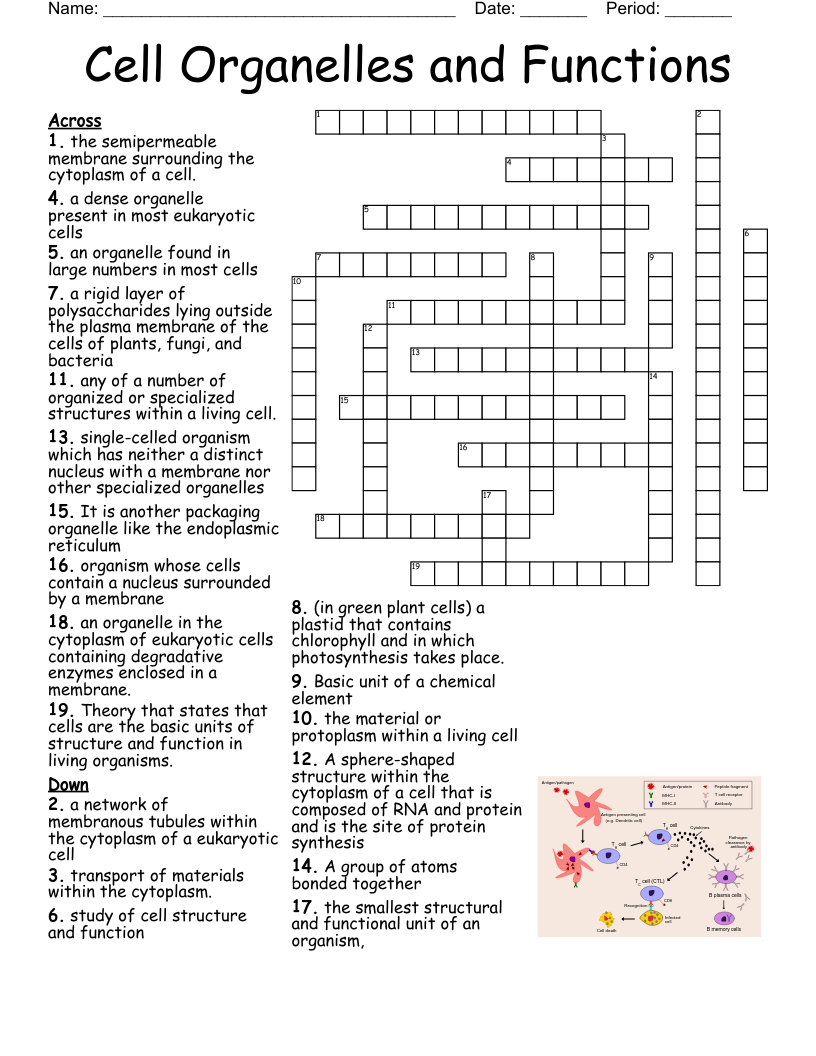
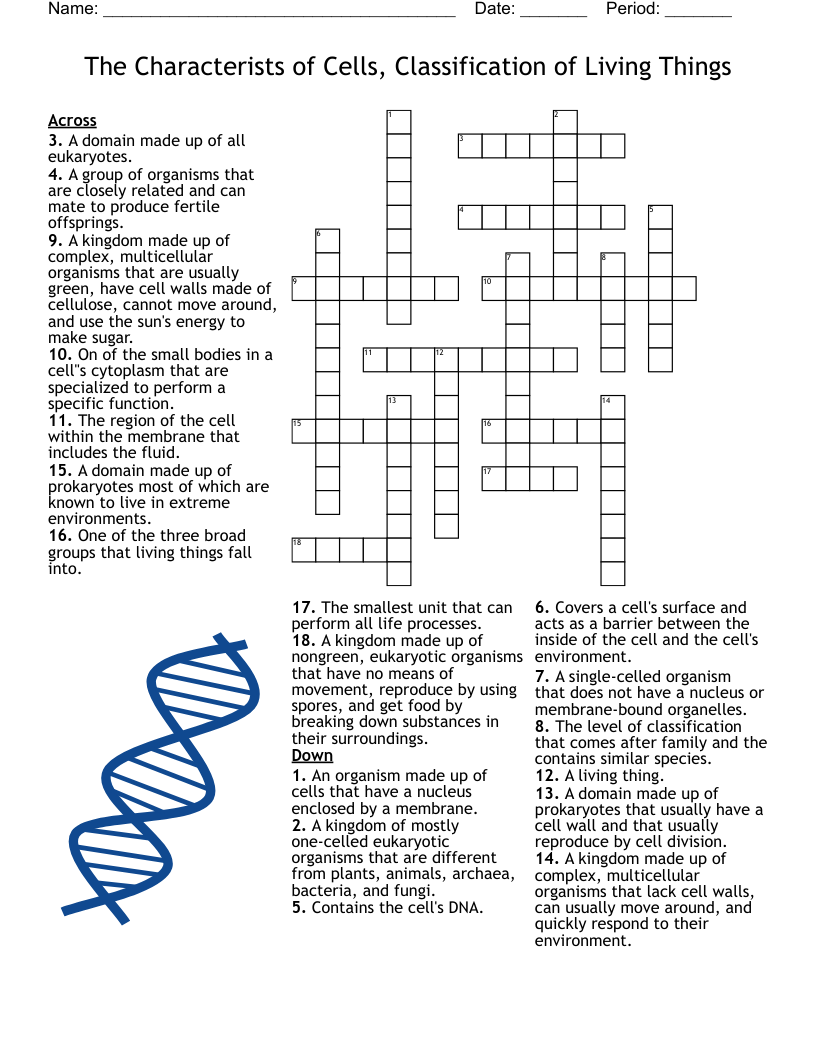
The smallest structural and functional unit of an organism.
A theory in biology that includes one or both of the statements that the cell is the fundamental structural and functional.
Any of the typically unicellular microorganisms that lack a distinct nucleus and membrane-bound organelles.
An organism whose cells contain a nucleus surrounded by a membrane.
A genetic structure in a cell that can replicate independently of the chromosomes.
The aqueous component of the cytoplasm of a cell, within which various organelles and particles are suspended.
A minute particle consisting of RNA and associated proteins, found in large numbers in the cytoplasm of living cells.
A slender threadlike structure, especially a microscopic whiplike appendage that enables many protozoa, bacteria, spermatozoa.
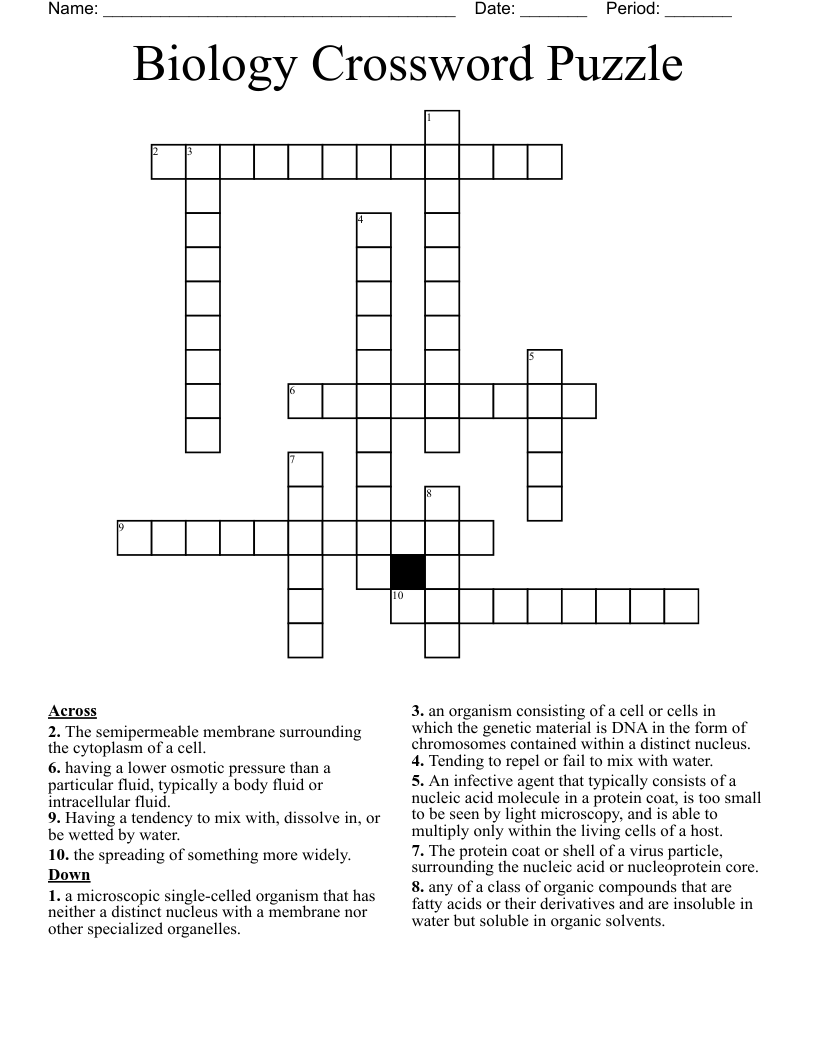
An infective agent that typically consists of a nucleic acid molecule in a protein coat.
The semipermeable membrane surrounding the cytoplasm of a cell.
a movement of ions and other atomic or molecular substances across cell membranes without need of energy input.
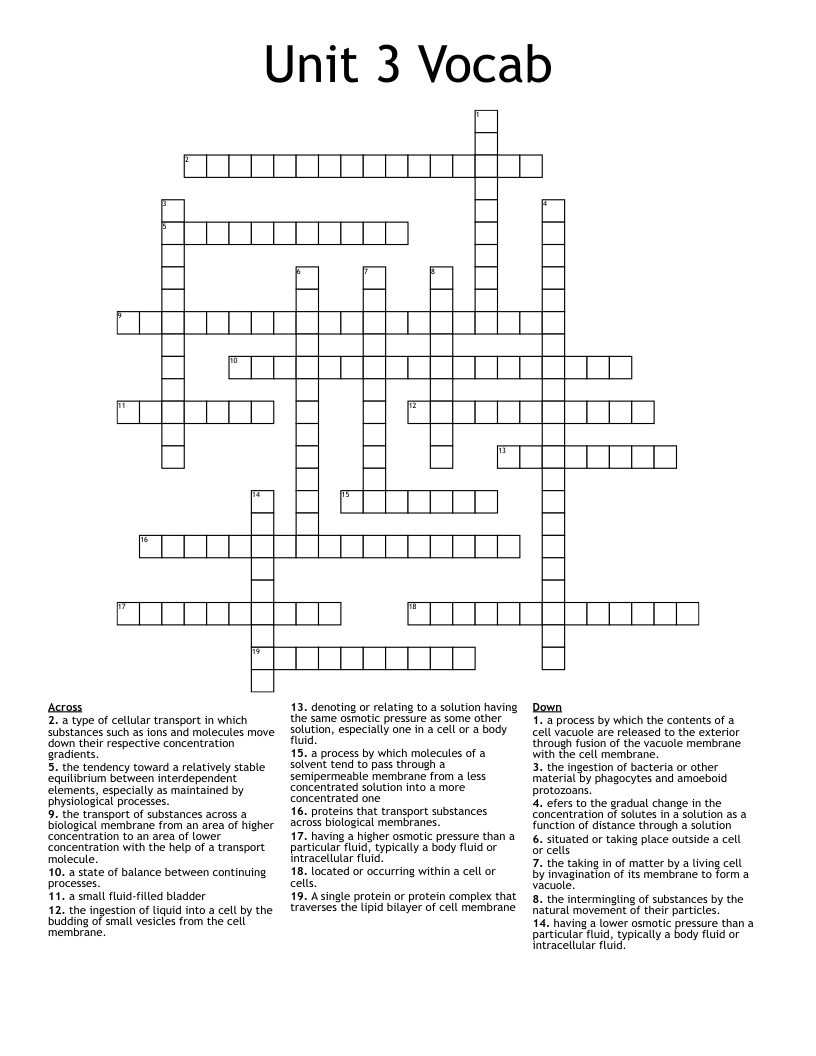
the intermingling of substances by the natural movement of their particles.
Is the process of spontaneous passive transport of molecules or ions across a biological membrane.
a process by which molecules of a solvent tend to pass through a semipermeable membrane.
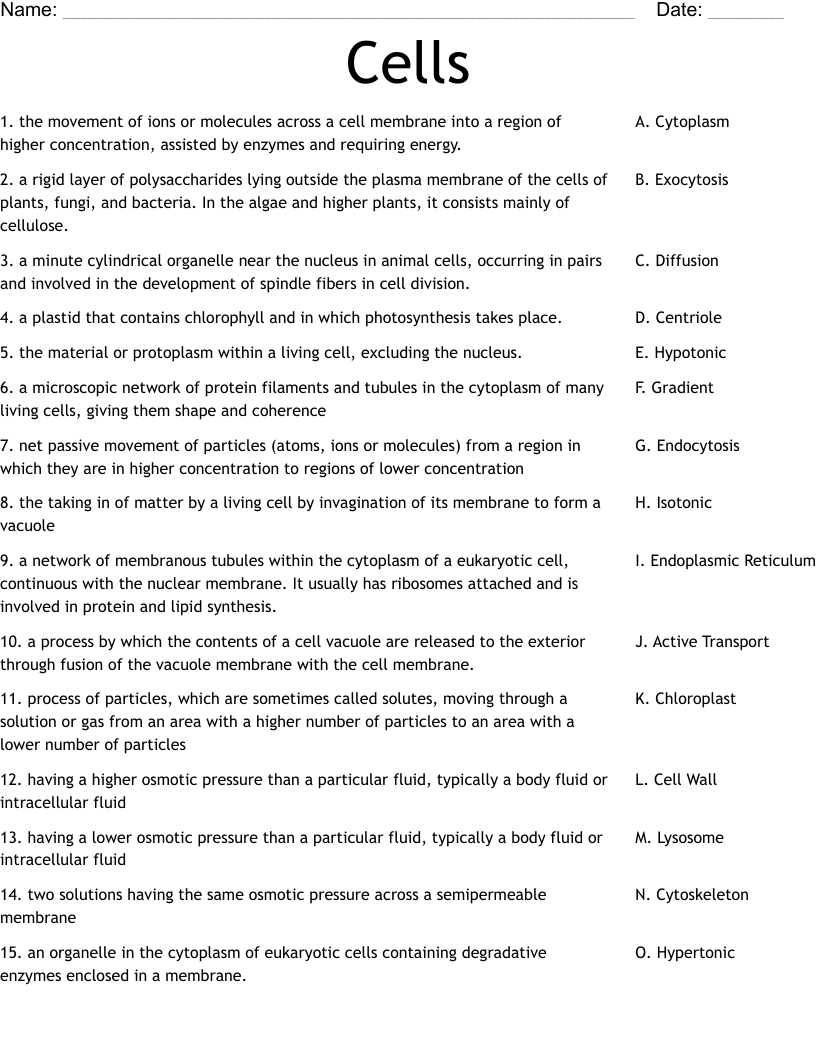
the movement of ions or molecules across a cell membrane into a region of higher concentration, assisted by enzymes and requiring energy.
the taking in of matter by a living cell by invagination of its membrane to form a vacuole.
a process by which the contents of a cell vacuole are released to the exterior through fusion of the vacuole membrane with the cell membrane.
having a higher osmotic pressure than a particular fluid, typically a body fluid or intracellular fluid.
having a lower osmotic pressure than a particular fluid, typically a body fluid or intracellular fluid.
denoting or relating to a solution having the same osmotic pressure as some other solution, especially one in a cell or a body fluid.
an artificial opening made into a hollow organ, especially one on the surface of the body leading to the gut or trachea.
A rigid layer of polysaccharides lying outside the plasma membrane of the cells of plants, fungi, and bacteria. In the algae and higher plants, it consists mainly of cellulose.
a plastid that contains chlorophyll and in which photosynthesis takes place.
A space or vesicle within the cytoplasm of a cell, enclosed by a membrane and typically containing fluid.