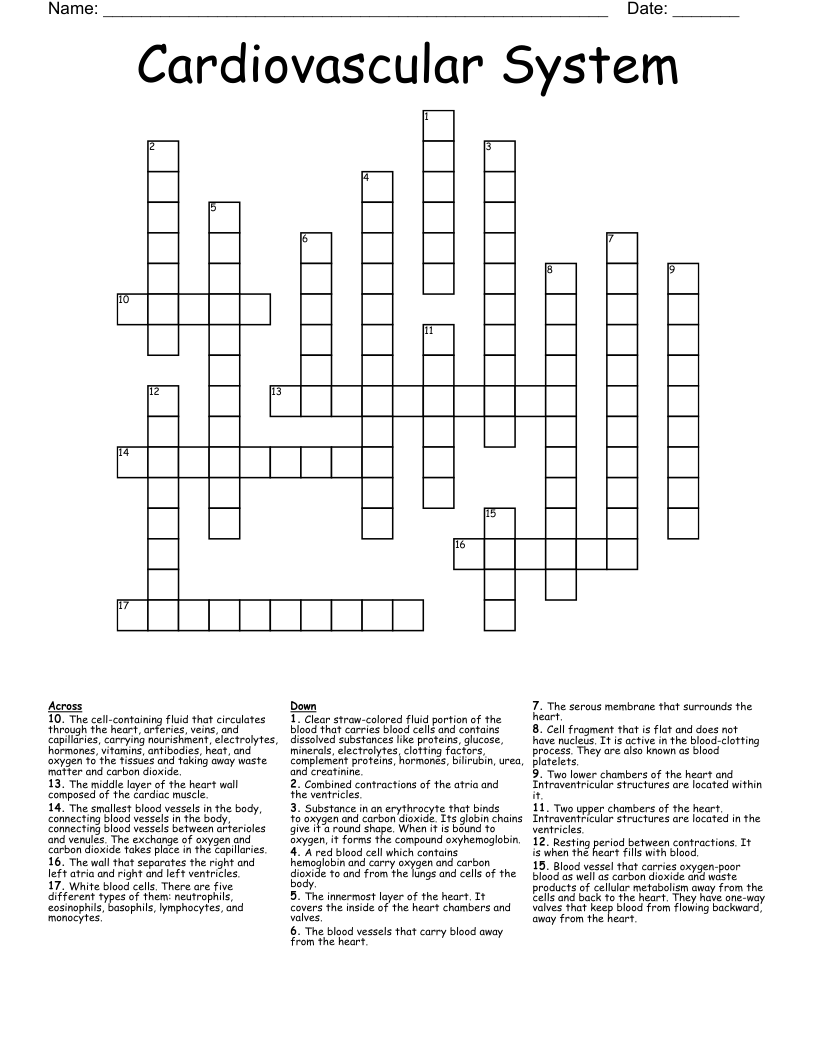
Cardiovascular System Crossword
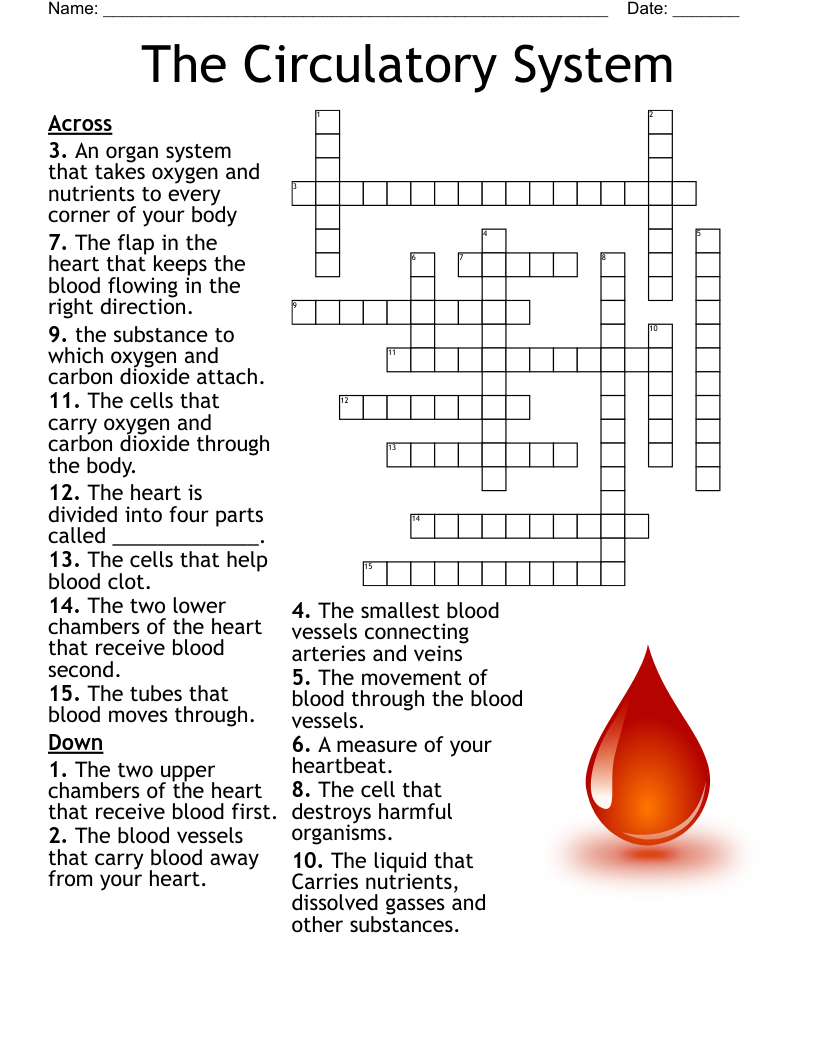
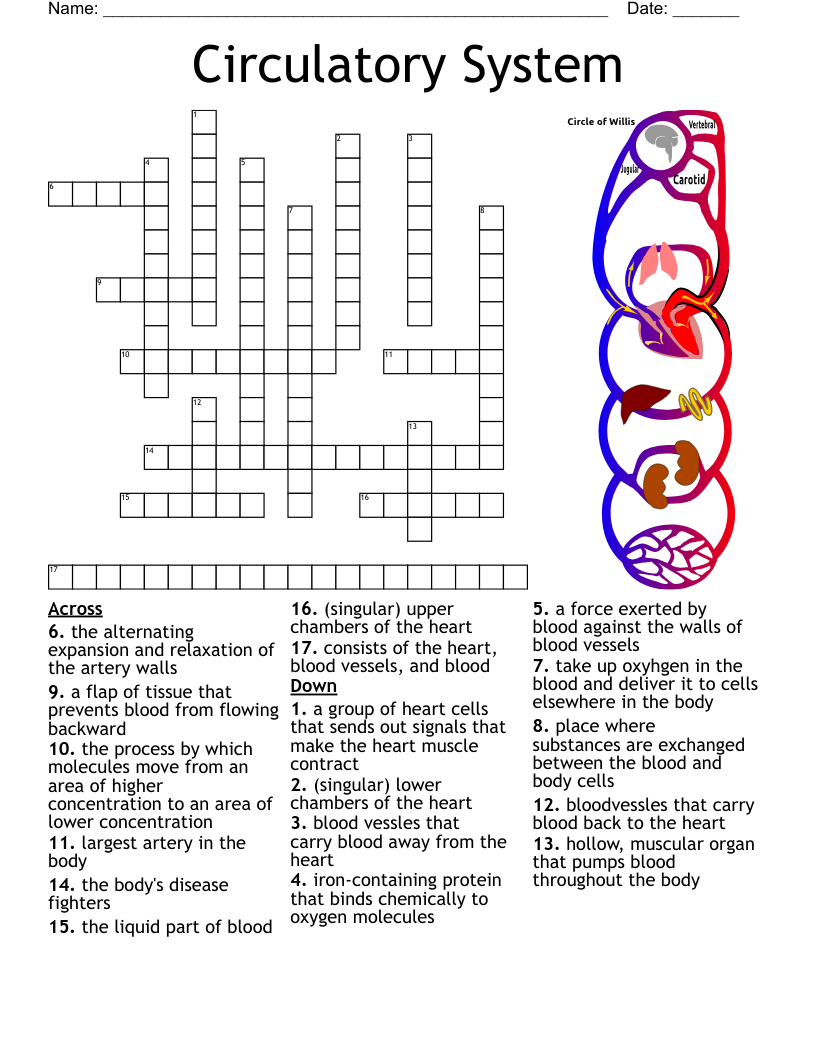
This printable crossword puzzle on the topic of Human Body Systems has 17 clues. Answers range from 4 to 12 letters long. This crossword is also available to download as a Microsoft Word document or a PDF.
Description
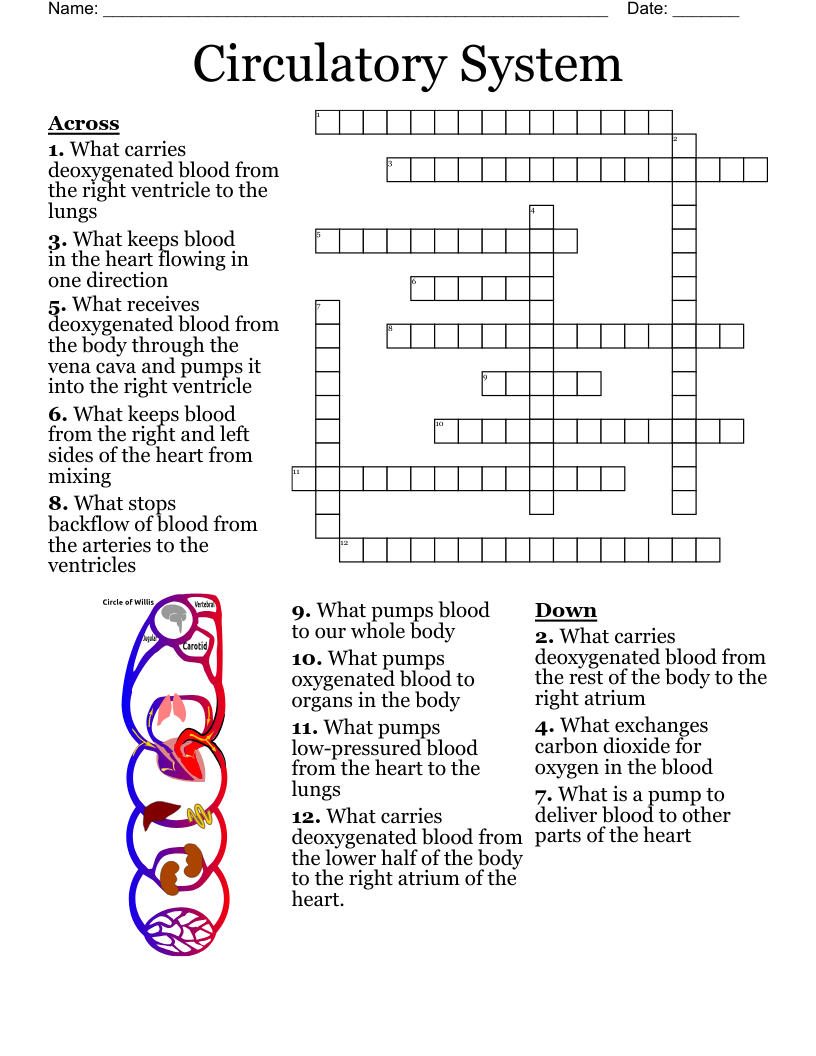
Blood vessel that carries oxygen-poor blood as well as carbon dioxide and waste products of cellular metabolism away from the cells and back to the heart. They have one-way valves that keep blood from flowing backward, away from the heart.
Clear straw-colored fluid portion of the blood that carries blood cells and contains dissolved substances like proteins, glucose, minerals, electrolytes, clotting factors, complement proteins, hormones, bilirubin, urea, and creatinine.
The smallest blood vessels in the body, connecting blood vessels in the body, connecting blood vessels between arterioles and venules. The exchange of oxygen and carbon dioxide takes place in the capillaries.
A red blood cell which contains hemoglobin and carry oxygen and carbon dioxide to and from the lungs and cells of the body.
The blood vessels that carry blood away from the heart.
The wall that separates the right and left atria and right and left ventricles.
The cell-containing fluid that circulates through the heart, arteries, veins, and capillaries, carrying nourishment, electrolytes, hormones, vitamins, antibodies, heat, and oxygen to the tissues and taking away waste matter and carbon dioxide.
White blood cells. There are five different types of them: neutrophils, eosinophils, basophils, lymphocytes, and monocytes.
Two upper chambers of the heart. Intraventricular structures are located in the ventricles.
The innermost layer of the heart. It covers the inside of the heart chambers and valves.
The middle layer of the heart wall composed of the cardiac muscle.
The serous membrane that surrounds the heart.
Resting period between contractions. It is when the heart fills with blood.
Cell fragment that is flat and does not have nucleus. It is active in the blood-clotting process. They are also known as blood platelets.
Combined contractions of the atria and the ventricles.
Substance in an erythrocyte that binds to oxygen and carbon dioxide. Its globin chains give it a round shape. When it is bound to oxygen, it forms the compound oxyhemoglobin.
Two lower chambers of the heart and Intraventricular structures are located within it.