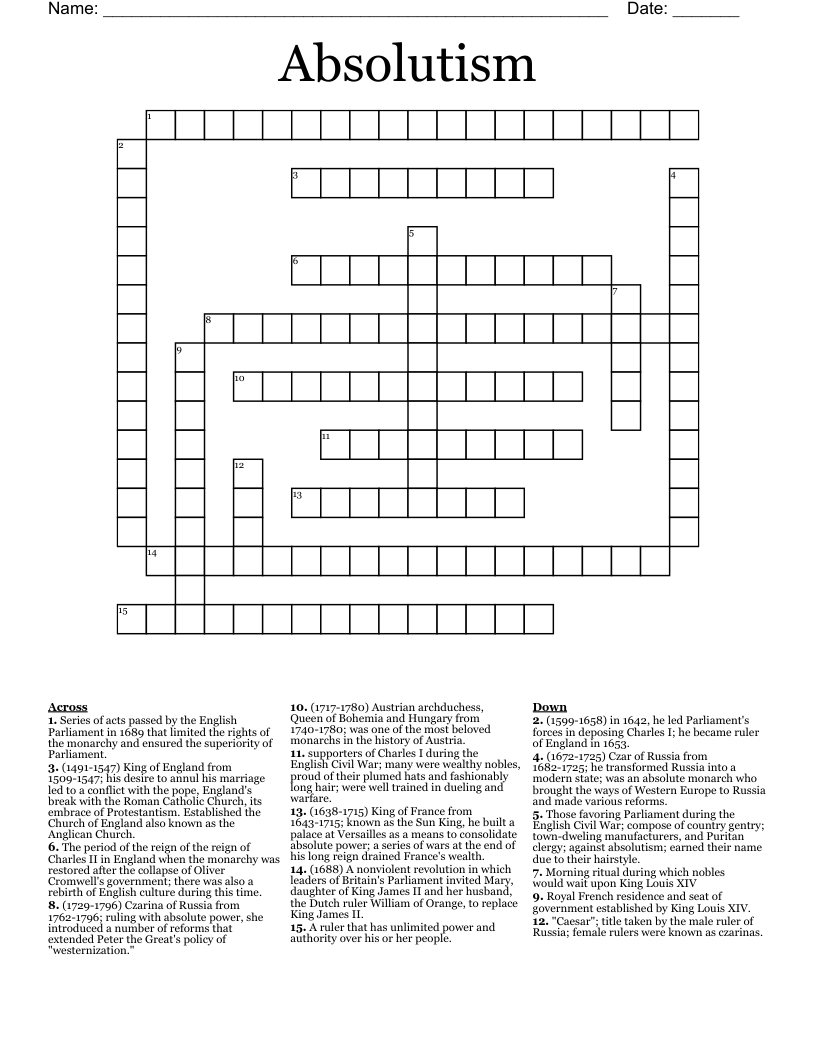
Absolutism Crossword
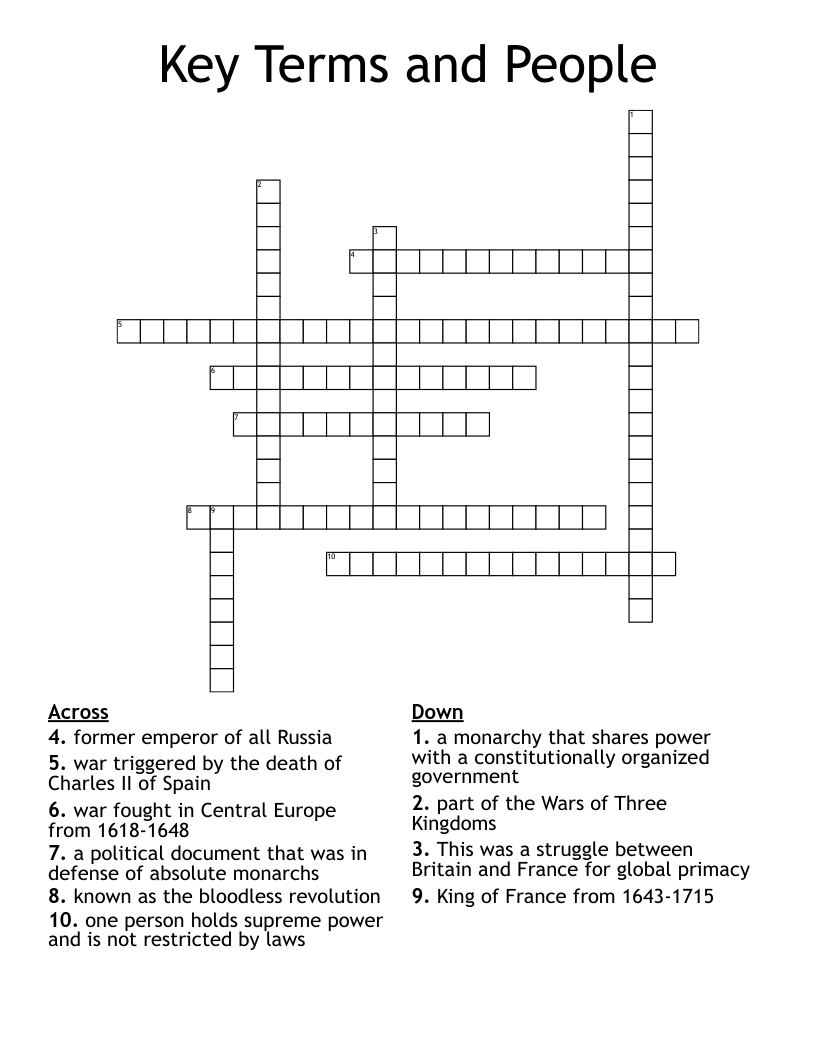
This printable crossword puzzle on the topic of World History (General) has 15 clues. Answers range from 4 to 19 letters long. This crossword is also available to download as a Microsoft Word document or a PDF.
Description
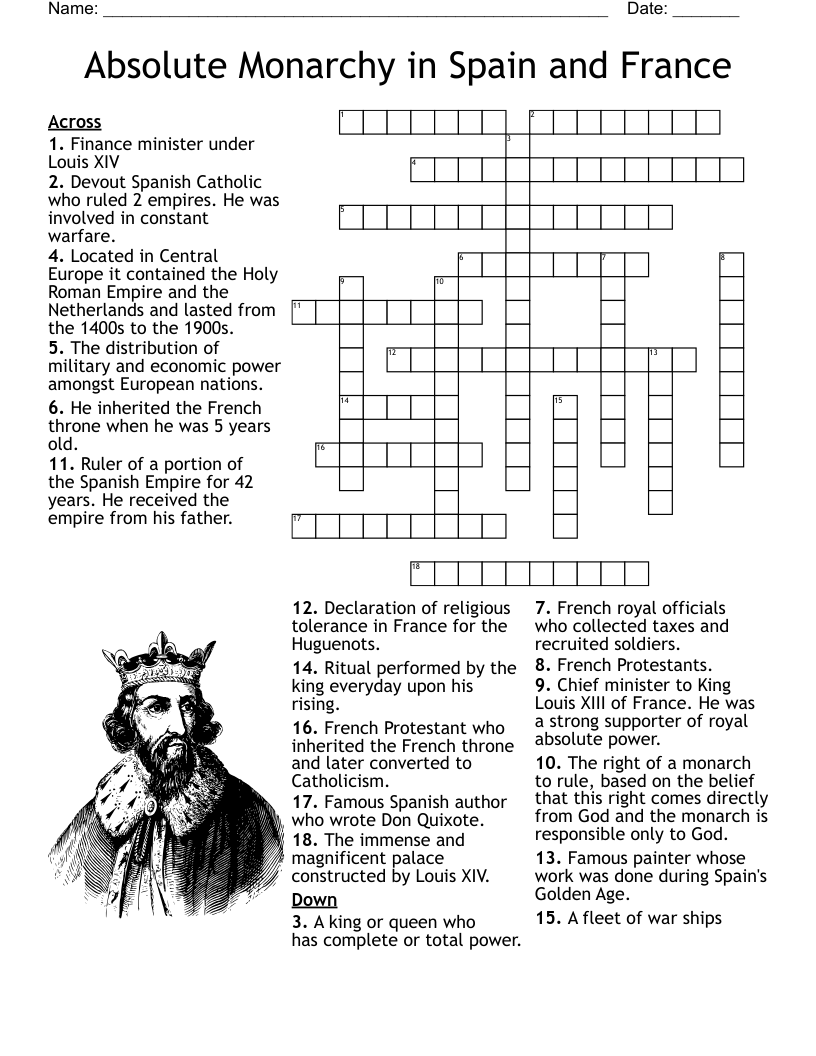
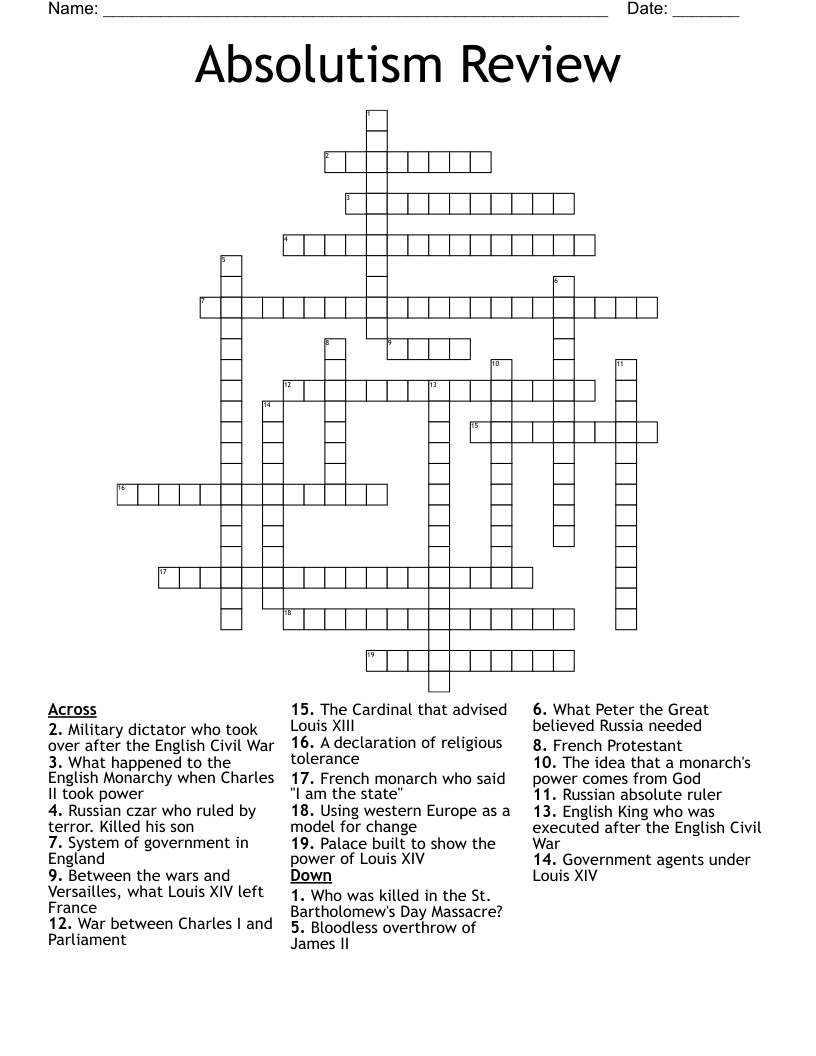
A ruler that has unlimited power and authority over his or her people.
(1638-1715) King of France from 1643-1715; known as the Sun King, he built a palace at Versailles as a means to consolidate absolute power; a series of wars at the end of his long reign drained France's wealth.
Royal French residence and seat of government established by King Louis XIV.
Morning ritual during which nobles would wait upon King Louis XIV
(1491-1547) King of England from 1509-1547; his desire to annul his marriage led to a conflict with the pope, England's break with the Roman Catholic Church, its embrace of Protestantism. Established the Church of England also known as the Anglican Church.
(1599-1658) in 1642, he led Parliament's forces in deposing Charles I; he became ruler of England in 1653.
(1688) A nonviolent revolution in which leaders of Britain's Parliament invited Mary, daughter of King James II and her husband, the Dutch ruler William of Orange, to replace King James II.
(1717-1780) Austrian archduchess, Queen of Bohemia and Hungary from 1740-1780; was one of the most beloved monarchs in the history of Austria.
(1672-1725) Czar of Russia from 1682-1725; he transformed Russia into a modern state; was an absolute monarch who brought the ways of Western Europe to Russia and made various reforms.
(1729-1796) Czarina of Russia from 1762-1796; ruling with absolute power, she introduced a number of reforms that extended Peter the Great's policy of "westernization."
"Caesar"; title taken by the male ruler of Russia; female rulers were known as czarinas.
Series of acts passed by the English Parliament in 1689 that limited the rights of the monarchy and ensured the superiority of Parliament.
The period of the reign of the reign of Charles II in England when the monarchy was restored after the collapse of Oliver Cromwell's government; there was also a rebirth of English culture during this time.
Those favoring Parliament during the English Civil War; compose of country gentry; town-dweling manufacturers, and Puritan clergy; against absolutism; earned their name due to their hairstyle.
supporters of Charles I during the English Civil War; many were wealthy nobles, proud of their plumed hats and fashionably long hair; were well trained in dueling and warfare.