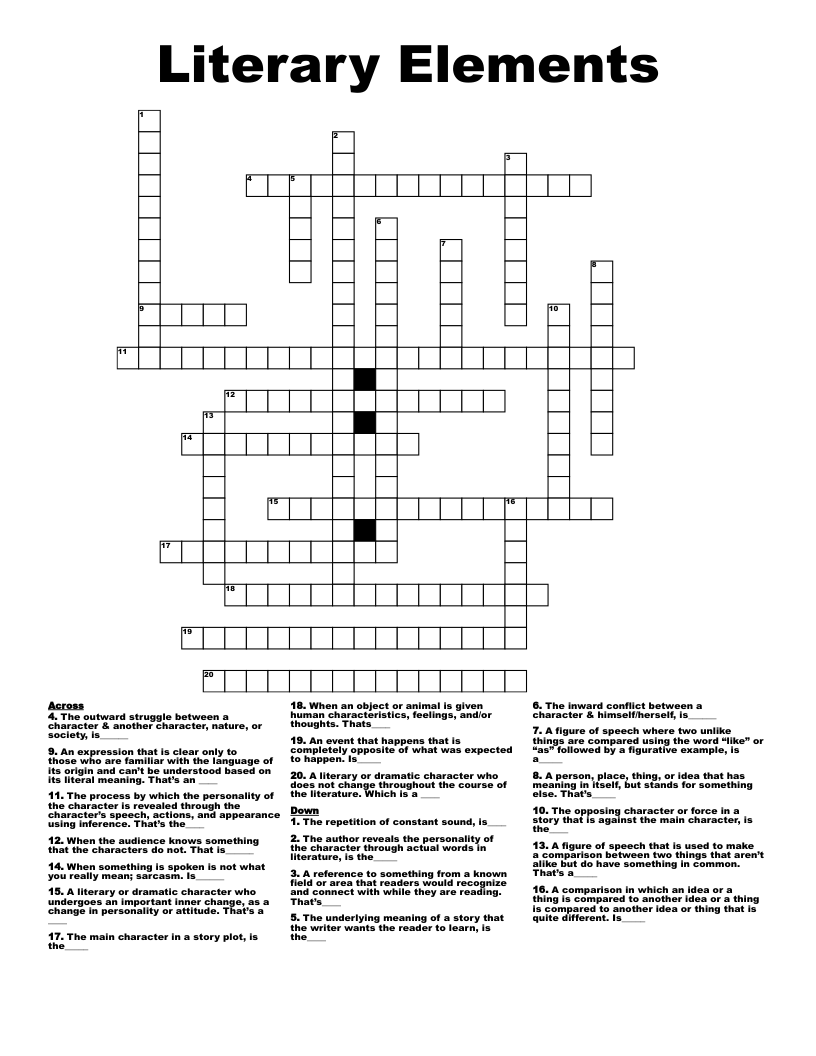
Literary Elements Crossword
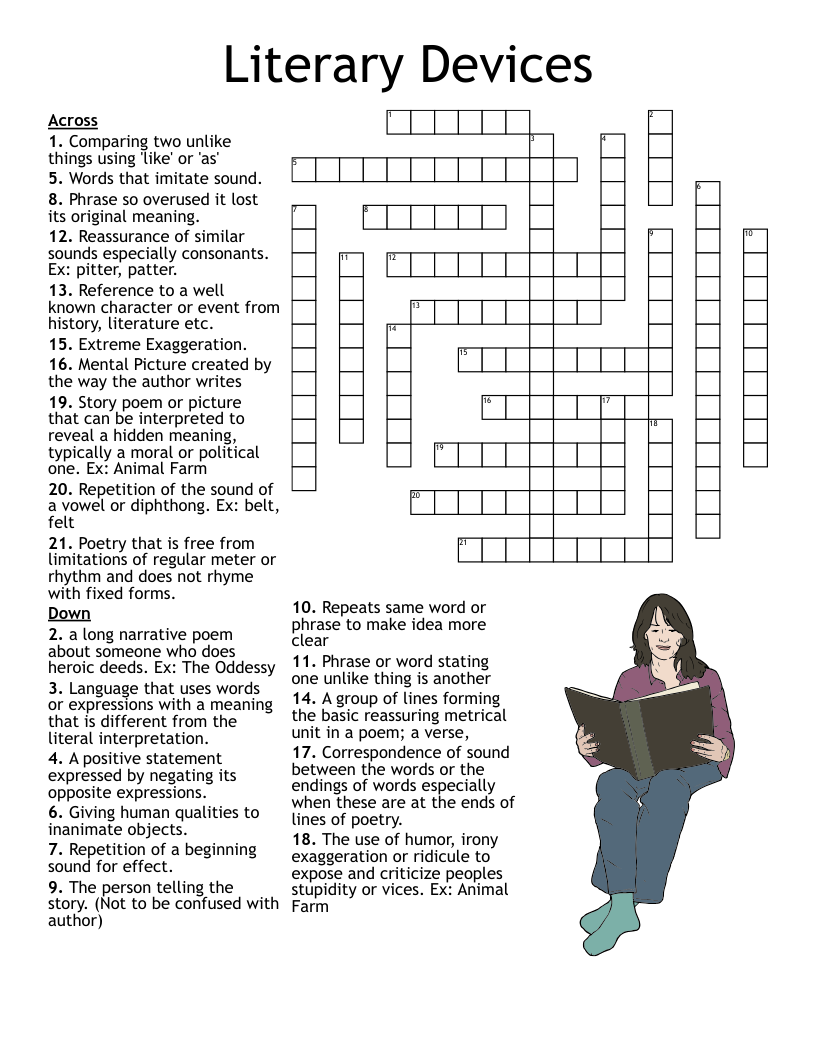
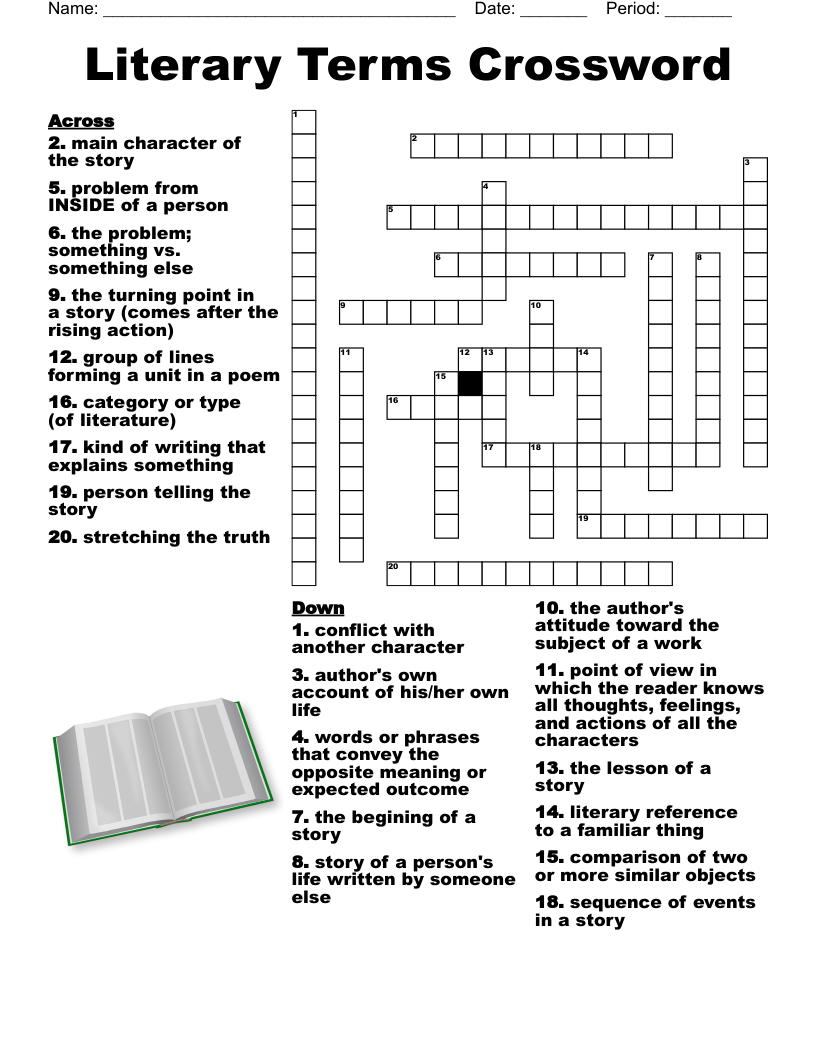
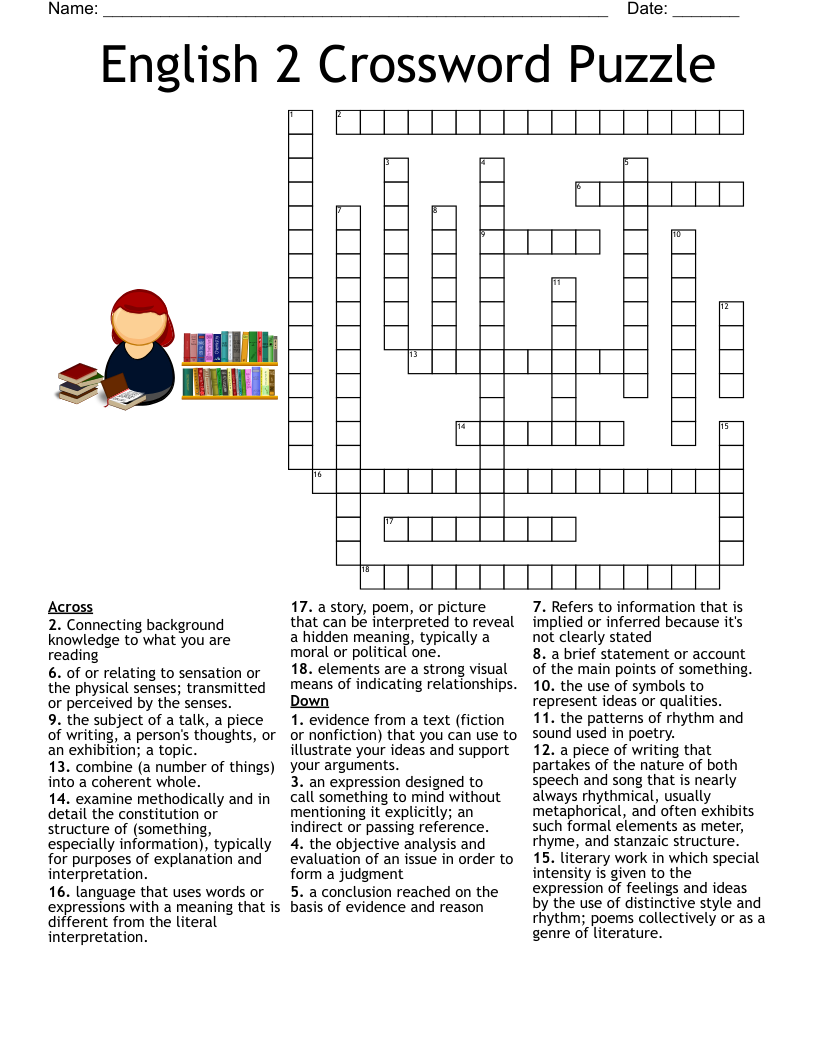
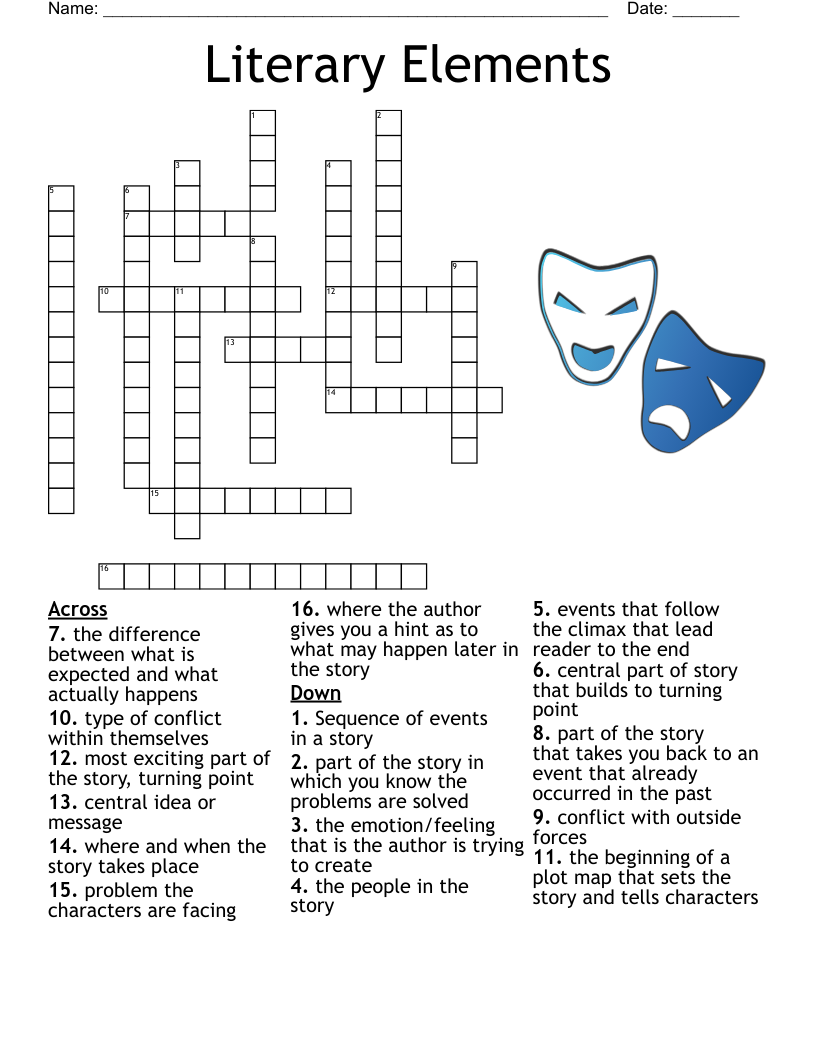
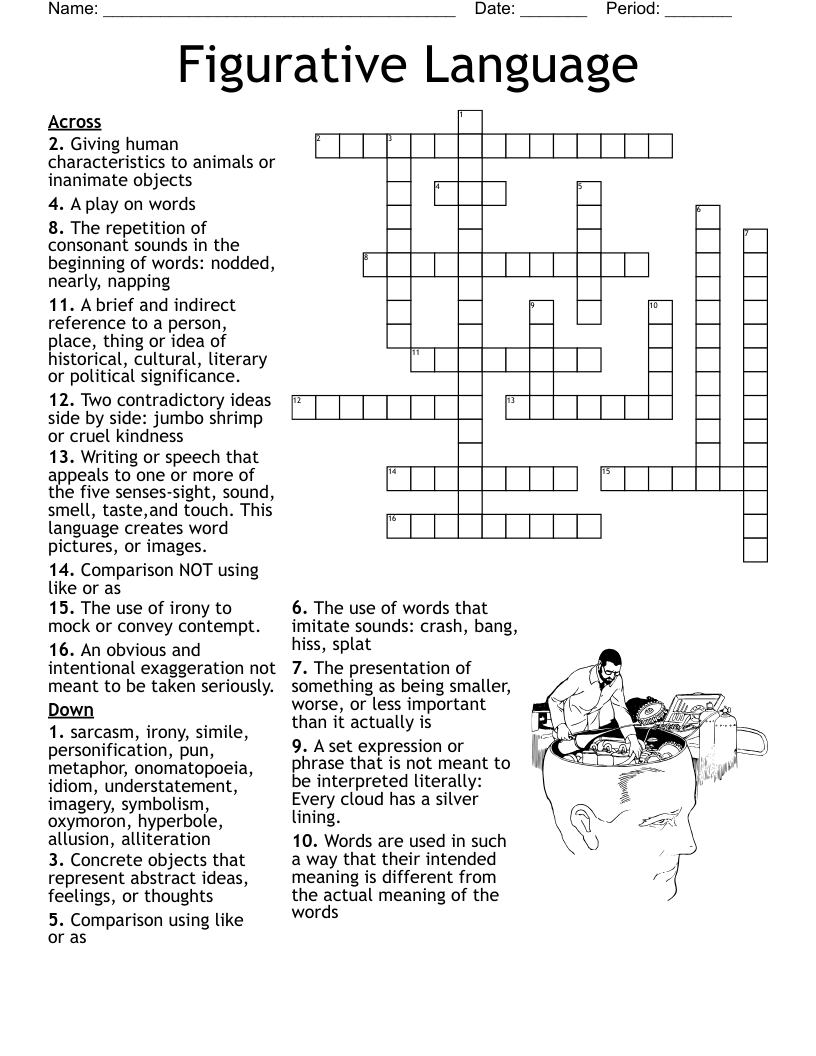
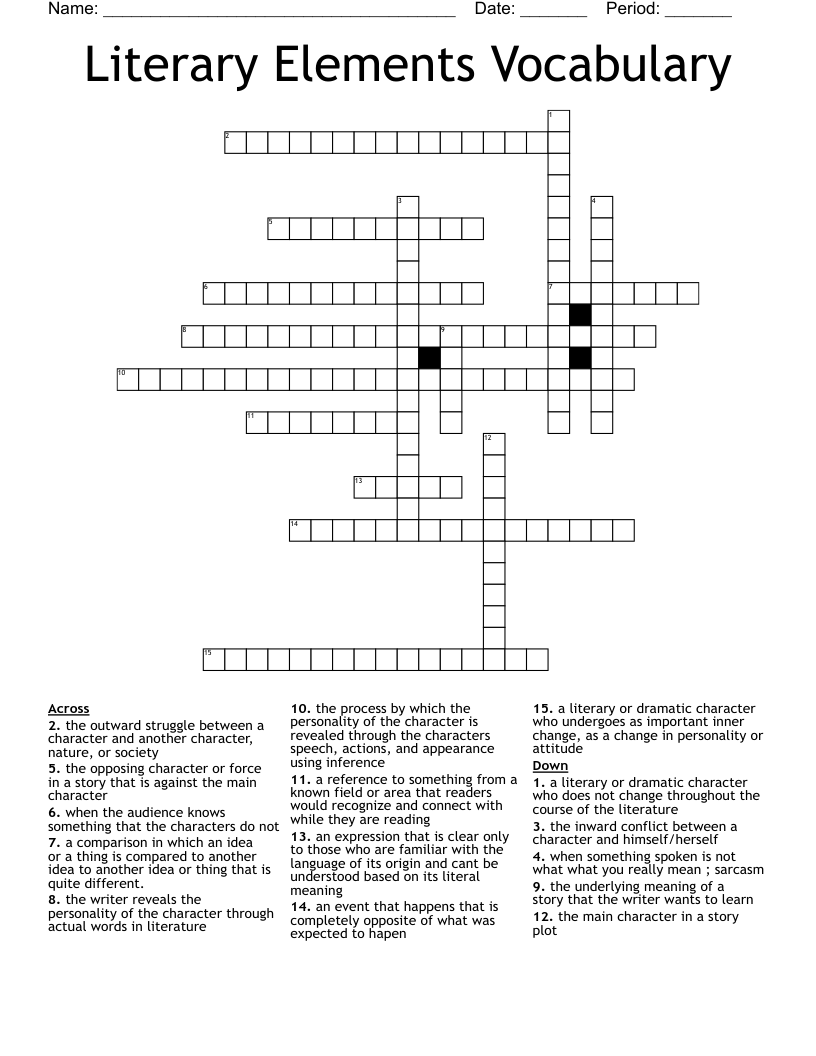
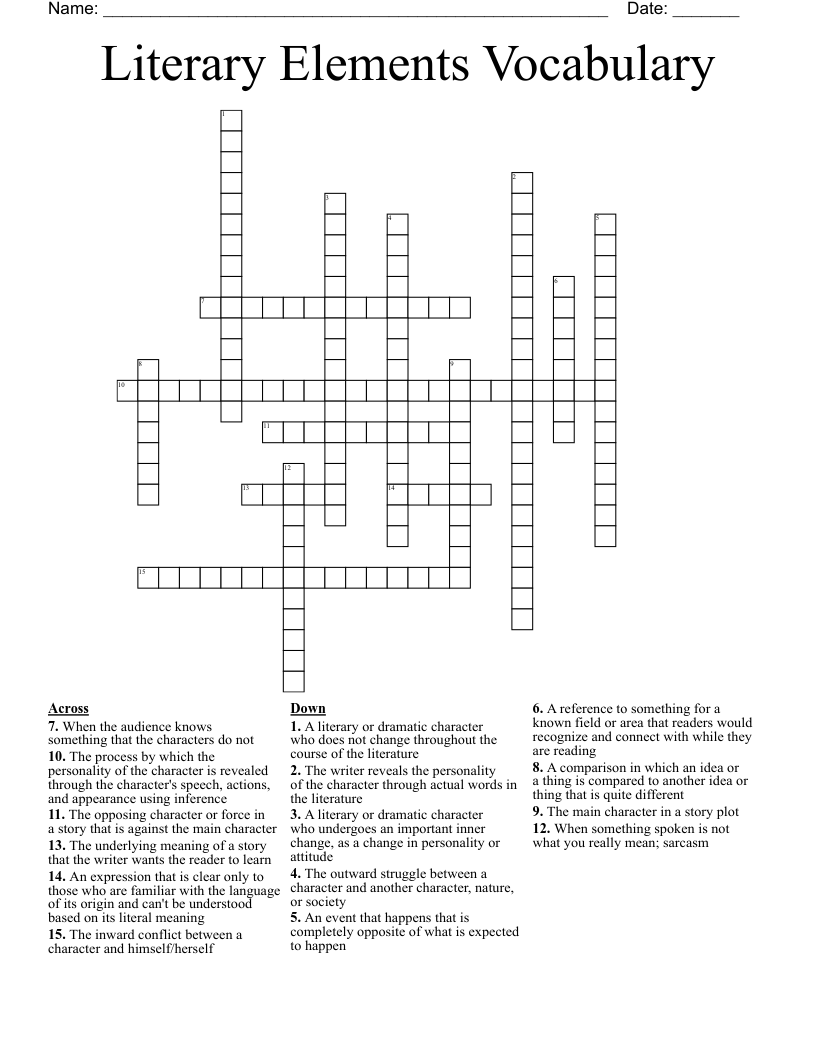
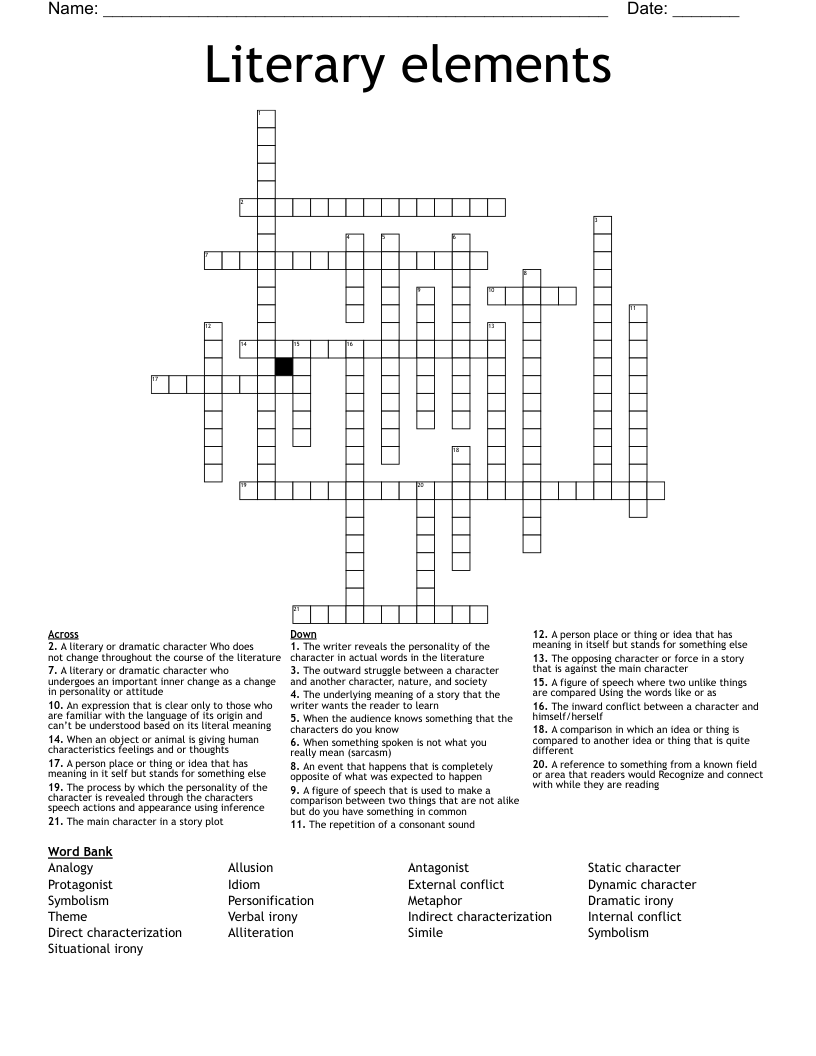
This printable crossword puzzle on the topic of Figurative Language & Literary Devices has 20 clues. Answers range from 5 to 24 letters long. This crossword is also available to download as a Microsoft Word document or a PDF.
Description
The underlying meaning of a story that the writer wants the reader to learn, is the____
The outward struggle between a character & another character, nature, or society, is______
The inward conflict between a character & himself/herself, is______
The main character in a story plot, is the_____
The opposing character or force in a story that is against the main character, is the____
The author reveals the personality of the character through actual words in literature, is the_____
The process by which the personality of the character is revealed through the character’s speech, actions, and appearance using inference. That’s the____
A figure of speech where two unlike things are compared using the word “like” or “as” followed by a figurative example, is a_____
A figure of speech that is used to make a comparison between two things that aren’t alike but do have something in common. That’s a_____
A person, place, thing, or idea that has meaning in itself, but stands for something else. That’s_____
When an object or animal is given human characteristics, feelings, and/or thoughts. Thats____
The repetition of constant sound, is____
A reference to something from a known field or area that readers would recognize and connect with while they are reading. That’s____
An expression that is clear only to those who are familiar with the language of its origin and can’t be understood based on its literal meaning. That’s an ____
A literary or dramatic character who undergoes an important inner change, as a change in personality or attitude. That’s a ____
A literary or dramatic character who does not change throughout the course of the literature. Which is a ____
A comparison in which an idea or a thing is compared to another idea or a thing is compared to another idea or thing that is quite different. Is_____
When something is spoken is not what you really mean; sarcasm. Is______
When the audience knows something that the characters do not. That is______
An event that happens that is completely opposite of what was expected to happen. Is_____