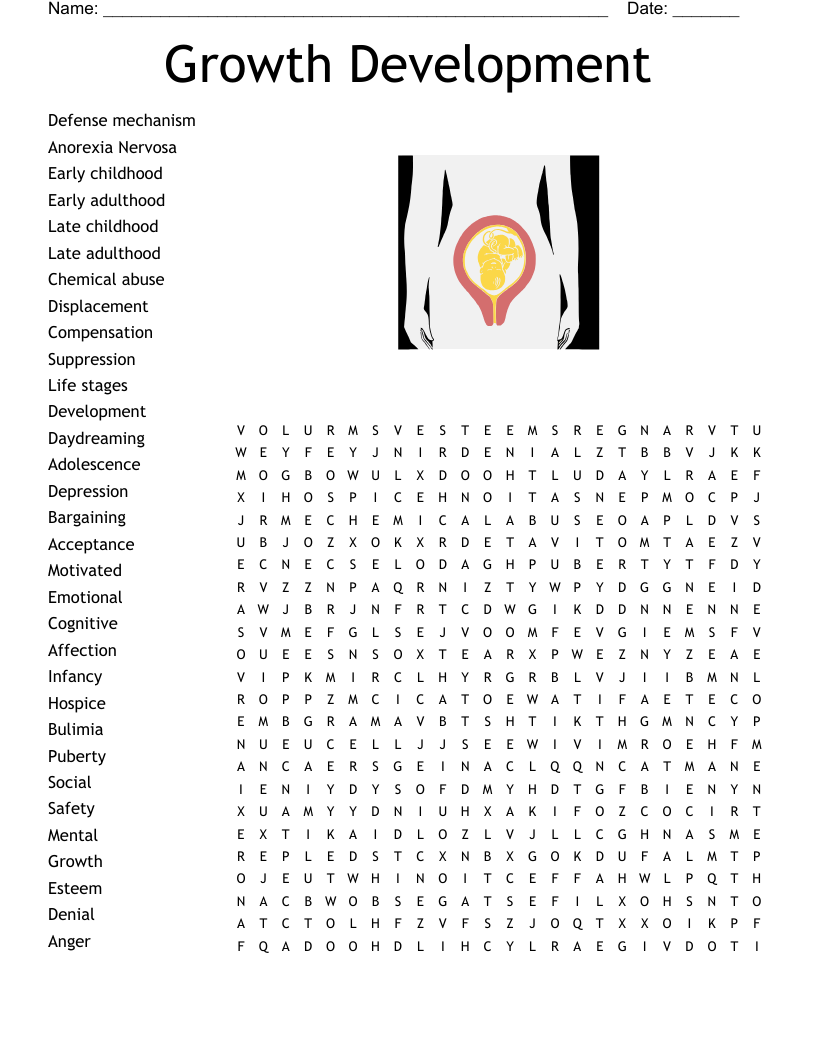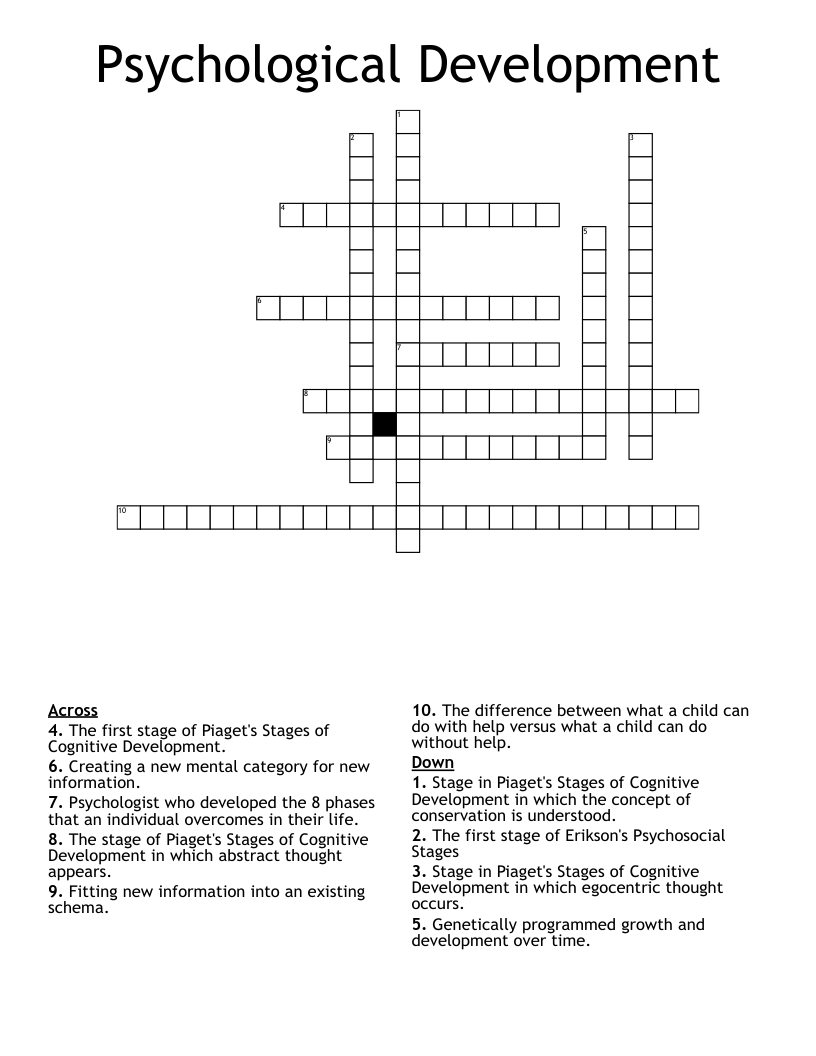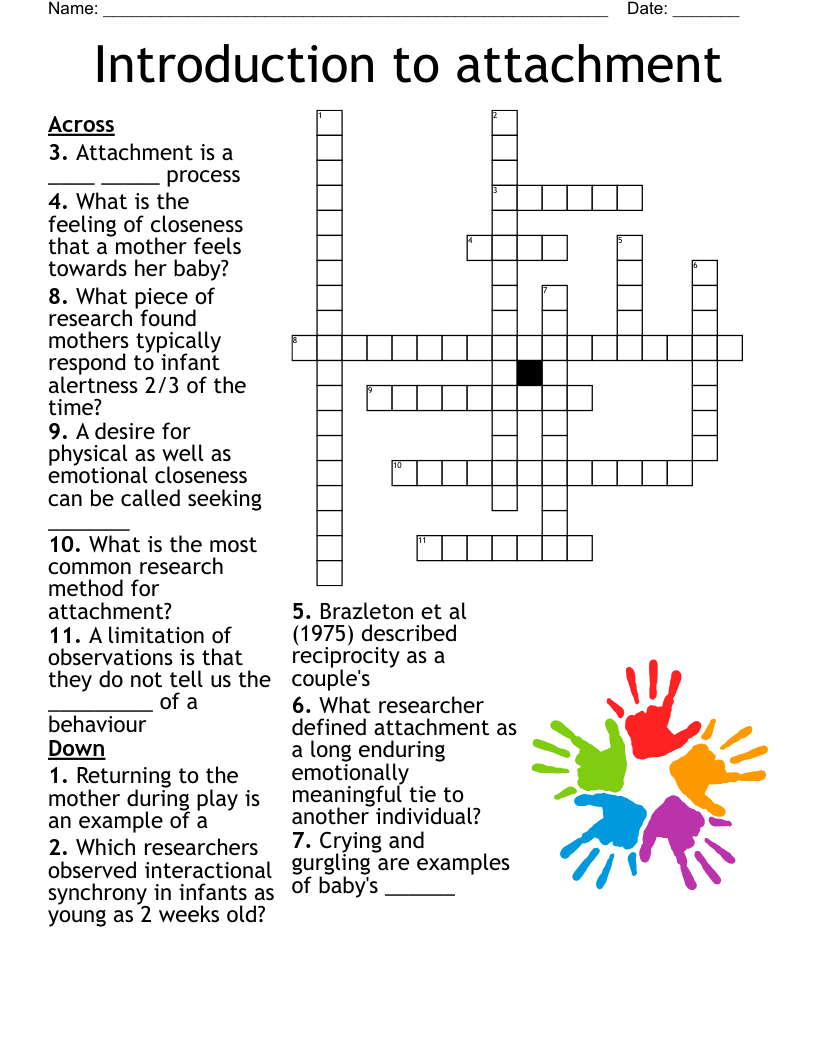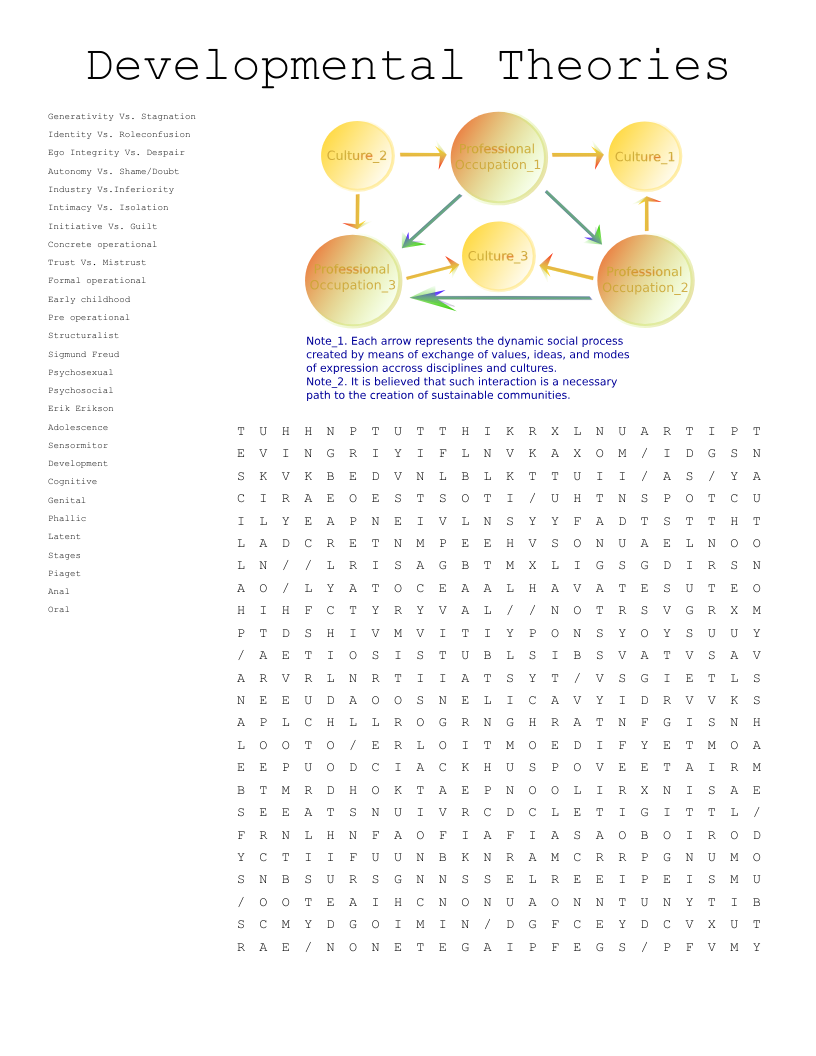
Development in Infancy and Childhood Review Crossword

Description

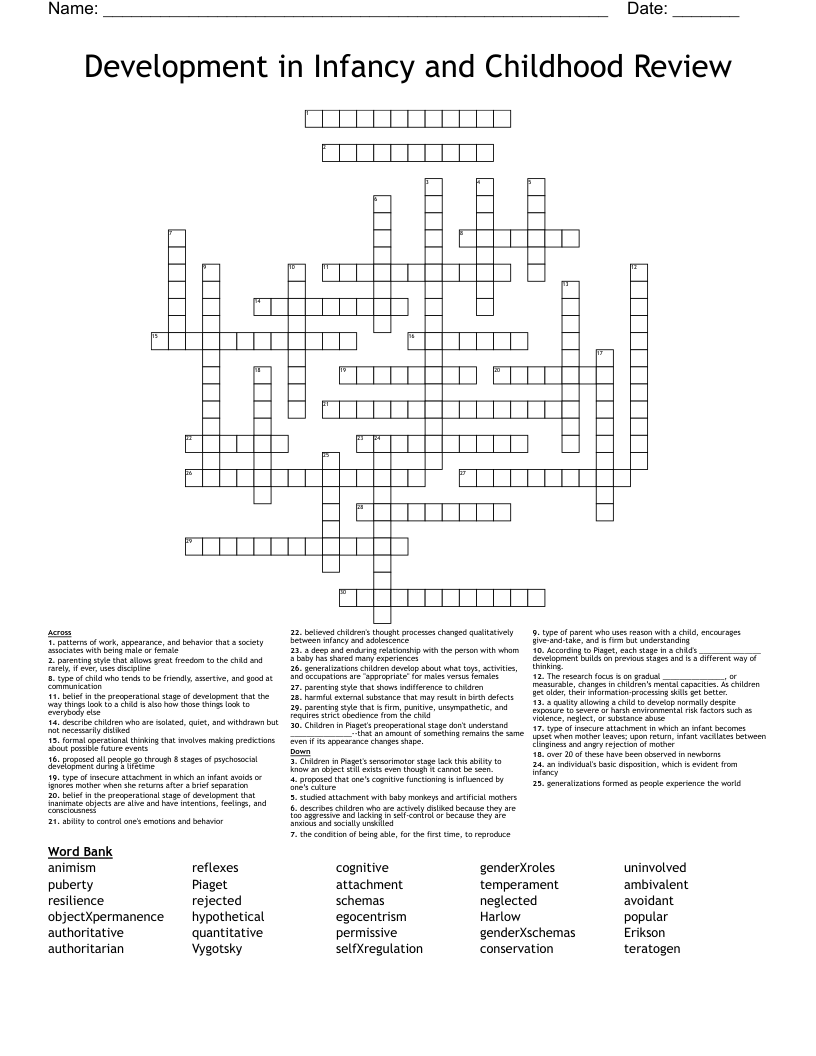
proposed all people go through 8 stages of psychosocial development during a lifetime
a deep and enduring relationship with the person with whom a baby has shared many experiences
an individual's basic disposition, which is evident from infancy
studied attachment with baby monkeys and artificial mothers
type of insecure attachment in which an infant avoids or ignores mother when she returns after a brief separation
parenting style that is firm, punitive, unsympathetic, and requires strict obedience from the child
ability to control one's emotions and behavior
generalizations children develop about what toys, activities, and occupations are "appropriate" for males versus females
describe children who are isolated, quiet, and withdrawn but not necessarily disliked
parenting style that allows great freedom to the child and rarely, if ever, uses discipline
harmful external substance that may result in birth defects
patterns of work, appearance, and behavior that a society associates with being male or female
proposed that one’s cognitive functioning is influenced by one’s culture
the condition of being able, for the first time, to reproduce
type of child who tends to be friendly, assertive, and good at communication
type of parent who uses reason with a child, encourages give-and-take, and is firm but understanding
over 20 of these have been observed in newborns
parenting style that shows indifference to children
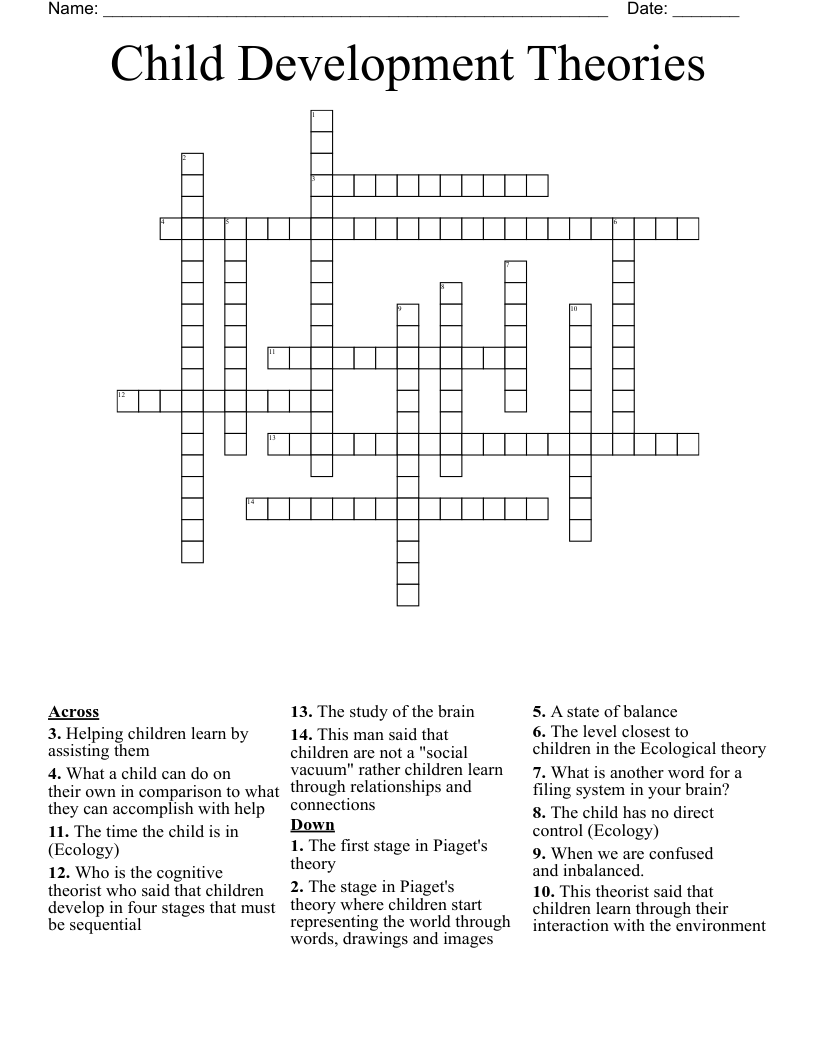
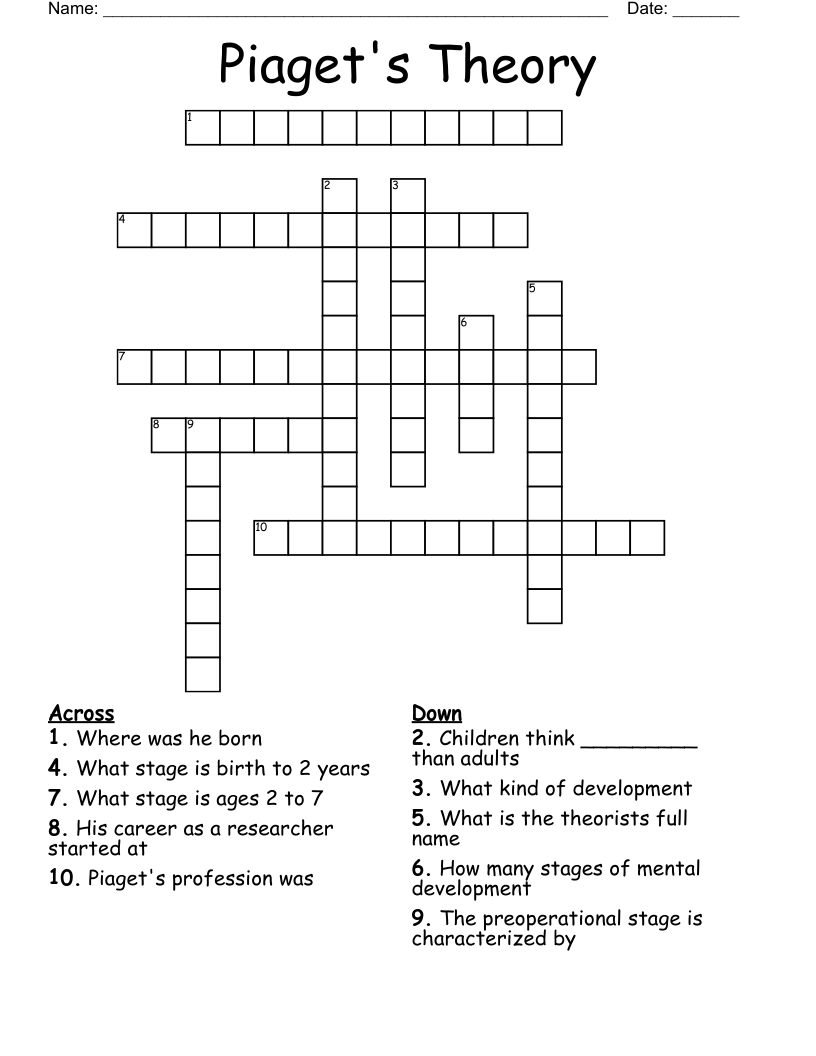
believed children's thought processes changed qualitatively between infancy and adolescence
Children in Piaget's sensorimotor stage lack this ability to know an object still exists even though it cannot be seen.
Children in Piaget's preoperational stage don't understand _______________--that an amount of something remains the same even if its appearance changes shape.
belief in the preoperational stage of development that inanimate objects are alive and have intentions, feelings, and consciousness
type of insecure attachment in which an infant becomes upset when mother leaves; upon return, infant vacillates between clinginess and angry rejection of mother
belief in the preoperational stage of development that the way things look to a child is also how those things look to everybody else
a quality allowing a child to develop normally despite exposure to severe or harsh environmental risk factors such as violence, neglect, or substance abuse
generalizations formed as people experience the world
The research focus is on gradual _______________, or measurable, changes in children’s mental capacities. As children get older, their information-processing skills get better.
According to Piaget, each stage in a child's _______________ development builds on previous stages and is a different way of thinking.
formal operational thinking that involves making predictions about possible future events
describes children who are actively disliked because they are too aggressive and lacking in self-control or because they are anxious and socially unskilled
Customize
Add, edit, delete clues, and customize this puzzle.

Prenatal Stage

Crossword

Attachment Recap

Crossword

Frequently Asked Questions

What is a crossword?

Crossword puzzles have been published in newspapers and other publications since 1873. They consist of a grid of squares where the player aims to write words both horizontally and vertically.

Next to the crossword will be a series of questions or clues, which relate to the various rows or lines of boxes in the crossword. The player reads the question or clue, and tries to find a word that answers the question in the same amount of letters as there are boxes in the related crossword row or line.

Some of the words will share letters, so will need to match up with each other. The words can vary in length and complexity, as can the clues.

Who is a crossword suitable for?

The fantastic thing about crosswords is, they are completely flexible for whatever age or reading level you need. You can use many words to create a complex crossword for adults, or just a couple of words for younger children.

Crosswords can use any word you like, big or small, so there are literally countless combinations that you can create for templates. It is easy to customise the template to the age or learning level of your students.

How do I create a crossword template?

For the easiest crossword templates, WordMint is the way to go!

Pre-made templates

For a quick and easy pre-made template, simply search through WordMint’s existing 500,000+ templates. With so many to choose from, you’re bound to find the right one for you!

Create your own from scratch

  • Log in to your account (it’s free to join!)
  • Head to ‘My Puzzles’
  • Click ‘Create New Puzzle’ and select ‘Crossword’
  • Select your layout, enter your title and your chosen clues and answers
  • That’s it! The template builder will create your crossword template for you and you can save it to your account, export as a word document or pdf and print!

How do I choose the clues for my crossword?

Once you’ve picked a theme, choose clues that match your students current difficulty level. For younger children, this may be as simple as a question of “What color is the sky?” with an answer of “blue”.

Are crosswords good for students?

Crosswords are a great exercise for students' problem solving and cognitive abilities. Not only do they need to solve a clue and think of the correct answer, but they also have to consider all of the other words in the crossword to make sure the words fit together.

Crosswords are great for building and using vocabulary.

If this is your first time using a crossword with your students, you could create a crossword FAQ template for them to give them the basic instructions.

Can I print my crossword template?

All of our templates can be exported into Microsoft Word to easily print, or you can save your work as a PDF to print for the entire class. Your puzzles get saved into your account for easy access and printing in the future, so you don’t need to worry about saving them at work or at home!

Can I create crosswords in other languages?

Crosswords are a fantastic resource for students learning a foreign language as they test their reading, comprehension and writing all at the same time. When learning a new language, this type of test using multiple different skills is great to solidify students' learning.

We have full support for crossword templates in languages such as Spanish, French and Japanese with diacritics including over 100,000 images, so you can create an entire crossword in your target language including all of the titles, and clues.