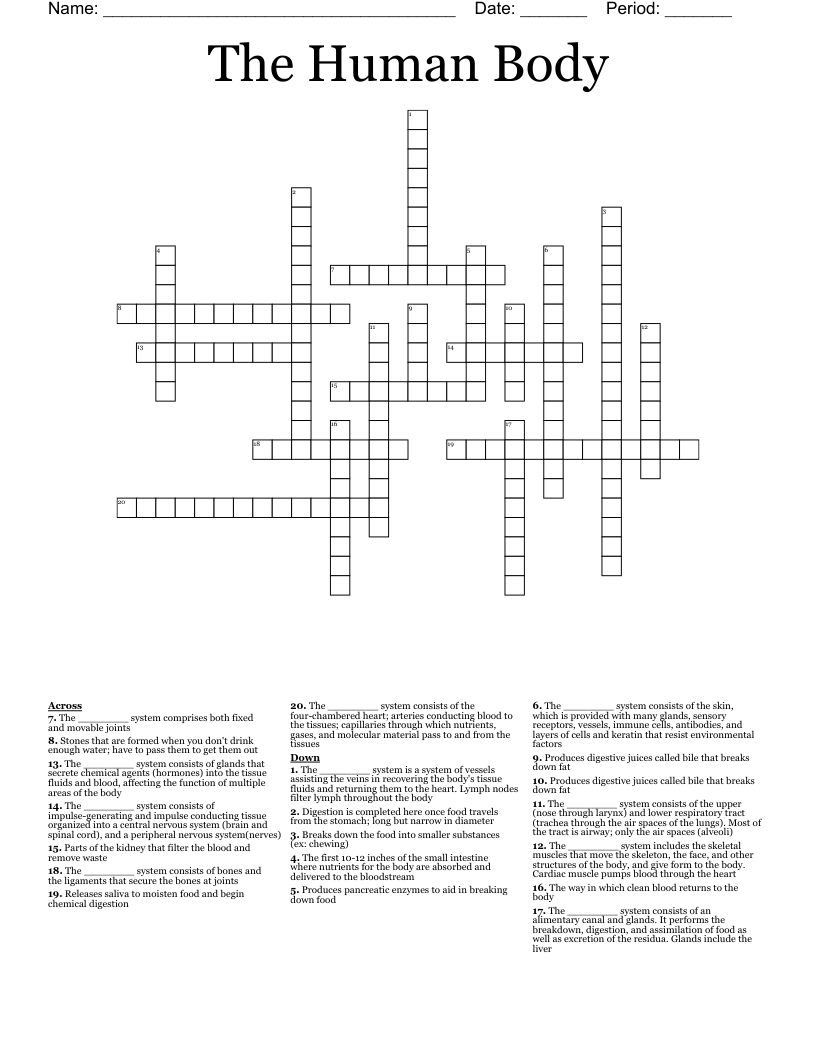
The Human Body Crossword
This printable crossword puzzle on the topic of Human Body Systems has 20 clues. Answers range from 5 to 19 letters long. This crossword is also available to download as a Microsoft Word document or a PDF.
Description
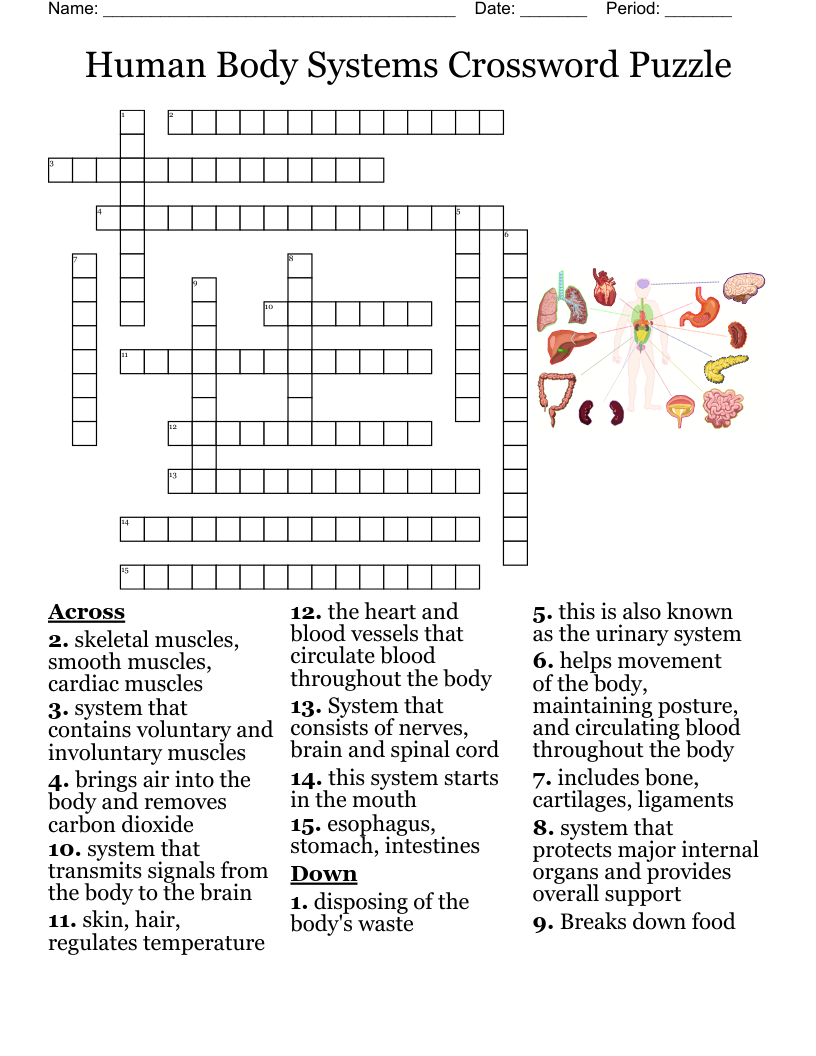
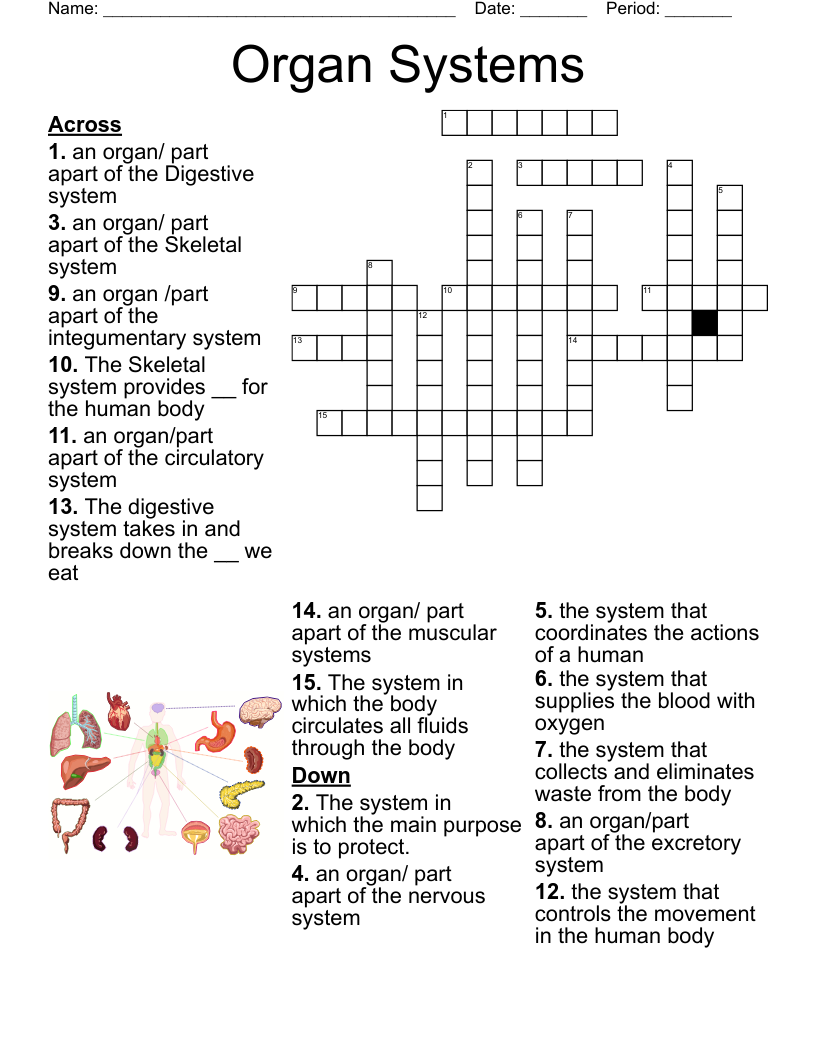
The ________ system consists of bones and the ligaments that secure the bones at joints
The ________ system comprises both fixed and movable joints
The ________ system includes the skeletal muscles that move the skeleton, the face, and other structures of the body, and give form to the body. Cardiac muscle pumps blood through the heart
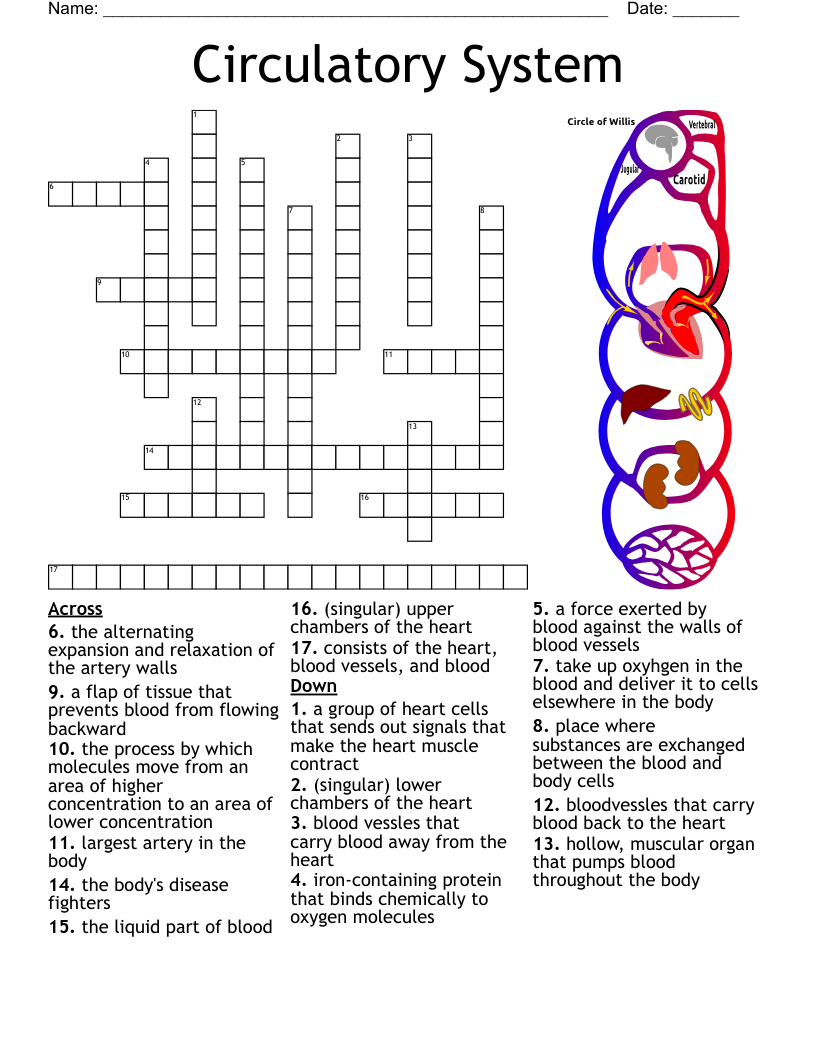
The ________ system consists of the four-chambered heart; arteries conducting blood to the tissues; capillaries through which nutrients, gases, and molecular material pass to and from the tissues
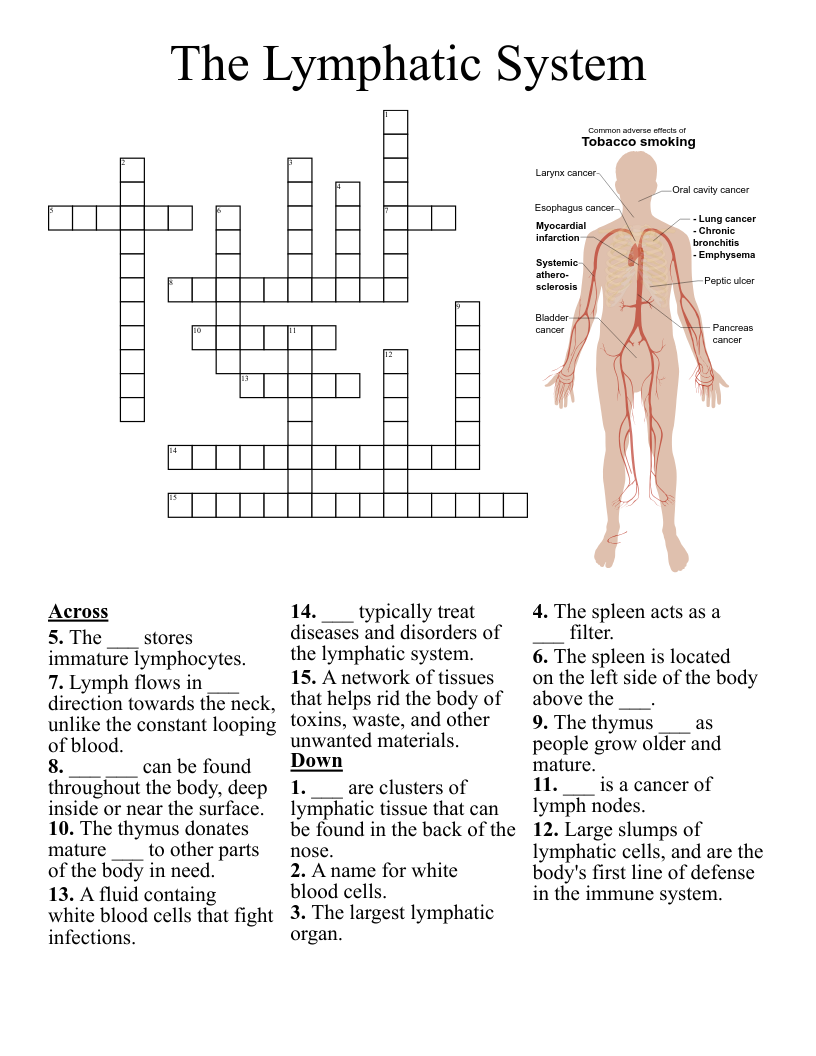
The ________ system is a system of vessels assisting the veins in recovering the body's tissue fluids and returning them to the heart. Lymph nodes filter lymph throughout the body
The ________ system consists of impulse-generating and impulse conducting tissue organized into a central nervous system (brain and spinal cord), and a peripheral nervous system(nerves)
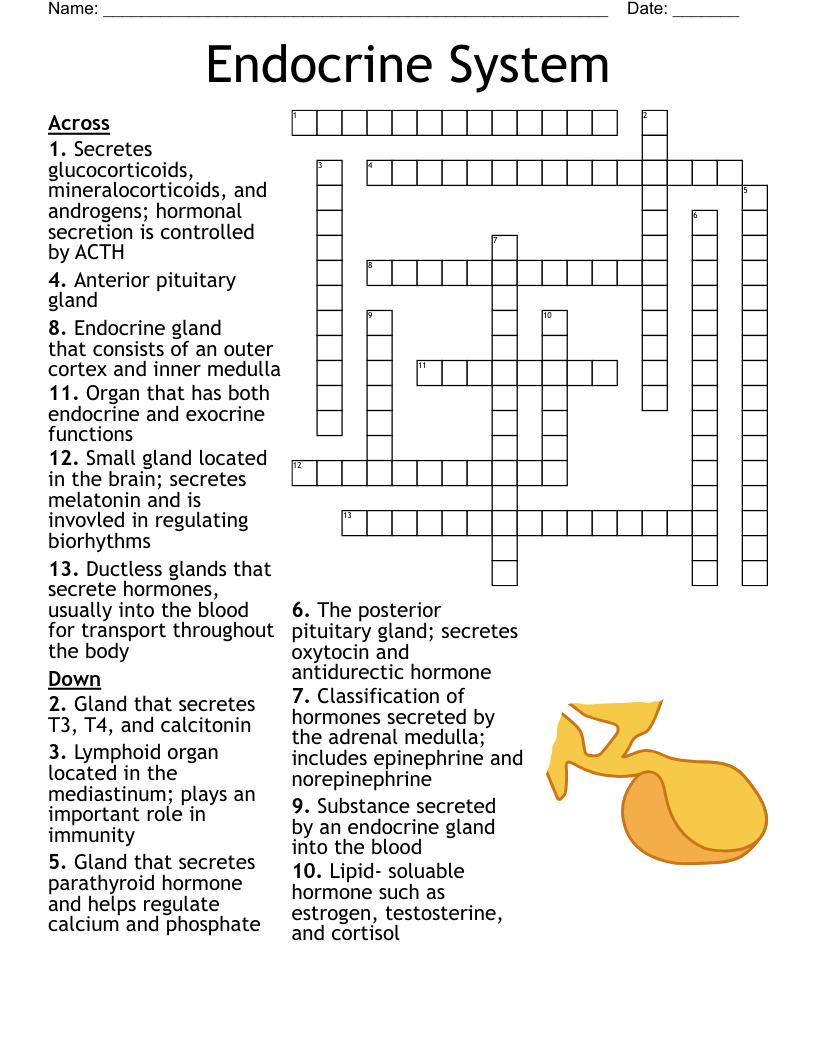
The ________ system consists of glands that secrete chemical agents (hormones) into the tissue fluids and blood, affecting the function of multiple areas of the body
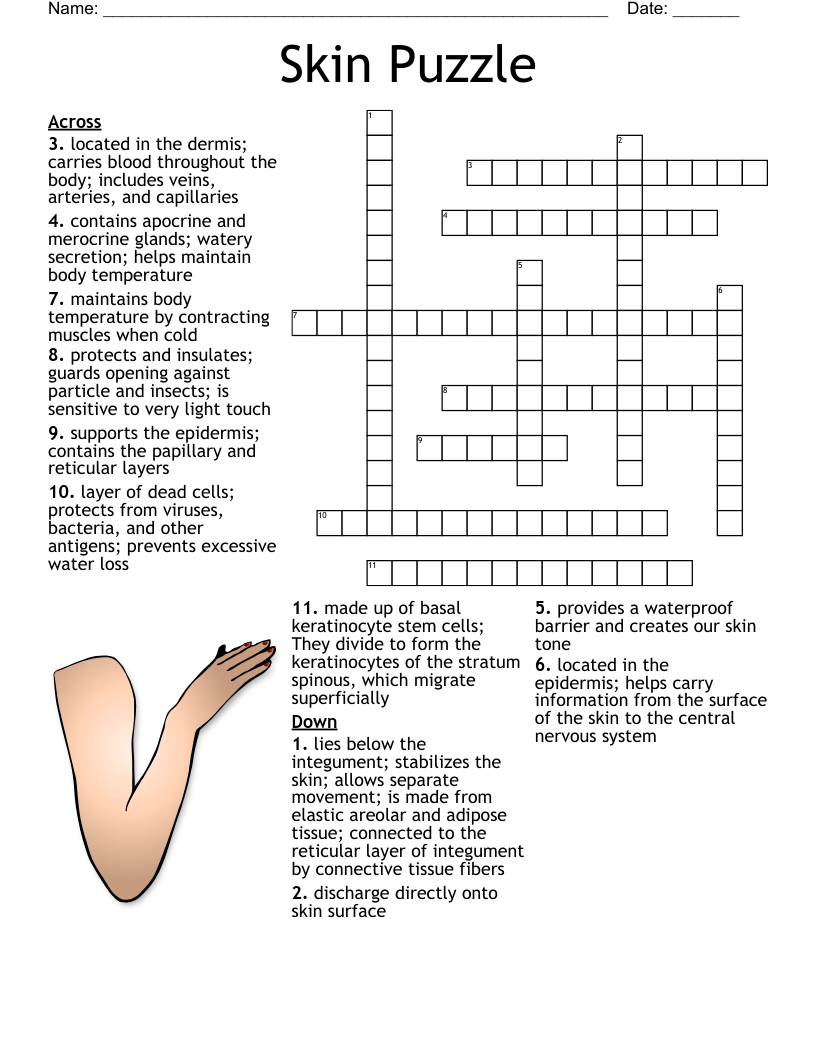
The ________ system consists of the skin, which is provided with many glands, sensory receptors, vessels, immune cells, antibodies, and layers of cells and keratin that resist environmental factors
The ________ system consists of the upper (nose through larynx) and lower respiratory tract (trachea through the air spaces of the lungs). Most of the tract is airway; only the air spaces (alveoli)
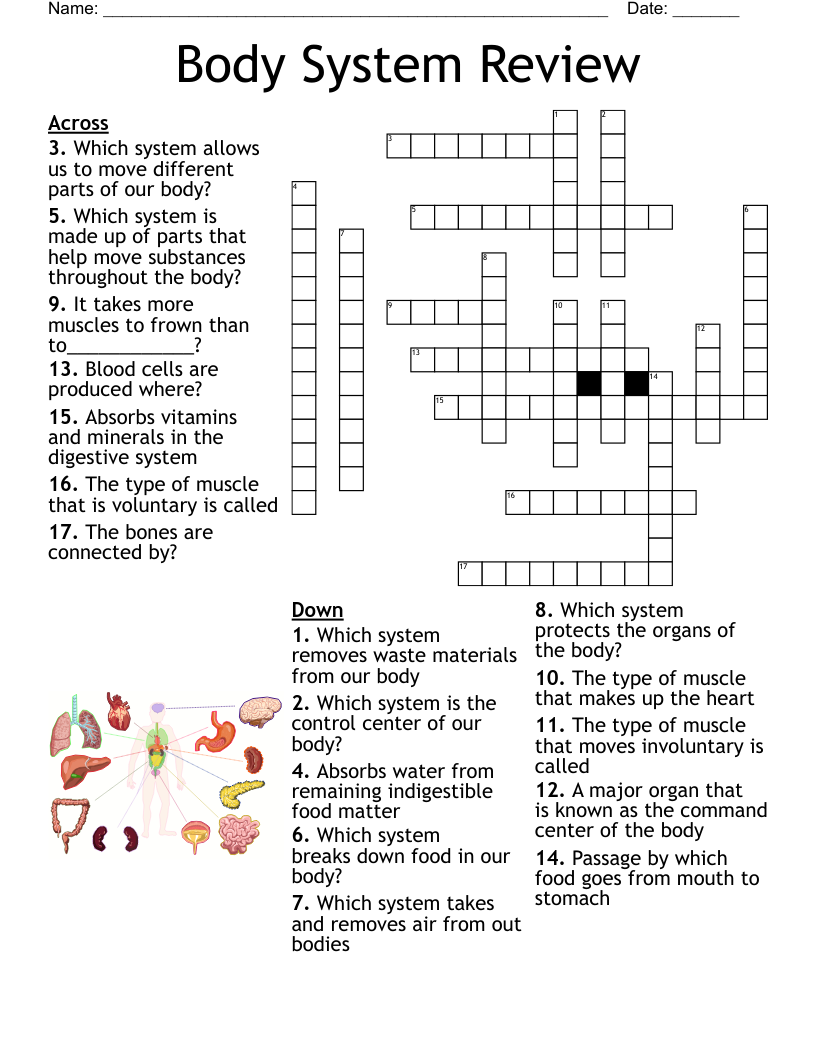
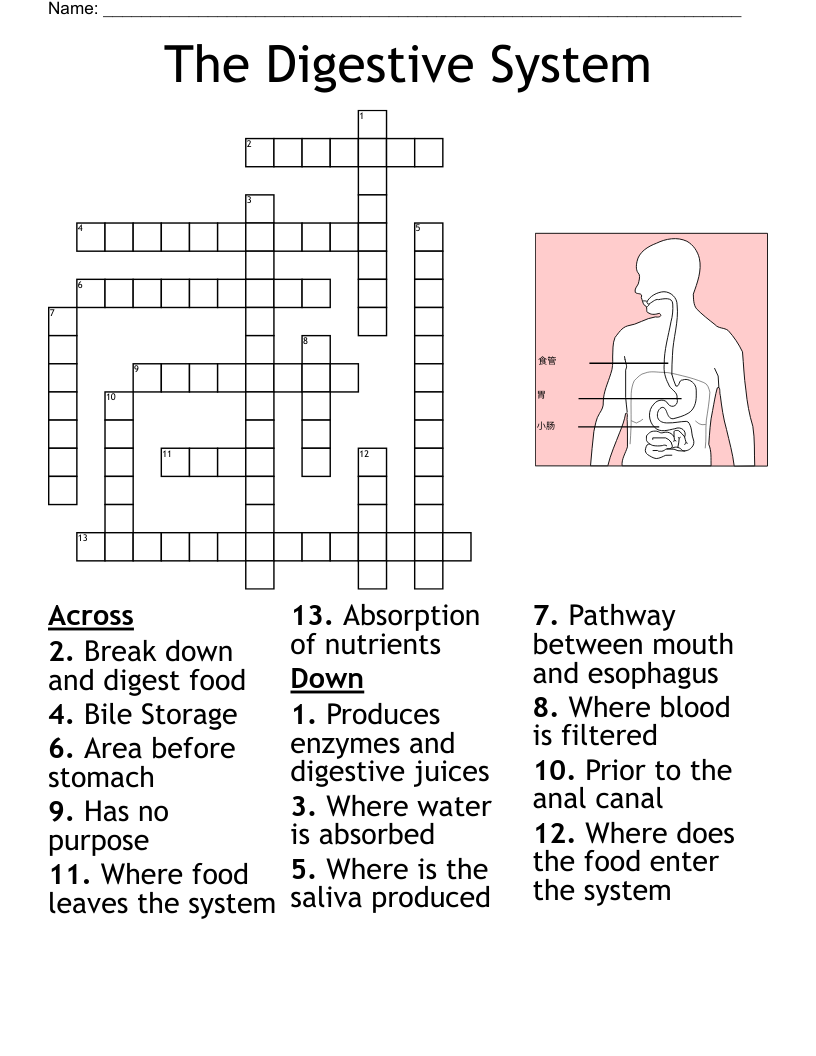
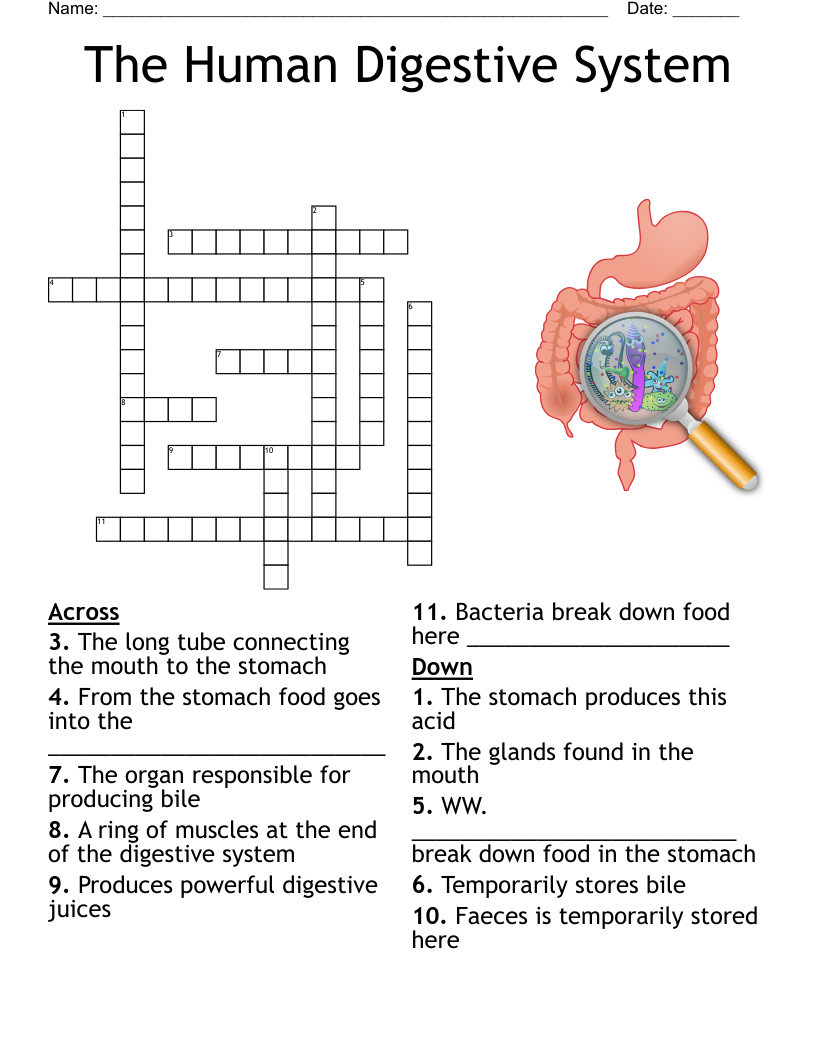
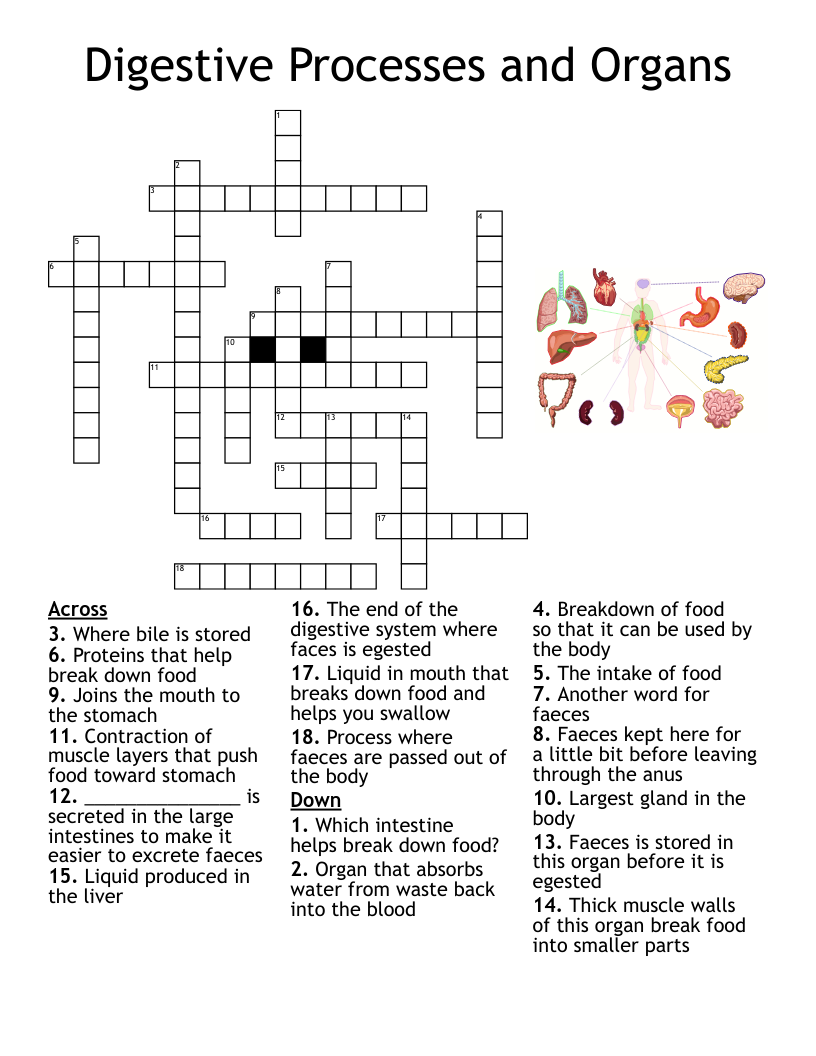
The ________ system consists of an alimentary canal and glands. It performs the breakdown, digestion, and assimilation of food as well as excretion of the residua. Glands include the liver
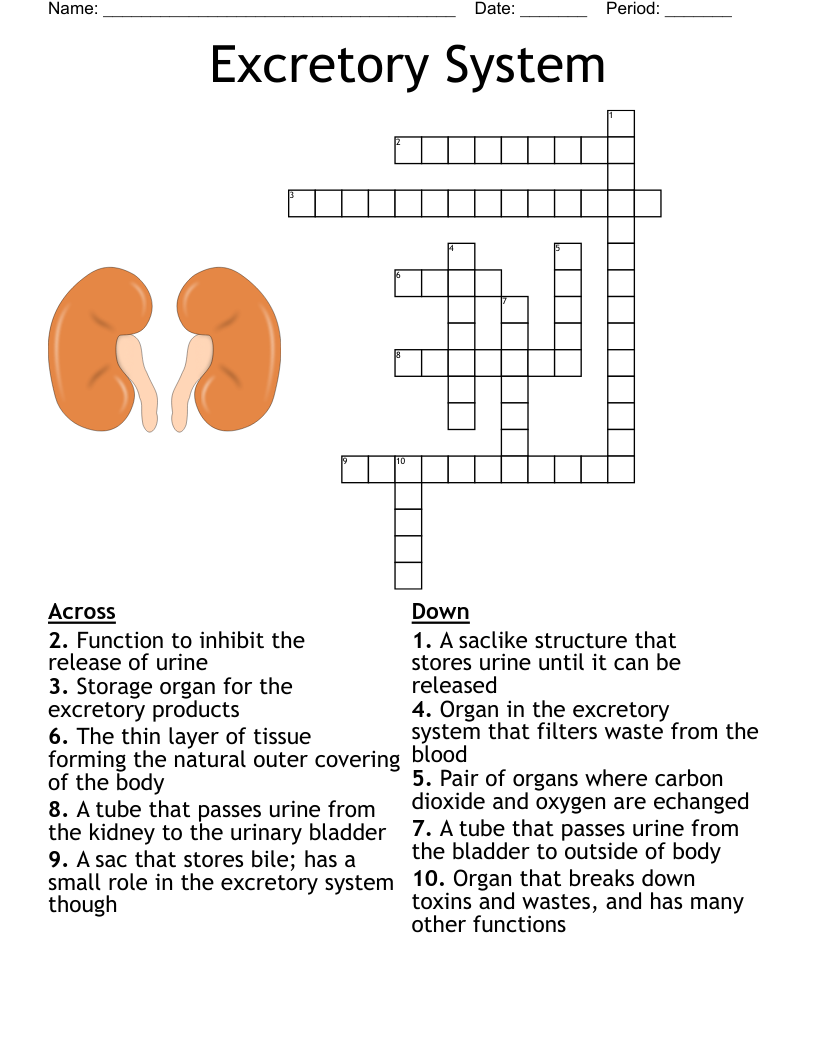
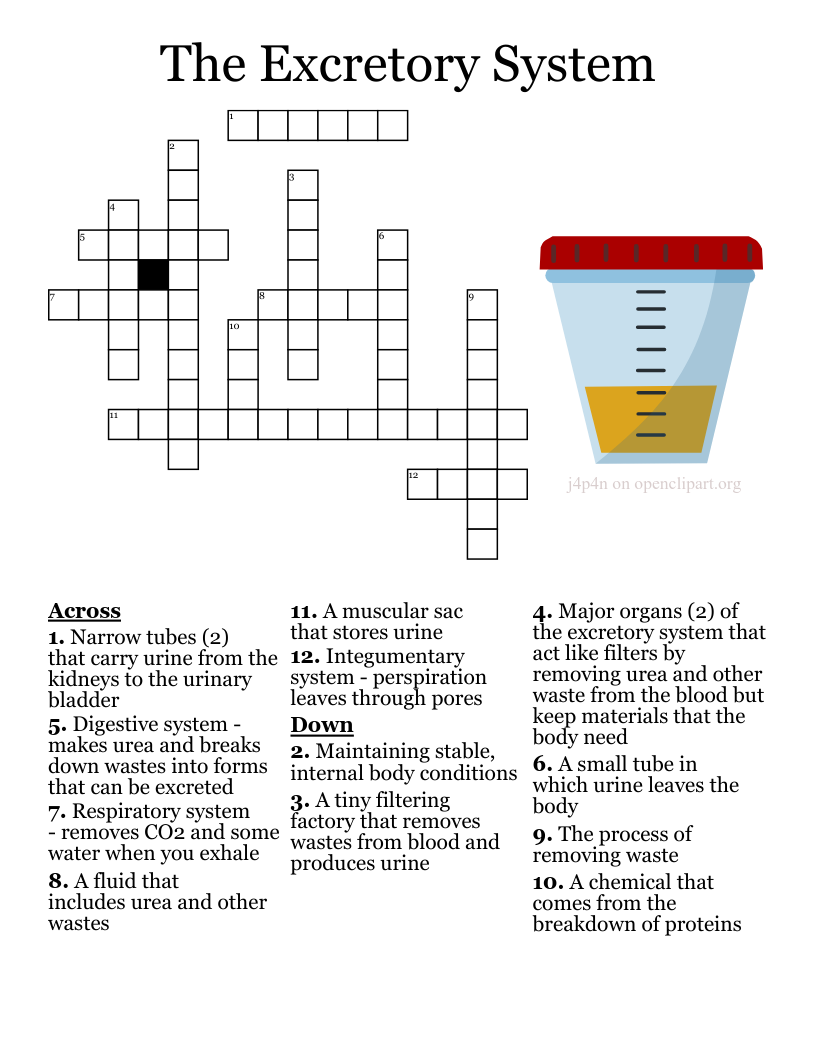
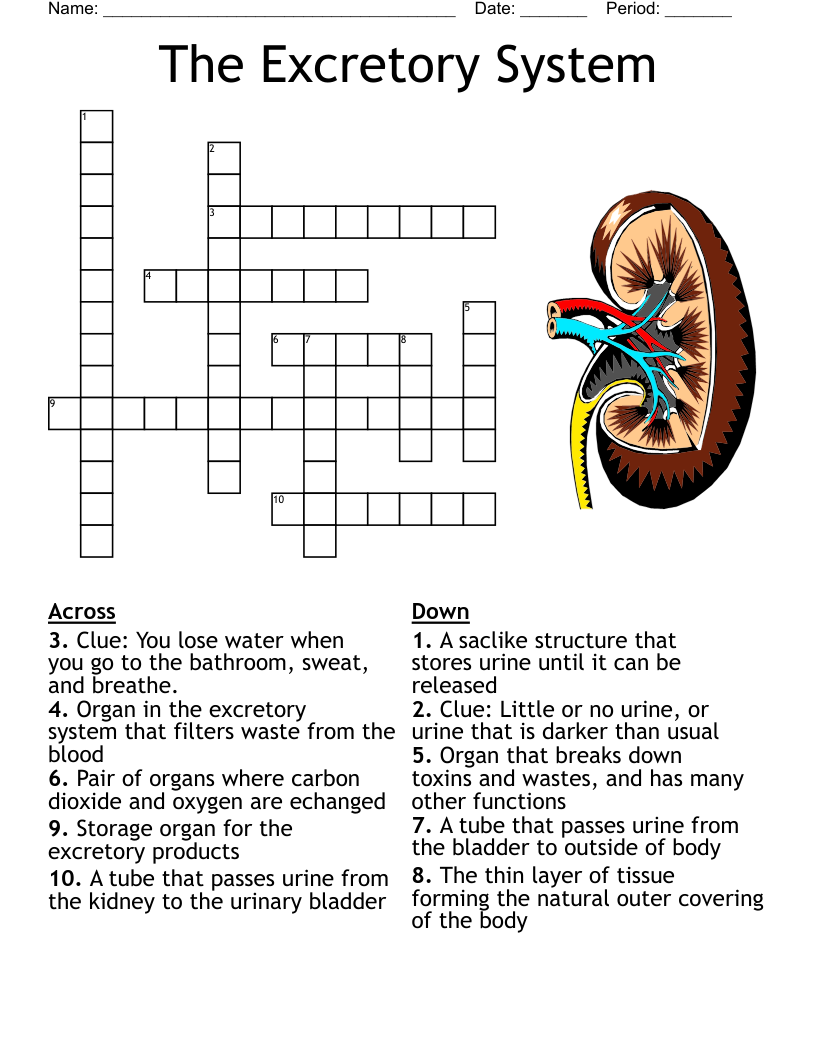
Stones that are formed when you don't drink enough water; have to pass them to get them out
Parts of the kidney that filter the blood and remove waste
Releases saliva to moisten food and begin chemical digestion
Produces digestive juices called bile that breaks down fat
The way in which clean blood returns to the body
Breaks down the food into smaller substances (ex: chewing)
Produces digestive juices called bile that breaks down fat
Produces pancreatic enzymes to aid in breaking down food
Digestion is completed here once food travels from the stomach; long but narrow in diameter
The first 10-12 inches of the small intestine where nutrients for the body are absorbed and delivered to the bloodstream