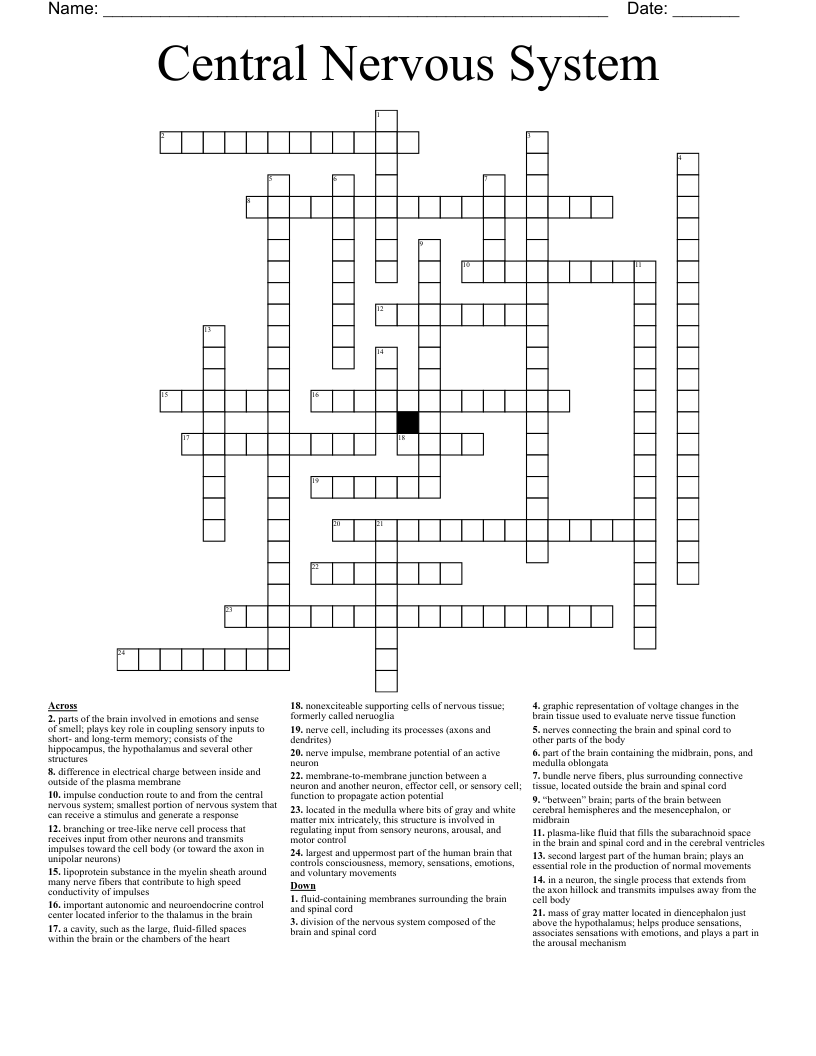
Central Nervous System Crossword
This printable crossword puzzle on the topic of Human Body Systems has 24 clues. Answers range from 4 to 23 letters long. This crossword is also available to download as a Microsoft Word document or a PDF.
Description
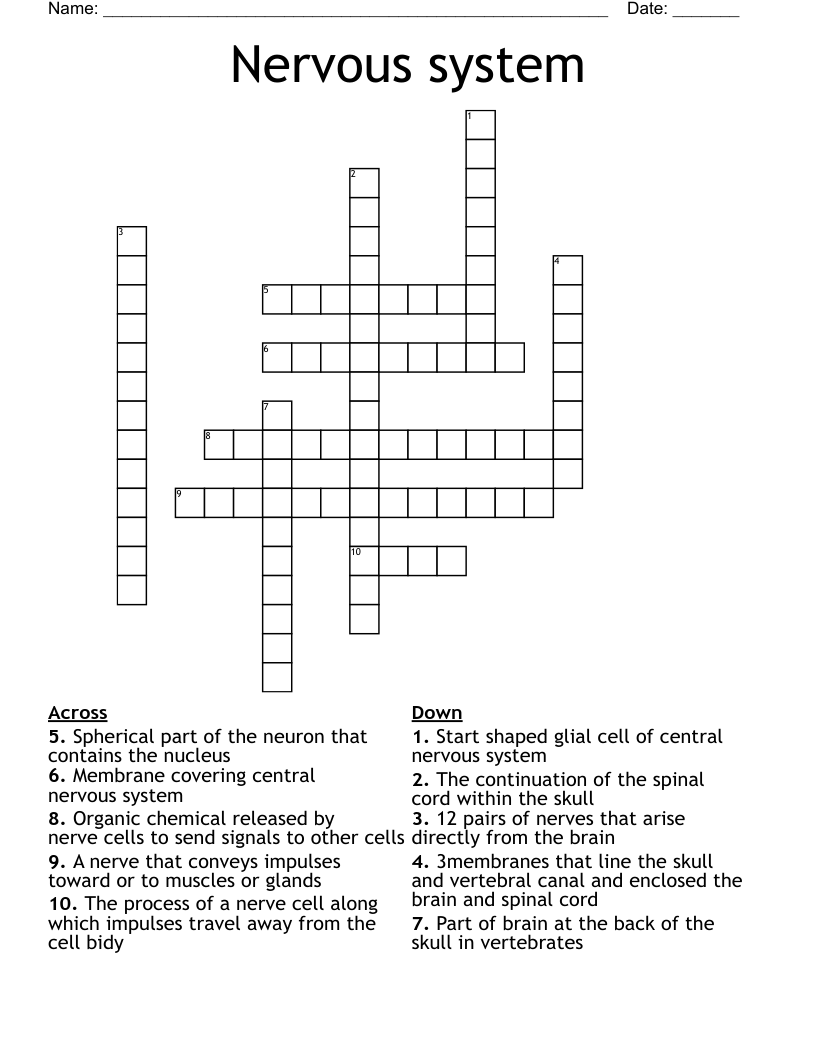
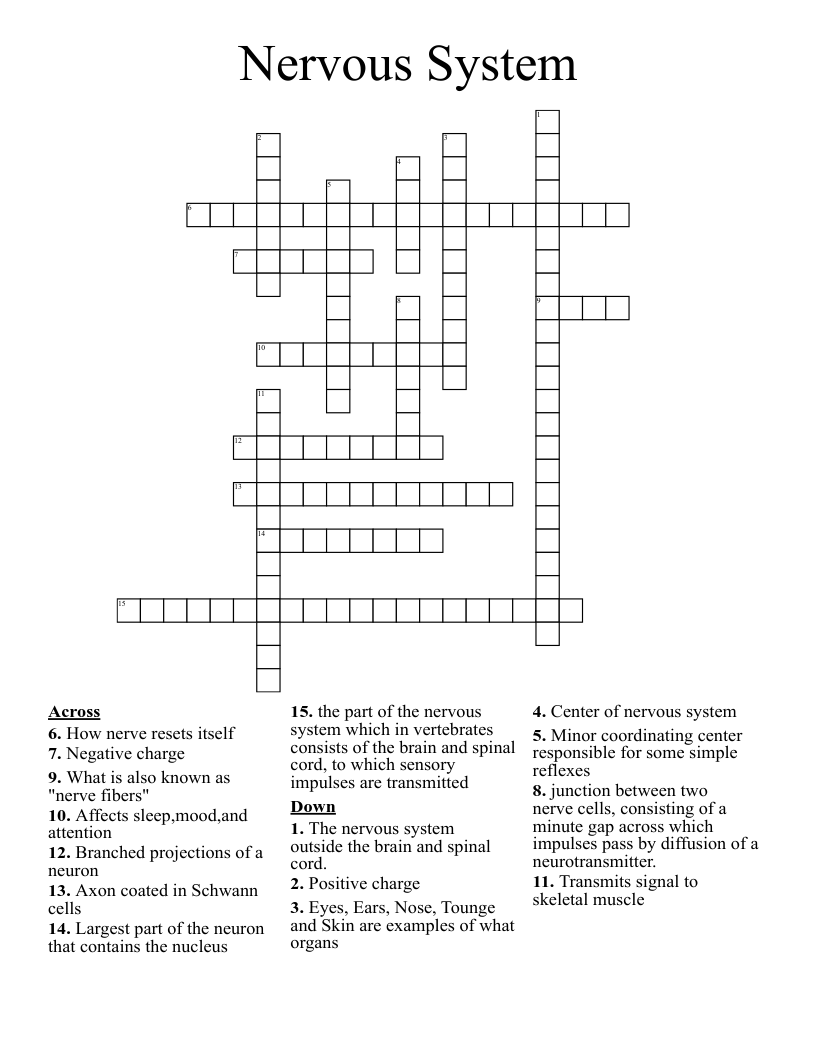
nerve impulse, membrane potential of an active neuron
in a neuron, the single process that extends from the axon hillock and transmits impulses away from the cell body
division of the nervous system composed of the brain and spinal cord
branching or tree-like nerve cell process that receives input from other neurons and transmits impulses toward the cell body (or toward the axon in unipolar neurons)
nonexciteable supporting cells of nervous tissue; formerly called neruoglia
difference in electrical charge between inside and outside of the plasma membrane
lipoprotein substance in the myelin sheath around many nerve fibers that contribute to high speed conductivity of impulses
bundle nerve fibers, plus surrounding connective tissue, located outside the brain and spinal cord
nerve cell, including its processes (axons and dendrites)
nerves connecting the brain and spinal cord to other parts of the body
impulse conduction route to and from the central nervous system; smallest portion of nervous system that can receive a stimulus and generate a response
membrane-to-membrane junction between a neuron and another neuron, effector cell, or sensory cell; function to propagate action potential
part of the brain containing the midbrain, pons, and medulla oblongata
second largest part of the human brain; plays an essential role in the production of normal movements
plasma-like fluid that fills the subarachnoid space in the brain and spinal cord and in the cerebral ventricles
largest and uppermost part of the human brain that controls consciousness, memory, sensations, emotions, and voluntary movements
“between” brain; parts of the brain between cerebral hemispheres and the mesencephalon, or midbrain
graphic representation of voltage changes in the brain tissue used to evaluate nerve tissue function
important autonomic and neuroendocrine control center located inferior to the thalamus in the brain
parts of the brain involved in emotions and sense of smell; plays key role in coupling sensory inputs to short- and long-term memory; consists of the hippocampus, the hypothalamus and several other structures
fluid-containing membranes surrounding the brain and spinal cord
located in the medulla where bits of gray and white matter mix intricately, this structure is involved in regulating input from sensory neurons, arousal, and motor control
mass of gray matter located in diencephalon just above the hypothalamus; helps produce sensations, associates sensations with emotions, and plays a part in the arousal mechanism
a cavity, such as the large, fluid-filled spaces within the brain or the chambers of the heart