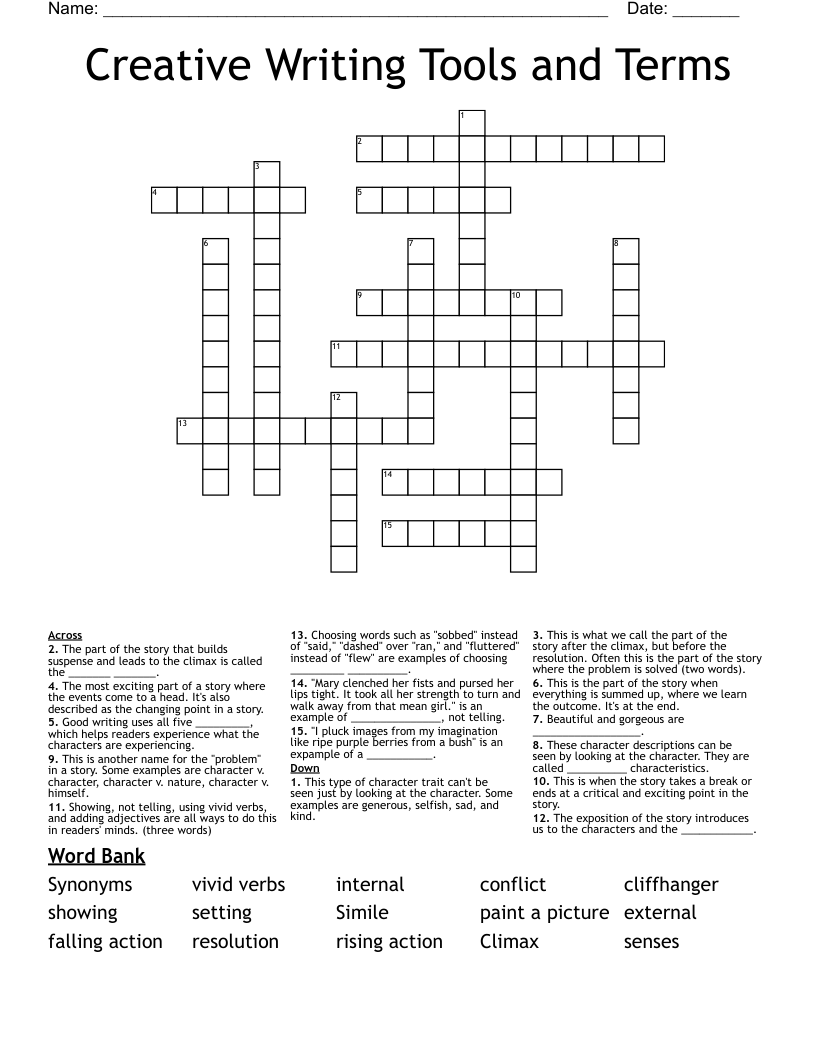
Creative Writing Tools and Terms Crossword
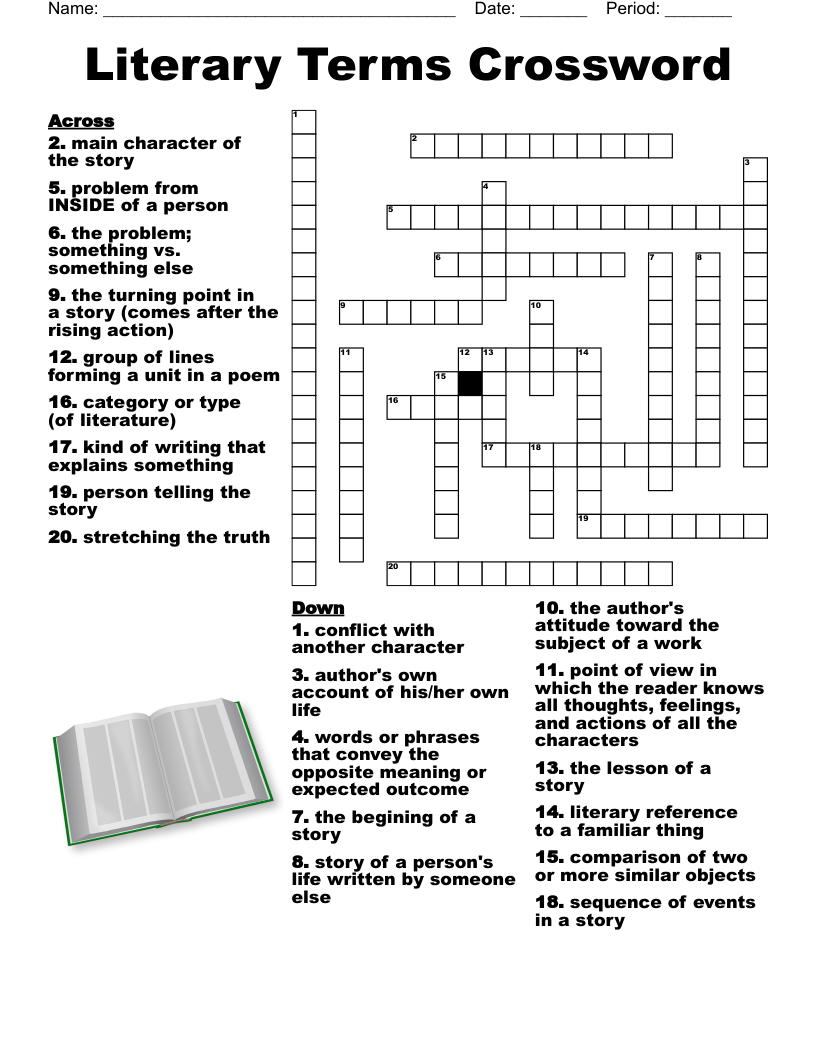
This printable crossword puzzle on the topic of Figurative Language & Literary Devices has 15 clues. Answers range from 6 to 13 letters long. This crossword is also available to download as a Microsoft Word document or a PDF.
Description
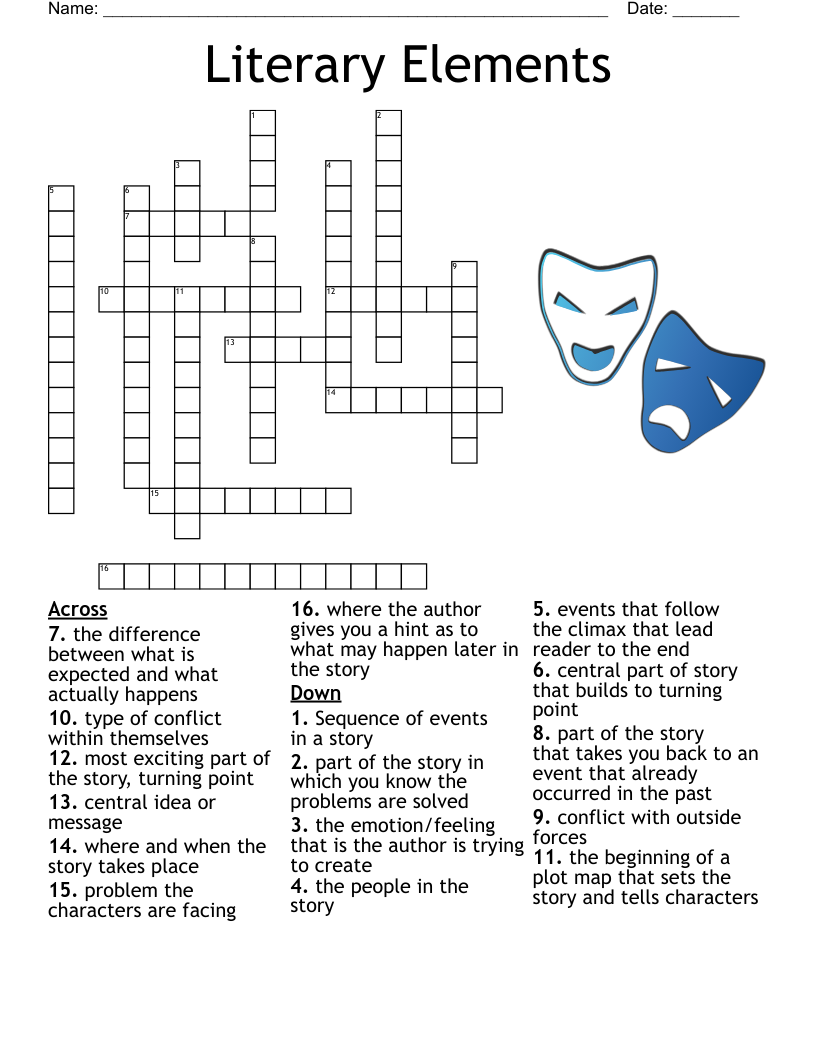
The most exciting part of a story where the events come to a head. It's also described as the changing point in a story.
"I pluck images from my imagination like ripe purple berries from a bush" is an expample of a ___________.
Choosing words such as "sobbed" instead of "said," "dashed" over "ran," and "fluttered" instead of "flew" are examples of choosing _________ __________.
Beautiful and gorgeous are __________________.
The exposition of the story introduces us to the characters and the ____________.
This is what we call the part of the story after the climax, but before the resolution. Often this is the part of the story where the problem is solved (two words).
This is the part of the story when everything is summed up, where we learn the outcome. It's at the end.
These character descriptions can be seen by looking at the character. They are called __________ characteristics.
This is another name for the "problem" in a story. Some examples are character v. character, character v. nature, character v. himself.
The part of the story that builds suspense and leads to the climax is called the _______ _______.
This type of character trait can't be seen just by looking at the character. Some examples are generous, selfish, sad, and kind.
"Mary clenched her fists and pursed her lips tight. It took all her strength to turn and walk away from that mean girl." is an example of _______________, not telling.
This is when the story takes a break or ends at a critical and exciting point in the story.
Good writing uses all five _________, which helps readers experience what the characters are experiencing.
Showing, not telling, using vivid verbs, and adding adjectives are all ways to do this in readers' minds. (three words)