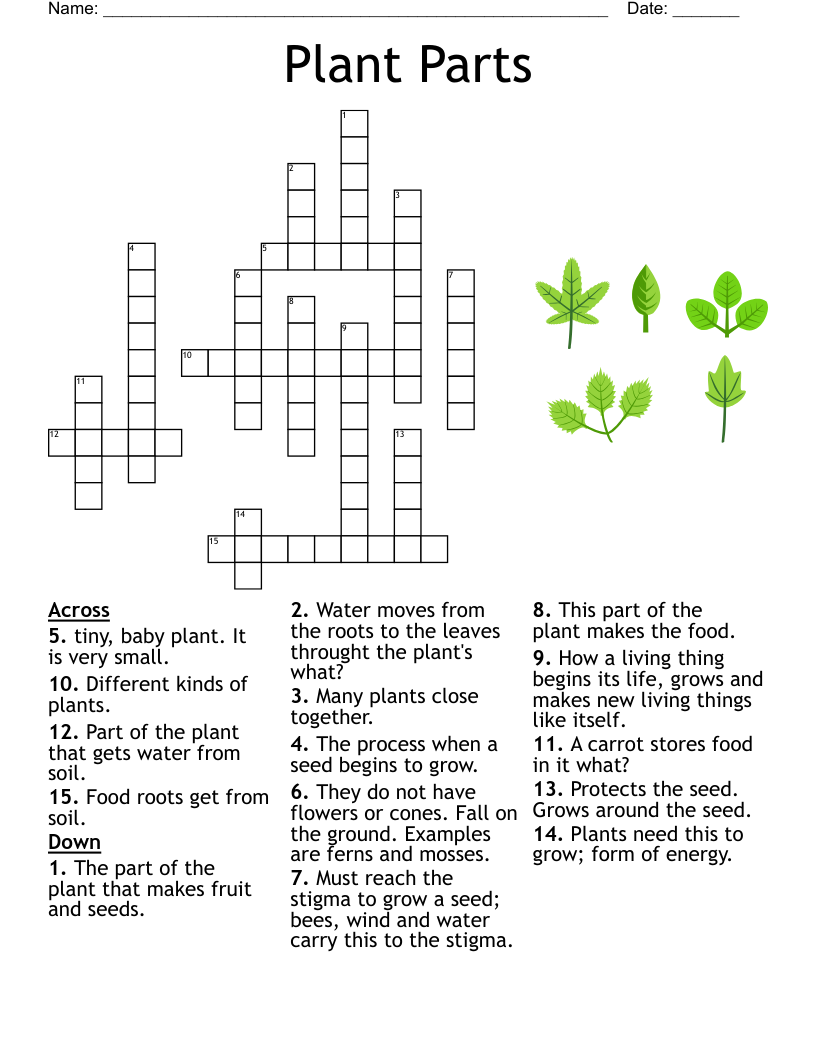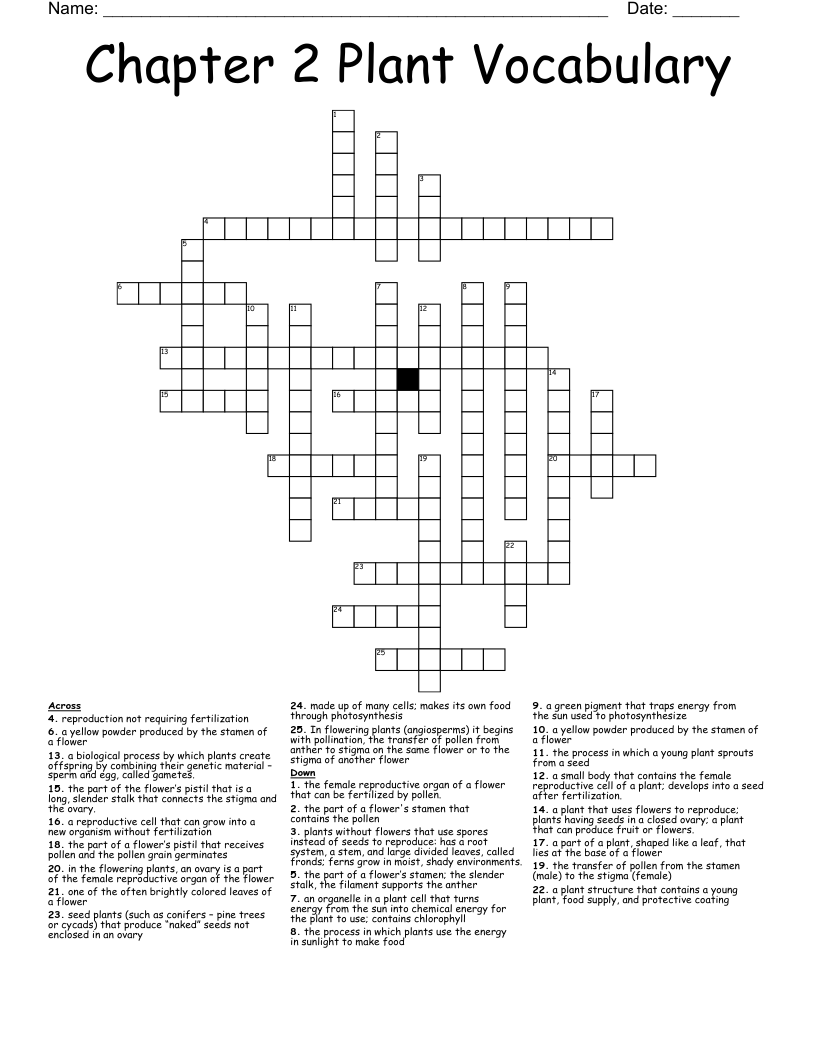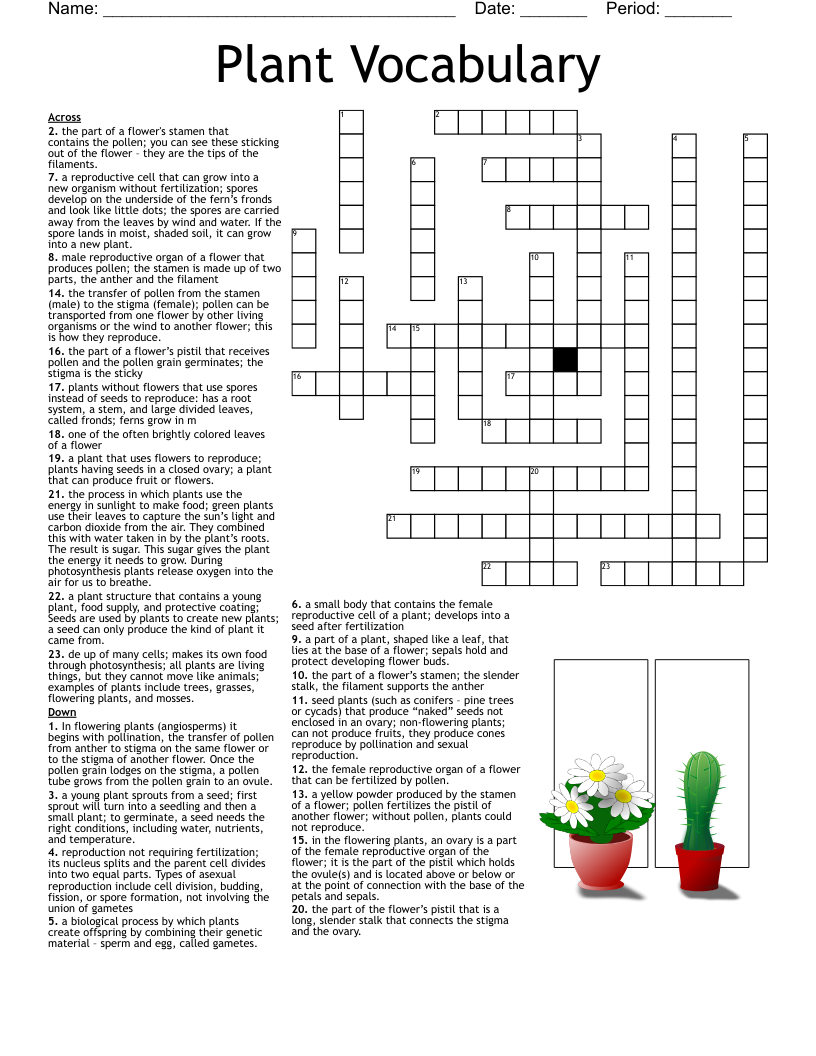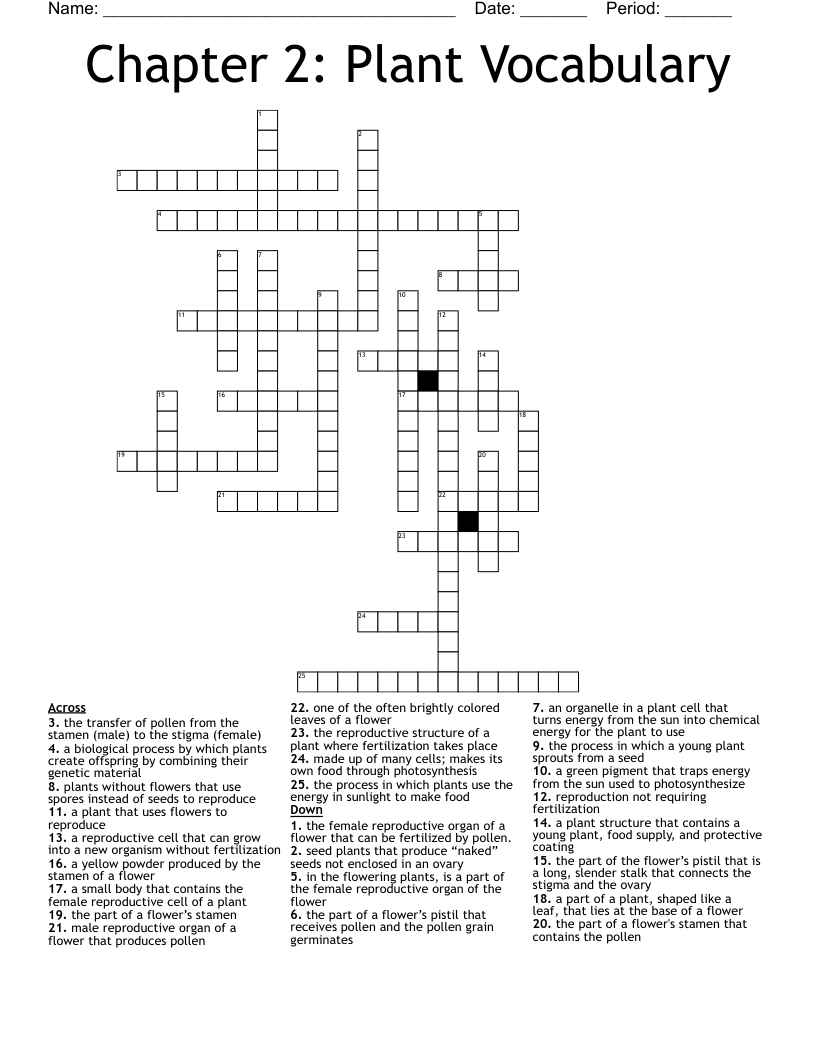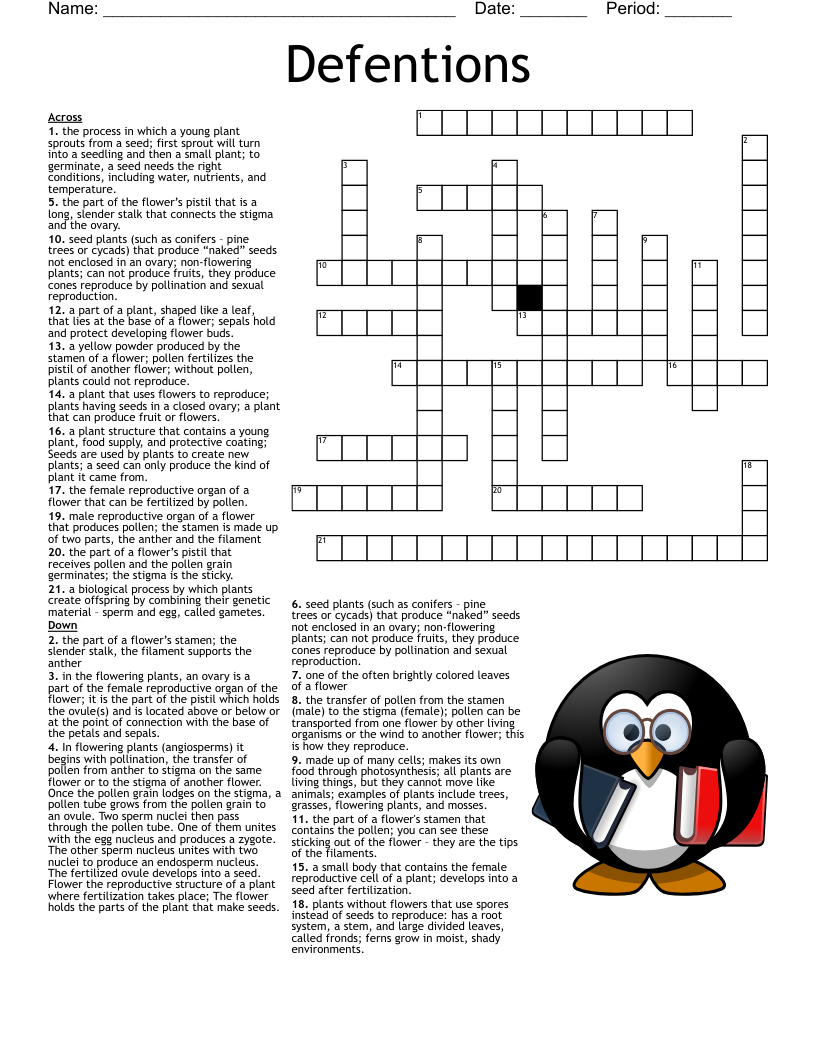
Defentions Crossword
This printable crossword puzzle on the topic of Plants & Botany has 21 clues. Answers range from 4 to 18 letters long. This crossword is also available to download as a Microsoft Word document or a PDF.
Description
made up of many cells; makes its own food through photosynthesis; all plants are living things, but they cannot move like animals; examples of plants include trees, grasses, flowering plants, and mosses.
the process in which a young plant sprouts from a seed; first sprout will turn into a seedling and then a small plant; to germinate, a seed needs the right conditions, including water, nutrients, and temperature.
a plant structure that contains a young plant, food supply, and protective coating; Seeds are used by plants to create new plants; a seed can only produce the kind of plant it came from.
a plant that uses flowers to reproduce; plants having seeds in a closed ovary; a plant that can produce fruit or flowers.
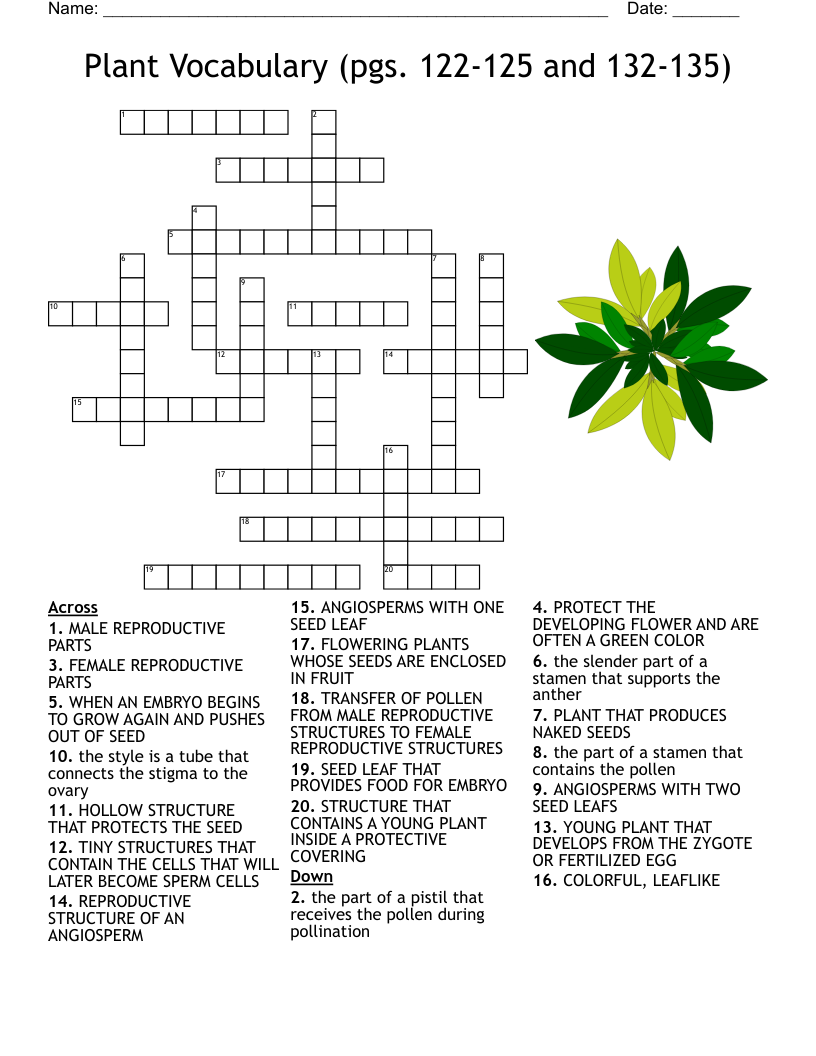
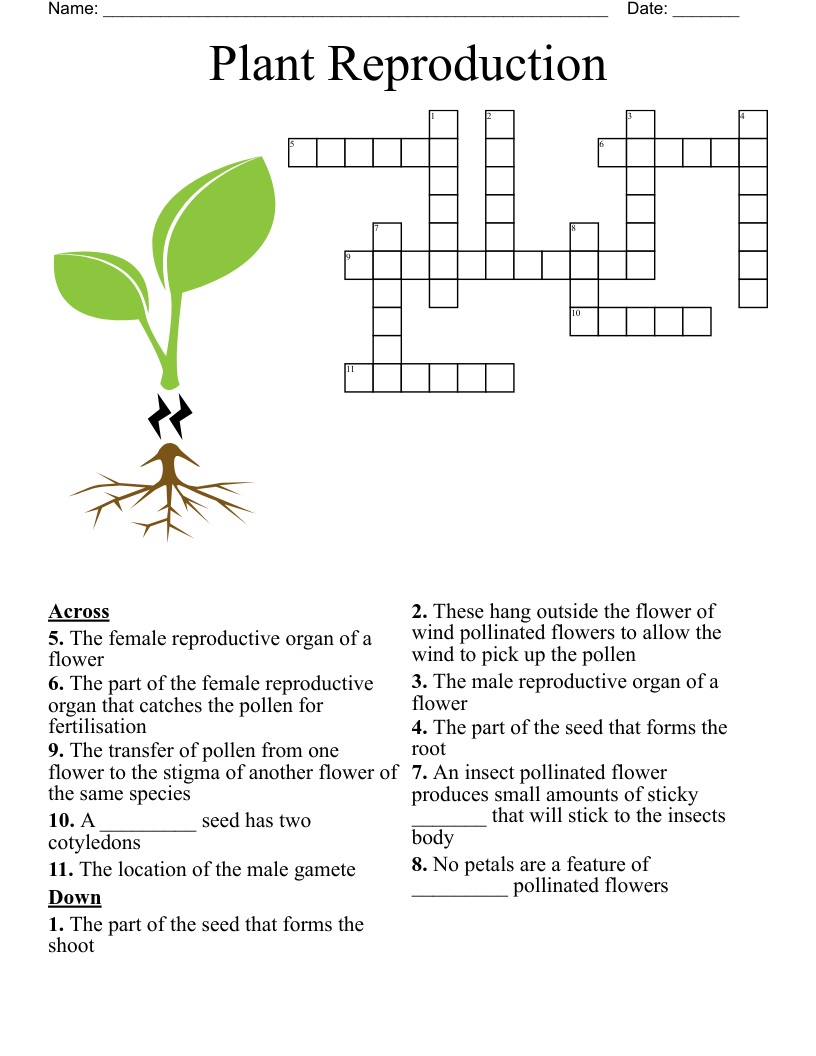
the transfer of pollen from the stamen (male) to the stigma (female); pollen can be transported from one flower by other living organisms or the wind to another flower; this is how they reproduce.
a biological process by which plants create offspring by combining their genetic material – sperm and egg, called gametes.
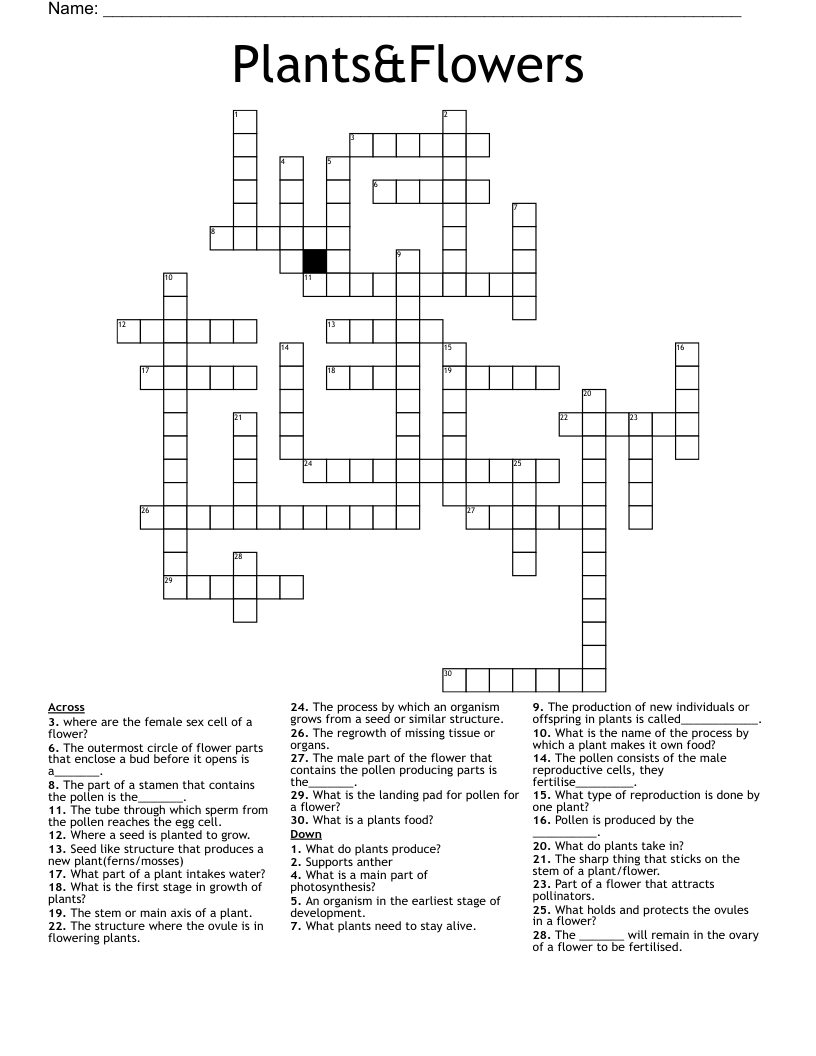
In flowering plants (angiosperms) it begins with pollination, the transfer of pollen from anther to stigma on the same flower or to the stigma of another flower. Once the pollen grain lodges on the stigma, a pollen tube grows from the pollen grain to an ovule. Two sperm nuclei then pass through the pollen tube. One of them unites with the egg nucleus and produces a zygote. The other sperm nucleus unites with two nuclei to produce an endosperm nucleus. The fertilized ovule develops into a seed. Flower the reproductive structure of a plant where fertilization takes place; The flower holds the parts of the plant that make seeds.
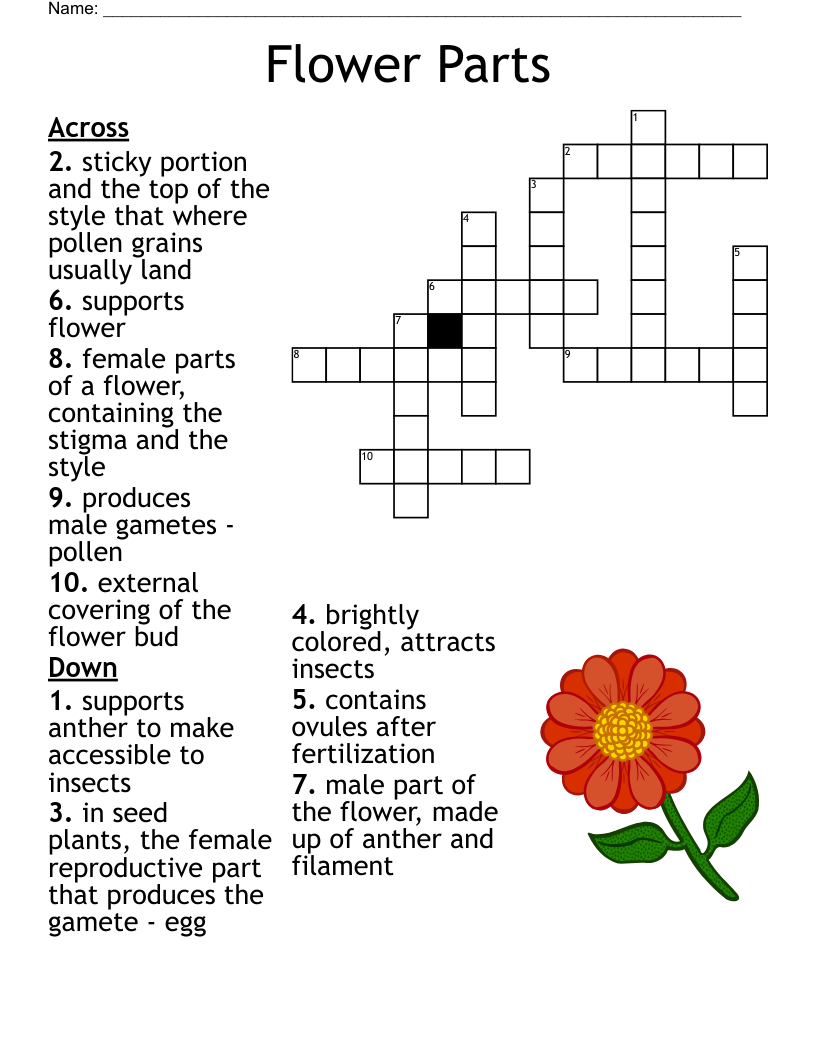
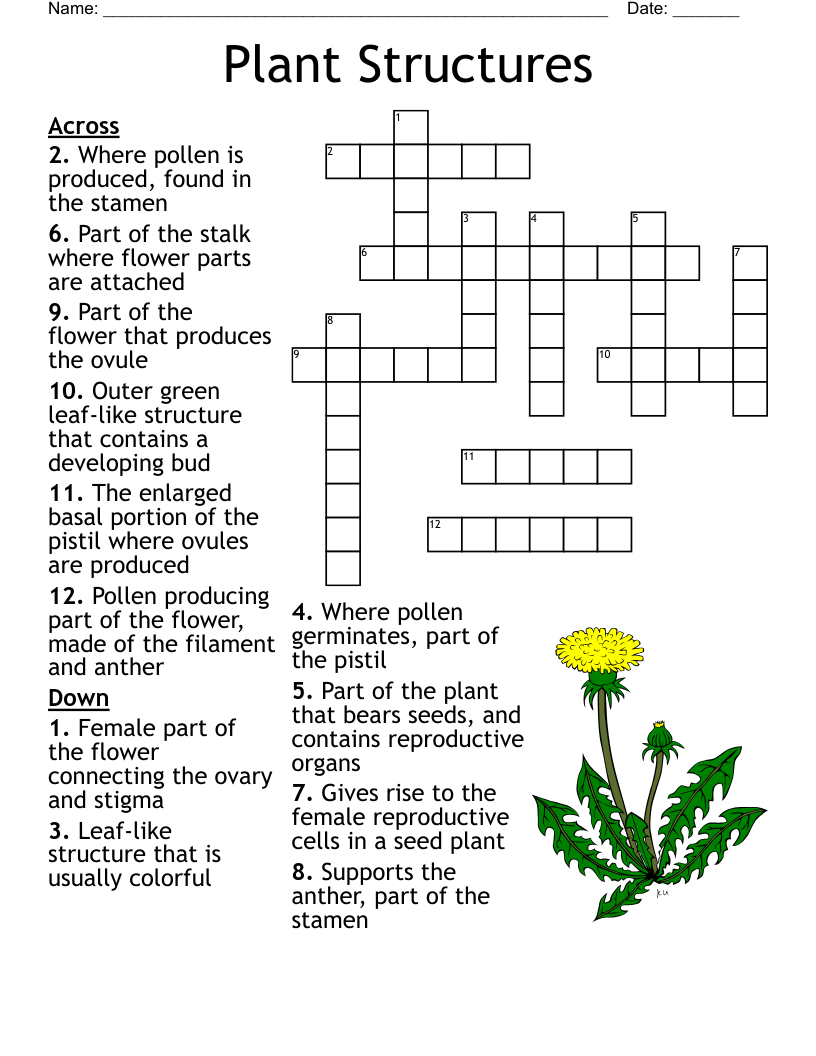
one of the often brightly colored leaves of a flower
a part of a plant, shaped like a leaf, that lies at the base of a flower; sepals hold and protect developing flower buds.
a yellow powder produced by the stamen of a flower; pollen fertilizes the pistil of another flower; without pollen, plants could not reproduce.
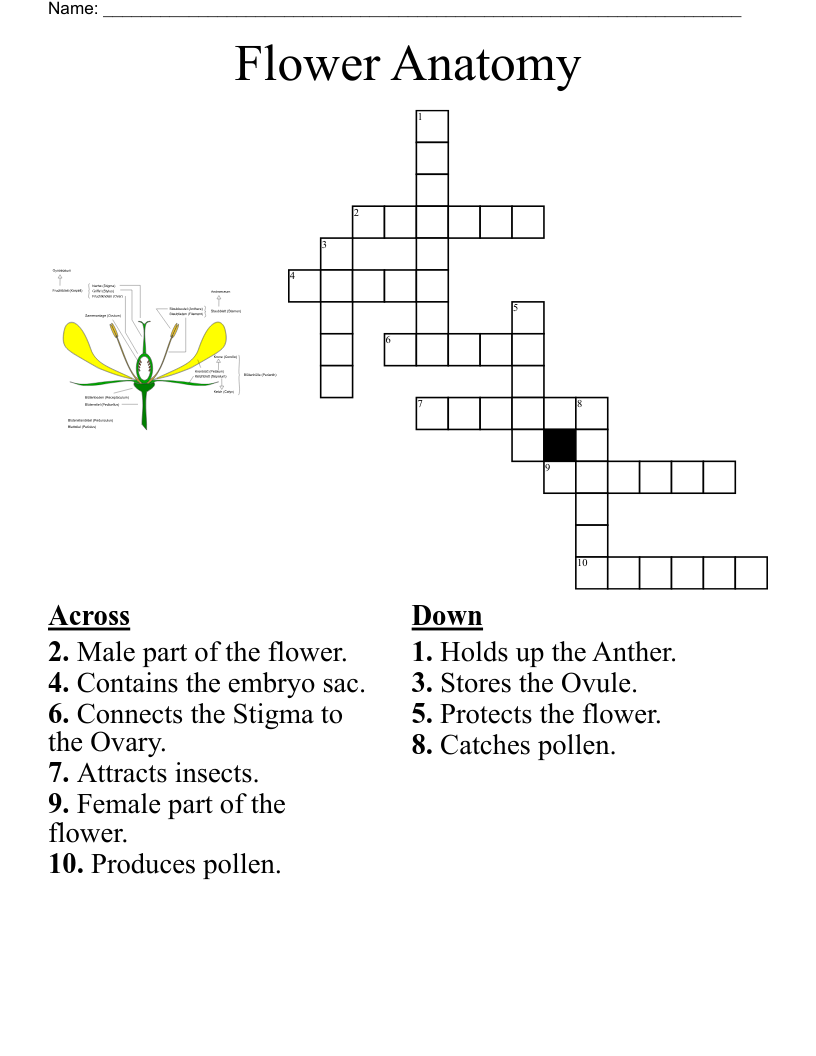
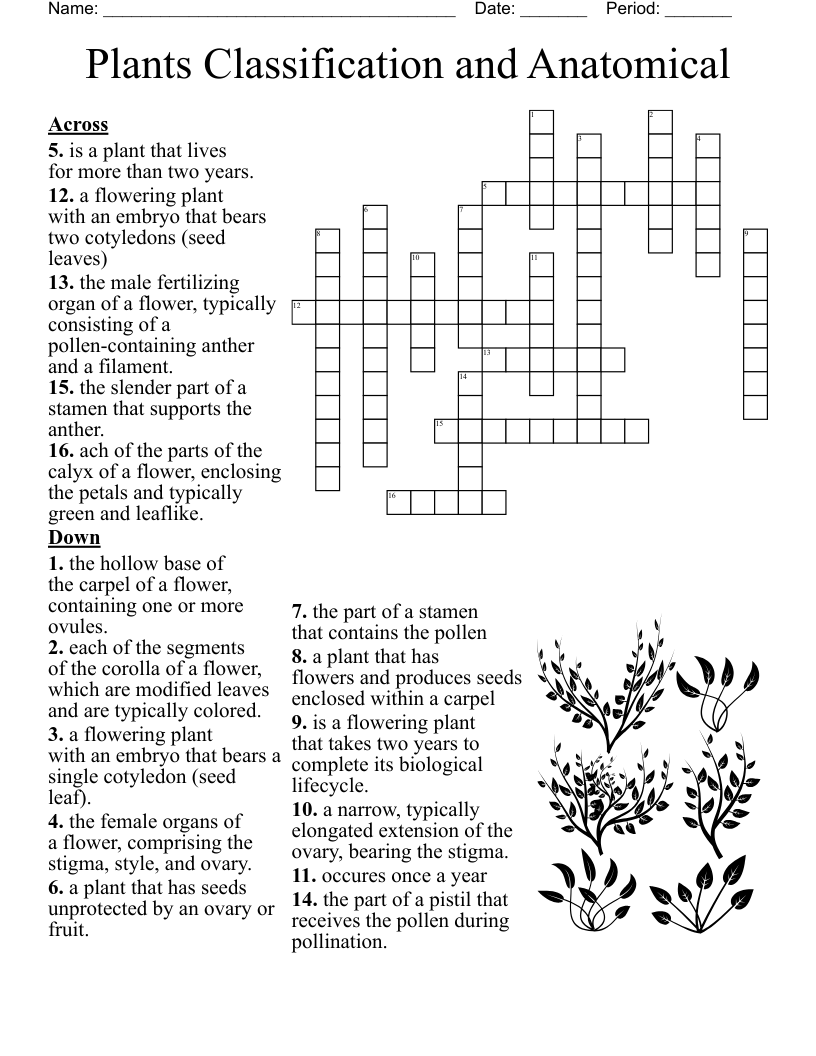
male reproductive organ of a flower that produces pollen; the stamen is made up of two parts, the anther and the filament
the part of a flower's stamen that contains the pollen; you can see these sticking out of the flower – they are the tips of the filaments.
the part of a flower’s stamen; the slender stalk, the filament supports the anther
the female reproductive organ of a flower that can be fertilized by pollen.
the part of a flower’s pistil that receives pollen and the pollen grain germinates; the stigma is the sticky.
the part of the flower’s pistil that is a long, slender stalk that connects the stigma and the ovary.
in the flowering plants, an ovary is a part of the female reproductive organ of the flower; it is the part of the pistil which holds the ovule(s) and is located above or below or at the point of connection with the base of the petals and sepals.
a small body that contains the female reproductive cell of a plant; develops into a seed after fertilization.
seed plants (such as conifers – pine trees or cycads) that produce “naked” seeds not enclosed in an ovary; non-flowering plants; can not produce fruits, they produce cones reproduce by pollination and sexual reproduction.
seed plants (such as conifers – pine trees or cycads) that produce “naked” seeds not enclosed in an ovary; non-flowering plants; can not produce fruits, they produce cones reproduce by pollination and sexual reproduction.
plants without flowers that use spores instead of seeds to reproduce: has a root system, a stem, and large divided leaves, called fronds; ferns grow in moist, shady environments.