Common Carpentry Terminology Worksheet
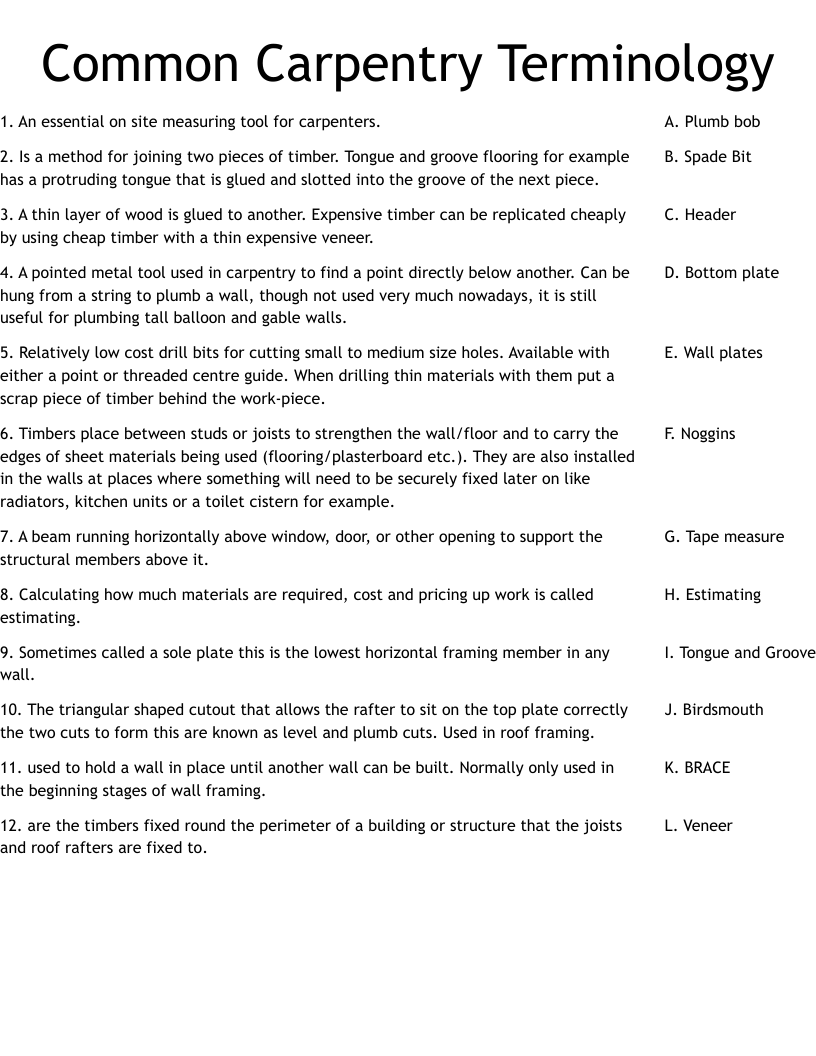
This printable matching worksheet has 12 questions and answers to match. This matching worksheet is also available to download as a Microsoft Word document or a PDF.
Description
An essential on site measuring tool for carpenters.
Is a method for joining two pieces of timber. Tongue and groove flooring for example has a protruding tongue that is glued and slotted into the groove of the next piece.
A thin layer of wood is glued to another. Expensive timber can be replicated cheaply by using cheap timber with a thin expensive veneer.
A pointed metal tool used in carpentry to find a point directly below another. Can be hung from a string to plumb a wall, though not used very much nowadays, it is still useful for plumbing tall balloon and gable walls.
Relatively low cost drill bits for cutting small to medium size holes. Available with either a point or threaded centre guide. When drilling thin materials with them put a scrap piece of timber behind the work-piece.
Timbers place between studs or joists to strengthen the wall/floor and to carry the edges of sheet materials being used (flooring/plasterboard etc.). They are also installed in the walls at places where something will need to be securely fixed later on like radiators, kitchen units or a toilet cistern for example.
A beam running horizontally above window, door, or other opening to support the structural members above it.
Calculating how much materials are required, cost and pricing up work is called estimating.
Sometimes called a sole plate this is the lowest horizontal framing member in any wall.
The triangular shaped cutout that allows the rafter to sit on the top plate correctly the two cuts to form this are known as level and plumb cuts. Used in roof framing.
used to hold a wall in place until another wall can be built. Normally only used in the beginning stages of wall framing.
are the timbers fixed round the perimeter of a building or structure that the joists and roof rafters are fixed to.