UNIT TWO CROSSWORD
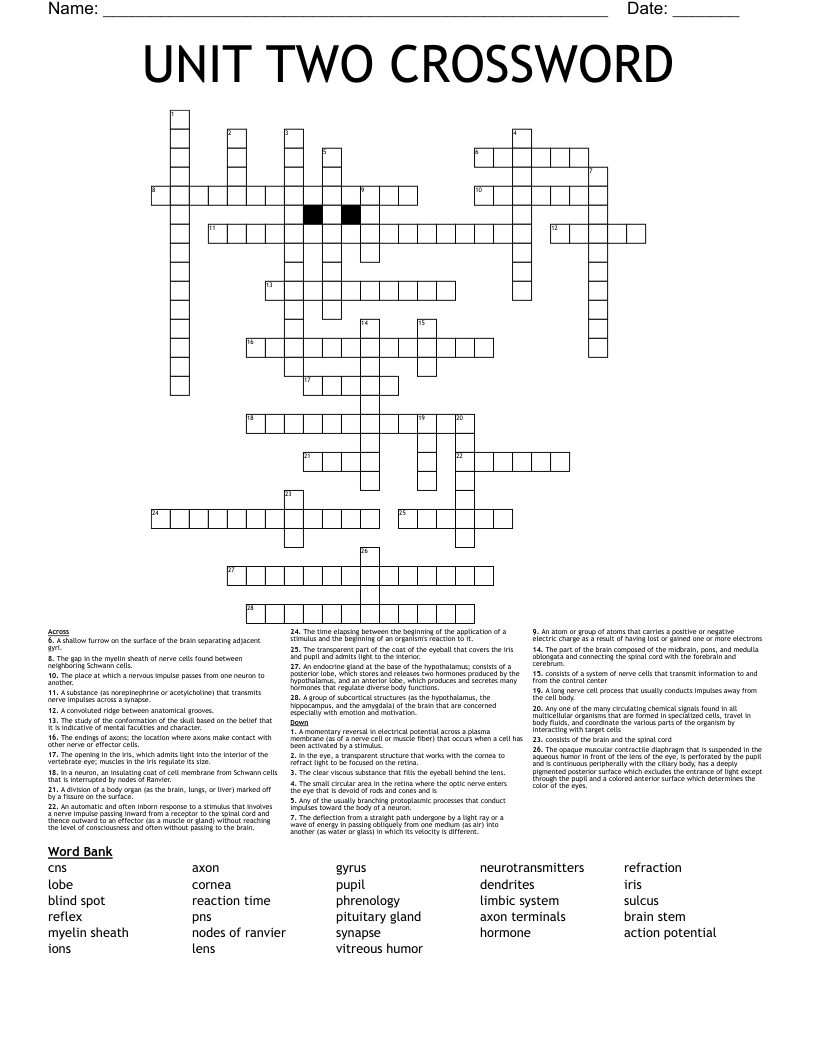
This printable crossword puzzle has 28 clues. Answers range from 3 to 17 letters long. This crossword is also available to download as a Microsoft Word document or a PDF.
Description
The opening in the iris, which admits light into the interior of the vertebrate eye; muscles in the iris regulate its size.
The deflection from a straight path undergone by a light ray or a wave of energy in passing obliquely from one medium (as air) into another (as water or glass) in which its velocity is different.
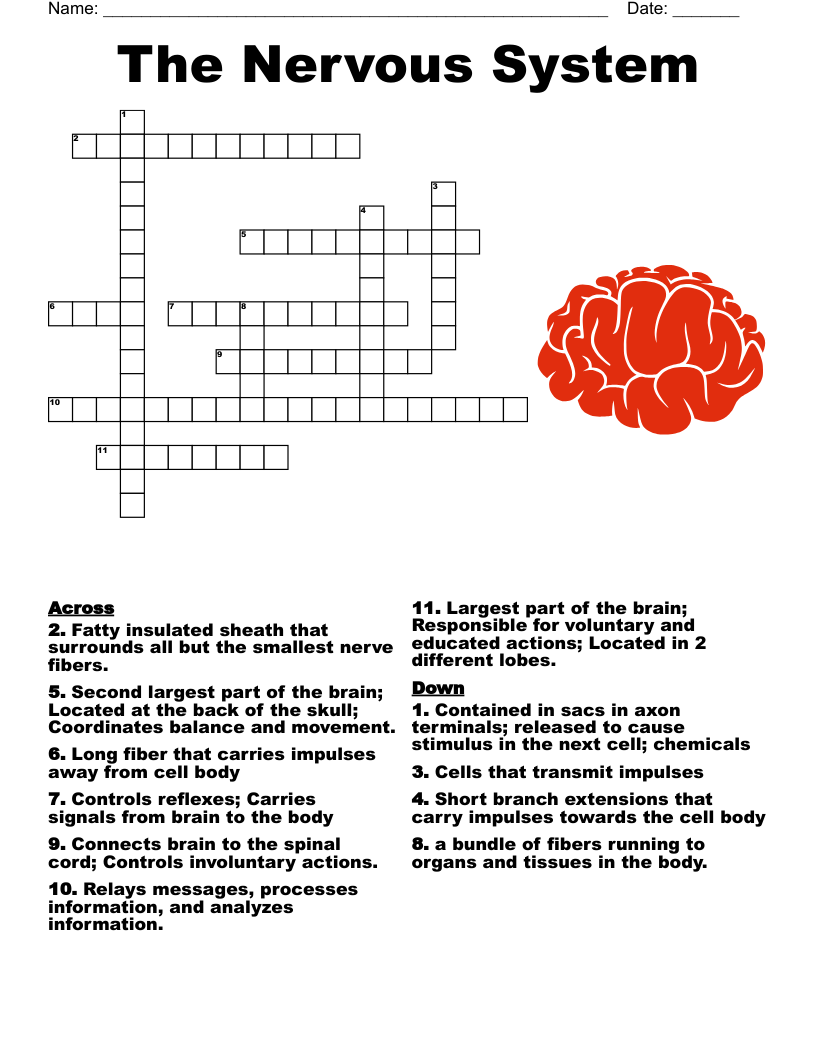
Any of the usually branching protoplasmic processes that conduct impulses toward the body of a neuron.
The endings of axons; the location where axons make contact with other nerve or effector cells.
A convoluted ridge between anatomical grooves.
A substance (as norepinephrine or acetylcholine) that transmits nerve impulses across a synapse.
The time elapsing between the beginning of the application of a stimulus and the beginning of an organism's reaction to it.
An atom or group of atoms that carries a positive or negative electric charge as a result of having lost or gained one or more electrons
A shallow furrow on the surface of the brain separating adjacent gyri.
The small circular area in the retina where the optic nerve enters the eye that is devoid of rods and cones and is
The gap in the myelin sheath of nerve cells found between neighboring Schwann cells.
An automatic and often inborn response to a stimulus that involves a nerve impulse passing inward from a receptor to the spinal cord and thence outward to an effector (as a muscle or gland) without reaching the level of consciousness and often without passing to the brain.
In a neuron, an insulating coat of cell membrane from Schwann cells that is interrupted by nodes of Ranvier.
A long nerve cell process that usually conducts impulses away from the cell body.
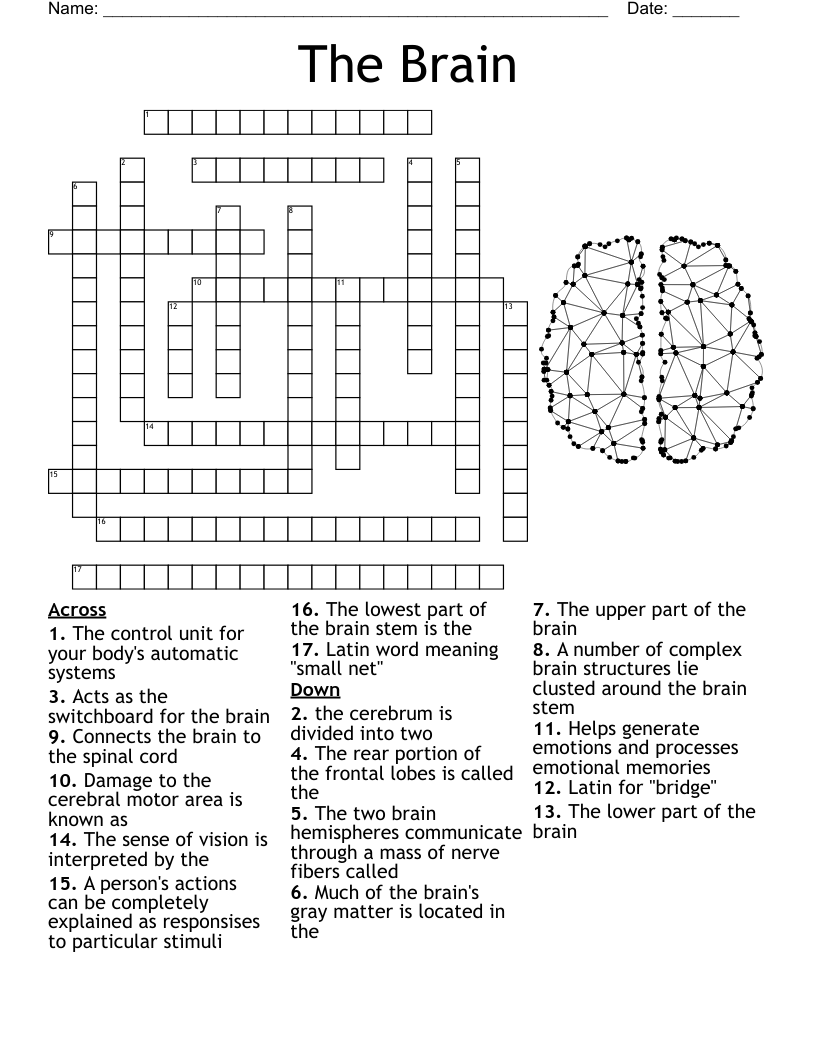
The part of the brain composed of the midbrain, pons, and medulla oblongata and connecting the spinal cord with the forebrain and cerebrum.
In the eye, a transparent structure that works with the cornea to refract light to be focused on the retina.
The study of the conformation of the skull based on the belief that it is indicative of mental faculties and character.
Any one of the many circulating chemical signals found in all multicellular organisms that are formed in specialized cells, travel in body fluids, and coordinate the various parts of the organism by interacting with target cells
A division of a body organ (as the brain, lungs, or liver) marked off by a fissure on the surface.
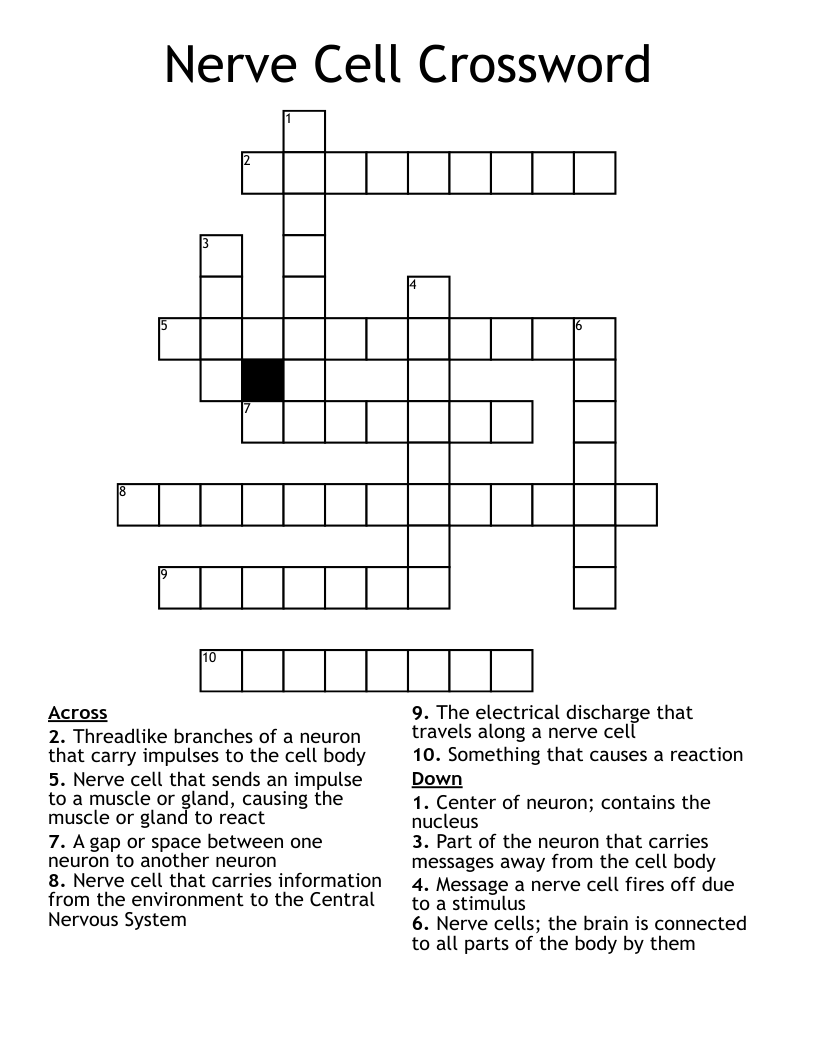
The place at which a nervous impulse passes from one neuron to another.
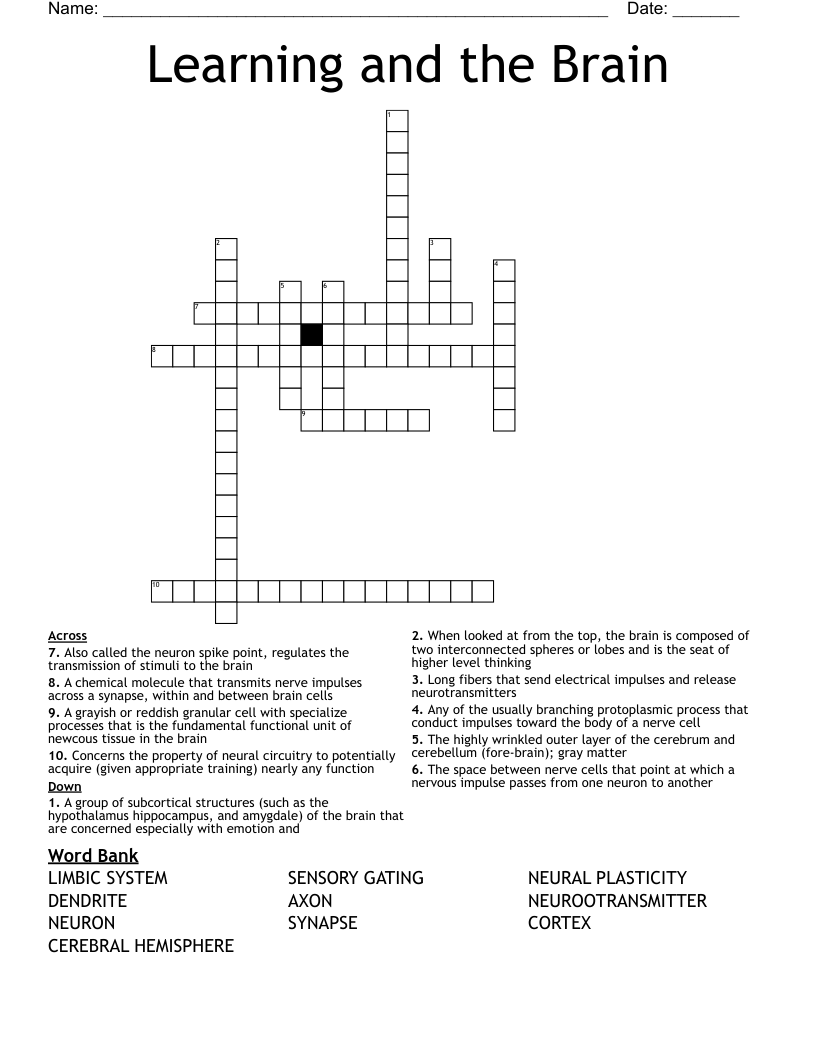
A group of subcortical structures (as the hypothalamus, the hippocampus, and the amygdala) of the brain that are concerned especially with emotion and motivation.
The opaque muscular contractile diaphragm that is suspended in the aqueous humor in front of the lens of the eye, is perforated by the pupil and is continuous peripherally with the ciliary body, has a deeply pigmented posterior surface which excludes the entrance of light except through the pupil and a colored anterior surface which determines the color of the eyes.
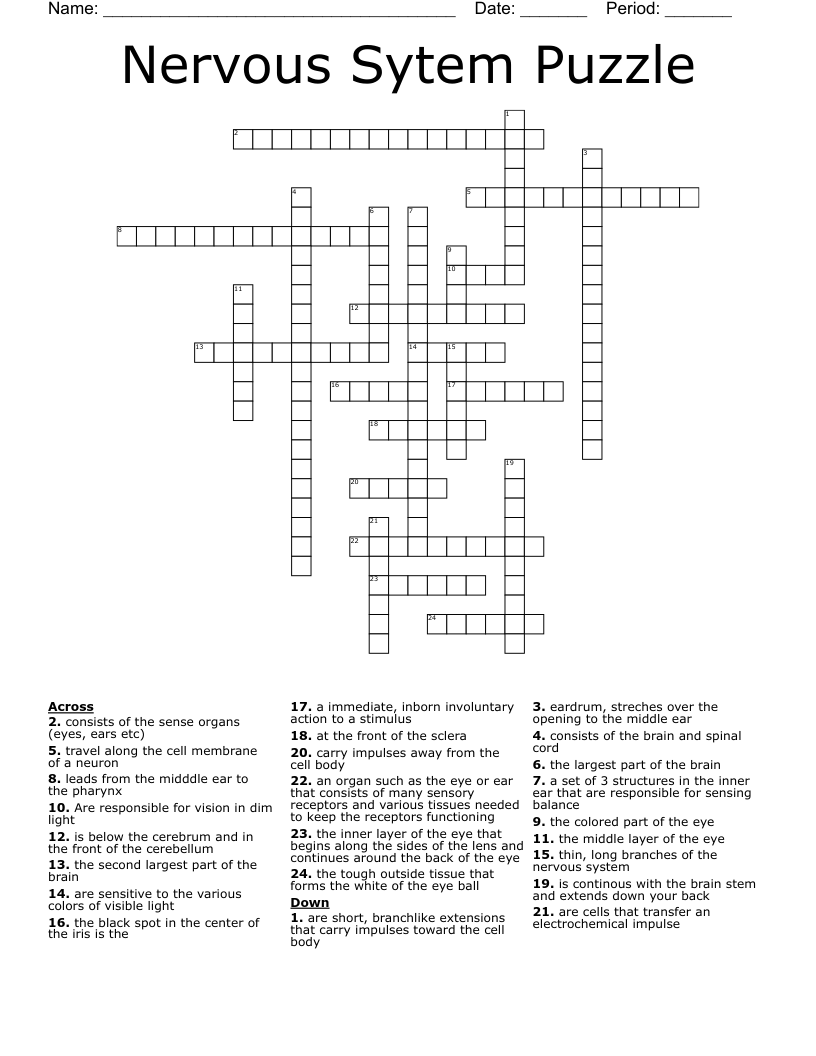
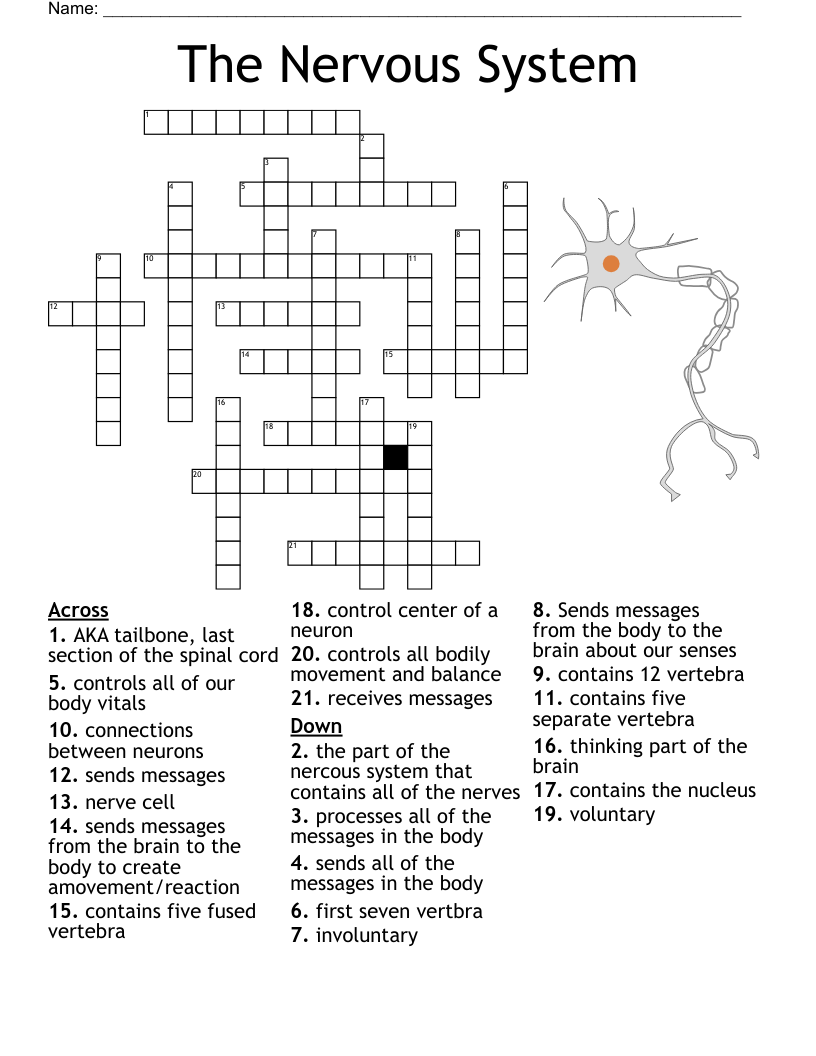
consists of the brain and the spinal cord
A momentary reversal in electrical potential across a plasma membrane (as of a nerve cell or muscle fiber) that occurs when a cell has been activated by a stimulus.
An endocrine gland at the base of the hypothalamus; consists of a posterior lobe, which stores and releases two hormones produced by the hypothalamus, and an anterior lobe, which produces and secretes many hormones that regulate diverse body functions.
The clear viscous substance that fills the eyeball behind the lens.
consists of a system of nerve cells that transmit information to and from the control center
The transparent part of the coat of the eyeball that covers the iris and pupil and admits light to the interior.