Courtroom Particpants Crossword
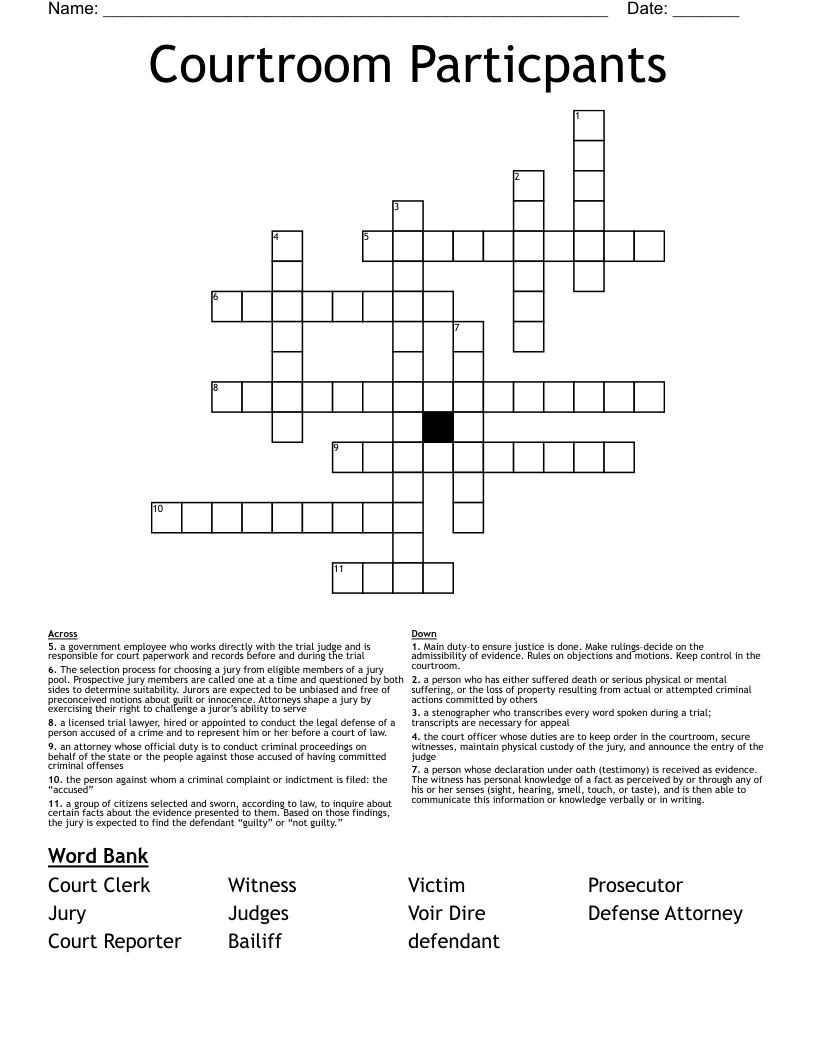
This printable crossword puzzle has 11 clues. Answers range from 4 to 15 letters long. This crossword is also available to download as a Microsoft Word document or a PDF.
Description
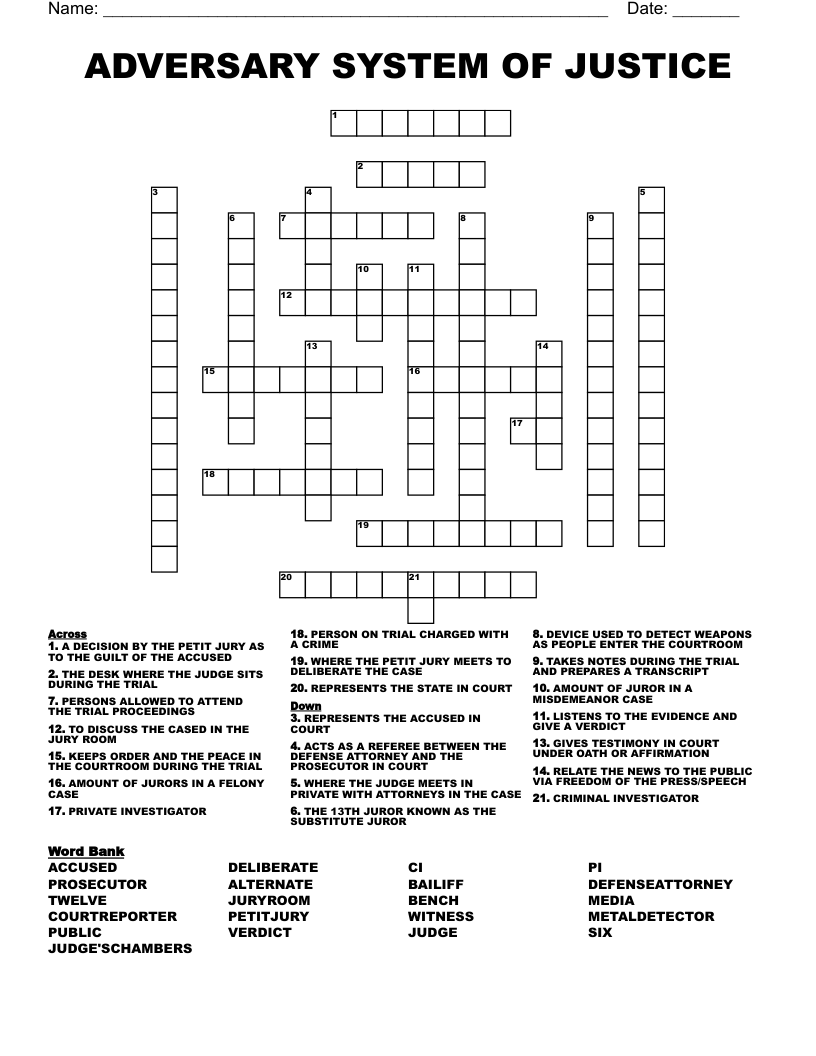
the court officer whose duties are to keep order in the courtroom, secure witnesses, maintain physical custody of the jury, and announce the entry of the judge
a government employee who works directly with the trial judge and is responsible for court paperwork and records before and during the trial
a stenographer who transcribes every word spoken during a trial; transcripts are necessary for appeal
the person against whom a criminal complaint or indictment is filed: the “accused”
a licensed trial lawyer, hired or appointed to conduct the legal defense of a person accused of a crime and to represent him or her before a court of law.
Main duty–to ensure justice is done. Make rulings–decide on the admissibility of evidence. Rules on objections and motions. Keep control in the courtroom.
a group of citizens selected and sworn, according to law, to inquire about certain facts about the evidence presented to them. Based on those findings, the jury is expected to find the defendant “guilty” or “not guilty.”
an attorney whose official duty is to conduct criminal proceedings on behalf of the state or the people against those accused of having committed criminal offenses
a person who has either suffered death or serious physical or mental suffering, or the loss of property resulting from actual or attempted criminal actions committed by others
The selection process for choosing a jury from eligible members of a jury pool. Prospective jury members are called one at a time and questioned by both sides to determine suitability. Jurors are expected to be unbiased and free of preconceived notions about guilt or innocence. Attorneys shape a jury by exercising their right to challenge a juror’s ability to serve
a person whose declaration under oath (testimony) is received as evidence. The witness has personal knowledge of a fact as perceived by or through any of his or her senses (sight, hearing, smell, touch, or taste), and is then able to communicate this information or knowledge verbally or in writing.