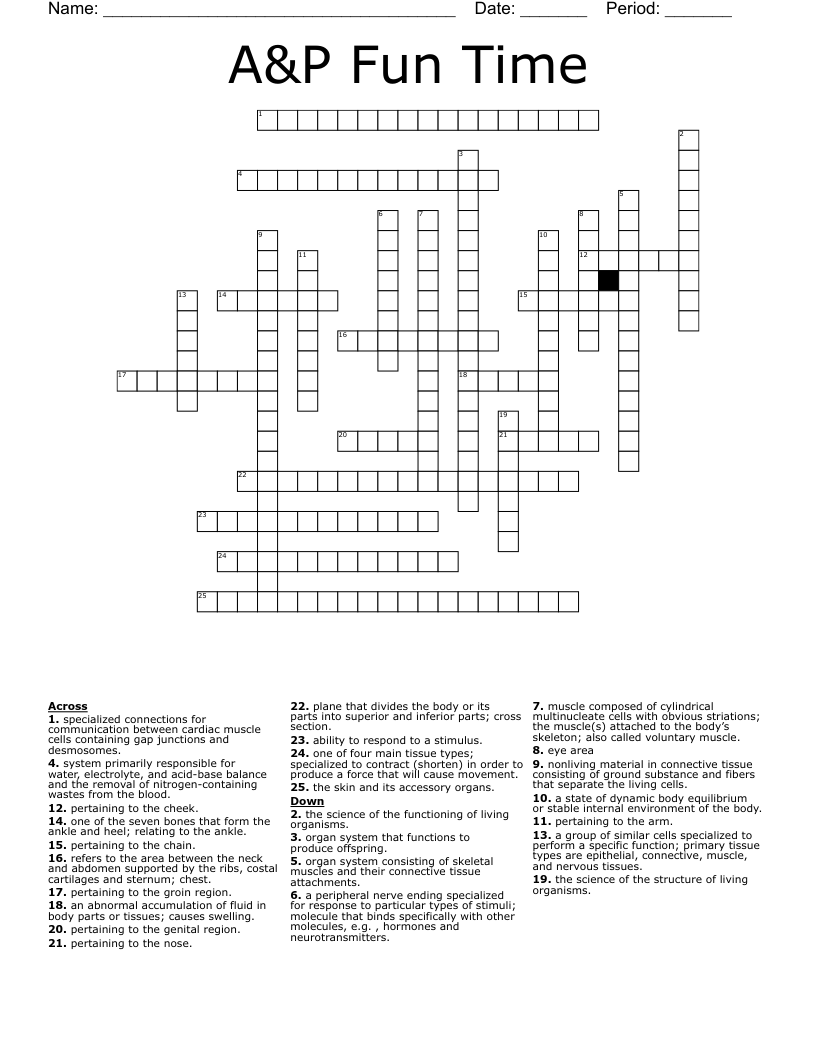
A&P Fun Time Crossword
This printable crossword puzzle on the topic of Anatomy has 25 clues. Answers range from 5 to 19 letters long. This crossword is also available to download as a Microsoft Word document or a PDF.
Description
the science of the structure of living organisms.
pertaining to the arm.
pertaining to the cheek.
a state of dynamic body equilibrium or stable internal environment of the body.
pertaining to the groin region.
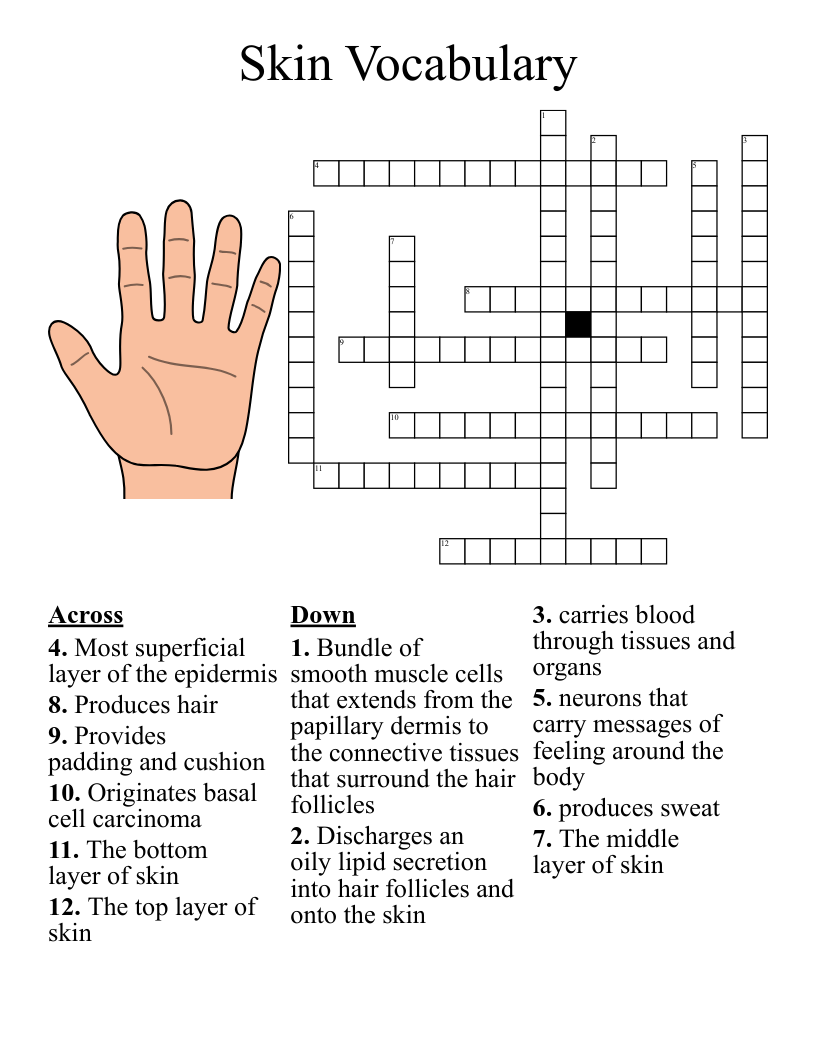
the skin and its accessory organs.
ability to respond to a stimulus.
pertaining to the chain.
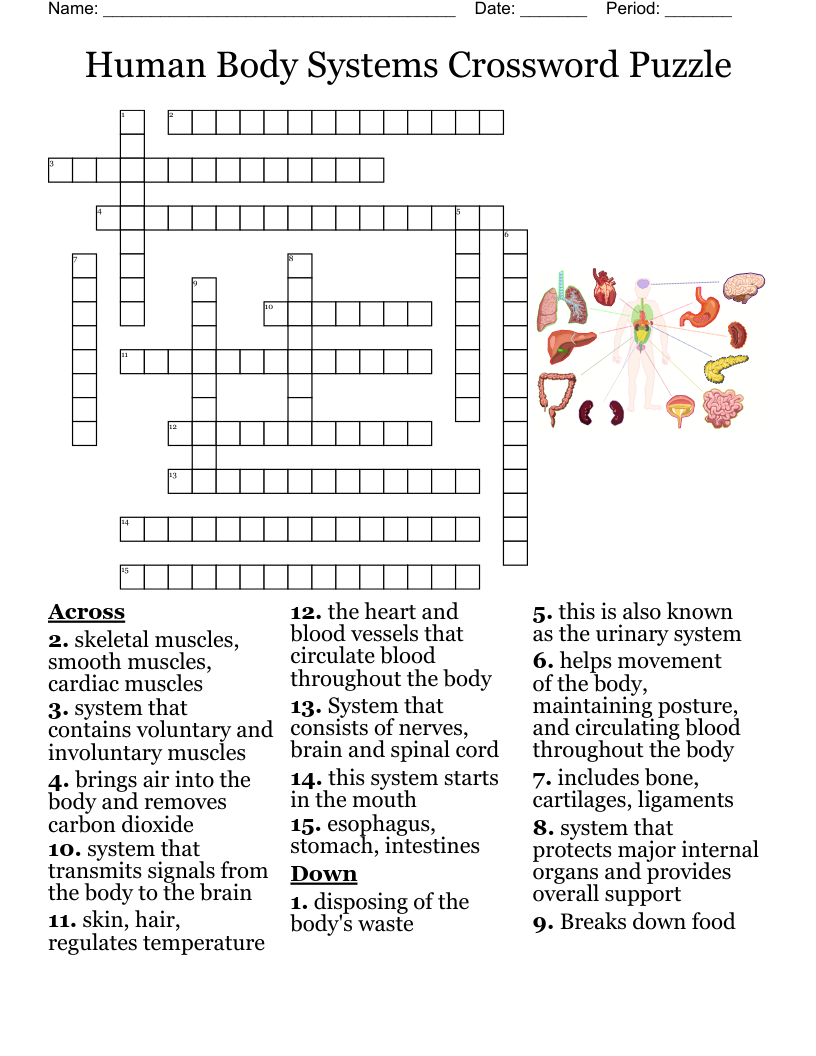
organ system consisting of skeletal muscles and their connective tissue attachments.
pertaining to the nose.
eye area
the science of the functioning of living organisms.
pertaining to the genital region.
a peripheral nerve ending specialized for response to particular types of stimuli; molecule that binds specifically with other molecules, e.g. , hormones and neurotransmitters.
organ system that functions to produce offspring.
one of the seven bones that form the ankle and heel; relating to the ankle.
refers to the area between the neck and abdomen supported by the ribs, costal cartilages and sternum; chest.
a group of similar cells specialized to perform a specific function; primary tissue types are epithelial, connective, muscle, and nervous tissues.
plane that divides the body or its parts into superior and inferior parts; cross section.
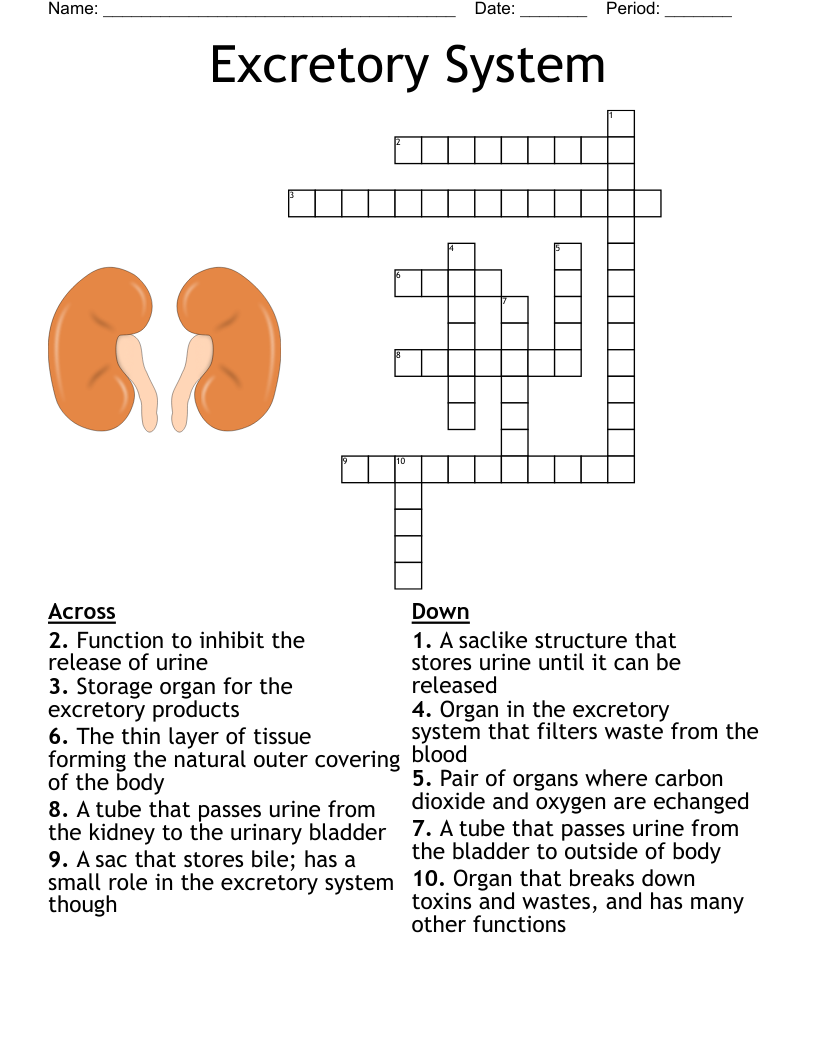
system primarily responsible for water, electrolyte, and acid-base balance and the removal of nitrogen-containing wastes from the blood.
nonliving material in connective tissue consisting of ground substance and fibers that separate the living cells.
one of four main tissue types; specialized to contract (shorten) in order to produce a force that will cause movement.
an abnormal accumulation of fluid in body parts or tissues; causes swelling.
muscle composed of cylindrical multinucleate cells with obvious striations; the muscle(s) attached to the body’s skeleton; also called voluntary muscle.
specialized connections for communication between cardiac muscle cells containing gap junctions and desmosomes.