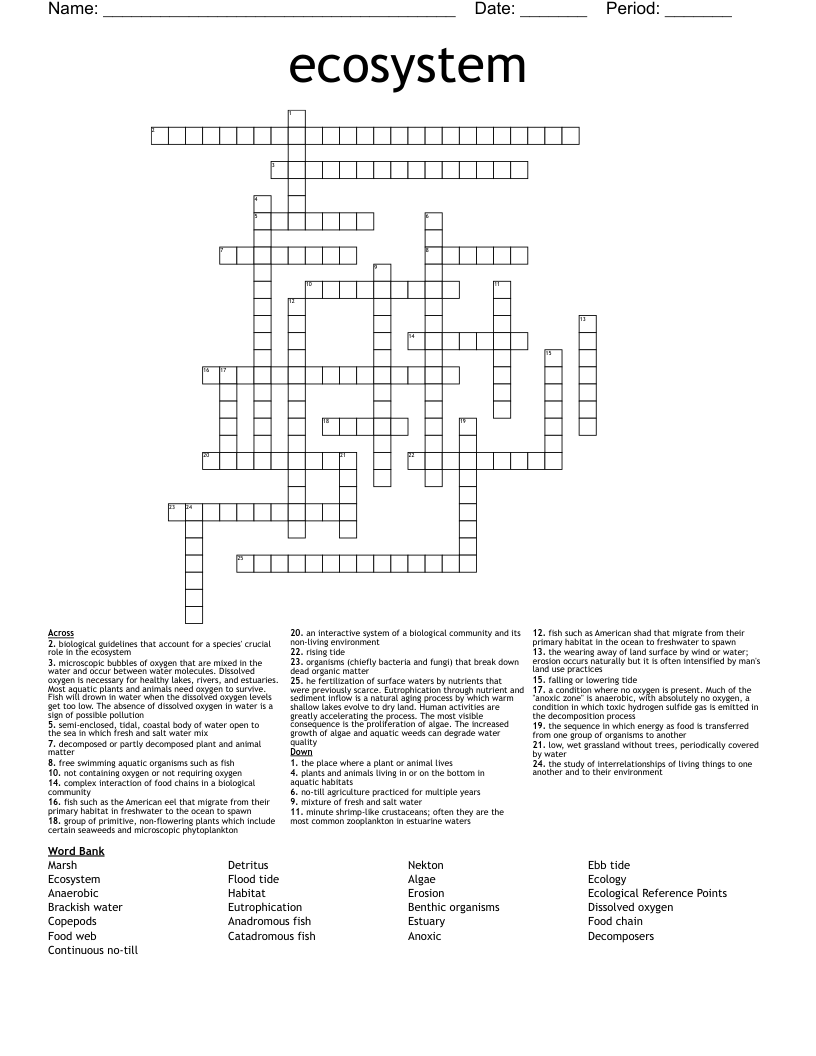
ecosystem Crossword
This printable crossword puzzle on the topic of Ecology & Evolution has 25 clues. Answers range from 5 to 25 letters long. This crossword is also available to download as a Microsoft Word document or a PDF.
Description
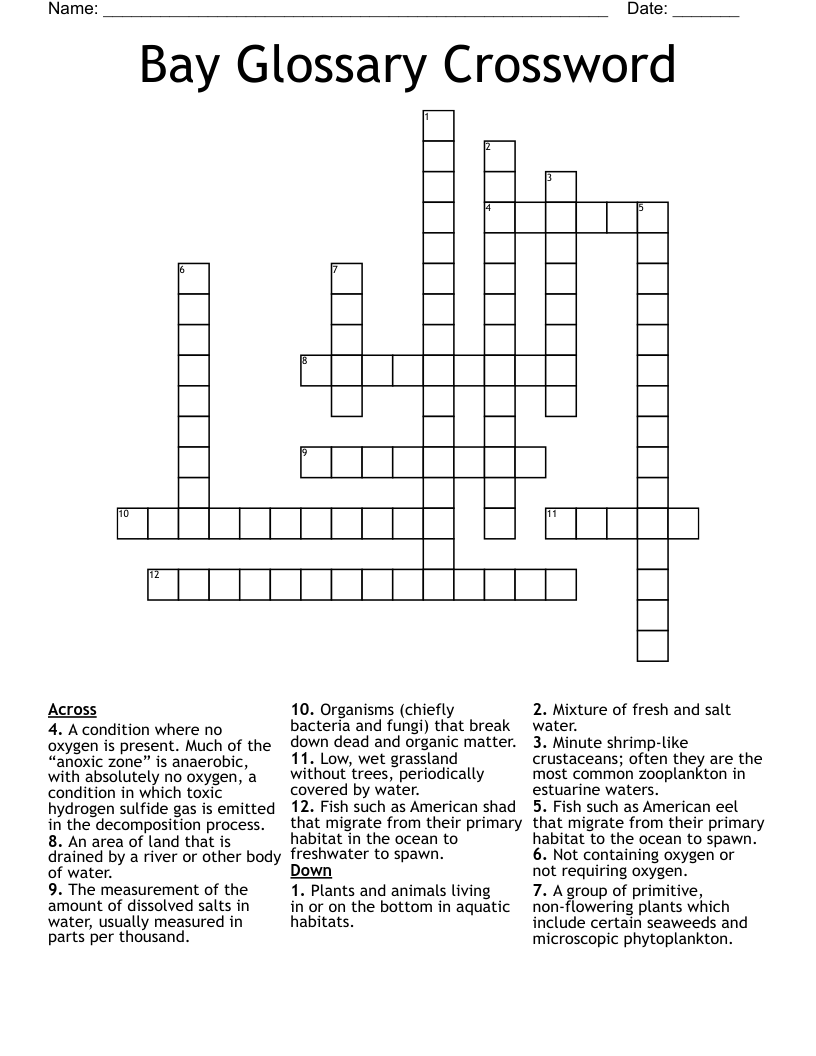
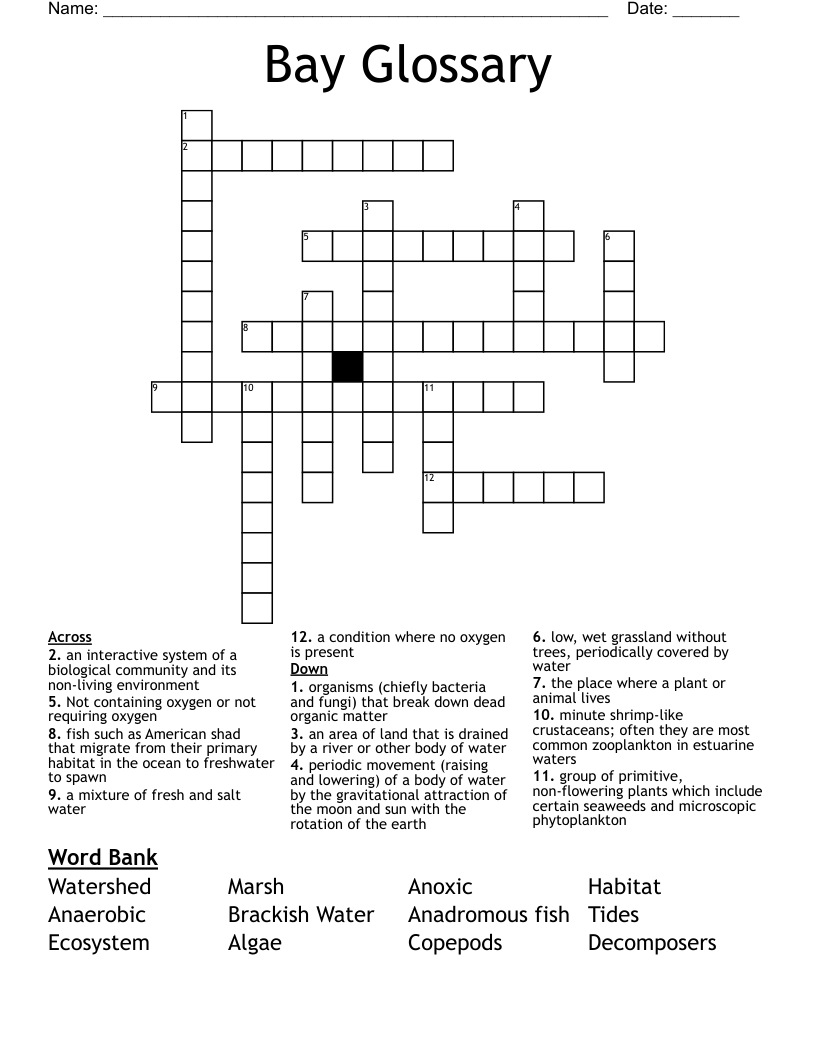
group of primitive, non-flowering plants which include certain seaweeds and microscopic phytoplankton
fish such as American shad that migrate from their primary habitat in the ocean to freshwater to spawn
not containing oxygen or not requiring oxygen
a condition where no oxygen is present. Much of the "anoxic zone" is anaerobic, with absolutely no oxygen, a condition in which toxic hydrogen sulfide gas is emitted in the decomposition process
plants and animals living in or on the bottom in aquatic habitats
mixture of fresh and salt water
fish such as the American eel that migrate from their primary habitat in freshwater to the ocean to spawn
no-till agriculture practiced for multiple years
minute shrimp-like crustaceans; often they are the most common zooplankton in estuarine waters
organisms (chiefly bacteria and fungi) that break down dead organic matter
decomposed or partly decomposed plant and animal matter
microscopic bubbles of oxygen that are mixed in the water and occur between water molecules. Dissolved oxygen is necessary for healthy lakes, rivers, and estuaries. Most aquatic plants and animals need oxygen to survive. Fish will drown in water when the dissolved oxygen levels get too low. The absence of dissolved oxygen in water is a sign of possible pollution
falling or lowering tide
biological guidelines that account for a species' crucial role in the ecosystem
the study of interrelationships of living things to one another and to their environment
an interactive system of a biological community and its non-living environment
the wearing away of land surface by wind or water; erosion occurs naturally but it is often intensified by man's land use practices
semi-enclosed, tidal, coastal body of water open to the sea in which fresh and salt water mix
he fertilization of surface waters by nutrients that were previously scarce. Eutrophication through nutrient and sediment inflow is a natural aging process by which warm shallow lakes evolve to dry land. Human activities are greatly accelerating the process. The most visible consequence is the proliferation of algae. The increased growth of algae and aquatic weeds can degrade water quality
rising tide
the sequence in which energy as food is transferred from one group of organisms to another
complex interaction of food chains in a biological community
the place where a plant or animal lives
low, wet grassland without trees, periodically covered by water
free swimming aquatic organisms such as fish