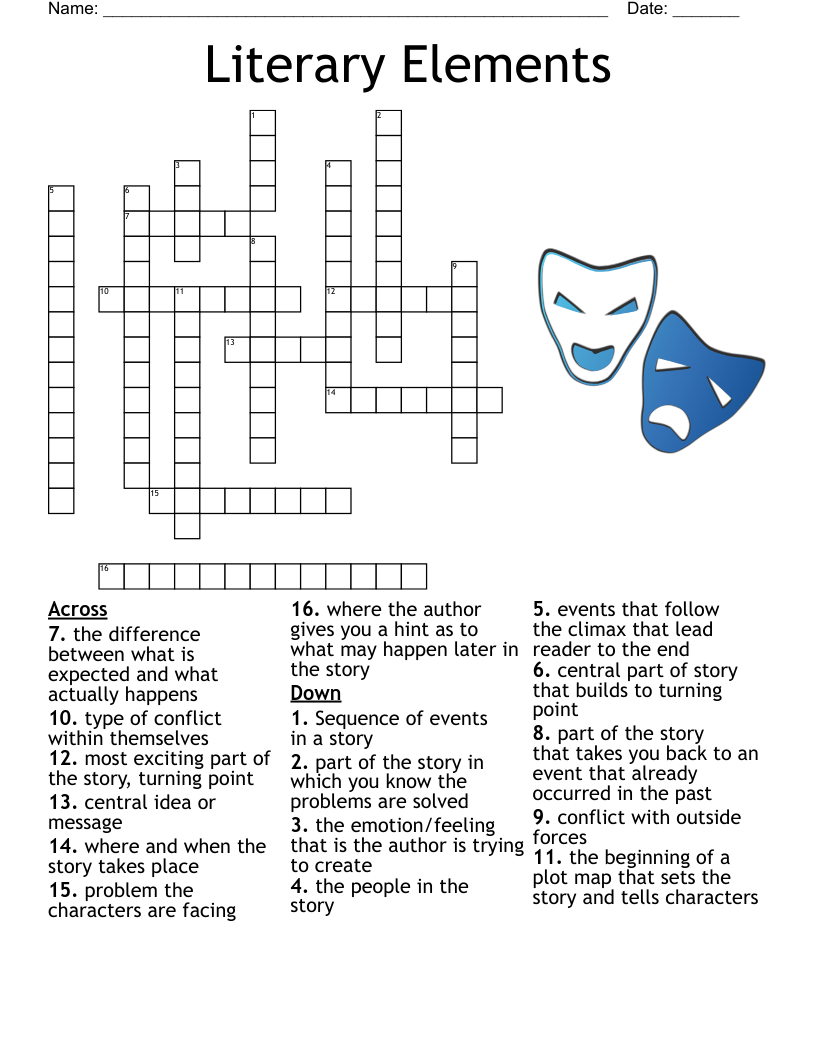
5th Literary Terms Test Set 1 Worksheet
This printable matching worksheet on the topic of Figurative Language & Literary Devices has 24 questions and answers to match. This matching worksheet is also available to download as a Microsoft Word document or a PDF.
Description
a reference to a well-known person, place, event, literary work, or work of art, often used to help make a comparison
the perspective from which a story is told
a central message, idea, or concern that is expressed in a literary work
a character who does not undergo a change over the course of a story
a section in a literary piece that interrupts the sequence of events in order to relate an earlier incident or set of events
the main character in a literary work
a conclusion drawn by the reader based on available information
a method of storytelling in which the narrator knows the thoughts and feelings of all of the characters in the story
is a word that imitates or suggest the source of the sound that it describes (bees buzzing around)
a problem or struggle between two or more forces
the events are told by someone outside the story
use of extreme exaggeration (my feet are killing me)
a character who changes over the course of a story
a figure of speech in which something is described as if it were something else; a comparison made without using like or as (My dog Sunny is a beast!)
anything that stands for or represents something else (a dove represents purity)
a problem or struggle between a character and an outside force
an author's use of hints or clues to give a reader an idea of what may happen next
a method of storytelling in which the narrator knows only the thoughts and feelings of a single character while other characters are presented externally
the writer directly states the character's traits or characteristics
the repetition of similar initial consonant sounds in order to create a musical or rhythmical effect, to emphasize key words or to imitate sounds (The slithering snake slowly made its way into its den.)
a character or force in conflict with a main character
a problem within a character
a comparison between two things, using like or as (I am as snug as a bug in a rug.)
the writer allows the reader to draw his/ her conclusions as to what a character is like, based on the appliances, words, actions, and interactions with other characters