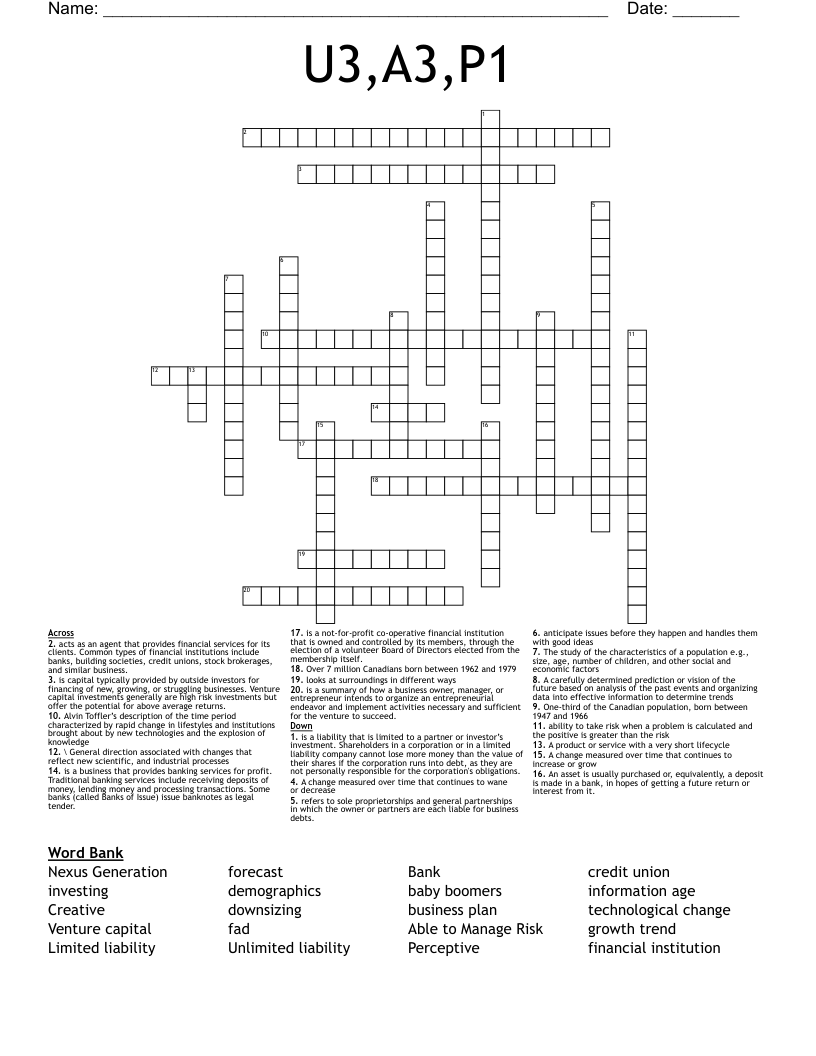
U3,A3,P1 Crossword
This printable crossword puzzle on the topic of Economics & Business has 20 clues. Answers range from 3 to 20 letters long. This crossword is also available to download as a Microsoft Word document or a PDF.
Description
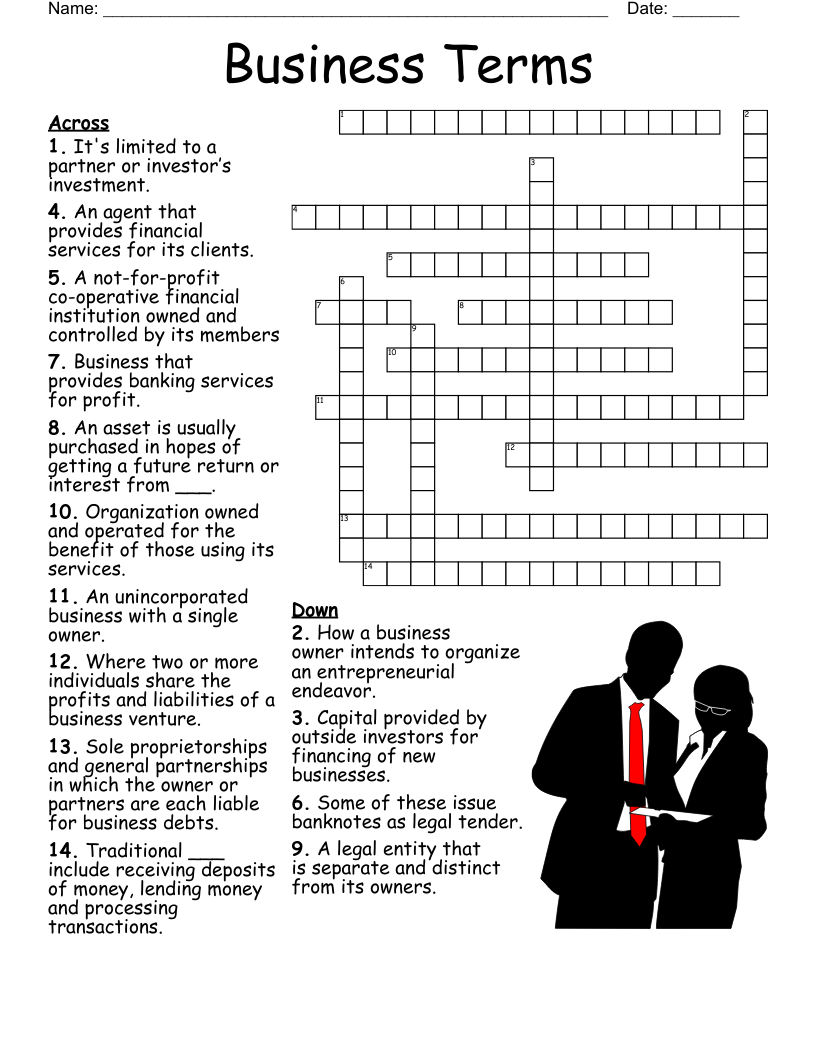
is a summary of how a business owner, manager, or entrepreneur intends to organize an entrepreneurial endeavor and implement activities necessary and sufficient for the venture to succeed.
is capital typically provided by outside investors for financing of new, growing, or struggling businesses. Venture capital investments generally are high risk investments but offer the potential for above average returns.
acts as an agent that provides financial services for its clients. Common types of financial institutions include banks, building societies, credit unions, stock brokerages, and similar business.
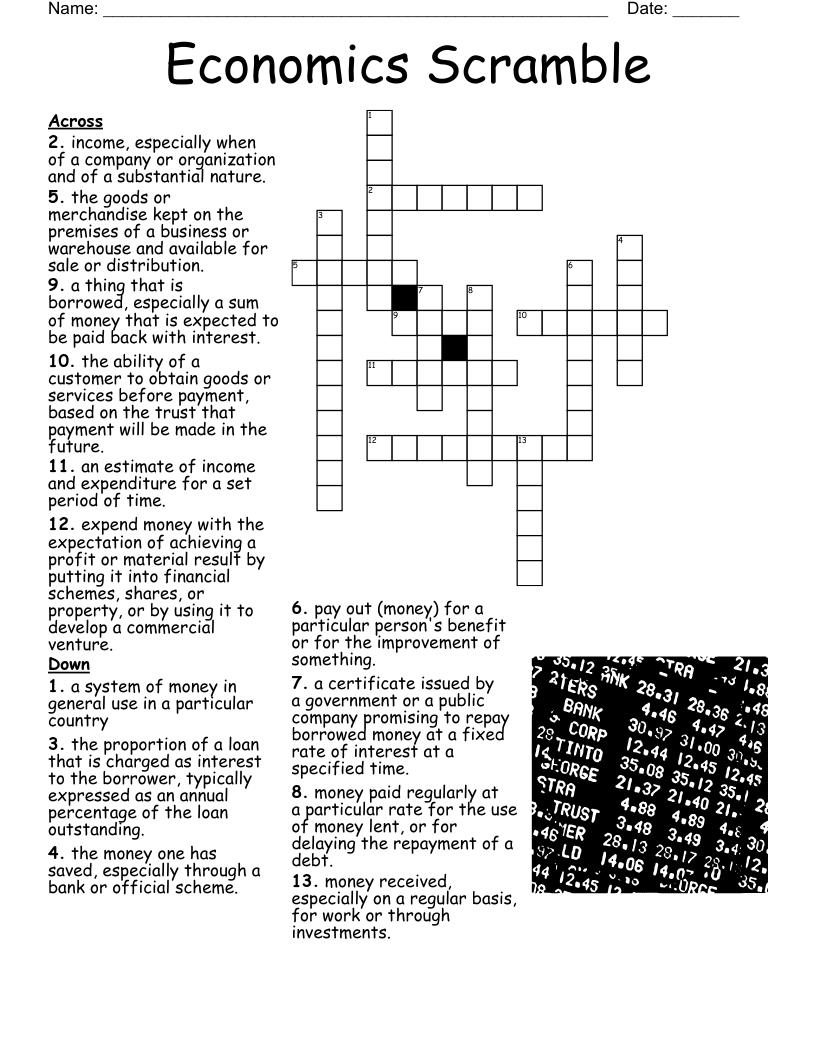
is a business that provides banking services for profit. Traditional banking services include receiving deposits of money, lending money and processing transactions. Some banks (called Banks of Issue) issue banknotes as legal tender.
is a not-for-profit co-operative financial institution that is owned and controlled by its members, through the election of a volunteer Board of Directors elected from the membership itself.
An asset is usually purchased or, equivalently, a deposit is made in a bank, in hopes of getting a future return or interest from it.
is a liability that is limited to a partner or investor’s investment. Shareholders in a corporation or in a limited liability company cannot lose more money than the value of their shares if the corporation runs into debt, as they are not personally responsible for the corporation's obligations.
refers to sole proprietorships and general partnerships in which the owner or partners are each liable for business debts.
A carefully determined prediction or vision of the future based on analysis of the past events and organizing data into effective information to determine trends
Alvin Toffler’s description of the time period characterized by rapid change in lifestyles and institutions brought about by new technologies and the explosion of knowledge
A product or service with a very short lifecycle
\ General direction associated with changes that reflect new scientific, and industrial processes
The study of the characteristics of a population e.g., size, age, number of children, and other social and economic factors
A change measured over time that continues to wane or decrease
A change measured over time that continues to increase or grow
One-third of the Canadian population, born between 1947 and 1966
Over 7 million Canadians born between 1962 and 1979
anticipate issues before they happen and handles them with good ideas
ability to take risk when a problem is calculated and the positive is greater than the risk
looks at surroundings in different ways