New Deal Terms Crossword
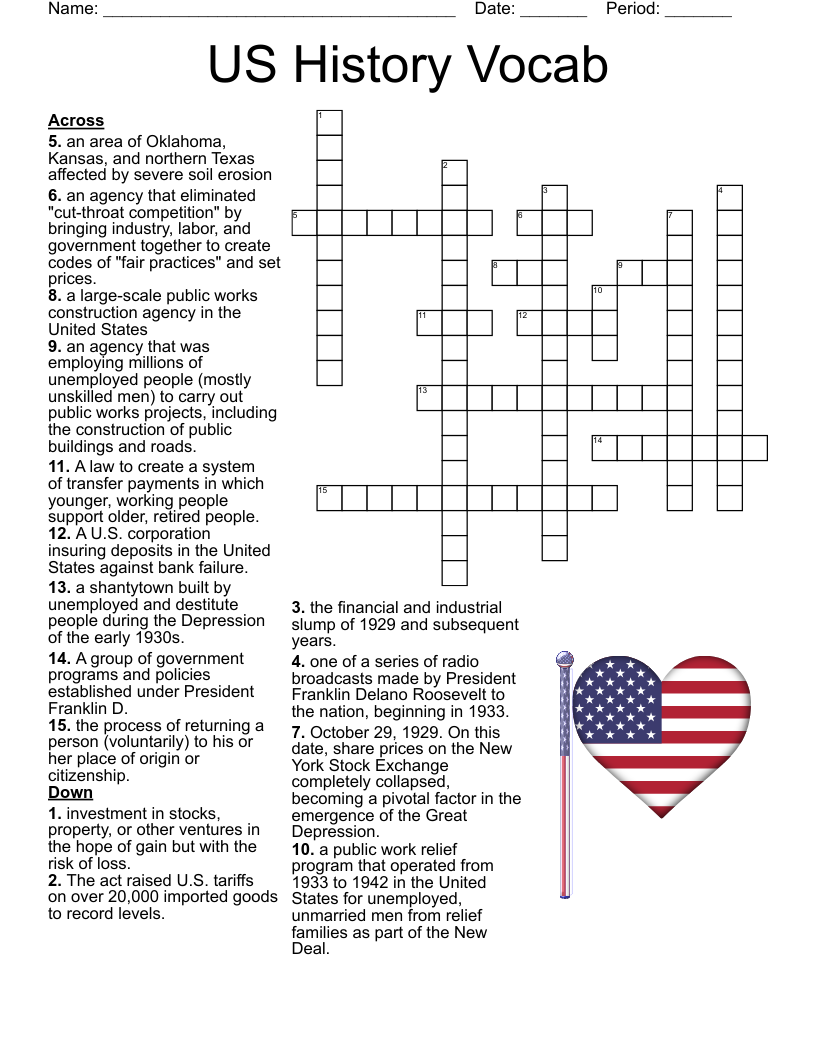
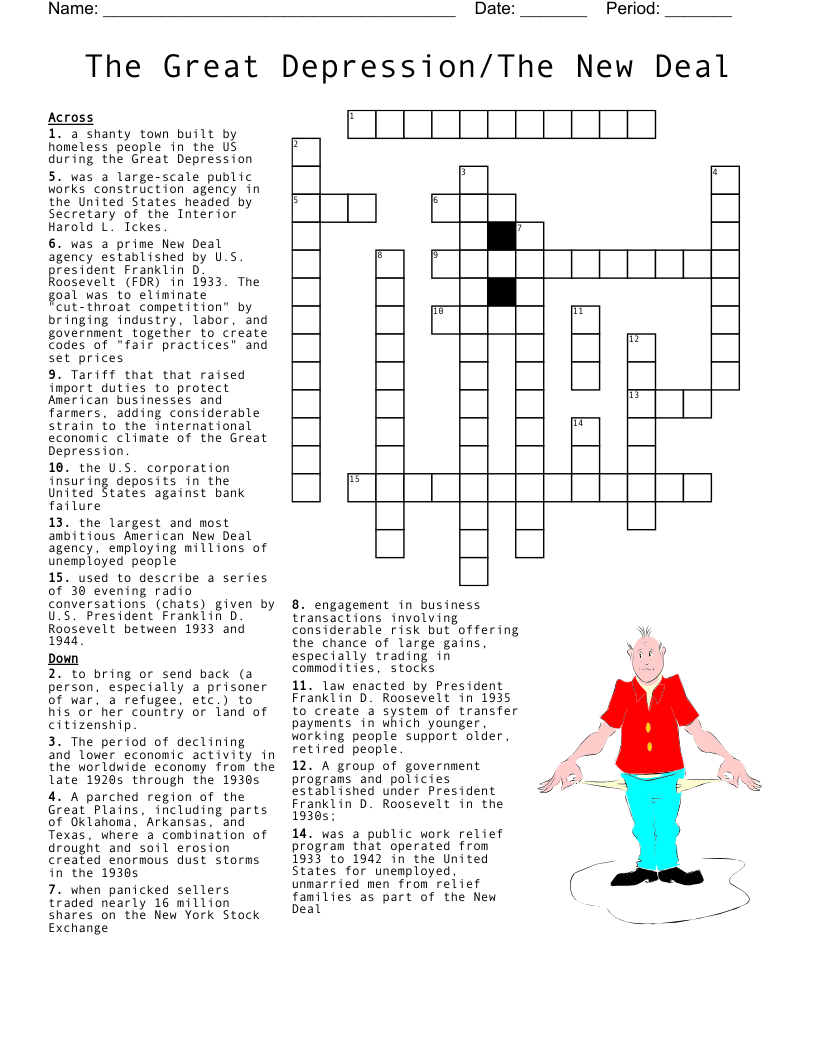
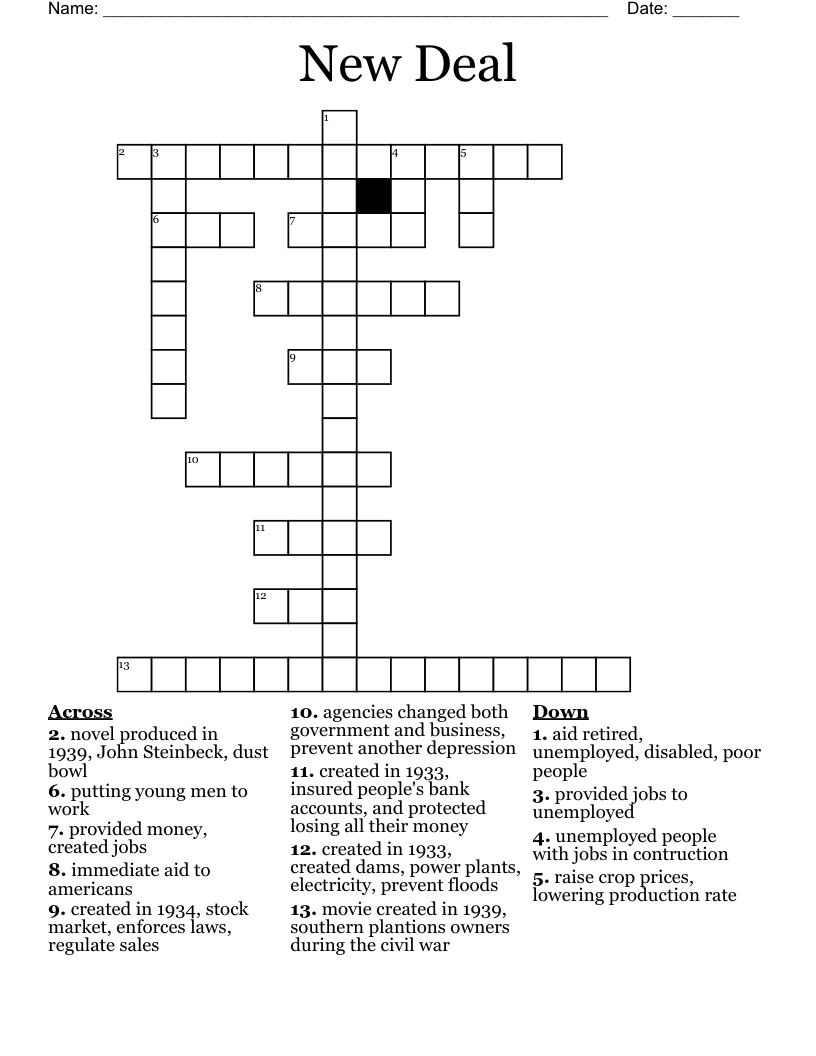
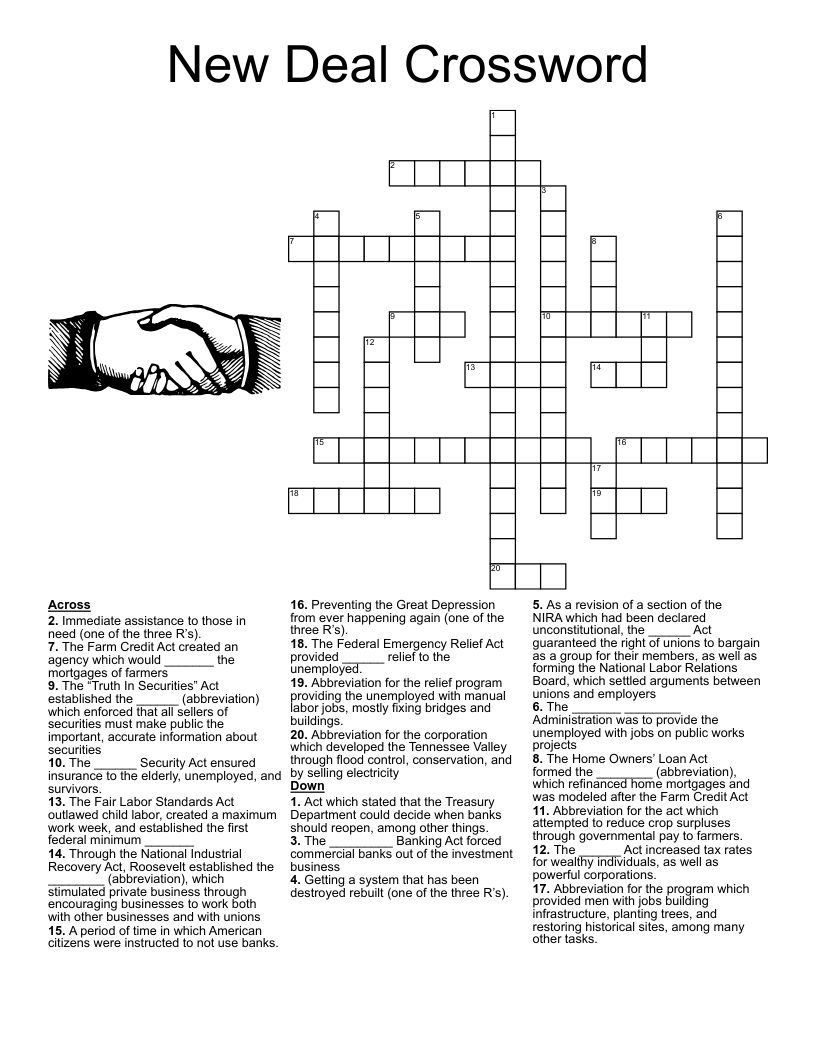
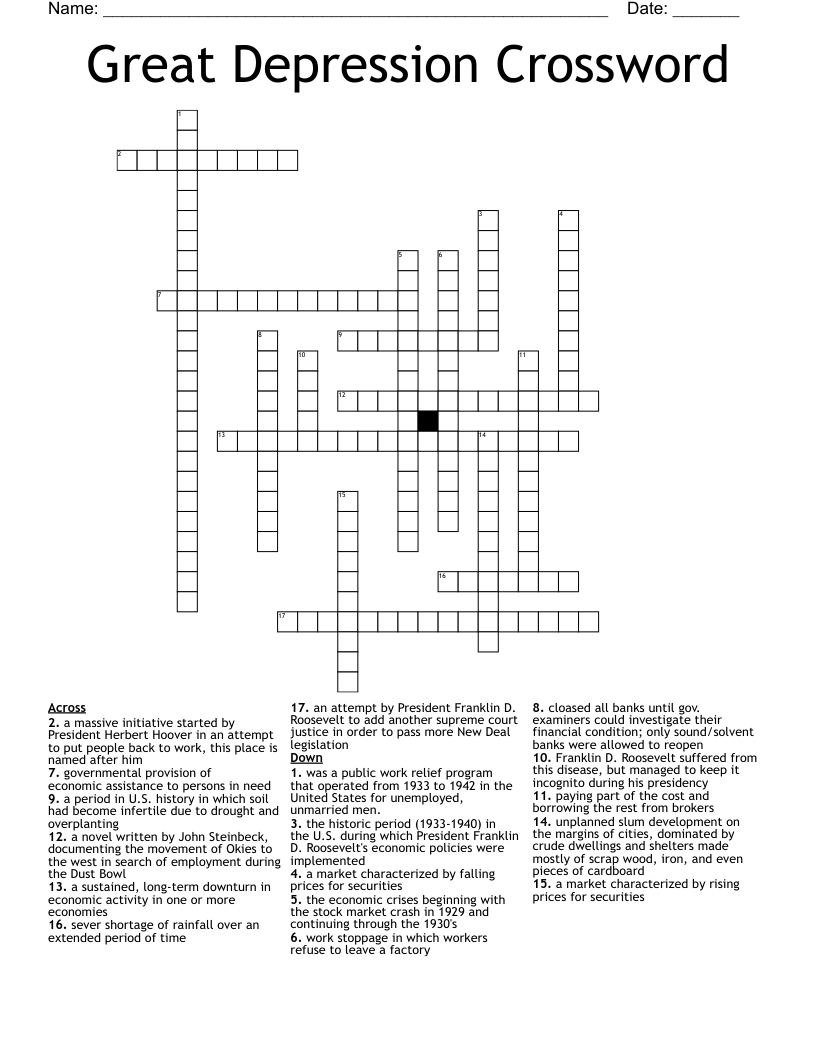
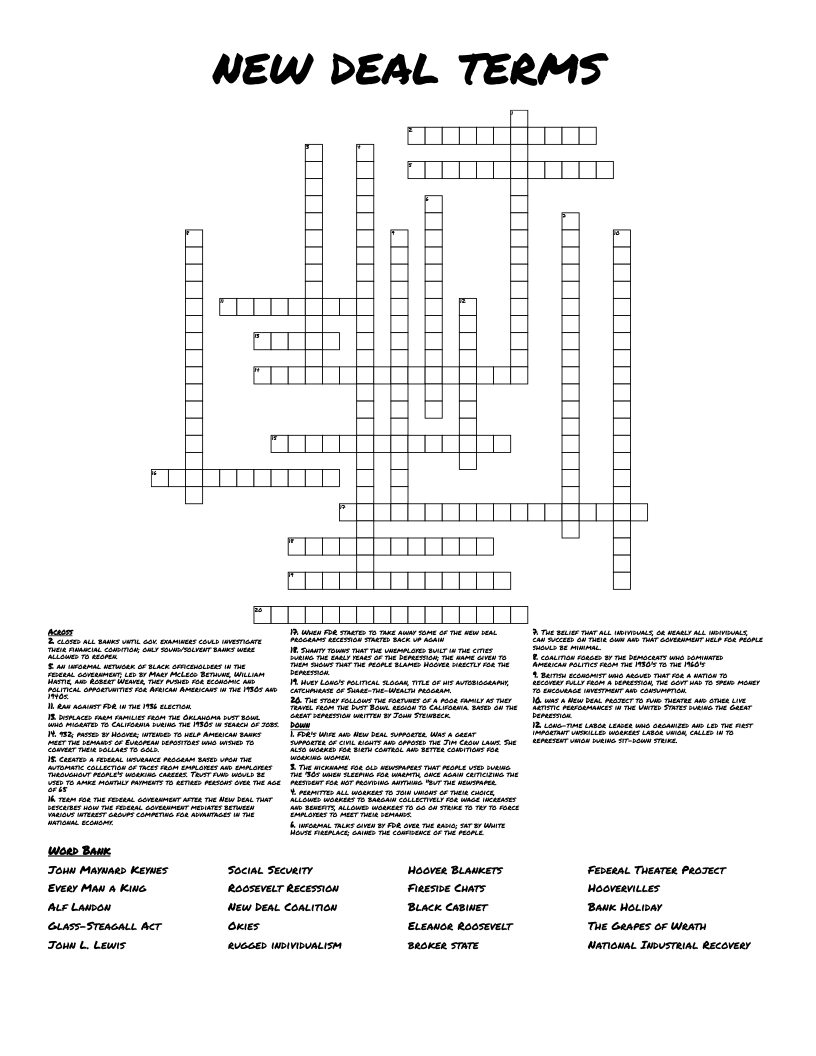
This printable crossword puzzle on the topic of US History (General) has 15 clues. Answers range from 4 to 19 letters long. This crossword is also available to download as a Microsoft Word document or a PDF.
Description
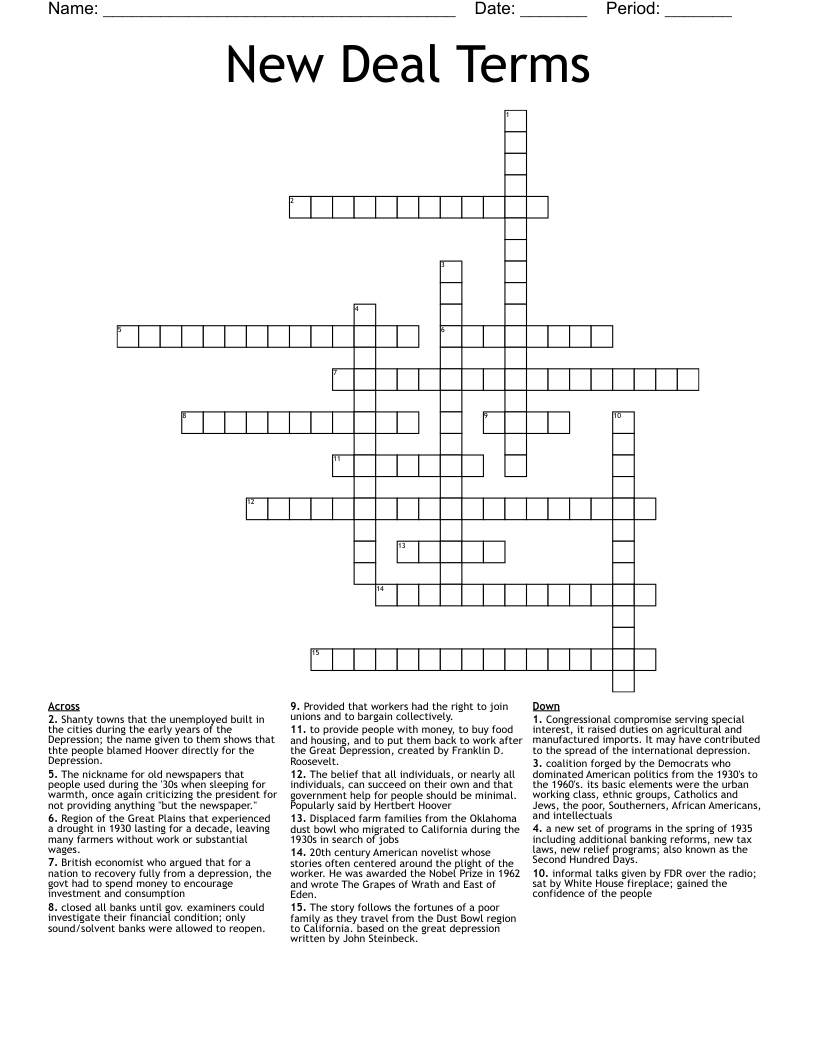
The belief that all individuals, or nearly all individuals, can succeed on their own and that government help for people should be minimal. Popularly said by Hertbert Hoover
Shanty towns that the unemployed built in the cities during the early years of the Depression; the name given to them shows that thte people blamed Hoover directly for the Depression.
The nickname for old newspapers that people used during the '30s when sleeping for warmth, once again criticizing the president for not providing anything "but the newspaper."
British economist who argued that for a nation to recovery fully from a depression, the govt had to spend money to encourage investment and consumption
Region of the Great Plains that experienced a drought in 1930 lasting for a decade, leaving many farmers without work or substantial wages.
Displaced farm families from the Oklahoma dust bowl who migrated to California during the 1930s in search of jobs
20th century American novelist whose stories often centered around the plight of the worker. He was awarded the Nobel Prize in 1962 and wrote The Grapes of Wrath and East of Eden.
The story follows the fortunes of a poor family as they travel from the Dust Bowl region to California. based on the great depression written by John Steinbeck.
Congressional compromise serving special interest, it raised duties on agricultural and manufactured imports. It may have contributed to the spread of the international depression.
to provide people with money, to buy food and housing, and to put them back to work after the Great Depression, created by Franklin D. Roosevelt.
closed all banks until gov. examiners could investigate their financial condition; only sound/solvent banks were allowed to reopen.
informal talks given by FDR over the radio; sat by White House fireplace; gained the confidence of the people
Provided that workers had the right to join unions and to bargain collectively.
a new set of programs in the spring of 1935 including additional banking reforms, new tax laws, new relief programs; also known as the Second Hundred Days.
coalition forged by the Democrats who dominated American politics from the 1930's to the 1960's. its basic elements were the urban working class, ethnic groups, Catholics and Jews, the poor, Southerners, African Americans, and intellectuals